
Penny loafers are the slip-on shoes that never quite go away, and that is exactly their charm. They are smart enough for the office, relaxed enough for the weekend, and simple enough to wear without thinking about them at all.
So what are penny loafers, and why have they lasted so long? They are a low, laceless leather shoe with a strap across the vamp, the front of the shoe, and a small slot in the strap that once held a coin. This guide covers what they are, where they came from, the main types, and how to wear and care for them.
Key takeaways:
- Penny loafers are laceless slip-on shoes with a strap and a small slot across the vamp.
- They began as a practical working shoe in Norway and became a classic of smart-casual dress in America and Britain.
- The main types are the classic leather loafer, the suede loafer, the bit loafer and the chunky-soled loafer.
- Buy your usual size, wear them with or without socks, and keep the leather clean, conditioned and rested between wears.
What are penny loafers?
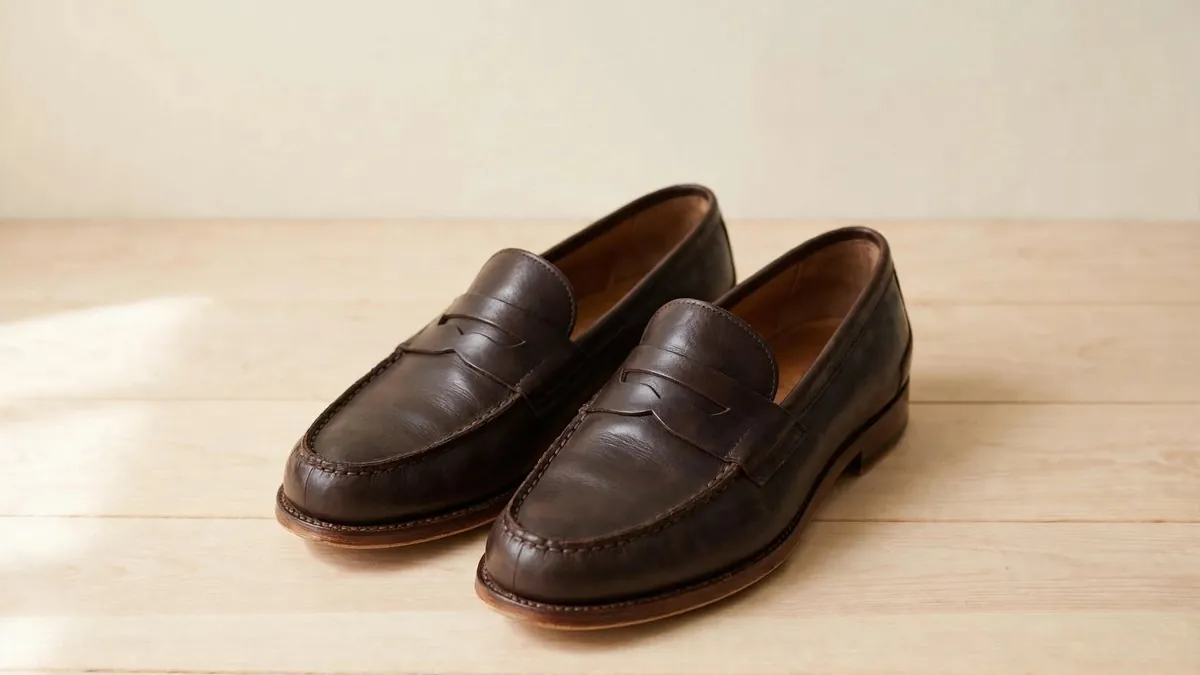
A penny loafer is a slip-on shoe made of leather or suede, with a low heel, no laces and a strap across the front. The strap has a small diamond-shaped slot cut into it, and that slot is what gives the shoe its name. The story goes that wearers once slipped a penny into the slot, kept there for a phone call.
The shape is what makes the loafer so easy to wear. The vamp, the front part of the shoe, is cut low, and the opening is wide enough to step into without a shoehorn. The sole is usually leather or rubber, the heel is low, and the stitching around the front, known as the apron seam, gives the shoe its familiar hand-sewn look.
Penny loafers sit in a useful middle ground. They are smarter than trainers and more relaxed than lace-up Oxford shoes, which makes them one of the most versatile shoes a person can own. They work with tailored trousers, chinos and jeans alike.
A short history of the penny loafer
The penny loafer began far from the city streets where it is worn today. Its ancestor was a simple slip-on shoe worn by farmers and fishermen in Norway, made to be pulled on and off easily and to cope with wet, rough ground. It was practical above all else: no laces to tie, and leather tough enough for daily work.
The style crossed the Atlantic in the 1930s, when American shoemakers began making their own version of the Norwegian shoe. The strap with the slot was added in America, and the shoe took on its familiar name. It caught on quickly with students, who wore it as a casual shoe that still looked tidy, and from the campuses it spread into everyday dress.
The loafer’s great moment came in the 1950s and 1960s, when it became part of the Ivy League look: chinos, a button-down shirt, a jacket and a pair of penny loafers. Worn with white socks or no socks at all, it became the shoe of a generation, and the look was copied on both sides of the Atlantic.
Since then the loafer has never really left. It has been restyled with thicker soles, softer suede and brighter colours, and it keeps returning whenever smart-casual dress comes back into favour. The reason is simple: the design works, and a shoe that slips on, looks smart and goes with almost everything is hard to improve on.
The main types of penny loafer
Not all penny loafers are the same, and the differences matter when you are choosing a pair. The classic leather loafer is the original: smooth, polished leather, a leather sole and a low heel, made to be worn with tailored clothes. It is the most formal of the family and the one that lasts longest with care.
The suede loafer is the softer, more casual cousin. Suede gives the shoe a matte finish and a relaxed feel, and it pairs well with chinos, linen and denim. It needs more protection from rain than smooth leather, but it is comfortable from the first wear. The bit loafer replaces the plain strap with a metal bar, which makes it a little dressier, while the chunky-soled loafer adds a thicker rubber sole for a heavier, more modern look.
| Type | Material and look | Feel | Best for |
|---|---|---|---|
| Classic leather | Smooth polished leather, leather sole | Firm at first, moulds to the foot | Tailored trousers, smart occasions, the office |
| Suede | Soft matte suede, often a rubber sole | Comfortable from the first wear | Chinos, linen, denim, warm weather |
| Bit loafer | Leather with a metal bar across the vamp | Smart and structured | Dressier outfits, evenings out |
| Chunky-soled | Leather or suede with a thick rubber sole | Heavier, more cushioned | Casual outfits, wet weather, a modern look |
There is also the question of colour. Dark brown and black are the safe choices: brown is warmer and more casual, black is sharper and more formal. Tan and oxblood, a deep reddish brown, are useful middle options that work with navy, grey and stone. Dark brown is the most useful colour of all, because it goes with almost everything.
How to choose the right pair
Fit comes first, because a loafer has no laces to adjust. Buy your usual size, and try the shoes on with the socks you plan to wear, or barefoot if you plan to wear them that way. The heel should grip without slipping, the toes should have room to move, and the shoe should feel snug across the vamp without pinching.
New leather loafers often feel tight for the first few wears, and that is normal: the leather softens and moulds to your foot. If they pinch hard or rub your heel raw on the first try, they are the wrong size, not the wrong shoe.
Check the construction before you buy. A leather sole is smarter and can be resoled by a cobbler, which makes the shoe last for years, while a rubber sole grips better in the wet and needs no breaking in. Look for neat stitching around the apron seam and a heel that sits squarely on the ground.
How to wear penny loafers
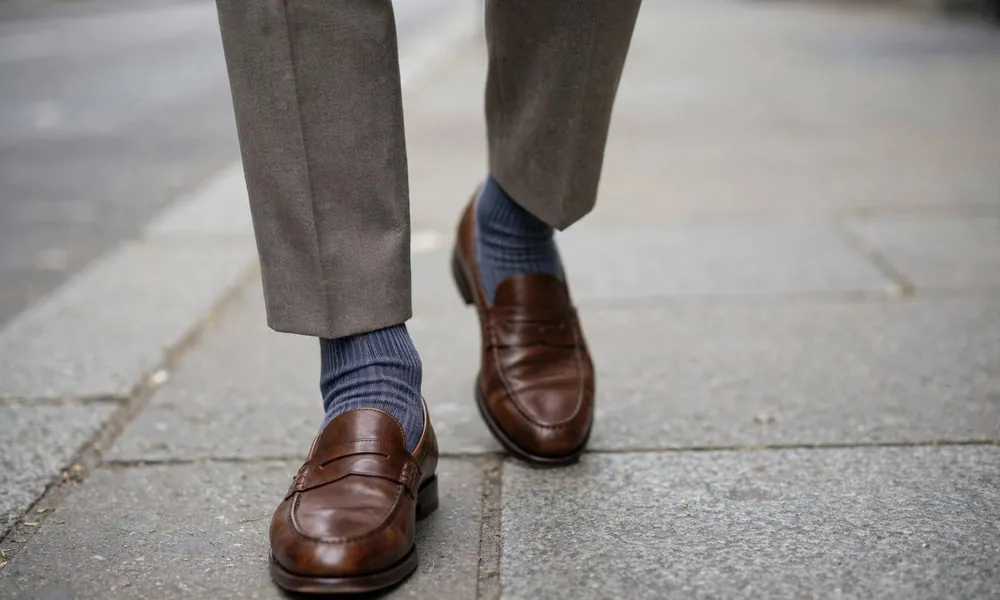
The easiest way to wear penny loafers is with chinos and a shirt. Roll the chinos to the ankle or choose a pair that ends just above the shoe, so the loafer is visible rather than hidden under a pool of fabric. A jacket over the top makes the outfit smart enough for most offices, while a jumper or a polo shirt keeps it relaxed. Our guides to baggy jeans and barrel jeans cover looser trouser shapes that suit a chunky-soled loafer.
With tailored trousers, the loafer becomes a proper office shoe. Choose a classic leather pair in dark brown or black, wear dark socks, and keep the trousers long enough to break slightly over the shoe. For evenings, a bit loafer with dark trousers and a jacket is a simple, reliable combination.
Socks are a matter of choice. Bare ankles are the classic summer look, and a pair of no-show socks keeps the shoe fresh without showing. In cooler weather, dark socks are the safe choice, while patterned socks can add a little personality to a plain outfit. Avoid white sports socks with loafers: they belong with trainers, and they make the whole outfit look unfinished. Our guide to the bomber jacket pairs well with loafers, and our guide to how to fold a pocket square finishes a jacket pocket neatly.
How to care for penny loafers
Leather loafers last for years if they are looked after, and the care is simple. Brush off dust and dirt after each wear, polish smooth leather every few weeks with a cream or wax polish in the right colour, and let the shoes rest for a day between wears so the leather can dry out. Shoe trees help them keep their shape and absorb moisture.
Suede needs different care: a suede brush lifts the nap and removes dust, and a protective spray applied before the first wear helps keep rain and stains off. Never polish suede, and never wear suede loafers in heavy rain if you can avoid it. If they do get wet, stuff them with newspaper and let them dry slowly, away from direct heat, which can crack the leather.
When the soles wear down, take the shoes to a cobbler rather than throwing them away. A resole and a new heel are inexpensive compared with a new pair, and a good pair of loafers only gets more comfortable with age. Store them in a cool, dry place, out of direct sunlight.
Your penny loafers checklist
Use this list when you buy your first pair.
- Start with dark brown leather: the most useful colour, smart enough for work and relaxed enough for weekends.
- Buy your usual size: try them on with the socks you plan to wear, and check the heel grips without slipping.
- Check the stitching: neat apron seams and a heel that sits squarely are signs of a well-made shoe.
- Decide on the sole: leather soles are smarter and can be resoled, rubber soles grip better in the wet.
- Break them in gently: wear them for short outings first.
- Buy shoe trees: they keep the shape and absorb moisture.
- Keep them clean: brush after each wear and polish smooth leather regularly.
Frequently asked questions
What are penny loafers?
They are laceless slip-on shoes with a strap across the vamp and a small slot in the strap, once used to hold a coin. They are made of leather or suede, with a low heel and no laces.
Why are they called penny loafers?
The name comes from the slot in the strap across the front of the shoe. The story goes that wearers once slipped a penny into the slot, kept there for a phone call, and the name stuck.
Are penny loafers formal or casual?
Both, which is their strength. A classic leather pair with tailored trousers is smart enough for the office, while a suede or chunky-soled pair with chinos or jeans is a relaxed weekend shoe.
Should you wear socks with penny loafers?
It is your choice. Bare ankles are the classic summer look, and no-show socks keep the shoe fresh without showing. In cooler weather, dark socks are the safe choice.
How should penny loafers fit?
Buy your usual size. The heel should grip without slipping, the toes should have room to move, and the shoe should feel snug across the vamp without pinching. New leather softens and moulds to your foot over a few wears.
How do you clean penny loafers?
Brush smooth leather after each wear and polish it every few weeks with a cream or wax polish. Brush suede with a suede brush and protect it with a spray before the first wear. Let wet shoes dry slowly, away from direct heat.
The bottom line
Penny loafers have survived for nearly a century because they solve a simple problem: they are the easiest smart shoe to wear. They slip on, they go with almost everything, and a good pair only gets better with age.
Your next step is a simple one: try on a pair in dark brown leather, wear them with chinos and a shirt, and give them a week. They may become the shoes you reach for without thinking.