

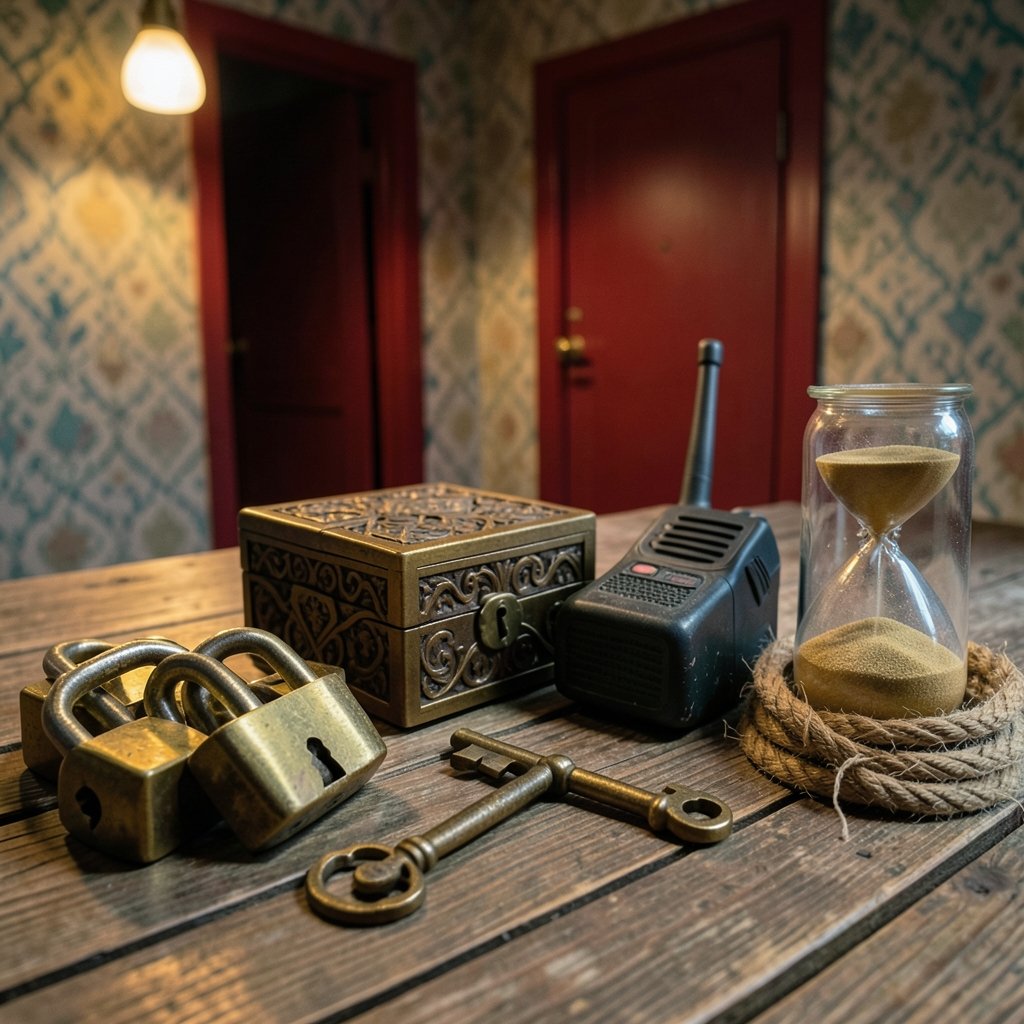
What makes a small group of adults pay to be locked in a themed room with a ticking clock and a pile of padlocks? For millions of people, the answer is simple: escape rooms are fun, social, and surprisingly stressful in the best way. Red Door Escape Room has become one of the better-known names in that world, and if you are thinking about booking a session, it helps to know how the company works, what the experience feels like, and where first-timers tend to stumble.
This guide walks through the brand, the format, practical booking tips, and the honest limits of what is publicly known. It is written for people who want a real picture, not a sales pitch.
What Is Red Door Escape Room?
Red Door Escape Room is a U.S. escape-room company that designs and runs themed, timed puzzle rooms. Small teams enter a story-driven space, hunt for clues, solve puzzles, and try to “escape” before the clock runs out. The company is one of the larger multi-location escape-room brands in the United States, and it expanded through a mix of company-owned and franchise locations across several states.
A quick word of caution on the name: “Red Door” is a common brand element, and readers should not confuse the escape-room company with unrelated businesses that use similar names, including real-estate and salon brands. If you are searching for a booking page, check that you have landed on the escape-room company and not a lookalike.
One honest caveat up front. The company’s founding year, first location, and current location count are not firmly verified in widely available sources, and any developments after early 2025 sit outside what can be confirmed here. Treat specific numbers you see online with a little skepticism and check the company’s own site before you plan a trip.
How an Escape Room Actually Works

If you have never done one, the format is simpler than it looks. A team of usually two to eight players is placed in a themed room. A staff member explains the rules, the safety basics, and the story. Then the door closes, the timer starts, and the group has roughly 45 to 60 minutes to solve a chain of puzzles and complete the objective.
Most rooms work like this:
- The briefing. A host explains the rules, the emergency exit, and how to ask for a hint.
- The search. Players fan out and look for hidden clues, codes, keys, and strange objects.
- The puzzle chain. Each solved puzzle usually makes the next one available, so progress is sequential.
- The hint system. Stuck teams can request help, usually through a screen, radio, or walkie-talkie.
- The finish. The team either completes the objective or the timer ends. Either way, a host debriefs the group afterward.
The rooms themselves vary widely in style. Some lean on locks and keys, others on electronics, magnets, lighting, and sound. Themes range from haunted houses to heist scenarios to sci-fi mysteries. The best operators treat the room like a small piece of theater, with set design that supports the story rather than just decorating a box.
Why the Format Became So Popular
Escape rooms grew rapidly as an entertainment format from around 2012 to 2014, and the U.S. became one of the biggest markets. The appeal is easy to explain. The format combines problem-solving, teamwork, and a bit of adrenaline, and it gives groups something to do together that is not dinner or a movie.
It also suits a wide range of occasions. Birthday groups, date nights, family outings, and corporate team-building sessions all fit the model. Revenue in the industry typically comes from per-person or per-team bookings, plus group packages and gift cards.
The design of a good room matters more than people expect. A beautiful set with weak puzzles feels hollow, and a clever puzzle in a bare room feels cheap. The operators that last tend to invest in both.
Booking Smart: Practical Tips That Actually Help
First-hand experience from frequent players points to a handful of habits that make a real difference. These are the things that separate a great session from a frustrating one.
Book the right room for your group. Room difficulty varies, and a room labeled “expert” is a bad first choice for a family with younger kids. Ask the staff which room suits your group size and experience level. Most operators will tell you honestly.
Arrive early, not on time. Groups that arrive five minutes before their slot tend to start flustered. Aim for 15 minutes early so the briefing is relaxed.
Pick your team deliberately. Four to six players is often the sweet spot. Too few and you run out of hands; too many and people stand around waiting for something to do.
Agree on a hint policy before you start. Some groups refuse hints on principle. Others want one the moment they stall. Decide as a team, because arguing about it mid-game wastes time.
Assign roles loosely. One person can hold the clue log, another can handle locks, another can manage the timer. Loose roles beat chaos, but rigid roles can leave people idle.
Wear comfortable clothes and skip the heels. You will be crouching, reaching, and possibly crawling. Practical clothing matters more than it sounds.
Know your limits. If someone in your group is claustrophobic, check whether the room has an open-door option. Mobility needs vary by room, so call ahead rather than assume.
A common mistake is treating the room like a race. Teams that rush past details miss clues sitting in plain sight. Slower, more systematic groups often finish first.
Safety, Accessibility, and the Fine Print
Escape rooms generally involve doors that appear locked, and responsible operators use emergency-release mechanisms and staff monitoring so players are never truly trapped. That is standard industry practice, but the specifics vary by venue, so confirm the setup with the location you plan to visit.
Accessibility is the area where assumptions cause the most trouble. Mobility access, claustrophobia accommodations, age limits, and room capacity all vary from room to room, even within the same brand. The safest approach is to call the specific location and describe your group’s needs directly. Do not rely on a general FAQ page for a specific room.
The COVID-19 period hit entertainment venues hard. Like most U.S. operators, escape rooms faced closures and capacity limits in 2020 and 2021, and many adapted with sanitation protocols and private-group bookings. Current policies may differ, so check before you go.
Escape Rooms and the Wider Home-Design Obsession
Here is a connection that surprises people. The same instincts that make a great escape room, careful set design, mood, lighting, and a strong sense of place, show up in how people decorate their homes. Fans of immersive spaces often carry that taste into their living rooms.
If you love the feeling of a richly designed room, the same principles apply at home. A textured base like a wool living room carpet adds warmth and absorbs sound, which changes how a room feels before anyone notices the furniture. Layering in large living room rugs can anchor a seating area the way a set anchors a scene.
Style choices matter too. Exploring different living room carpet styles is a bit like choosing a room theme: the right one sets the tone for everything else. A luxury living room set and a few pieces of elegant living room furniture can turn an ordinary space into something memorable. And if you want the full sensory effect, consider a set of luxury home scents to match the mood, the same way a good escape room uses smell and sound to sell its story.
Even small details carry over. A bold accent, like the confidence of red nails, is the decor equivalent of a red door: one strong element that makes a space feel intentional. If you enjoy that kind of styling inspiration, browsing red nail designs and ideas is a surprisingly good exercise in color confidence.
What Separates a Great Room From a Mediocre One
After enough sessions, patterns emerge. The best rooms share a few traits, and the weakest ones repeat the same mistakes.
| Feature | Great Room | Weak Room |
|---|---|---|
| Puzzles | Logical, fair, and tied to the story | Random locks with no narrative link |
| Set design | Immersive and functional | Decorative but distracting |
| Hints | Clear, tiered, and easy to request | Vague or hard to access |
| Flow | Sequential, with natural momentum | Bottlenecks where everyone waits |
| Briefing | Calm and complete | Rushed and confusing |
| Staff | Attentive and responsive | Absent or slow to respond |
The single biggest tell is puzzle fairness. A good puzzle gives you that satisfying “of course” moment when you solve it. A bad one makes you feel tricked. If a room relies on guesswork rather than deduction, the design is doing the work for the wrong reasons.
Group Size and Difficulty: A Quick Reality Check
New players often overestimate what their group can handle. A few general guidelines help:
- Two players work well in small, linear rooms but struggle when puzzles run in parallel.
- Four to six players handle most rooms comfortably and keep everyone busy.
- Seven or more can work in large-format rooms, but smaller spaces leave people idle.
Difficulty ratings are not standardized across the industry. One company’s “medium” is another’s “hard.” Ask the staff for a comparison to rooms you have already played, and be honest about your experience level.
Common Mistakes First-Timers Make
A short list of habits that cost teams time:
- Splitting up so far that nobody knows what anyone found.
- Hoarding clues instead of announcing them out loud.
- Forcing a lock instead of reading it carefully.
- Ignoring the timer until the last ten minutes.
- Refusing hints out of pride and stalling for twenty minutes.
- Forgetting to check obvious places: under things, behind things, inside things.
The fix is simple. Announce everything you find, keep a shared mental list, and treat hints as a tool rather than a failure.
Is It Worth It?
For most groups, yes. An escape room delivers a shared experience that is hard to replicate elsewhere, and the memory tends to outlast the cost. The value depends heavily on room quality and group fit, so a little research before booking goes a long way.
The format also rewards repeat visits. Once you have played a few rooms, you start noticing design patterns, and that makes you a sharper player. Many enthusiasts keep a running list of rooms they have completed, ranked by puzzle quality and set design.
Conclusion
Red Door Escape Room sits in a crowded but lively corner of the entertainment world, and the brand’s multi-location reach makes it one of the easier names to find. The experience itself is straightforward: a story, a timer, a chain of puzzles, and a group of people working together under mild pressure. What separates a good session from a forgettable one is preparation and design quality, not luck.
Book the right room for your group, arrive early, agree on hints, and stay systematic once the clock starts. If you have accessibility needs, call the specific location rather than trusting a general page. And if you are the type who loves a well-designed space, the same instincts that make an escape room immersive can make your living room feel just as intentional. A red door, after all, is really just a promise that something interesting waits behind it.
Frequently Asked Questions
How long does a Red Door Escape Room session last?
Most escape-room sessions run roughly 45 to 60 minutes of gameplay, plus about 15 minutes for check-in, briefing, and the post-game debrief. Plan for around 90 minutes total from arrival to departure, and add travel time on top of that.
Is Red Door Escape Room good for beginners?
Yes, provided you pick an appropriate room. Most operators offer rooms at different difficulty levels, and staff can recommend one that matches your group size and experience. Beginners should avoid rooms labeled expert-level and should feel free to use hints.
How many people should be on a team?
Four to six players is generally the sweet spot for most rooms. Smaller groups work well in linear rooms, while larger groups need a big-format room to keep everyone engaged. Ask the venue for the recommended team size for the specific room you are booking.
Are escape rooms safe for people with claustrophobia?
Many venues offer accommodations, such as leaving the door open or providing an exit option, but policies vary by room and location. Call the specific venue and explain your concern before booking. Do not assume a general policy applies to every room.
What should players wear and bring?
Wear comfortable clothing and flat shoes, since you may be crouching, reaching, or crawling. Leave large bags behind if the venue allows. Bring only what you need, and check whether the location has lockers or storage for personal items.
Can you book an escape room for a corporate team-building event?
Yes. Corporate and team-building packages are a common part of the escape-room business model, and many venues offer private bookings and group rates. Contact the specific location directly to discuss group size, scheduling, and any custom arrangements.









