

Can you really shrink a spot overnight, or is that just what the label promises? If you have ever gone to bed with a red, angry bump on your chin and woken up hoping it had vanished, you already know the answer is rarely a clean yes. But here is the honest, useful version: you cannot erase a pimple in eight hours, yet you can make it look calmer, flatter, and less obvious by morning. That gap between “cured” and “less noticeable” is where every realistic overnight trick lives. (Fedex overnight shipping it works it costs when its worth it)
This guide walks through what genuinely helps, what is mostly marketing, and the small habits that make a difference when a spot shows up at the worst possible time.
The Honest Truth About “Overnight” Spot Treatments
Dermatology sources consistently describe acne treatments as taking weeks to months to work, not hours. Any improvement you see by morning is mostly reduced redness and swelling, or a spot that looks better because it is less inflamed, not because the lesion has resolved. That is not nothing. A calmer spot is easier to cover, less painful, and less likely to tempt you into picking.
The word “overnight” on a product label is largely marketing. Advertising regulators have repeatedly pushed back on cosmetic claims that cannot be substantiated, and absolute promises about clearing a spot in one night fall into that territory. A smarter way to read the label is to ask what the product is actually doing: calming inflammation, drying surface oil, or simply covering the spot so you stop touching it.
So set your expectation correctly. Tonight you are not curing anything. You are managing a small, temporary problem so it looks and feels better by morning, and so you do not make it worse.
What You Can Realistically Achieve Before Morning
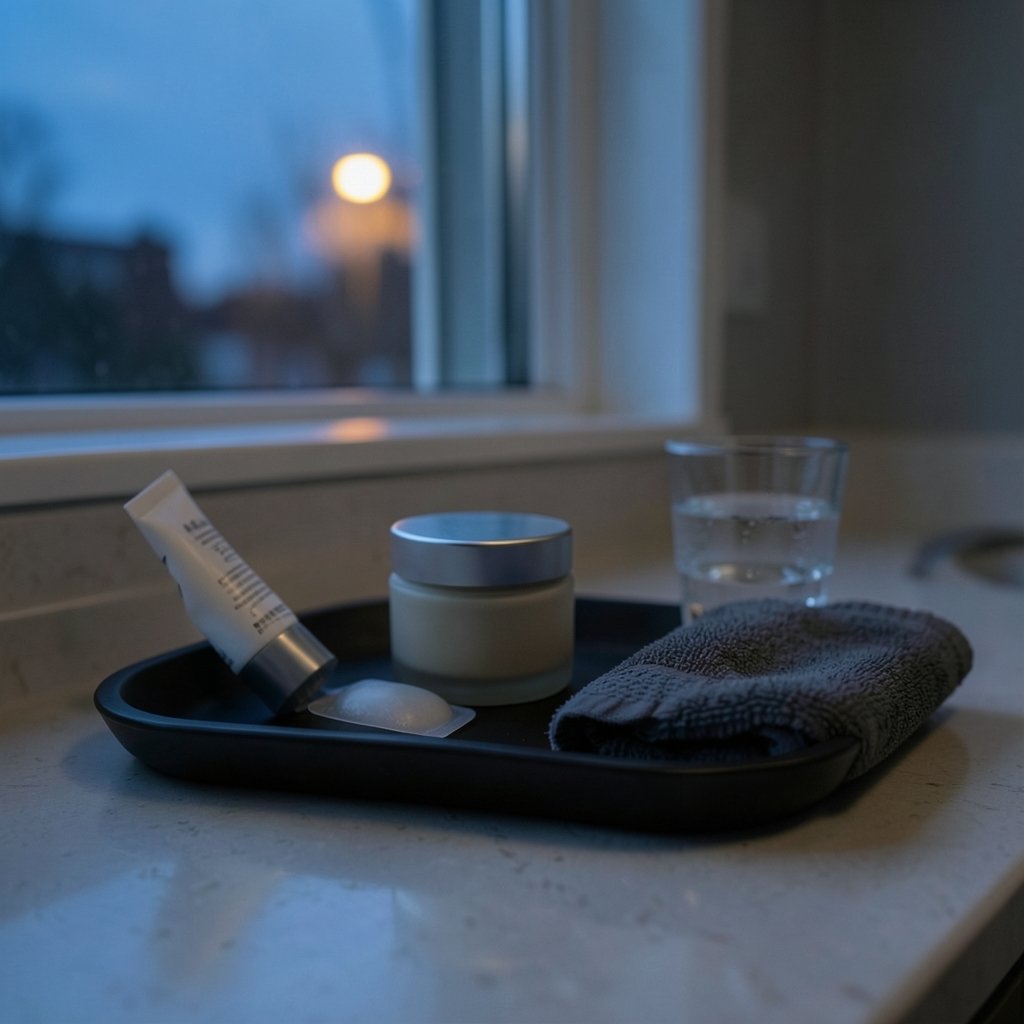
| Goal | Realistic by morning? | What helps |
|---|---|---|
| Less redness and swelling | Yes, partly | Cold compress, anti-inflammatory ingredients |
| Flatter, less raised spot | Sometimes | Hydrocolloid patch, benzoyl peroxide |
| Spot fully gone | No | Nothing clears a lesion in one night |
| Less noticeable under makeup | Yes | Calmed skin, patch, gentle coverage |
| Preventing a scar | Indirectly | Not picking, gentle handling |
The table is the whole article in miniature. Manage the appearance, protect the skin, and leave the actual healing to time.
Step One: Calm the Inflammation With Cold
A cold compress is the closest thing to an instant fix. Ice wrapped in a clean cloth, or a chilled spoon, held against an inflamed spot for a few minutes can temporarily reduce redness and swelling. The effect is cosmetic and short-lived, but it is real, and it costs nothing.
A few practical notes from experience matter here. Never put ice directly on the skin, because you can irritate or even burn it. Keep the compress to short bursts of a few minutes rather than falling asleep with it. And do this early in your evening routine, not right before bed, so the skin has settled before you apply anything else.
People often skip this step because it feels too simple to work. In practice, a five-minute cold compress before cleansing does more visible work than most fancy serums, especially on a spot that is red and throbbing.
Step Two: Choose One Active, Not Five
The biggest mistake people make overnight is layering everything at once. A spot treatment, a strong acid, a clay mask, and a retinoid all in the same evening is a recipe for irritation, peeling, and a spot that looks worse by morning. More is not better here.
Benzoyl peroxide is a well-studied option. It reduces the bacteria involved in acne and calms inflammation, and lower concentrations of 2.5 to 5 percent are considered about as effective as higher strengths with less irritation. One warning that catches people out: it can bleach fabric, so if you use it overnight, be careful with pillowcases and sheets, and consider a white pillowcase you do not mind risking.
Salicylic acid is a common over-the-counter spot treatment. It helps unclog pores, but it is not a rapid cure. It suits oily, congested skin better than dry, sensitive skin.
Pick one, apply it only to the spot, and leave the rest of your face alone. If your skin is sensitive, start with the lowest strength you can find and see how it behaves. A spot that is irritated from too many products looks far worse than the original bump.
Step Three: Consider a Hydrocolloid Patch
Hydrocolloid patches have become the default overnight product, and the evidence is genuinely mixed. A small study published in 2021 suggested some benefit for inflamed lesions, but sample sizes were small, and some dermatologists regard patches as mainly cosmetic. That does not make them useless. It means you should understand what you are buying.
A patch does three practical things. It covers the spot, which stops you touching it. It keeps the area moist, which can help the skin’s surface behave better. And it makes the spot less visible, which matters if you have somewhere to be in the morning. The “it draws out the gunk” story is oversold; the covering and protecting are the honest benefits.
Patches work best on a spot that has come to a head or is already open. On a deep, blind lump, they mostly just sit there. Apply to clean, dry skin, and leave it for the night rather than fiddling with it.
Step Four: Protect the Spot From Yourself
The single most damaging thing most people do to a spot happens at night, half awake, in front of a mirror. Picking and popping can worsen scarring and infection, and it turns a small problem into a scab that takes far longer to heal than the original spot would have.
Set yourself up to succeed. Keep your hands busy, put a patch on the spot so there is a physical barrier, and if you know you are a nighttime picker, move the magnifying mirror out of the bathroom. It sounds silly until you realize how often the damage happens in a moment of frustration.
If you are prone to scanning your face for imperfections, the same habit that makes you notice every mark can make you anxious about normal skin texture. It is worth remembering that small bumps and marks are common and usually harmless, much like the harmless quirks people worry about elsewhere, from a strange sensation in the throat to white spots on nails. Skin is rarely flawless, and chasing perfection overnight usually backfires. (Throat calcium those hard spots strange sensations really)
Step Five: Set Up Your Pillow and Bedding
You spend hours with your face against a pillowcase, so it is worth a little attention. Changing your pillowcase regularly and avoiding heavy, occlusive products overnight may reduce irritation, though the direct evidence is thin. Think of it as sensible hygiene rather than a miracle fix.
A few practical habits help. Wash pillowcases every few days if you are breakout-prone. Skip thick, heavy night creams on active spots, since piling on occlusive products can trap oil and heat. And if you use benzoyl peroxide, keep a dedicated pillowcase so a bleached patch does not ruin your good bedding. (White spots on nails)
Step Six: Keep the Rest of Your Routine Boring
The night you have a spot is not the night to experiment. Gentle cleansing, a light moisturizer if your skin is dry, and one spot treatment is the whole routine. Harsh scrubbing overnight can worsen irritation, and exfoliating beads or rough cloths on an inflamed spot do more harm than good.
Sun protection matters too, though it is a daytime job. Supporting healing means protecting skin from damage, and harsh overnight treatments that leave skin raw make daytime protection harder. Keep the basics steady and let the spot treatment do its one job.
What to Avoid When You Are Desperate
When a spot appears before an event, people reach for extremes. Here is what to skip.
- Toothpaste. A folk remedy that dries and irritates skin. It is not a treatment, and it can leave a red, peeling patch that is harder to hide than the spot.
- Alcohol-based toners and hand sanitizer. Drying the surface does not clear a spot and can damage the skin barrier.
- Squeezing “just this once.” It rarely is once, and it usually makes things worse.
- Layering multiple acids. This is the fastest route to a chemical burn on a small area of skin.
- Believing absolute claims. If a product promises a spot gone by morning, treat that as a red flag, not a feature.
The pattern is consistent: anything aggressive tends to backfire, and anything gentle and consistent tends to help.
When Overnight Is Not the Right Question
If spots are frequent, painful, or leaving marks, the overnight question is the wrong one. Persistent or severe acne warrants medical review, and prescription options such as retinoids or antibiotics work over weeks, not hours. That is not a failure of willpower; it is simply how acne treatment works.
There is a broader lesson in that. Quick fixes are appealing across many areas of life, whether you are hunting for the best winter vacation spots or trying to make a fast decision about a used car. The urgent question pulls attention, but the slower, better question often serves you more. With skin, the slower question is: what routine will keep this from happening next month?
If you want a sense of how quickly the body actually responds to care, it helps to look at other everyday concerns people track obsessively, like the appearance of white spots on nails. These things change on their own timeline, not yours.
A Realistic Night-Before Plan
If a spot shows up and you have an event tomorrow, here is a simple sequence that fits in fifteen minutes.
- Wash your hands and gently cleanse your face with a mild cleanser.
- Hold a cold compress against the spot for a few minutes.
- Pat dry and apply one spot treatment, such as a low-strength benzoyl peroxide or salicylic acid product, only to the spot.
- Let it dry, then cover with a hydrocolloid patch if you have one.
- Change or flip your pillowcase, and go to bed without touching your face.
- In the morning, cleanse gently, apply a light moisturizer, and use concealer if you want to even out the look.
That routine will not erase the spot. It will make it calmer, flatter, and easier to live with, which is the honest goal.
The Bottom Line on Overnight Spots
No product clears a spot in one night, and any label that says otherwise is selling hope. What you can do is reduce redness and swelling with cold, apply one sensible active, cover the spot so you leave it alone, and keep your bedding clean. That combination makes a visible difference by morning without wrecking your skin barrier.
The rest is patience. Spots heal on their own schedule, and the people who handle them best are usually the ones who do the least to them. If you are dealing with something that keeps coming back, stop chasing overnight fixes and talk to a professional. That is the advice that actually holds up.
Frequently Asked Questions
Can a spot really disappear overnight?
No. Acne treatments take weeks to months to work, and nothing clears a lesion in one night. What can happen overnight is reduced redness and swelling, so the spot looks and feels calmer even though it is still there.
Do hydrocolloid patches actually work?
The evidence is limited and mixed. A small 2021 study suggested some benefit for inflamed lesions, but sample sizes were small. Patches are most useful for covering a spot, keeping it moist, and stopping you from touching it, rather than magically drawing out impurities.
Is toothpaste a good overnight spot treatment?
No. Toothpaste dries and irritates skin, and it can leave a red, peeling patch that is harder to hide than the original spot. Use a proper spot treatment instead.
Should I pop a spot before bed?
Never. Picking and popping can worsen scarring and infection, and it turns a small problem into a scab that takes much longer to heal. Cover the spot with a patch if you are tempted to touch it.
What strength of benzoyl peroxide should I use?
Lower concentrations of 2.5 to 5 percent are considered about as effective as higher strengths, with less irritation. Start low, apply only to the spot, and remember it can bleach fabric, so be careful with pillowcases.
When should I see a doctor about spots?
If spots are frequent, painful, deep, or leaving marks, it is worth a medical review. Prescription options work over weeks rather than overnight, but they address the cause rather than just the appearance of a single spot.









