

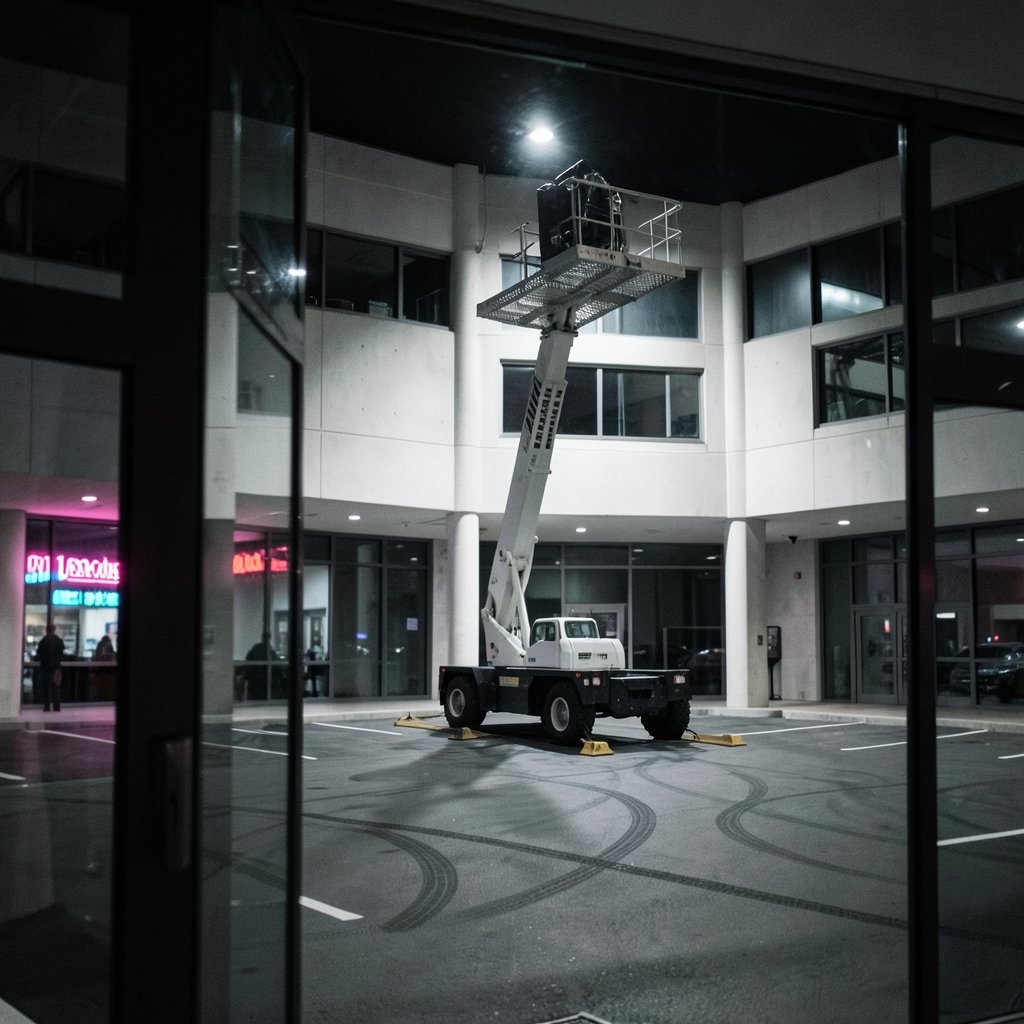
What do you do when the work is 60 feet in the air, the ground below is a finished parking lot, and the job has to be done before the client opens on Monday? Scaffolding would take two days to build. A ladder is out of the question. That is exactly the moment when most contractors, facility managers, and even homeowners with a tall tree and a stubborn gutter start looking up “rent a boom lift” on their phone and hoping the answer is simple.
It is not simple, but it is manageable. The trick is knowing what you actually need before you call the rental desk, because the difference between a productive week and an expensive mistake often comes down to three choices: the type of boom, the height rating, and the ground you plan to park it on.
What a Boom Lift Actually Is
A boom lift is an aerial work platform with an extendable arm, called a boom, that raises a work basket into the air. It is part of a broader family of machines called mobile elevating work platforms, or MEWPs, which also includes scissor lifts. The key difference is reach. A scissor lift goes straight up. A boom lift goes up and out, which means it can put a worker over a roof edge, past a wall, or into a spot a scissor lift can never touch.
There are two main families, and picking the wrong one is the most common first-timer mistake.
| Feature | Articulating boom | Telescopic boom |
|---|---|---|
| Arm shape | Jointed, bends like an elbow | Straight, extends like a telescope |
| Typical height range | Roughly 40 to 60 feet | Roughly 60 to 150 feet |
| Best for | Reaching up and over obstacles | Maximum height and horizontal reach |
| Common nickname | Knuckle boom | Stick boom |
| Typical setting | Indoor and outdoor, tight spaces | Large outdoor sites |
Those height ranges are rough guides, not rules. Manufacturers build machines well outside those bands, so always check the specific model’s spec sheet rather than assuming a category tells you the reach.
Articulating booms: the problem solvers
An articulating boom shines when the work is not directly above the machine. Think of a warehouse where a conveyor or a racking system blocks the path to a ceiling fixture, or a building where you need to get the basket over a parapet and down the other side. The jointed arm lets the operator thread the basket around obstacles that would stop a straight boom cold.
The trade-off is height. Articulating booms generally top out lower than telescopic units, so if the job is a 90-foot communications tower, a knuckle boom will not get you there.
Telescopic booms: the height specialists
Telescopic booms are built for one thing: getting high, fast. The straight arm extends in a line, which makes them efficient on large open sites like steel erection, bridge work, and big-box exterior maintenance. They also tend to offer more horizontal reach at height, which matters when you need to work several feet out from the machine’s base.
The catch is maneuverability. A long straight boom is awkward in tight quarters, and the machine’s footprint is often larger than a first-time renter expects.
Sizing the Lift: Height Is Only Half the Story
New renters almost always focus on the platform height number. That is a mistake. What matters is working height, which is the platform height plus roughly six feet to account for a person’s reach. If a task requires touching something 45 feet up, a machine with a 40-foot platform height will not do it.
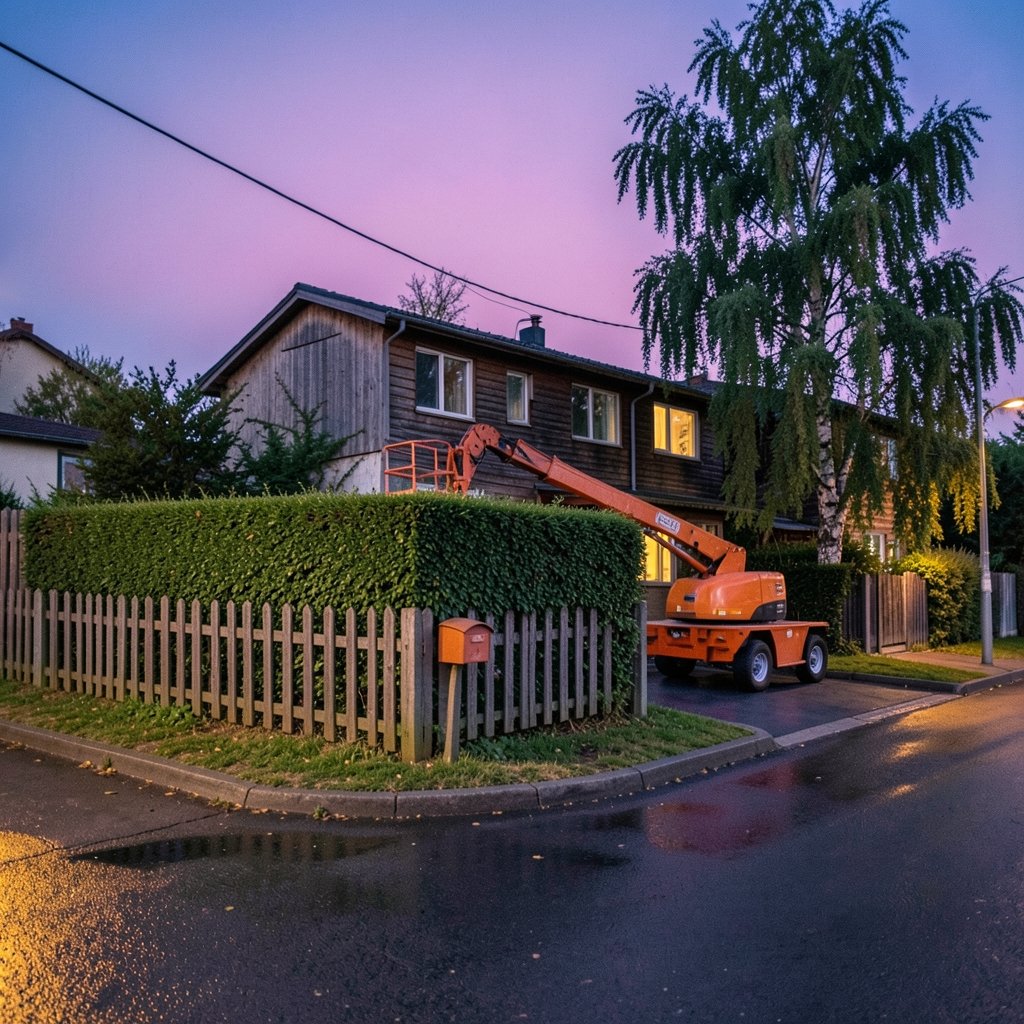
The second number to check is horizontal reach, sometimes called outreach. This is how far the basket can extend sideways from the machine’s base. On a job where the lift has to park behind a fence or in a driveway and reach over a hedge, outreach becomes the deciding factor, not height.
A practical tip from the rental counter: bring the actual measurements, not an estimate. Measure the height of the work, the distance from where the machine can legally park to the work, and the width of the narrowest gap the machine must pass through. Renters who show up with a sketch and three numbers get the right machine the first time. Renters who say “about three stories” often come back for a swap.
What Drives the Cost
Boom lift rental pricing is built from more than the daily rate, and the extras are where budgets quietly blow up. Rental terms are usually structured as daily, weekly, or monthly, and weekly and monthly rates are typically priced well below the daily rate multiplied out. If a job will run five days, asking for the weekly rate is almost always cheaper than five separate days.
Beyond the base rate, expect these line items:
- Delivery and pickup. These are often charged each way, and they can be substantial for a heavy machine that needs a flatbed and a trained driver.
- Damage waiver or insurance. This is not the same as your general liability policy. Read what it actually covers.
- Fuel or battery charge. Some companies send units out full and expect them back full. Others charge a refueling fee.
- Environmental or administrative fees. These vary widely by company and region, so ask for the all-in number before signing.
- Operator training or familiarization. Many rental companies require proof of training or offer a familiarization session at handover.
Comparing quotes on the daily rate alone is the classic error. Ask each supplier for a total cost covering delivery, pickup, fees, and a full rental period. For a broader look at how these numbers stack up across the market, it helps to review current apartment rent costs style comparisons, because the same principle applies: the headline number rarely tells the whole story. The same logic governs how rent prices are presented in any rental market, equipment included.
Training, Fall Protection, and the Rules People Skip
Here is the part that separates a smooth job from a serious incident. Boom lifts are not self-teaching machines.
Operator training is expected, not optional. The U.S. design and safe-use standards for MEWPs, ANSI/SAIA A92.20 and A92.22, call for trained and familiarized operators, and many rental companies will not release a machine without evidence of training or a documented handover session. On U.S. job sites, OSHA’s construction and general industry standards govern how aerial lifts are used. The exact edition years and paragraph numbers are worth confirming with the current standard before you cite them in a safety plan.
Fall protection is standard practice. Most boom lift use requires a full-body harness with a short lanyard attached to the designated anchor point in the basket. The manufacturer’s instructions and the applicable safe-use standard set the specifics, and some models and jurisdictions differ, so check the manual rather than relying on what the last crew did.
Licensing is jurisdiction-dependent. In many places, no separate operator licence is required to run a boom lift on private property, but traveling on public roads and working in some jurisdictions carry their own rules. This varies widely by country and state, so confirm locally rather than assuming.
The practical takeaway: build ten minutes into your schedule at pickup for the familiarization walkthrough, and do not let anyone into the basket who has not been trained on that specific machine type.
Ground Conditions and the Mistakes That Cost Money
A boom lift is heavy, and its weight concentrates on a small footprint. That combination is unforgiving.
Firm, level ground is a requirement, not a suggestion. Rental agreements and safe-use standards typically require stable footing, and soft surfaces often need pads or load distribution. Parking a lift on freshly graded dirt, a lawn after rain, or an asphalt patch over a septic tank is how machines end up leaning.
Overhead power lines are the classic hazard. Before the machine moves, walk the work zone and look up. The safe approach distance is set by local rules, and it is usually farther than people guess.
Indoor and outdoor units are not interchangeable. Electric boom lifts are typically used indoors because they produce zero emissions and run quieter. Diesel or dual-fuel units are common outdoors where run time and rough terrain matter. Bringing a diesel unit into an enclosed warehouse is a quick way to fail an inspection and gas out a crew.
Weight limits on the basket are real. Tools, materials, and people all count. Overloading a basket is both a safety issue and a warranty issue.
For anyone comparing equipment options across a portfolio of properties, the same discipline that applies to apartment rental comparison applies here: define the requirement first, then compare options against it. Facility managers juggling high end apartment rentals and their maintenance schedules often find that batching boom lift work into a single weekly rental beats scattering single-day rentals across a month.
Rent or Buy? A Quick Reality Check
The break-even question comes up on every long project. The usual rule of thumb is that renting stops making sense when total rental days approach the cost of ownership, but that rule is only useful if you are honest about utilization. A machine that sits idle eleven months a year is a liability, not an asset. Storage, insurance, maintenance, and certification costs all keep running whether the lift works or not.
For most one-off jobs, seasonal maintenance, and short renovation projects, renting wins clearly. Where ownership starts to pencil out is steady, year-round use, and even then the math depends on utilization in a way no generic rule of thumb captures. If you are modeling the numbers, treat rental property cash flow thinking as your template: compare total cost of ownership against total cost of access, not against a single day rate.
A Practical Checklist Before You Call
Walking into a rental yard prepared changes the whole experience. Before the call, gather:
- The measured working height, not an estimate.
- The required horizontal reach and any obstacles in the path.
- The ground surface and whether it is firm and level.
- The narrowest gap the machine must pass through, including doorways.
- Whether the work is indoors or outdoors.
- The number of operators and their training status.
- The full rental duration, so you can ask for the weekly rate.
Ask for the all-in quote, confirm the delivery window, and book the familiarization session at handover. Do those three things and the rest tends to fall into place.
Conclusion
Renting a boom lift is less about finding the cheapest daily rate and more about matching the machine to the job before money changes hands. Get the working height and outreach right, choose an articulating boom for obstacles and a telescopic boom for altitude, respect the ground conditions and the overhead lines, and treat operator training and fall protection as fixed costs rather than optional extras. The renters who do well are the ones who arrive with measurements, ask for the weekly rate, and read the damage waiver before signing. Do that, and the lift becomes a tool that saves days rather than a line item you regret.
Frequently Asked Questions
How much does it cost to rent a boom lift?
Pricing varies by machine size, region, and rental length, and there is no reliable single figure to quote. The base rate is only part of the picture, since delivery, pickup, damage waiver, fuel, and administrative fees all add to the total. Always request an all-in quote for the full rental period rather than comparing daily rates in isolation.
Do I need a licence to operate a boom lift?
It depends on where you are. In many places, no separate operator licence is required to run a boom lift on private property, but public-road travel and certain jurisdictions have their own rules. What is consistent across most frameworks is the expectation that the operator is trained and familiarized with that specific machine before use.
What is the difference between a boom lift and a scissor lift?
A scissor lift raises a platform straight up on crossed supports, which makes it stable and simple but limited to vertical reach. A boom lift uses an extendable arm that reaches up and out, so it can place a worker over a roof edge or around an obstacle. If the work is directly overhead, a scissor lift is often cheaper and easier. If it is over or around something, you need a boom.
Can a boom lift be used indoors?
Yes, but the power source matters. Electric boom lifts are typically used indoors because they produce no emissions and run quieter. Diesel or dual-fuel units are common outdoors. Bringing a fuel-powered machine into an enclosed space is a safety and compliance problem, so confirm the unit type when booking.
What kind of ground does a boom lift need?
Firm, level ground. Boom lifts are heavy and concentrate their weight on a small footprint, so soft surfaces usually need pads or load distribution, and rental agreements typically require stable footing. Parking on wet lawns, freshly graded dirt, or unsupported surfaces is a common and avoidable mistake.
Is it cheaper to rent weekly or daily?
Weekly and monthly rates are typically priced well below the daily rate multiplied out, so for any job running more than a few days, the weekly rate is usually the better deal. The catch is that the meter keeps running whether or not the machine is working, so plan the schedule tightly and batch tasks where possible.









