

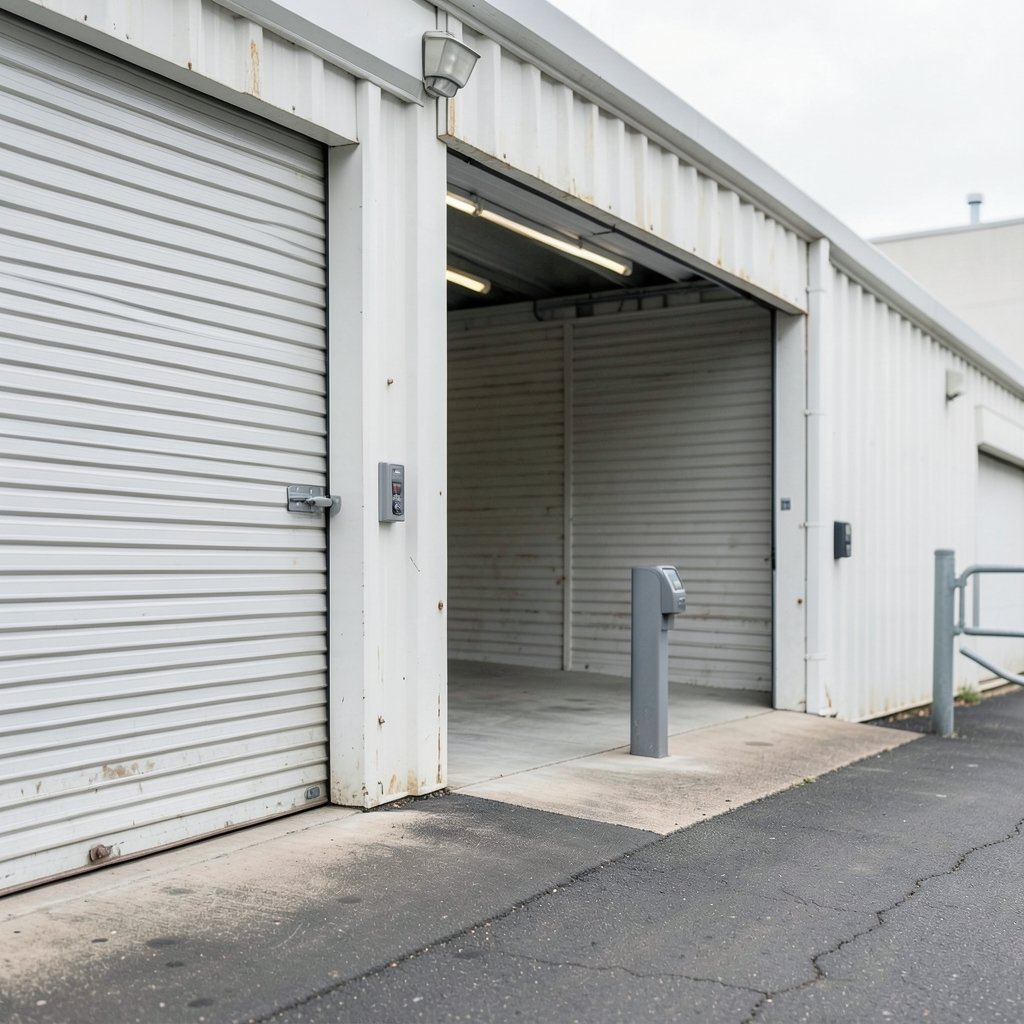
What do you actually get when you rent a storage unit from one of the country’s biggest self-storage operators? If you have driven past a Storage Rentals of America facility, you have probably noticed the bright signage, the gate code keypad, and the promise of cheap first-month rent. The company has grown fast by buying up smaller facilities across the country, and that growth story matters to anyone comparing storage options, apartment space, or rental costs.
This guide breaks down how the company operates, what its rental agreements typically look like, where the real costs hide, and how storage fits into a broader housing budget. It also covers the mistakes renters make most often, because a storage unit is a lease like any other, and the fine print deserves the same scrutiny you would give an apartment contract.
What Storage Rentals of America Actually Is
Storage Rentals of America is a US self-storage operator that has expanded largely through acquisitions. Instead of building new facilities from scratch, the company buys existing properties, rebrands them, and folds them into a centralized management system. That strategy explains why facilities under the banner can look very different from one another: some are older drive-up rows, others are climate-controlled interior buildings, and the amenities vary by location.
The model is common in the sector. Self-storage is a fragmented industry where national and regional operators compete with thousands of independent owners. Trade bodies such as the Self Storage Association track the sector, and market-research firms publish size estimates that differ widely depending on methodology. That conflict is worth knowing about: if you see two very different industry-size figures quoted, neither is necessarily wrong. They may simply count different things.
For renters, the practical takeaway is simple. The brand name tells you who manages the property, not what the property offers. You still need to inspect the specific facility, ask about its access hours, and read that location’s rental agreement.
Why the Company’s Acquisition Strategy Affects Renters

When an operator buys a facility, several things can change for existing tenants:
- Management and payment systems get consolidated, which can mean new online portals, new autopay setups, and new fee schedules.
- Rates may be adjusted as the new owner brings pricing in line with its portfolio. Rent increases are a recurring theme in self-storage consumer complaints nationwide.
- Rules and add-ons may shift, including insurance or protection-plan requirements and late-fee structures.
None of this is unique to one company. It is how the acquisition-heavy model works across the industry. The lesson for renters is to photograph your signed agreement and keep every notice about rate changes. If a facility changes hands mid-lease, your contract terms usually carry over, but the billing mechanics may not.
The Real Cost of a Storage Unit
Advertised storage rates are the starting point, not the price. A unit promoted at a low introductory rate often climbs after the first few months, and several add-ons stack on top.
| Cost component | What to expect | How to handle it |
|---|---|---|
| Base rent | Introductory rate that often rises after a few months | Ask for the rate schedule in writing |
| Protection plan or insurance | Required at many facilities unless you show your own coverage | Check your renters or homeowners policy first |
| Admin fee | One-time charge at move-in | Ask whether it is refundable |
| Lock | Often sold on site at a markup | Buy your own disc lock |
| Late fees | Triggered by a short grace period | Set autopay and confirm the due date |
| Rate increases | Periodic, disclosed in the agreement | Read the increase clause before signing |
The pattern mirrors what happens with apartment rent costs: the headline number is marketing, and the total monthly outlay is what matters. Renters who track storage as a line item alongside their housing budget make better decisions than those who treat it as an afterthought. If you are weighing a smaller apartment against a larger one plus a storage unit, run the numbers side by side. A rental property cash flow mindset helps here even if you are a tenant, not a landlord: compare total monthly cost against usable space, not sticker price against sticker price.
How Storage Fits Into a Housing Budget
Storage units are often framed as a moving-day convenience, but for many households they become a long-term expense. That changes the math. A unit rented for two years at a mid-range monthly rate can easily cost more than the value of the items inside it.
A practical rule: if you are paying for storage mainly to hold furniture, seasonal gear, or boxes you have not opened in a year, price out the alternatives first. A smaller unit, a closet reorganization, or simply selling and rebuying rarely used items often wins. Storage makes the most sense for short-term transitions, business inventory, or genuinely irreplaceable items.
For people comparing living situations, storage costs belong in the same spreadsheet as apartment rent costs and utility estimates. A unit that adds a meaningful monthly charge can quietly erase the savings of a cheaper apartment. It is also worth checking whether a building offers included storage lockers, bike rooms, or oversized closets, since those amenities change the true cost of a lease.
State Rules, Liens, and Why They Matter to You
Self-storage is regulated at the state level in the US, chiefly through lien laws. Those laws let an operator place a lien on the contents of a unit when rent goes unpaid, and eventually sell or auction the contents to recover what is owed. The procedures differ from state to state: notice requirements, waiting periods, and advertising rules all vary.
Two practical points. First, read the lien and default section of your agreement as well as the rent line. Second, keep your contact information current with the facility. Most disputes that end badly start with missed notices sent to an old address.
Consumer-protection themes in this sector tend to repeat across states: automatic rent increases, late-fee structures, required protection plans, and auction procedures. Legislatures revisit these issues regularly, so rules can change. If a term in your agreement seems unusual, check your state’s current statute through an official state legislature site rather than relying on a forum post.
Storage Rentals vs. Portable Container Storage
The phrase “storage rentals” covers two different businesses, and mixing them up leads to bad comparisons.
Traditional self-storage means a unit inside a facility you drive to. You load it yourself, access it during gate hours, and pay monthly rent plus possible add-ons. Portable container storage means a container is delivered to your address, you load it, and the company stores or moves it. Pricing structures differ sharply, and so do access rules: with a container, you may not be able to get to your items for weeks.
The table below sums up the trade-offs.
| Factor | Self-storage facility | Portable container |
|---|---|---|
| Access | During facility hours, often daily | Limited; may require scheduling |
| Loading | You haul items to the site | Load at your door |
| Climate control | Available at many facilities | Usually limited |
| Best for | Ongoing access, business stock | Moves, renovations, short gaps |
| Cost pattern | Monthly rent plus add-ons | Delivery and pickup fees plus rent |
If a quote seems unusually cheap, check which model it is quoting. A container price that excludes delivery is not comparable to a facility rate.
Practical Tips That Actually Work
First-hand experience from renters and facility managers points to a handful of habits that prevent most problems.
- Visit in person before signing. Check lighting, gate security, camera coverage, door condition, and whether the hallway smells damp. Photos online are curated.
- Measure your load, not your old closet. Unit sizes are quoted in square feet, but height and door width matter too. A 5×10 unit holds less than most people expect once boxes are stacked safely.
- Ask for the full fee schedule in writing. Admin fees, lock prices, and protection-plan costs should be itemized before you pay anything.
- Confirm the rate-increase clause. Ask how often increases happen and how much notice is given.
- Check your existing insurance. Renters and homeowners policies sometimes cover off-site property. If yours does, you may be able to waive the facility’s plan.
- Set autopay and verify it posted. Late fees are one of the most common and most avoidable charges.
- Keep the unit organized from day one. Aisles, labeled boxes, and a written inventory save hours later and reduce the temptation to rent a bigger unit than needed.
The biggest mistake people make is signing online in a hurry during a move. A ten-minute read of the agreement, plus one site visit, prevents most of the regret that shows up in reviews.
How Storage Compares With Renting More Space
Sometimes the honest answer is that you do not need storage at all. If the overflow is furniture, clothing, or hobby gear, compare the monthly unit cost against the rent difference for a larger apartment. In many markets, the gap between a one-bedroom and a two-bedroom is smaller than people assume, and the extra space comes with no gate code, no drive, and no risk of a rate increase on a second contract.
This is where a disciplined apartment rental comparison pays off. List total monthly costs for each option, including storage, and compare against usable square footage. Renters hunting for luxury apartments for rent often find that included storage and generous closets change the value equation entirely. A building with a dedicated storage cage in the garage may cost slightly more per month but eliminate a separate unit, a second contract, and a monthly drive.
For anyone tracking rent prices across neighborhoods, storage belongs in the same analysis. A cheap unit in a distant suburb can cost more in fuel and time than a pricier one near home. Convenience has a price, and it is usually worth calculating rather than guessing.
What to Ask Before You Sign
Bring this list to the counter or the phone call:
- What is the total monthly cost, including every required add-on?
- How often have rates increased at this facility in the past two years?
- What is the notice period for a rate increase?
- What are the access hours, and do they change seasonally?
- Is the unit climate controlled, and what temperature range is maintained?
- What does the lien and auction process look like under state law?
- Can I use my own lock and my own insurance?
- What is the move-out notice requirement, and are there cleaning fees?
Clear answers to these questions separate a well-run facility from one that competes only on the advertised first month.
Conclusion
Storage Rentals of America is one name in a large, fragmented industry, and the brand on the sign matters far less than the specific facility, the specific agreement, and the specific numbers on your monthly budget. The company’s acquisition-driven growth means properties vary widely, so inspection and paperwork beat assumptions every time. Treat a storage unit as a lease, price the add-ons before you commit, and compare it honestly against the cost of more living space. Do that, and storage becomes a tool rather than a slow leak in your budget. Whether you are comparing high end apartment rentals with included storage or hunting for luxury apartments for rent with generous closets, the same discipline applies: total cost, usable space, and terms you actually understand.
FAQ
What is Storage Rentals of America?
It is a US self-storage operator that has grown largely by acquiring existing facilities and rebranding them. Because of that model, amenities, pricing, and rules vary significantly from one location to another, so renters should evaluate each facility individually rather than assuming uniform standards.
Is the first month’s rent really as cheap as advertised?
Often the promotional rate applies only to the first month or a short introductory period, after which the rate rises. Required protection plans, admin fees, and lock purchases add to the total. Always ask for the full fee schedule and the rate-increase clause in writing before paying.
Do I have to buy the facility’s insurance?
Many facilities require some form of coverage, but you may be able to satisfy the requirement with your own renters or homeowners policy if it covers property stored off-site. Ask what proof the facility accepts, and confirm your policy’s limits before you rely on it.
What happens if I fall behind on payments?
State lien laws allow operators to place a lien on stored contents and eventually sell or auction them to recover unpaid rent. Notice periods and procedures differ by state. Keeping your contact details current with the facility is the simplest way to avoid missing a required notice.
How is self-storage different from portable container storage?
Self-storage means a unit at a facility you drive to and access during set hours. Portable container storage means a container delivered to your address that the company stores or moves. Access is more limited with containers, and pricing includes delivery and pickup fees, so the two are not directly comparable.
How big a unit do I actually need?
Most households overestimate. A 5×10 unit holds the contents of a studio or a small one-bedroom, roughly a room’s worth of furniture plus boxes, while a 10×10 suits a two-bedroom apartment. Measure your items, account for stacking height, and ask staff to show you a comparable unit in person before deciding.









