


What if the best beach near Charleston, South Carolina, came with a side of Revolutionary War history, a lighthouse you can’t quite reach, and a restaurant scene that punches far above its weight? That’s Sullivan’s Island in a nutshell. This small barrier island sits at the mouth of Charleston Harbor, just minutes from downtown, yet it feels like a different world. There are no high-rise hotels, no boardwalk carnival games, and no chain restaurants lining the main drag. Instead, you get wide Atlantic beaches, a maritime forest, a handful of genuinely excellent eateries, and one of the most important coastal defense sites in American history.
For travelers who want a calmer alternative to the busier resort islands nearby, Sullivan’s Island is worth planning a day around. And for anyone comparing options across the region, it holds its own against the destinations in this roundup of island escapes across the Southeast and beyond.
Where Is Sullivan’s Island?
Sullivan’s Island is a barrier island in Charleston County, South Carolina, positioned at the southern side of the entrance to Charleston Harbor. It sits north of the Isle of Palms connector and south of the main shipping channel. The only road access is via the Ben Sawyer Bridge, which crosses the Intracoastal Waterway and connects the island to Mount Pleasant.
That single access point shapes everything about a visit. Traffic backs up on summer weekends, especially mid-morning and late afternoon. Locals know to arrive early or come on a weekday. If you’re staying in Mount Pleasant or downtown Charleston, the drive is short, usually under twenty minutes outside peak times.
The island is small, roughly three miles long and less than a mile wide in most places. A year-round population of about 2,000 people lives there, though the number swells in summer. It’s an incorporated town with its own police and fire services, and it has a distinctly residential feel. This isn’t a resort island, and that’s precisely the appeal.
A Quick History of Sullivan’s Island
Few beach towns in America can match this island’s historical resume.
Fort Moultrie and the Revolution
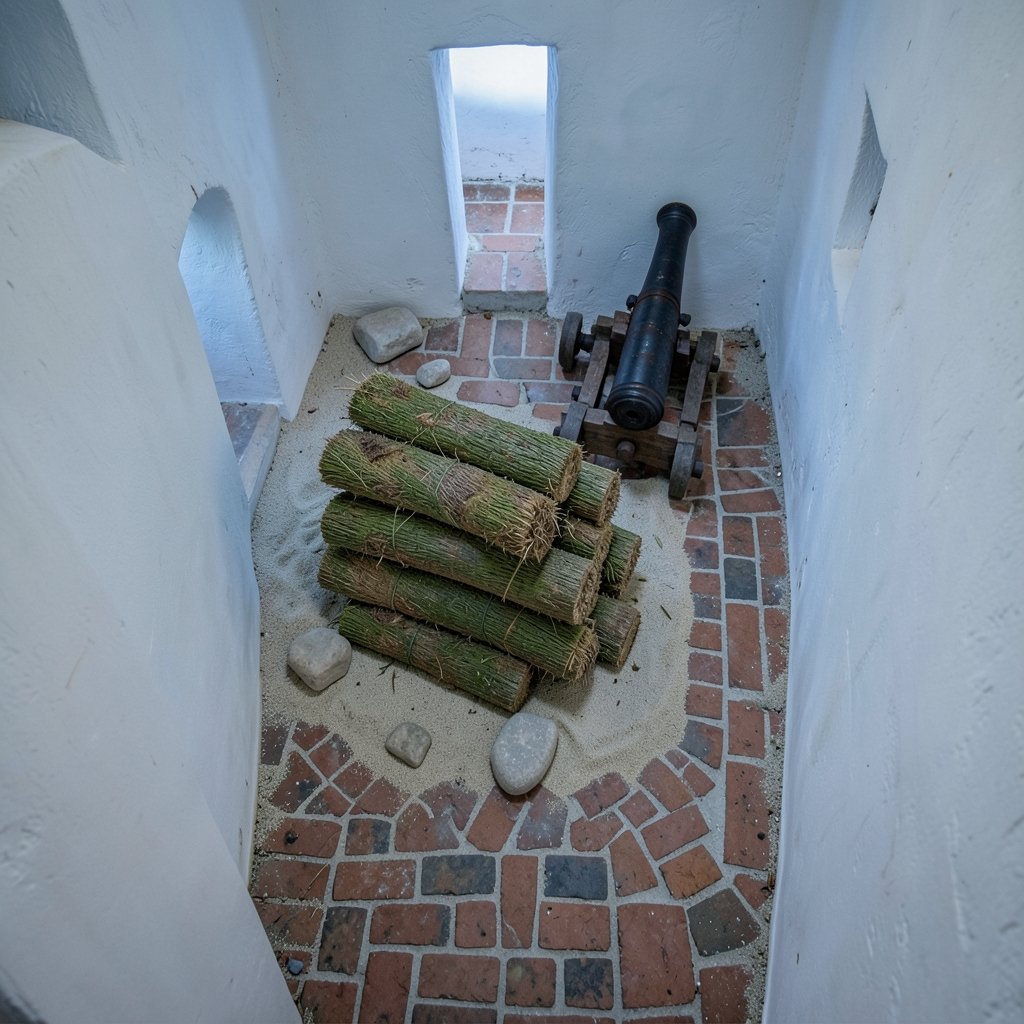
Fort Moultrie is the island’s defining landmark. The original fort was built from palmetto logs and sand in 1776, and in June of that year, it famously repelled a British naval attack during the Revolutionary War. The spongy palmetto logs absorbed cannonballs rather than shattering, a quirk of construction that helped the defenders hold their ground. That victory is why the palmetto tree appears on South Carolina’s state flag.
The fort was rebuilt several times over the following centuries, and today it’s part of Fort Sumter and Fort Moultrie National Historical Park. Visitors can walk through fortifications that span from the American Revolution to World War II coastal defense. The site includes a visitor center with exhibits and a film, and rangers are on hand to answer questions. It’s an easy, affordable stop and a good rainy-day backup.
Edgar Allan Poe’s Connection
Here’s a literary footnote that surprises many visitors: Edgar Allan Poe was stationed at Fort Moultrie as an enlisted soldier in 1827 and 1828. The island is often linked to his 1843 story “The Gold-Bug,” though the story’s setting is fictionalized and shouldn’t be read as a literal map of the island. Still, the Poe association gives Sullivan’s Island a curious cultural layer that most beach towns lack.
Hurricane Hugo and Rebuilding
In September 1989, Hurricane Hugo struck the South Carolina coast and caused severe damage on Sullivan’s Island. The storm reshaped the island’s built environment and its vegetation. Remnants of the maritime forest and the rebuilt homes tell the story of a community that has learned to live with the coast rather than fight it.
The Beach: What to Expect
The Atlantic beach runs the length of the island’s eastern edge. It’s wide, generally uncrowded by Charleston-area standards, and free to access. There are a few public access points with limited parking, and street parking is restricted in many residential blocks, so read signs carefully. Getting ticketed or towed is a common first-timer mistake.
A few practical notes that matter:
- No lifeguards are on duty at most access points, and currents can be strong. Swim near other people and keep an eye on kids.
- Sea turtle nesting happens in summer. Loggerhead turtles nest along this coast, and marked nests must be left alone. Fill in holes you dig, and don’t leave chairs or umbrellas out overnight.
- Sand spurs and heat are real in July and August. Water shoes help, and so does an early start.
- Trash must be carried out or placed in provided bins. The island takes its beach cleanliness seriously, and so should you.
The beach faces east, which means good morning light and softer afternoon conditions. Sunrise walks here are a genuine highlight, and you’ll share the sand with more pelicans than people.
The Lighthouse You Can’t Visit
The Sullivan’s Island Lighthouse, a distinctive black-and-white triangular tower, stands near the island’s southern end. It’s an active aid to navigation and is not open to the public. You can see it from the beach and from certain roads, and photographers love it, but there are no tours. Plenty of visitors waste time looking for an entrance that doesn’t exist. Admire it from a distance and move on.
Where to Eat on Sullivan’s Island
For such a small island, the food scene is remarkably strong. A few standouts that consistently earn local loyalty:
| Spot | Vibe | What to Order |
|---|---|---|
| The Obstinate Daughter | Upscale-casual, busy | Pasta, wood-fired dishes, brunch |
| Poe’s Tavern | Burgers and beer, Poe-themed | Burger, fish tacos, local drafts |
| High Thyme Cuisine | Intimate, dinner-focused | Seasonal seafood, small plates |
| Home Team BBQ | Casual, lively | Wings, ribs, frozen cocktails |
Reservations matter at the sit-down places, especially on weekends. Poe’s Tavern, named for the island’s famous former soldier, is the most casual and family-friendly option. The Obstinate Daughter draws a crowd from across the region, so book ahead or expect a wait.
One common mistake: assuming you can just walk in anywhere at 7 p.m. on a Saturday in June. You can’t. Plan your meals the way you’d plan a beach day, with a little foresight.
Getting There and Getting Around
The Ben Sawyer Bridge is the sole vehicular link, and it opens for marine traffic on occasion, which can cause brief delays. Once on the island, a car is useful but not essential if you’re staying near the beach or the restaurant cluster. Bicycles and golf carts are common, though golf cart use is regulated and mostly confined to certain roads.
Parking is the single biggest friction point. Public beach access parking is limited, and residential streets are permit-restricted in many areas. Arrive before 10 a.m. on summer weekends or come late afternoon. Ride-share services work, but surge pricing and limited drivers can make a return trip tricky after dark.
If you’re mapping a broader coastal trip, it helps to compare the island against other regional options. This guide to the best islands to visit covers how Sullivan’s Island stacks up against nearby destinations in terms of crowds, access, and character.
Is Sullivan’s Island Worth Visiting?
It depends on what you want. If you’re after nightlife, water parks, and resort amenities, look elsewhere. If you want a quiet, handsome beach town with real history, good food, and a pace that forces you to slow down, Sullivan’s Island delivers.
The island suits day-trippers from Charleston, couples looking for a low-key weekend, history buffs drawn to Fort Moultrie, and families who value calm water access over entertainment complexes. It’s less ideal for travelers who need a lot of parking, want lifeguarded swimming, or expect to walk everywhere without a car.
For travelers building a longer itinerary across the region, Sullivan’s Island works well as one stop among several. It pairs naturally with downtown Charleston, Mount Pleasant, and the beaches of Isle of Palms. If you’re comparing it with more polished resort destinations, this look at private island resorts shows what the higher-end end of the spectrum looks like, and why Sullivan’s Island occupies a different niche entirely.
Practical Tips That Actually Help
Here’s what experienced visitors do differently:
- Arrive early. Before 10 a.m. on summer weekends, parking is easier and the beach is quiet.
- Bring cash or a card that works offline. Some small spots have spotty connectivity, and you don’t want to be stuck.
- Check the bridge. Brief openings can delay you, so leave a buffer if you have a reservation.
- Respect the residential streets. This is a neighborhood, not a resort. Keep noise down and don’t block driveways.
- Plan for heat. Hydration, shade, and sunscreen matter more than most people expect from a “quick beach trip.”
- Visit Fort Moultrie first. It’s cooler in the morning, and you’ll beat the midday tour groups.
Another mistake worth naming: treating the island as a drive-through on the way to Isle of Palms. Sullivan’s Island rewards a slower visit. Give it a full day, or better, an overnight.
Sullivan’s Island vs. Nearby Options
| Feature | Sullivan’s Island | Isle of Palms | Downtown Charleston |
|---|---|---|---|
| Vibe | Quiet, residential | Family resort | Urban historic |
| Beach access | Free, limited parking | County park, paid parking | None |
| Dining | Small but strong | Casual, family-oriented | Extensive |
| History | Fort Moultrie, Poe | Minimal | Extensive |
| Best for | Calm day trips | Families with kids | Food and culture |
This comparison helps set expectations. Sullivan’s Island is not a substitute for downtown Charleston’s restaurant scene, and it’s not as amenity-rich as Isle of Palms. Its advantage is atmosphere. The island feels like a place where people actually live, because they do.
When to Go
Spring and fall are the sweet spots. April through May and September through October bring warm water, thinner crowds, and comfortable temperatures. Summer is hot and busy, but the beach is at its best for swimming. Winter is quiet, and Fort Moultrie remains open, making it a good season for history-focused visits.
Hurricane season runs from June through November, with peak risk usually in late summer and early fall. Travel insurance and flexible bookings are smart for any coastal trip in that window.
Conclusion
Sullivan’s Island is the rare beach destination that asks you to slow down rather than spend up. Its appeal is built on a wide Atlantic beach, a fort with genuine historical weight, a literary connection that adds curiosity, and a restaurant scene that outperforms its size. The trade-offs are real: limited parking, one bridge in and out, no lifeguards, and a residential character that demands respect. But for travelers who value calm over crowds and substance over spectacle, this small South Carolina island earns its place on any Charleston-area itinerary. Go early, stay late, and leave the beach exactly as you found it.
Frequently Asked Questions
Is Sullivan’s Island free to visit?
Yes. The beach and public access points are free, and Fort Moultrie charges no admission. You’ll pay for parking where meters or permits apply, and for food and lodging. The main costs are time and planning, not tickets.
Can you swim at Sullivan’s Island?
Yes, but there are no lifeguards at most access points, and currents can be strong. Swim near other people, supervise children closely, and avoid swimming alone or during storms. Conditions vary by day, so check the water before committing.
How do you get to Sullivan’s Island?
The only road access is via the Ben Sawyer Bridge from Mount Pleasant. Ride-share and taxis also serve the island, though return trips can be slow at peak times. Once there, a car, bike, or a good pair of walking shoes will cover most needs.
Is the Sullivan’s Island Lighthouse open to the public?
No. The lighthouse is an active navigation aid and is not open for tours. You can view it from the beach and nearby roads, but there is no public entrance or visitor access.
What is Sullivan’s Island known for?
It’s best known for Fort Moultrie, its role in Revolutionary War history, its connection to Edgar Allan Poe, and its quiet Atlantic beach. The island’s restaurant scene and residential character also draw repeat visitors from across the Charleston area.
Is Sullivan’s Island good for families?
It can be, especially for families who want a calm beach and don’t need organized entertainment. The lack of lifeguards and limited parking require extra planning, and the strong food scene skews slightly adult. Early visits with kids work best.









