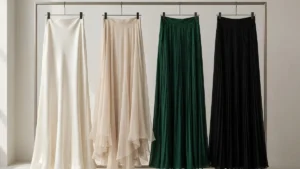
Velvet and silk are the two fabrics that make a dress feel like an occasion, but they behave nothing alike. Velvet is heavy, soft and matte, with a pile that catches light in one direction and darkens in another. Silk is light, smooth and fluid, with a sheen that moves as you do. Put them side by side on a rail and the choice seems obvious. Wear them through a long evening, a winter wedding or a summer garden party, and the differences start to matter in ways a label never mentions.
The real question is not which fabric is better in general. It is which one suits the event, the season, your shape and how much fuss you are willing to put up with. Price, care, comfort and how the fabric photographs all play a part, and none of them are visible from a product thumbnail.
Below are nine comparisons that matter in 2027, from drape and warmth to care, cost and occasion, so you can choose between velvet and silk with your eyes open, not just your eye on the prettiest dress.
Key takeaways
- Velvet is warm, structured and matte, while silk is cool, fluid and luminous, so the season and the setting usually decide first.
- Velvet hides creases and holds its shape, but it shows pressure marks and needs careful cleaning; silk drapes beautifully but creases and watermarks easily.
- Silk is lighter and cooler, which suits warm rooms and summer evenings, while velvet is the safer choice for cold weather and formal winter events.
- Both fabrics vary enormously by quality, and a cheap version of either will look and feel worse than a good version of the other.
- Neither fabric is a practical everyday choice, and both need more care than cotton or jersey, so buy for the occasions you actually attend.
What velvet and silk dresses actually are
Velvet is a woven fabric with a short, dense pile, the soft upright fibres that give it its nap. That pile is what makes velvet look different from every angle, lighter where the fibres catch the light and darker where they fall away. Most dresses sold as velvet today are cotton velvet, silk velvet or a viscose blend, and the base fibre changes everything. Silk velvet is the softest and most fluid, cotton velvet is sturdier and more matte, and viscose velvet is the most affordable and the most prone to pressure marks. The weight is usually substantial, which is why velvet dresses tend to fall straight and hold a clean silhouette.
Silk is a natural protein fibre, spun by silkworms and woven into fabrics that range from heavy silk satin and duchess satin to light silk crepe, chiffon and charmeuse. A silk dress can be structured or flowing depending on the weave, but it is almost always lighter than a velvet dress of the same cut, and it moves with the body rather than holding its own shape. That fluidity is its great strength and its great weakness. It flatters movement and photographs beautifully, but it also clings where it is cut too close and shows every fold.
How we chose these comparisons and what to look for
Look first at the fibre content on the label, not the word velvet or silk alone. A dress labelled velvet may be 100 percent polyester, which looks convincing on a hanger but feels warmer, holds static and crushes differently from cotton or silk velvet. A dress labelled silk may be a silk blend, or it may be satin made from polyester, which is often sold as silky without containing any silk at all. The fibre content tells you how the dress will feel, how it will breathe and how it will clean.

Look next at the weight and the lining. A velvet dress is usually lined, because the pile can irritate skin and the fabric is heavy enough to need structure. A silk dress may be lined or unlined, and an unlined silk dress in a pale colour can be surprisingly sheer. Hold the dress up to the light before you buy, and check whether the lining matches the outer fabric in weight and drape. A heavy lining under a light silk defeats the point of the silk, and a flimsy lining under velvet will not support the dress.
Finally, look at the construction. Velvet shows every stitch and every seam, because the pile does not hide mistakes, so check the seams for puckering and the hem for evenness. Silk is slippery to sew, so look for straight seams, a clean zip and a hem that does not ripple. A well-made dress in either fabric will look better and last longer than a careless one in a more expensive cloth, and our guide to the best satin dresses shows how much construction matters once you move beyond the fabric itself.
The 9 comparisons that matter in 2027
Drape and movement
What we like: Velvet falls in a clean, sculpted line and holds its shape through an evening, which suits A-line and column cuts. Silk flows and moves with the body, which suits bias cuts and slip shapes. What to consider: Velvet can look stiff in a very fluid cut, and silk can cling in a fitted cut. Best for: Velvet for structured silhouettes, silk for fluid ones. Fabric: Cotton velvet vs silk satin or crepe. Price range: £120 to £600 for a good velvet dress, £150 to £800 for a good silk dress. Standout feature: Velvet holds a shape, silk follows the body.
Warmth and comfort
What we like: Velvet is genuinely warm, which makes it comfortable at winter events and in cold venues. Silk is cool to the touch and breathable, which makes it comfortable in warm rooms and summer evenings. What to consider: Velvet can overheat in a crowded, heated room, and silk can feel cold when you first put it on. Best for: Velvet for winter, silk for summer. Fabric: Cotton or silk velvet vs silk crepe or satin. Price range: £100 to £500 for velvet, £150 to £700 for silk. Standout feature: Velvet insulates, silk breathes.
Shine and finish
What we like: Velvet has a deep, soft glow that changes with the light and photographs richly. Silk has a brighter, more obvious sheen that catches the eye. What to consider: Velvet can look flat in poor light, and silk can look shiny in flash photography. Best for: Velvet for moody, evening light, silk for daylight and bright rooms. Fabric: Silk velvet vs silk satin. Price range: £150 to £700 for either at good quality. Standout feature: Velvet glows softly, silk shines clearly.
Wrinkling and creasing
What we like: Velvet resists creasing well and recovers from sitting, which makes it practical for long dinners. Silk creases easily, especially satin weaves, and the creases are visible. What to consider: Velvet can develop pressure marks where it is folded or sat on, and silk needs steaming before every wear. Best for: Velvet for events with lots of sitting, silk for events where you stay standing. Fabric: Cotton velvet vs silk satin. Price range: £100 to £600 for velvet, £120 to £800 for silk. Standout feature: Velvet forgives sitting, silk does not.
Care and cleaning
What we like: Most velvet dresses are dry-clean only, but they need cleaning less often because the fabric does not show marks easily. Silk is also usually dry-clean only, and it stains more readily. What to consider: Velvet can be damaged by water and by bad pressing, and silk can watermark from a single splash. Best for: Velvet if you dislike frequent cleaning, silk if you are careful with drinks. Fabric: Cotton velvet vs silk crepe. Price range: Dry cleaning £10 to £25 per dress for either. Standout feature: Velvet hides small marks, silk shows them.
Occasion and formality
What we like: Velvet reads as formal and wintery, which suits black-tie events, winter weddings and festive parties. Silk reads as elegant in any season and suits weddings, garden parties and evening events. What to consider: Velvet can look too heavy for a daytime summer wedding, and silk can look too light for a formal winter event. Best for: Velvet for winter formality, silk for all-season elegance. Fabric: Silk velvet vs silk satin or crepe. Price range: £150 to £900 for either at occasion quality. Standout feature: Velvet is dramatic, silk is versatile.
Colour and print
What we like: Velvet takes deep, rich colour beautifully, especially jewel tones, and the pile gives colour extra depth. Silk takes bright and pale colours well and suits prints, because the smooth surface shows pattern clearly. What to consider: Velvet prints are rare and often look muddy, and pale silk shows stains more than dark velvet. Best for: Velvet for deep solid colours, silk for prints and pale shades. Fabric: Cotton velvet vs silk crepe or chiffon. Price range: £120 to £700 for either. Standout feature: Velvet deepens colour, silk shows print.
Durability and lifespan
What we like: Good cotton velvet is tough and holds up well to repeated wear, though the pile can flatten over time. Good silk is strong for its weight but weakens with sun and age. What to consider: Velvet can develop shiny patches at pressure points, and silk can tear at seams if it is pulled. Best for: Velvet for frequent wear, silk for occasional wear with careful storage. Fabric: Cotton velvet vs silk satin. Price range: £150 to £800 for either at good quality. Standout feature: Velvet wears hard, silk wears gently.
Price and value
What we like: Velvet dresses are often slightly cheaper than silk dresses at the same quality level, because the base fibres cost less. Silk is more expensive, but a classic silk dress holds its value as a wardrobe piece. What to consider: Cheap velvet looks cheap quickly, with a flat, shiny pile, and cheap silk is often polyester in disguise. Best for: Velvet for value at mid-range prices, silk for a long-term investment piece. Fabric: Cotton velvet vs 100 percent silk. Price range: £100 to £600 for velvet, £150 to £1,000 for silk. Standout feature: Velvet gives more for less, silk gives more for longer.
Which dress is right for you
Choose velvet if your event is in winter, if the dress code is formal, if you will be sitting for long stretches, or if you want a deep, rich colour that photographs beautifully in evening light. A velvet midi or maxi in a jewel tone is a reliable choice for a winter wedding or a festive party, and it will keep you warm without a coat.
Choose silk if your event is in summer, if you want a dress that moves, if you love print or pale colour, or if you want a piece you can wear to different kinds of events. A silk slip dress or a silk crepe midi works for a wedding, a dinner or a garden party, and it packs light for travel. The comparison with velvet vs satin dresses is worth reading too, because satin is the closest silk weave to velvet in formality, and the differences there are smaller than people expect.
If you are torn, let the venue decide. A draughty church, a cold marquee or an outdoor winter event points to velvet. A warm restaurant, a summer garden or a long evening of dancing points to silk. And if you buy one dress to wear again and again, silk is the more versatile choice, while velvet is the more dramatic one. For a wedding specifically, our guide to the best wedding guest dresses can help you match the fabric to the dress code, because the right fabric for a beach wedding and a cathedral wedding are rarely the same.
The caveats that matter
Neither fabric is forgiving of a bad fit. Velvet does not stretch, so a velvet dress that is too tight will pull at the seams and show pressure marks, while silk is slippery and can gap at the bust or ride up when you sit. Try both fabrics on and sit down in them before you buy.
| Detail | What is known |
|---|---|
| Warmth | Velvet is warm and insulating; silk is cool and breathable |
| Drape | Velvet holds a structured shape; silk flows and follows the body |
| Creasing | Velvet resists creases but can mark under pressure; silk creases easily |
| Care | Both are usually dry-clean only; silk stains and watermarks more easily |
| Best season | Velvet for autumn and winter; silk for spring and summer, and warm rooms |
| Colour | Velvet deepens dark, rich colours; silk suits prints and pale shades |
| Durability | Cotton velvet wears hard; silk is strong but weakens with sun and age |
| What neither does well | Neither is a practical everyday fabric, and both need more care than cotton or jersey |
Be honest about the care as well. If you know you will not dry-clean a dress after every wear, velvet is the more forgiving choice, because it hides small marks and does not need steaming. If you are comfortable with a steamer and careful with drinks, silk will reward the effort with a lightness no other fabric matches.
Checklist: choosing between velvet and silk honestly
Use these checks before you buy, and again before the event.
- Check the label: real velvet should name cotton, silk or viscose, and real silk should say 100 percent silk, not silky or satin.
- Check the season and the venue: velvet for cold rooms and winter events, silk for warm rooms and summer events.
- Check the fit sitting down: velvet should not pull at the seams, and silk should not gap or ride up.
- Check the lining: it should match the outer fabric in weight, and a pale silk dress should not be sheer.
- Check the care: both are usually dry-clean only, so budget for cleaning before you buy.
- Check the colour in the right light: velvet looks darker in dim light, and silk looks brighter in flash photography.
Frequently asked questions
Is velvet or silk warmer?
Velvet is warmer. Its dense pile traps air and insulates, which is why it suits winter events. Silk is cool to the touch and breathable, which is why it suits warm rooms and summer evenings.
Can I wear velvet in summer?
You can, but it is rarely comfortable. Lightweight silk velvet in a pale colour works for a summer evening, but a heavy cotton velvet dress will feel hot in warm weather, and it looks out of place in daylight.
Can I wear silk in winter?
Yes, with the right cut and layers. A heavy silk satin or duchess satin dress in a dark colour works for a formal winter event, especially with a coat or a wrap, but a light silk chiffon dress will feel cold on its own.
Which fabric creases more?
Silk creases more, especially satin weaves, and the creases are visible. Velvet resists creasing, but it can develop pressure marks where it is folded or sat on for a long time.
Are velvet and silk dresses hard to clean?
Both are usually dry-clean only. Velvet needs cleaning less often because it hides marks, while silk stains and watermarks more easily, so it often needs cleaning sooner. Neither should be washed at home unless the label says so.
Which is better value?
Velvet is often better value at mid-range prices, because good cotton velvet costs less than good silk. Silk is the better long-term investment if you buy 100 percent silk in a classic cut, because it stays versatile across seasons and occasions.
The bottom line
Velvet and silk are not rivals so much as answers to different questions. Velvet is the fabric for winter, for formality, for structure and for deep colour. Silk is the fabric for warmth, for movement, for print and for versatility. The right choice is the one that matches the event, the season and the way you actually spend an evening, not the one that looks best on a hanger.
Check the label, sit down in the dress, and think about the room you will wear it in. If it is cold, formal and long, choose velvet. If it is warm, fluid and varied, choose silk.