


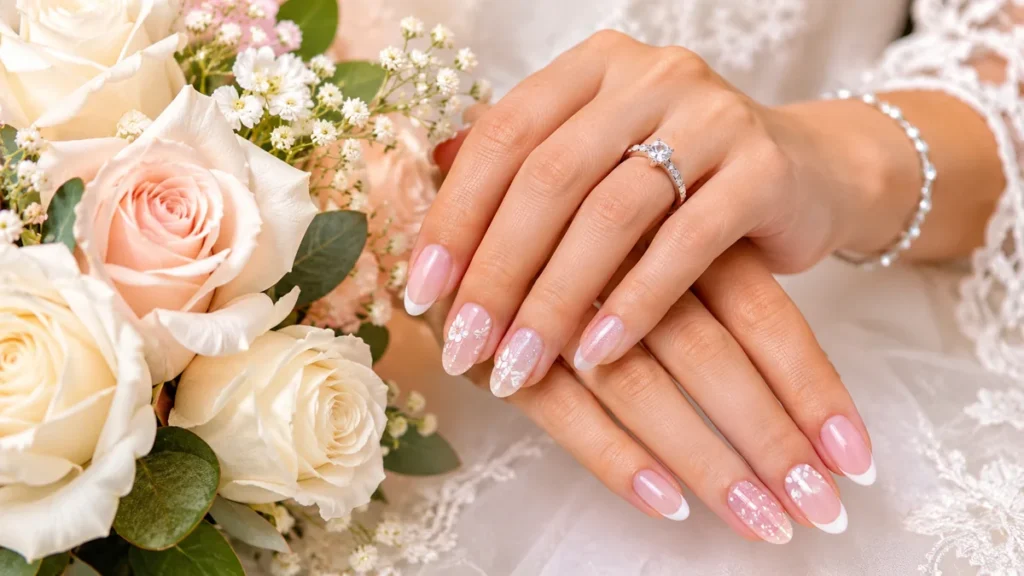
Your wedding nails may look like a small detail while you’re planning the dress, flowers, and venue. But they’ll appear in close-up photos throughout the day: holding the bouquet, exchanging rings, signing documents, and raising a glass. A manicure that chips the night before or catches on your dress can become an avoidable distraction.
The best wedding nails balance three things: a style that suits your outfit, a shape you can comfortably wear, and a finish that lasts through the ceremony and celebrations. The key is to plan ahead rather than choose a design at the last minute.
AI Overview: How to Plan Wedding Nails
For a reliable wedding manicure, test your preferred shape and color around two to four weeks before the ceremony. Schedule your final appointment one to two days before the wedding, leaving enough time to fix any unexpected issue. Sheer pink, milky white, soft French tips, and subtle chrome are popular choices for elegant close-up photos. Short-to-medium almond, oval, and squoval shapes are practical for handling rings, bouquets, and clothing. Choose regular polish, gel, or extensions based on your preferred look, nail condition, and honeymoon plans.
Key Takeaways
- Plan your wedding nail design several weeks before the ceremony.
- Book a trial manicure around two to four weeks ahead.
- Schedule the final manicure one to two days before the wedding.
- Sheer pink, milky white, nude, and soft French tips are versatile photo-friendly options.
- Oval, almond, and squoval shapes offer a practical balance of style and comfort.
- Choose gel, regular polish, or extensions based on your nail condition and maintenance preferences.
- Protect your manicure during travel and never peel off gel or artificial nails.
Wedding Nails Timeline: When to Book Each Appointment

One of the easiest mistakes is leaving your manicure until the day before the wedding without testing the design first. A shade that looks beautiful on a salon display may appear too white against an ivory dress. A long shape may also feel uncomfortable if you normally keep your nails short.
A simple schedule gives you time to make adjustments.
| Stage | Recommended timing | What to do |
| Nail design research | 4–6 weeks before | Save reference photos and shortlist colors, shapes, and finishes. |
| Trial manicure | 2–4 weeks before | Test the shade, length, shape, and design with your dress and rings. |
| Nail preparation | 1–2 weeks before | Maintain your chosen length and moisturize your hands and cuticles. |
| Final manicure | 1–2 days before | Have the finished design applied and check every nail carefully. |
| Wedding morning | Day of the wedding | Apply a little cuticle oil and check for chips or rough edges. |
| Honeymoon | During the trip | Protect your manicure and arrange a touch-up if needed. |
Why a Trial Manicure Matters
A trial is more than a chance to see whether you like a design. It helps you check how the manicure works in real life.
Bring a photo of your dress, a picture of your bouquet, and your engagement ring if you have one. Look at the polish in natural daylight as well as indoor lighting. If possible, take a few phone photos with flash because bright lighting can make some finishes look different.
Pay attention to practical details, too. Can you fasten jewelry comfortably? Does the length catch on fabric? Does the shape look balanced next to your ring?
If you are growing your own nails, keep them at a comfortable length rather than trying to gain a dramatic amount of length in the final week. The American Academy of Dermatology’s healthy nail advice covers basic habits that help protect natural nails.
Wedding Nail Colors That Look Beautiful in Photos

A wedding manicure does not have to match your dress exactly. In fact, a slightly softer shade often creates a more balanced look.
1. Sheer Pink
Sheer pink is a classic choice because it gives nails a clean, polished appearance without drawing attention away from your dress or jewelry. It works particularly well if you want your hands to look natural in photographs.
Choose a pink that complements your skin tone. A cool, rosy pink may suit some complexions, while a warmer blush can look more balanced on others.
2. Milky White
Milky white offers a brighter finish than sheer pink while remaining soft. It is a good option for brides who want a clean, modern manicure without the sharp contrast of opaque white polish.
If your dress is ivory, champagne, or cream, compare the polish against the fabric before choosing it. A very bright white can look noticeably different beside a warmer dress.
3. Soft French Tips
French tips add definition while keeping the overall manicure understated. A thin white tip over a nude or pink base feels delicate, while a slightly deeper smile line creates a more noticeable finish.
If you like this style, explore different cute nail ideas for inspiration before deciding how traditional or modern you want your wedding manicure to look.
4. Glazed or Subtle Chrome
A glazed finish adds a gentle shine over a neutral base. It catches light without requiring large glitter pieces or dramatic nail art.
Ask your nail technician to show you the effect over your chosen base color. Some chrome powders look pearly and subtle, while others create a stronger metallic reflection.
5. Soft Nude or Beige
Nude shades work well when you want your nails to complement your natural coloring. The right nude should not make your hands look washed out or overly yellow.
Test a few shades rather than choosing one from a photograph. Skin tone, lighting, and the undertone of your dress can all affect how the color appears.
Adding Sparkle Without Overdoing It

A little detail can make wedding nails feel special. The challenge is choosing decoration that looks attractive in close-up photographs without becoming uncomfortable.
Consider these options:
- One small crystal: Place a single stone near the base of an accent nail.
- Fine shimmer: Use a delicate shimmer top coat over a sheer pink or nude base.
- Pearl details: A tiny pearl accent can complement pearl jewelry or dress details.
- Minimal metallic lines: A thin gold or silver detail adds interest without covering the nail.
Think about how the decoration will feel during the day. Large stones and raised embellishments can catch on lace, hair, and delicate fabrics. If you plan to wear gloves or handle detailed accessories, a smooth finish may be more practical.
Ring-Friendly Nail Shapes for Brides

Your wedding manicure should look good when your hands are relaxed and when you are moving them. The shape matters because you will handle your bouquet, exchange rings, hug guests, and hold objects throughout the day.
| Nail shape | Overall appearance | Practical considerations |
| Almond | Tapered sides with a rounded point | Elegant, but needs enough length to create the shape. |
| Oval | Soft, rounded edge | A comfortable choice for shorter natural nails. |
| Squoval | Straight tip with softened corners | A practical balance between square and rounded shapes. |
| Square | Flat tip with defined corners | Clean and modern, but corners may catch on fabric. |
| Stiletto | Long, sharply pointed tip | Dramatic, but less convenient for everyday wedding activities. |
Almond Nails
Almond nails create a tapered appearance that can make fingers look longer. They pair well with sheer pink, French tips, and subtle chrome.
However, a very long almond shape may not suit everyone. If you rarely wear extensions, test a shorter version before committing.
Oval Nails
Oval nails follow a rounded outline and work well on shorter natural nails. They are a useful option if you want an elegant manicure without adding much length.
Squoval Nails
Squoval nails combine a flatter tip with rounded corners. They offer a clean shape without the sharper edges of a traditional square manicure.
For brides who use their hands frequently or prefer short nails, this can be a sensible choice.
Should You Choose Long Extensions?
Long extensions can create a striking bridal look, especially when paired with sculpted designs or chrome finishes. But they also require an adjustment period.
If you are considering extensions, discuss the length and maintenance before booking. Gel-X nails are one extension option to discuss with a qualified nail technician. Ask how the set will be applied, how it should be maintained, and how it will be removed afterward.
Which Manicure Type Should You Choose?

The polish or enhancement system affects how your nails look, how long the manicure may last, and how much maintenance it needs.
| Manicure type | Best suited to | What to consider |
| Regular polish | Simple colors and easy removal | More likely to chip during a long trip. |
| Gel polish | A glossy finish with longer wear | Requires curing under a lamp and careful removal. |
| Builder gel | Added structure over natural nails | Application and removal should be handled correctly. |
| Nail extensions | Added length and customized shape | Require maintenance and a planned removal appointment. |
| Press-on nails | A temporary style or DIY option | Fit and adhesive choice affect how securely they stay on. |
If your natural nails are thin or flexible, ask whether a strengthening overlay is appropriate before choosing extensions. You can compare options in the BrassSmile guides to builder gel nails and gel nails.
Do not assume that every gel system is suitable for every nail. The condition of your natural nails, your previous reactions to nail products, and the technician’s application method all matter.
The American Academy of Dermatology explains the potential risks and precautions associated with gel manicures. If you have experienced itching, swelling, or a rash after nail products, tell your technician and seek medical advice before another application.
How to Make Wedding Nails Last Through the Honeymoon

Your manicure may need to survive more than the wedding day. Travel, luggage, swimming, sunscreen, and frequent handwashing can all affect its appearance.
A few habits can help:
Protect Your Nails From Rough Work
Use gloves when cleaning, washing dishes, or handling products that can dry your skin. Avoid using your nails to open packages or scrape labels. These small habits can reduce unnecessary stress on the nail edges.
Apply Cuticle Oil Regularly
Cuticle oil helps keep the skin around your nails comfortable and moisturized. Apply it as directed by the product, especially after washing your hands.
Avoid Picking at Lifting Polish
If polish begins to lift, do not peel it away. Pulling at the coating can remove layers of the natural nail with it. Arrange a repair or follow the product’s recommended removal method.
Be Careful With Swimming and Travel
Water exposure, sand, and repeated contact with luggage can wear down a manicure. Gel polish may last longer than regular polish for many people, but no finish is guaranteed to remain perfect throughout every honeymoon.
Pack a small nail file and hand cream. If you use regular polish, bring the same shade for a possible touch-up.
Remove Gel Correctly
Do not force, peel, or scrape off gel polish. Improper removal can damage the nail plate. Follow the system’s instructions or return to a trained professional. The AAD’s guide to removing gel polish explains why gentle removal matters.
DIY Wedding Nails or a Salon Appointment?

Both options can work. The right choice depends on the design, your experience, and how much time you want to spend preparing.
DIY may suit you if:
- You want a simple sheer pink, nude, or regular French manicure.
- You already know how to shape and polish your nails neatly.
- You have time to practice before the wedding.
- You prefer to control the cost and timing.
A salon may be the better option if:
- You want extensions, builder gel, or detailed nail art.
- You are unfamiliar with chrome or sculpted designs.
- You want consistent shaping across all ten nails.
- You would rather avoid doing your own manicure during a busy wedding week.
There is also a practical middle ground: do your own nail care and design research, then book a professional for the final manicure.
Questions to Ask Your Nail Technician
Before confirming the appointment, ask:
- Which manicure system is best for my natural nail condition?
- How long should I allow for the appointment?
- What is the recommended removal method?
- Can I see the shade and finish before the full application?
- How should I handle a chipped or damaged nail before the wedding?
- Is the design comfortable for the length I have chosen?
A good appointment should include a discussion of your preferences and any relevant nail concerns. Avoid rushing into extensions or unfamiliar products immediately before the ceremony.
Common Wedding Nail Mistakes to Avoid

Even a beautiful design can become inconvenient if the planning is rushed. Watch out for these mistakes:
- Trying a new length too late: You may not have enough time to get used to it.
- Choosing polish from a screen alone: Photos can change how shades appear.
- Booking the final manicure too early: Natural nail growth and daily wear may become noticeable before the ceremony.
- Ignoring the dress undertone: Bright white, ivory, and champagne can look different next to the wrong polish.
- Choosing bulky decorations: Raised details may catch on clothing and accessories.
- Peeling off gel or extensions: Forceful removal can damage natural nails.
- Skipping the trial: You lose the chance to identify problems before the wedding week.
Frequently Asked Questions
When should I get my nails done before my wedding?
Schedule your final manicure one to two days before the ceremony. This gives you time to address a small issue without leaving the appointment too early. A trial manicure two to four weeks beforehand helps you confirm the design.
What nail color is best for a wedding?
Sheer pink, soft nude, milky white, and delicate French tips are versatile choices. The best shade depends on your skin tone, dress color, jewelry, and preferred style. Test the polish in natural light before deciding.
What is the most practical nail shape for a bride?
Short-to-medium oval, almond, and squoval shapes are practical choices. They can look elegant without requiring extreme length. If you are not used to long nails, avoid choosing a dramatic shape just for the wedding.
Are gel nails a good choice for a wedding?
Gel polish can be a useful option if you want a glossy finish that generally lasts longer than regular polish. It must be cured under a suitable lamp and removed carefully. Consider your nail condition and any previous reactions to nail products before booking.
Can I do my own wedding nails?
Yes. Simple designs such as sheer pink, nude, and basic French tips can be done at home if you have practiced. Extensions, intricate art, and unfamiliar gel systems may be better left to a trained professional.
How can I prevent my wedding nails from chipping?
Avoid using your nails as tools, wear gloves for cleaning, and follow the care instructions for your polish system. For regular polish, a compatible top coat can help protect the finish. No manicure is completely chip-proof.
Should my wedding nails match my dress?
They do not need to match exactly. A shade that complements the dress is often more balanced. For example, a soft pink may work well with ivory, while a neutral beige can complement champagne tones.
Final Thoughts
The best wedding nails are not necessarily the longest, brightest, or most elaborate. They are the ones that suit your dress, feel comfortable when you wear your ring, and look polished in photographs.
Test your color and shape before the wedding week, choose a manicure system you understand, and leave enough time for the final appointment. With those decisions settled early, your nails can be one less thing to worry about on the day.









