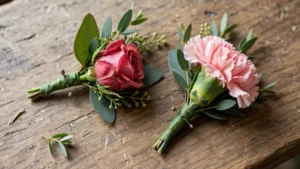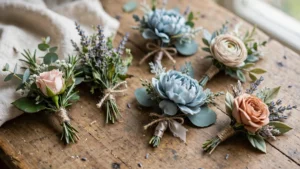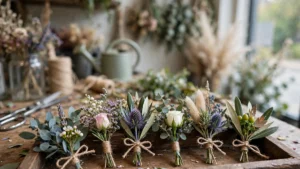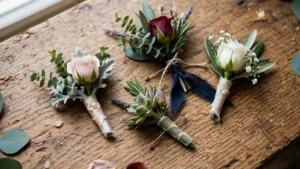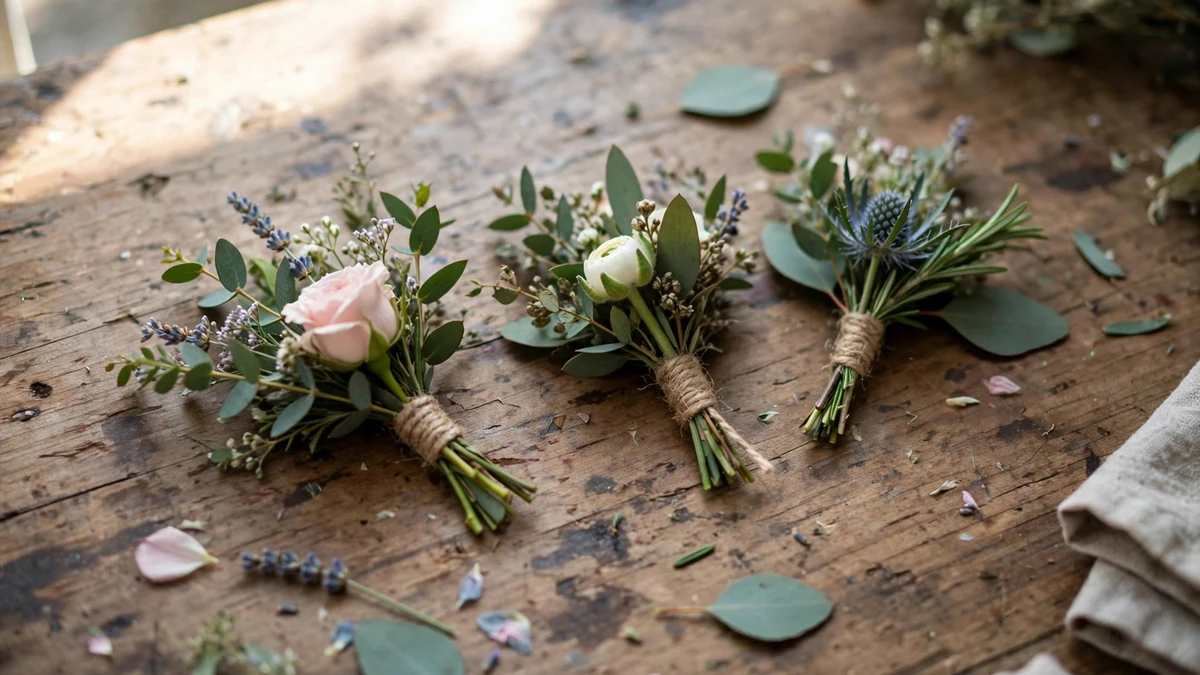

A boutonniere is the small flower worn on the lapel of a suit jacket, and it is one of the oldest finishing touches in menswear. It sits in the buttonhole of the left lapel, just above the chest pocket, and it does a quiet job: it adds colour, it marks an occasion, and it makes a plain suit look considered rather than simply worn.
The confusion around boutonnieres usually comes from the name itself. It is a French word, and it is pronounced roughly “boo-ton-YAIR”. It is not the same as a lapel pin, although the two are often worn in the same place. A boutonniere is made of flowers, fresh or silk, while a lapel pin is made of metal, enamel, or stone.
This guide explains what a boutonniere actually is, how it is worn, what it costs, and when it is worth the effort in 2027. Below are nine facts that cover the flower, the pin, the placement, and the occasions, so you can wear one with confidence instead of guessing.
Key takeaways
- A boutonniere is a flower worn in the buttonhole of the left lapel, not a pin, and it is meant for formal occasions first.
- It should sit high on the lapel, just above the chest pocket, with the stem hidden behind the lapel and the flower facing outward.
- Fresh flowers look best but last only a day, while silk boutonnieres keep their shape and can be worn again.
- Match the flower to the occasion and to the rest of the outfit, not to the tie, and keep it small enough to sit flat.
- A boutonniere does not fix a poorly fitting suit, and a fresh flower that has wilted or browned should be removed, not worn all evening.
What a boutonniere actually is
The word boutonniere comes from the French “bouton”, meaning button, and “boutonnière”, the buttonhole itself. In the nineteenth century, a flower in the buttonhole was an everyday habit for well-dressed men, not a special-occasion gesture. It was worn with a morning coat or a lounge suit, and the flower was usually a carnation or a rose, chosen in the morning and replaced the next day. The habit faded as dress codes relaxed, but the boutonniere survived as the formal accessory it is today.
A traditional boutonniere is a single stem, or a very small cluster, with a short stem that sits behind the lapel. The flower itself is small, roughly the size of a coin, and it faces forward so it can be seen from the front. The stem is held in place by a small loop of thread behind the lapel, which most good suit jackets still have, or by a pin if the jacket has no loop. The flower should sit flat against the lapel, not stick out at an angle, and it should never be so large that it covers the pocket square.
Today, boutonnieres appear most often at weddings, where the groom, the groomsmen, and the fathers of the couple traditionally wear one. They also appear at proms, black-tie dinners, award ceremonies, and formal garden parties.
How we chose these facts and what to look for
Look first at the flower. A good boutonniere flower is small, sturdy, and fresh, with petals that hold their shape for hours. Roses, carnations, ranunculus, and freesias are the most reliable choices because they are compact and they last. Delicate flowers such as gardenias smell wonderful but bruise easily, and large flowers such as lilies are too big and too heavy for a lapel.

Look next at the stem and the fastening. A fresh boutonniere needs a short, firm stem, usually wrapped in floral tape, with a pin or a lapel loop to hold it in place. The stem should be hidden behind the lapel, so only the flower is visible from the front. A silk boutonniere, by contrast, usually has a built-in pin and a short rigid stem, which makes it easier to wear and to reuse. Our guide to how to tie a tie covers the other half of the formal look, because a boutonniere works best when the tie, the shirt, and the jacket are already in order.
Finally, look at the occasion. A boutonniere is a formal accessory, and it should match the formality of the event. A single white rose suits a wedding. A small red carnation suits a black-tie dinner. A silk flower in a muted colour suits a daytime formal event.
The 9 facts about boutonnieres in 2027
It sits on the left lapel, through the buttonhole
What we like: The placement is simple and consistent, so there is nothing to decide once you know the rule. What to consider: The flower must go through the buttonhole or the lapel loop, not pinned to the front of the jacket, or it will sit at the wrong angle. Best for: Anyone wearing a suit with a working buttonhole or a lapel loop. Cost: No extra cost for the placement itself. Time needed: A minute to position it properly.
It comes in two main styles, fresh and silk
What we like: Fresh flowers look alive and smell wonderful, while silk flowers keep their shape and can be worn again. What to consider: Fresh flowers wilt within a day and need to be made on the morning of the event, while silk flowers can look stiff if they are cheaply made. Best for: Fresh for weddings and one-off occasions, silk for repeat wear and travel. Cost: Fresh boutonnieres cost roughly £5 to £25 each, silk ones roughly £10 to £60. Time needed: A florist needs a day or two of notice for fresh flowers.
The flower should be small, about the size of a coin
What we like: A small flower sits flat, looks neat, and does not distract from the rest of the outfit. What to consider: A flower that is too large will flop forward, cover the pocket square, and look like a corsage. Best for: Formal suits, morning dress, and black tie, where the details should be restrained. Cost: Small flowers are usually cheaper than large ones. Time needed: A minute to check the size against the lapel before pinning it.
It needs a jacket with a lapel and a buttonhole to work
What we like: The rule is clear, so you know immediately whether a boutonniere will work with a given jacket. What to consider: Jackets without a lapel loop or a working buttonhole need a pin, and some modern jackets have neither, which makes the flower hard to secure. Best for: Traditional suit jackets, morning coats, and dinner jackets with a lapel loop. Cost: A lapel pin costs a few pounds if the jacket has no loop. Time needed: A minute to check the lapel before the event.
Roses, carnations, and ranunculus are the most reliable flowers
What we like: These flowers are compact, sturdy, and available all year, so they hold up through a long event. What to consider: They are also the most common choices, so they do not stand out, and a rose with thorns needs to be prepared properly by a florist. Best for: Weddings, black-tie dinners, and any event that lasts several hours. Cost: Roughly £5 to £20 per boutonniere from a florist. Time needed: Order a day or two ahead for the freshest flowers.
It should match the occasion, not the tie
What we like: Matching the occasion keeps the look simple and avoids the trap of trying to coordinate every detail. What to consider: A flower that matches the tie exactly can look contrived, and a bright flower with a dark suit can look out of place at a sombre event. Best for: Weddings, where the boutonniere often matches the bridal flowers, and formal dinners. Cost: No extra cost, since the flower is chosen for the event, not the outfit. Time needed: A few minutes of thought when ordering.
It suits formal dress first, but not only formal dress
What we like: A boutonniere adds a touch of ceremony to any formal outfit, and it is a simple way to mark a special day. What to consider: Worn with a casual outfit, it looks out of place, and worn every day, it loses its meaning. Best for: Weddings, proms, black tie, and formal daytime events such as Royal Ascot. Cost: The same as any boutonniere, fresh or silk. Time needed: No extra time beyond choosing the flower.
It keeps its shape best when the stem is wrapped and pinned
What we like: A wrapped stem and a proper pin keep the flower upright all day, even through dancing and hugging. What to consider: A loose stem will droop within an hour, and a pin placed through the flower head will damage it. Best for: Long events such as weddings, where the boutonniere must last from morning to midnight. Cost: Floral tape and a pin cost almost nothing. Time needed: Five minutes for a florist to prepare it properly.
It holds its value when the flower is silk or jewelled
What we like: A silk or jewelled boutonniere can be worn again and again, and a well-made one lasts for years. What to consider: A cheap silk flower looks cheap, and a jewelled boutonniere is a piece of jewellery, not a flower, so it should be chosen with the same care. Best for: Anyone who attends formal events regularly and wants a boutonniere that is always ready. Cost: Silk boutonnieres cost roughly £10 to £60, jewelled ones from around £100 upward. Time needed: No preparation on the day, since it is ready to wear.
Which boutonniere is right for you
For a wedding, the choice is usually made for you. The groom’s boutonniere traditionally matches the bride’s bouquet, and the groomsmen wear a simpler version of the same flower. If you are the groom, ask the florist what will hold up best through the day, and choose a white or cream rose, a ranunculus, or a small spray of freesia. If you are a guest, a single white or pale flower is the safe choice, and it is better to keep it simple than to compete with the wedding party.
For a black-tie dinner or a formal evening, a single dark red carnation or a white rose is the classic answer. It is understated, it works with a black dinner jacket, and it does not need to match anything else in the outfit. A silk boutonniere in a muted colour is a good alternative if you attend such events often, because it is always ready and it never wilts. Our guide to the best silk ties for men is a useful companion here, because the tie and the boutonniere share the same job: to add a small amount of colour to a dark suit without overwhelming it.
For a daytime formal event, such as a wedding in a garden or a day at the races, a slightly softer flower works well. A pale pink rose, a sprig of lavender, or a small ranunculus in a light colour suits the daylight and the setting. Avoid dark, heavy flowers in bright sun, because they look sombre, and avoid anything too large, because it will catch the wind and flop. The boutonniere should look as if it was picked that morning, even if it was made by a florist the day before.
The caveats that matter
A boutonniere is a small detail, but it is easy to get wrong, and the mistakes are visible. The most common error is size: a flower that is too large looks like a corsage and overwhelms the lapel. The second is placement: a flower pinned to the front of the jacket, rather than through the buttonhole, sits at the wrong angle and looks improvised. The third is freshness: a wilted flower is worse than no flower at all, and it should be removed as soon as it starts to brown.
| Detail | What is known |
|---|---|
| Where it goes | Left lapel, through the buttonhole or lapel loop, flower facing forward |
| Best size | About the size of a coin, no wider than the lapel itself |
| Fresh or silk | Fresh looks best but lasts a day; silk keeps its shape and can be reused |
| Most reliable flowers | Roses, carnations, ranunculus, freesias; avoid large or delicate blooms |
| When to wear one | Weddings, black tie, proms, formal daytime events; not casual occasions |
| What to match | The occasion and, at a wedding, the bridal flowers; not the tie |
| How long it lasts | Fresh flowers last a day; a wrapped stem with water keeps them fresh longer |
| What it does not do | It does not fix a poorly fitting suit or replace a pocket square |
Allergies are worth a thought too. A strongly scented flower such as a gardenia or a lily can bother people nearby, and anyone with hay fever should choose a low-pollen flower such as a rose or a carnation, or a silk boutonniere instead.
Checklist: choosing a boutonniere honestly
Use these checks before you order, and again on the morning of the event.
- Check the occasion: weddings, black tie, and formal daytime events suit a boutonniere; casual events do not.
- Check the size: the flower head should be about the size of a coin and no wider than the lapel.
- Check the jacket: it needs a lapel loop or a working buttonhole, or a pin to hold the stem.
- Check the flower: choose a sturdy flower such as a rose, carnation, or ranunculus, and avoid large or delicate blooms.
- Check the freshness: a fresh boutonniere should be made on the morning of the event, and a wilted flower should be removed.
- Check the placement: stem hidden behind the lapel, flower facing forward, sitting flat and level.
Frequently asked questions
Which side does a boutonniere go on?
The left lapel, through the buttonhole or the lapel loop. The stem sits behind the lapel and the flower faces forward. It should never go on the right lapel, and it should never be pinned to the front of the jacket.
Can I wear a boutonniere if I am not the groom?
Yes. Groomsmen, fathers, and guests all wear boutonnieres at weddings, and anyone can wear one at a black-tie dinner or a formal event. Keep it simple and understated, and avoid anything larger or brighter than the groom’s.
How long does a fresh boutonniere last?
About a day, if it is made fresh on the morning of the event. A stem wrapped in floral tape with a little water-soaked cotton wool will last longer, but by the next morning it will have wilted, and it should be discarded.
Is a silk boutonniere acceptable at a wedding?
Yes, especially for guests and groomsmen. A good silk boutonniere looks convincing from a normal distance, it does not wilt, and it can be worn again. A cheap silk flower, however, looks cheap, so choose one with layered petals and a proper stem.
Should a boutonniere match the tie?
No. It should match the occasion, and at a wedding it often echoes the bridal flowers. Matching the tie exactly looks contrived. A single flower in white, cream, or a muted colour works with almost any tie. For a thoughtful gift that suits the same formal occasions, our guide to the best luxury gifts under £1,000 includes pieces that pair well with a formal wardrobe.
Can women wear a boutonniere?
Yes. Women wear boutonnieres on a jacket lapel in the same way, usually a smaller flower, and the same rules apply: left lapel, small flower, stem hidden. At weddings, mothers of the couple often wear a small corsage or a boutonniere-style flower on the lapel.
The bottom line
The best boutonniere in 2027 is a small, fresh or well-made silk flower, worn on the left lapel, that matches the occasion rather than the tie. A white rose for a wedding, a red carnation for black tie, or a pale ranunculus for a daytime formal event will all work, as long as the flower is small, the stem is hidden, and the flower is fresh. The details matter more than the flower itself, because a boutonniere is a finishing touch, and finishing touches are judged on neatness.
Choose one flower, wear it properly, and take it off when it wilts. That is the whole secret.