
Why Boutonnieres Are Worth It 2027
A boutonniere costs less than a taxi to the venue and takes ten seconds to pin on, yet it changes how a suit reads in a photograph. It is the smallest formal detail you can buy, and one of the few that everyone notices, even if nobody can quite say why the outfit looks finished.
That is because a boutonniere does work that nothing else in a suit does. A tie adds colour, a pocket square adds texture, and a good fit adds shape, but only a flower adds something alive to the lapel. It softens a dark suit, marks the wearer as part of an occasion, and gives the eye a place to rest that is not a knot or a button.
Below are nine reasons boutonnieres are worth it in 2027, from the way they finish a suit to the way they travel, keep, and mark a day. Each one is described by what it does well, what to watch for, and what it costs in time and money, so you can decide with the occasion in mind.
Key takeaways
- A boutonniere finishes a suit for very little money, often under £10, and takes seconds to put on.
- It adds colour and life to a dark suit without a loud tie, and it marks the wearer as part of an occasion.
- It suits weddings, formal dinners, graduations, and smart evenings, and it works with or without a tie.
- Fresh boutonnieres need cool shade and late pinning; silk and dried versions last all day and can be kept.
- A boutonniere does not fix a poorly fitting suit, and a wilted flower draws more attention than no flower at all.
What a boutonniere actually does
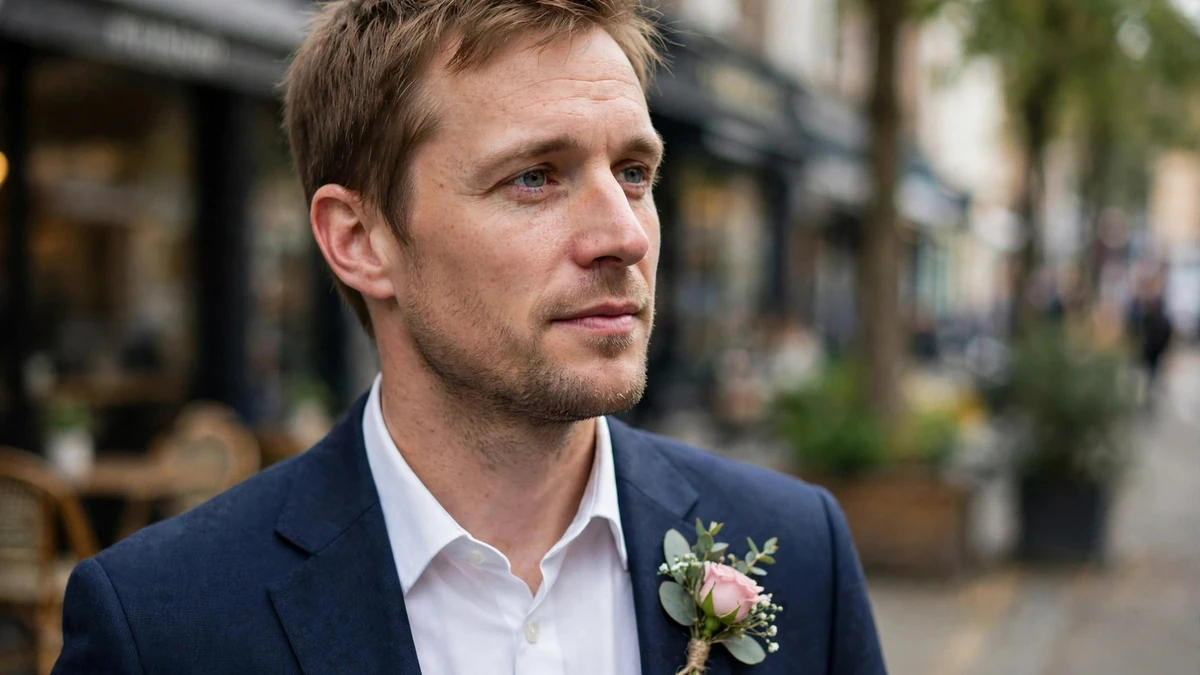
A boutonniere is a single flower, or a small arrangement of flowers and foliage, pinned to the buttonhole of the left lapel. It is worn at weddings, formal dinners, graduations, and smart evening events, and its job is simple: to add a living detail to a suit that is otherwise made of cloth, metal, and leather.
The effect is out of proportion to the size. A dark navy or charcoal suit is a large area of flat colour, and a small flower breaks it up without adding bulk or noise. It draws the eye upward, toward the face, which is why it photographs so well. It also signals that the wearer has dressed for the occasion, not just dressed up.
It is also a social signal. At a wedding, a boutonniere marks the groom, the best man, and the fathers, so guests know who is who without asking. At a formal dinner, it marks the host. That is a practical job, and it is one that no other accessory does.
How we judged boutonnieres and what to look for
Look first at the flower itself. A fresh rose or carnation should be firm, with petals closed at the edges and no browning. A silk or dried boutonniere should look like a flower in daylight, not shiny or flat, and the wiring should be hidden behind the flower, not poking out where it can snag a shirt.

Look next at the size against the lapel. A boutonniere should cover roughly half the width of the lapel and sit flat, not droop forward. On a slim-lapel suit that means a small flower; on a wide lapel, a slightly larger one works. The pin should go through the back of the lapel, so the front fabric stays clean.
Finally, look at the rest of the outfit. The boutonniere should complement the tie, not compete with it: one matching colour is enough. A white or cream flower works with any tie; a coloured flower should pick up a colour from the tie, the pocket square, or the flowers of the day. The same care that goes into choosing a tie applies here, and our guide to how to wear a necktie covers how to keep the whole outfit in balance.
The 9 reasons boutonnieres are worth it in 2027
They finish a suit in seconds
What we like: A boutonniere takes ten seconds to pin on and instantly makes a suit look considered, even if everything else is simple. What to consider: It must sit flat and in the right place, or it looks like an afterthought. Best for: Anyone who wants a finished look without buying a new suit. Cost: About £5 to £15 for a fresh flower. Time needed: Ten seconds to pin on.
No other formal detail works this fast. A pocket square needs folding, a tie needs knotting, and a boutonniere needs only a pin through the back of the lapel.
They are the cheapest way to look polished
What we like: A fresh boutonniere costs less than a drink at the venue, and it changes the whole look of a suit for that price. What to consider: A very cheap boutonniere from a poor florist can look tired before the day starts, so spend the extra pound or two. Best for: Grooms, groomsmen, and anyone dressing formally on a budget. Cost: About £5 to £12 for a good fresh rose or carnation. Time needed: A few minutes to order from a florist.
Formal dressing is full of expensive details, and a boutonniere is the exception. It is the best value in the whole outfit, pound for pound.
They let you add colour without a loud tie
What we like: A burgundy, rust, or deep blue flower adds colour to a dark suit while the tie stays quiet, which suits men who do not like a bold tie. What to consider: The colour should match something else in the outfit, or it looks accidental. Best for: Navy and charcoal suits with a plain tie. Cost: About £5 to £15 for a coloured fresh flower. Time needed: Ten seconds to pin on.
Colour is the hardest part of formal dressing to get right, and a boutonniere is the gentlest way to add it. A small flower is easier to carry than a bright tie, and easier to remove if it does not work.
They work for weddings, work, and weekends
What we like: A boutonniere suits a wedding, a formal dinner, a graduation, a christening, or a smart evening out, and the same style works for all of them. What to consider: It is a formal detail, so skip it for anything casual, and keep it small and classic for a work event. Best for: Weddings and formal evenings first, smart work events second. Cost: About £5 to £15. Time needed: Ten seconds to pin on.
Versatility is part of the value. One small flower, bought in the morning, can carry you through a wedding, a dinner, and an evening reception without a change of outfit.
They do not need a tie to look right
What we like: A boutonniere works with an open collar and no tie, which is how many relaxed weddings and summer evenings are dressed now. What to consider: Without a tie, the flower becomes the main detail on the chest, so keep it small and simple. Best for: Relaxed weddings, garden parties, and summer evenings. Cost: About £5 to £15. Time needed: Ten seconds to pin on.
As dress codes loosen, the boutonniere has become more useful, not less. It gives a tieless suit the same sense of occasion that a tie used to give, without the formality.
They are the easiest formal accessory to carry
What we like: A boutonniere weighs almost nothing, needs no bag, no pocket, and no adjustment during the day, unlike a pocket square that slips or a tie that loosens. What to consider: A fresh flower can be knocked or crushed in a hug, so a spare in water is worth having. Best for: Long days with dancing, hugging, and photographs. Cost: About £5 to £15, plus a spare. Time needed: Ten seconds to pin on.
Comfort matters at a long event. A boutonniere is the one formal accessory you forget you are wearing, which is exactly how an accessory should feel.
They travel better than any other accessory
What we like: A silk or dried boutonniere packs flat in a jacket pocket, survives a flight, and looks the same at the end of a journey as at the start. What to consider: A fresh flower does not travel well, so order it at the destination, not at home. Best for: Destination weddings and anyone travelling to a formal event. Cost: About £10 to £40 for a good silk or dried piece. Time needed: Ten seconds to pin on.
A tie can crease, a pocket square can slip, and a suit can wrinkle, but a silk boutonniere arrives exactly as it left. For a destination wedding, that reliability is worth more than freshness.
They suit every age and every budget
What we like: A boutonniere looks right on a groom of twenty-five and a father of the bride of sixty-five, and the price is the same for both. What to consider: Older wearers often suit a classic rose; younger wearers can carry a modern design, but the occasion matters more than the age. Best for: Every age, every budget, every formal occasion. Cost: About £5 to £40 depending on fresh or silk. Time needed: Ten seconds to pin on.
Few formal details are this democratic. A boutonniere does not depend on body shape, height, or budget, and it does not need to be expensive to look right.
A good one lasts for years, not one season
What we like: A silk or dried boutonniere can be kept as a memento of the day, worn again at another wedding, or given to a guest who could not attend. What to consider: A fresh flower is discarded at the end of the day, so choose silk or dried if you want a keepsake. Best for: Grooms who want a memento, and anyone who attends formal events often. Cost: About £10 to £40 for a keepsake piece. Time needed: Ten seconds to pin on, years to keep.
A wedding boutonniere is one of the few parts of the day you can keep. Pressed in a book or kept in a drawer, a dried flower outlasts the photographs on the wall, and it costs less than any of them.
Which boutonnieres are right for you
Start with the occasion. A traditional wedding or a black-tie dinner points to a classic white or red rose, small and neat, pinned flat on the left lapel. The formality of the day does the deciding, and the classic style is formal without being stiff.
For a relaxed wedding, a garden party, or a summer evening, a modern design has room to work. Choose one unusual element, a protea, a sprig of dried grass, or a deep colour, and keep the rest simple. One statement is enough. A good gift list can help with the rest of the outfit, and our guide to the best luxury gifts under £1,000 covers the accessories that pair well with a boutonniere, from cufflinks to a good watch.
Finally, think about the day itself. A long outdoor summer wedding favours silk or dried, because heat wilts fresh flowers. A short indoor ceremony favours fresh, because the flower only needs to last a few hours. And if you want a keepsake, choose a dried or silk piece you can keep.
The caveats that matter
A boutonniere is a small detail, and small details go wrong in small ways that photographs magnify. A flower pinned too low looks like a badge; a flower pinned too high disappears under the chin. The right place is the buttonhole on the left lapel, with the flower sitting flat and the stem hidden behind the lapel.
| Detail | What is known |
|---|---|
| What it is | A single flower or small arrangement pinned to the left lapel buttonhole |
| Best position | Left lapel, flower flat, stem hidden behind the lapel |
| Size rule | About half the lapel width; small for slim lapels, larger for wide lapels |
| Fresh care | Keep in water and shade, pin on last, avoid heat and direct sun |
| Silk and dried | Last all day, travel well, can be kept; choose good quality or they look flat |
| Cost | About £5 to £15 fresh; £10 to £40 for a good silk or dried piece |
| Who should avoid what | Allergy sufferers should avoid heavily scented flowers and choose silk or dried |
| What it does not do | It does not fix a poorly fitting suit or a clashing tie |
Allergies are worth a thought. A strongly scented rose or lily next to the face can be uncomfortable for the wearer and for anyone standing close. If you have hay fever or a flower allergy, choose a silk or dried boutonniere, or a flower with little scent, such as a carnation.
Checklist: choosing a boutonniere honestly
Use these checks before you order, and again on the morning of the day.
- Check the occasion: black tie and traditional weddings point to a classic; relaxed and creative events leave room for modern.
- Check the size against the lapel: about half the lapel width, never wider than the lapel itself.
- Check the colour against the tie and pocket square: one matching note is enough, two competing colours are too many.
- Check the flower is firm and fresh: petals closed at the edges, no browning, stem straight and strong.
- Pin it on last: after the jacket, the tie, and the suit photographs, so a fresh flower lasts the day.
- Keep a spare: a second boutonniere in water costs little and saves the day if the first wilts or breaks.
Frequently asked questions
Do I really need a boutonniere?
No, but it is the cheapest way to make a suit look finished. A suit without one is perfectly correct; a suit with one looks considered. For a wedding, it also marks who is part of the party, which is a practical job.
Which side does a boutonniere go on?
The left lapel, through the buttonhole, with the flower sitting flat against the lapel and the stem hidden behind it. The pin goes through the back of the lapel, not through the front fabric.
Can I wear a boutonniere without a tie?
Yes. A boutonniere works well with an open collar, and it is one of the best ways to give a tieless suit a sense of occasion. Keep it small and simple without a tie, so it does not become the only detail on the chest.
How long does a fresh boutonniere last?
A few hours in good conditions, longer if it is kept in water and shade until the last minute. Heat, sun, and a hot car shorten its life sharply, so pin it on as late as possible.
Are silk boutonnieres acceptable at a formal wedding?
Yes, if the quality is good. A well-made silk boutonniere looks close to fresh in photographs and lasts all day. A cheap, shiny silk one does not, so look at it in daylight before the day. The same care applies to the rest of the outfit, and our guide to the best luxury cufflink brands shows how a small, well-chosen detail can carry a whole look.
What should groomsmen wear?
The same style as the groom, in the same flower or colour, but slightly smaller or simpler. That keeps the party coordinated in photographs while the groom stands out. Identical pieces for everyone look uniform; a small difference for the groom looks deliberate.
The bottom line
A boutonniere is worth it because it does more than its size suggests. For under £10 and ten seconds of effort, it finishes a suit, adds colour without a loud tie, marks the occasion, and photographs beautifully. It is the cheapest formal detail you can buy, and one of the few that everyone notices.
Choose a classic rose for a traditional day, a modern design for a relaxed one, and silk or dried if the day is long, hot, or far from home. Pin it on last, keep a spare, and let the flower do the work. A suit with a boutonniere does not just look dressed up; it looks dressed for something.