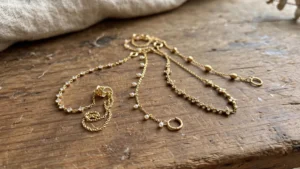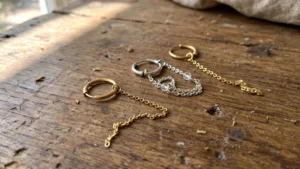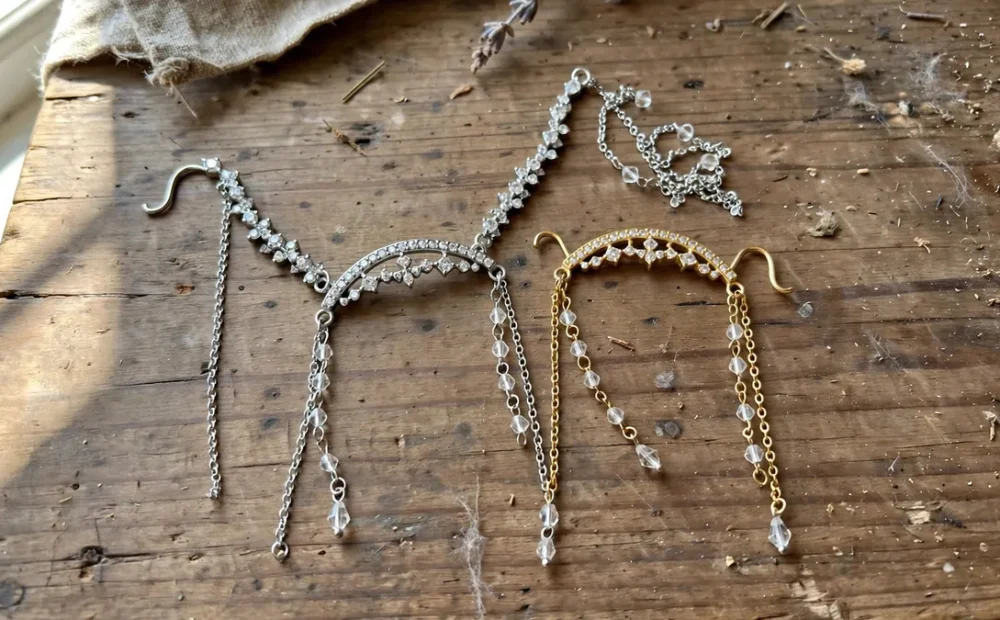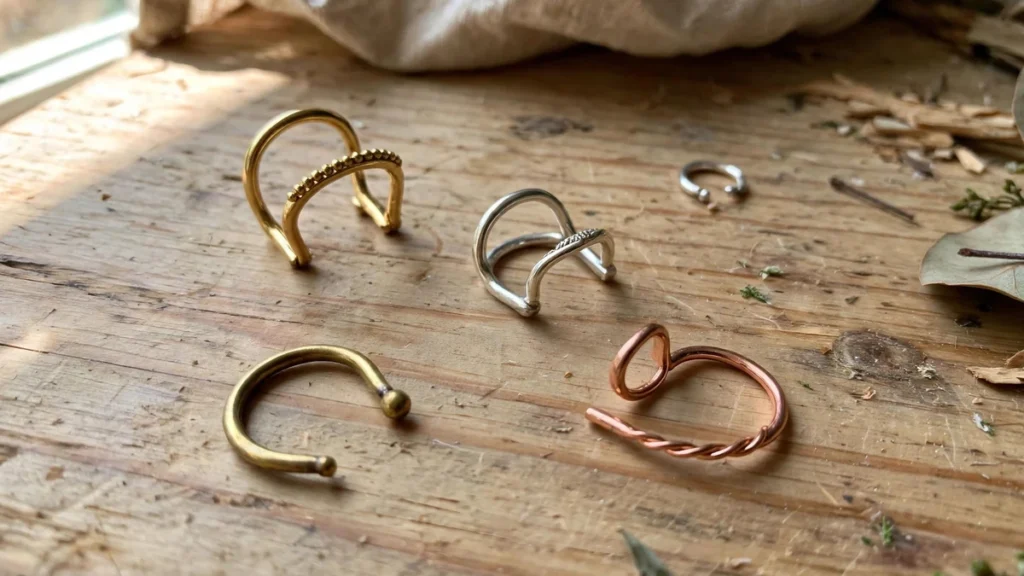
A nose cuff is the no-commitment way to wear a nose ring. It clips, slides, or gently presses onto the side of the nose or the septum, giving the look of a piercing without a needle, a healing period, or a permanent hole. For anyone who loves the look but is not ready for a piercing, or who wants to change styles daily, it is the simplest answer in the jewellery box.
The appeal is easy to understand. A nose cuff costs far less than a piercing, takes seconds to put on, and comes off just as fast. You can try a delicate gold hoop for a wedding, a crystal cuff for a night out, or a bold statement piece for a festival, all without visiting a piercer. That freedom is why nose cuffs have moved from costume jewellery into everyday fashion in 2027.
Below are nine facts about what a nose cuff really is, how the styles work, what they cost, and what to watch for before you buy.
Key takeaways
- A nose cuff is a clip-on or press-fit nose ring that needs no piercing, no healing time, and no permanent hole.
- The main styles are side cuffs, septum cuffs, and magnetic cuffs, and the fit matters more than the price.
- Gold-filled, sterling silver, and implant-grade titanium are the safest everyday metals for sensitive skin.
- A well-fitting cuff should feel snug but never painful, and it should stay put through a normal day.
- A nose cuff is not a substitute for a piercing, and a cuff that pinches, slips, or irritates the skin should be adjusted or returned.
What a nose cuff actually is
A nose cuff is a piece of jewellery shaped to sit on the nose without a piercing. Most designs use a gentle spring or a curved wire that hugs the nostril from the outside, while others sit across the septum, the thin wall between the nostrils, and hold themselves in place with light pressure. A third type uses a tiny magnet on either side of the nostril, so nothing presses the skin at all.
The difference from a nose ring is simple: a nose ring goes through a hole, and a nose cuff does not. That single difference changes everything about how it is worn. There is no piercing appointment, no aftercare routine, no risk of a piercing closing up, and no waiting weeks before you can change the jewellery. You can wear a cuff for an evening and take it off before bed, or wear it every day for months.
Nose cuffs come in the same metals and stones as pierced jewellery. You will find plain gold and silver hoops, cuffs set with crystals, pearls, and small gemstones, and designs that mix metals or add a tiny chain. The better ones are made from the same quality metals as real piercing jewellery, and the cheaper ones are usually plated base metal, which is fine for occasional wear but less comfortable for daily use.
How we chose these facts and what to look for
Look first at the style and the fit. A side cuff should sit neatly on one nostril without sliding toward the tip of the nose. A septum cuff should sit evenly across the septum, not tilted to one side. If a cuff needs constant adjusting, the size or the tension is wrong, and no amount of styling will fix that. Measure the width of your nostril or septum before ordering, and check the seller’s size guide rather than guessing.

Look next at the metal. Gold-filled and sterling silver are good everyday choices, and implant-grade titanium is the best option for sensitive skin. Avoid cuffs made from nickel-heavy base metal if your skin reacts easily, and be careful with very cheap plated cuffs, which can lose their coating and irritate the skin underneath. A simple guide to gold jewellery for everyday wear explains why the metal matters as much as the design.
Finally, look at the clasp and the finish. The edges of a good cuff are smooth, with no sharp points where the wire ends. The tension should be firm enough to stay on and gentle enough to forget. If the cuff is magnetic, check that the magnets are strong enough to hold through a normal day but small enough to sit discreetly on the nose.
The 9 facts about nose cuffs in 2027
It sits on the nose, not through it
What we like: No needle, no healing, no permanent hole, and you can take it off whenever you like. What to consider: It relies on gentle pressure or magnets, so it will never be as secure as a piercing. Best For: Anyone trying the look for the first time. Cost: From a few pounds for a basic cuff to around 60 pounds for a quality piece. Time Needed: Seconds to put on.
This is the fact that matters most. A nose cuff gives you the look of a nose ring with none of the commitment, which makes it the easiest way to test whether the style suits your face before you consider anything permanent.
Side cuffs, septum cuffs, and magnetic cuffs are the three main styles
What we like: Three clear styles make it easy to find one that fits your nose shape and your comfort level. What to consider: Each style fits differently, so a side cuff that suits one person may not suit another. Best For: Trying different looks without a piercing. Cost: Similar across styles, from budget to premium. Time Needed: A few minutes to compare styles online.
Side cuffs hug one nostril, septum cuffs sit across the middle of the nose, and magnetic cuffs use two small magnets instead of pressure. If you are unsure which to choose, start with a side cuff, which is the easiest to fit and the most forgiving.
Gold, silver, and titanium are the metals that matter most
What we like: These three metals are comfortable, durable, and widely available in good designs. What to consider: Plated base metal is cheaper but can wear through and irritate sensitive skin. Best For: Daily wear and sensitive skin. Cost: Silver from around 15 pounds, gold-filled from around 30, titanium from around 20. Time Needed: A few minutes to check the metal before buying.
Metal choice affects comfort more than appearance. If your skin reacts to cheap earrings, choose titanium or gold-filled, and avoid anything that does not state its metal clearly on the listing.
Fit decides comfort more than style does
What we like: A well-fitting cuff is so comfortable you forget it is there. What to consider: Too tight and it pinches, too loose and it slides off, and there is no way to adjust most designs much. Best For: Anyone who wants to wear a cuff all day. Cost: Nothing extra, if you measure first. Time Needed: Five minutes with a ruler and the seller’s size guide.
Measure the width of your nostril where the cuff will sit, and compare it with the inner diameter listed by the seller. A cuff that is one or two millimetres too large will slide, and one that is too small will press uncomfortably.
It has a long history, from South Asia to the festival scene
What we like: Nose jewellery has been worn for centuries, and the cuff is the modern, piercing-free version of that tradition. What to consider: Some traditional designs are heavy or ornate, which does not suit every face or every day. Best For: Anyone who likes jewellery with a story behind it. Cost: Traditional-style cuffs from around 10 pounds. Time Needed: As long as you like to read about the history.
It works with almost every face shape
What we like: A small, delicate cuff suits most faces, and a bolder cuff can balance a strong nose. What to consider: A very large cuff can overwhelm a small nose, and a tiny cuff can disappear on a broader one. Best For: Anyone who wants a low-risk way to try nose jewellery. Cost: Nothing extra to try a different size. Time Needed: A few minutes in front of a mirror.
Start small. A thin gold hoop or a tiny crystal cuff is the easiest way to see whether the look suits you, and you can move to a bolder design once you know what size feels right on your face.
There is no healing time, but the skin still needs care
What we like: You can wear a cuff the same day you buy it, with no aftercare routine. What to consider: A cuff that presses too hard can leave a red mark, and a dirty cuff can irritate the skin. Best For: Busy people who want no maintenance. Cost: A gentle cleanser and a soft cloth. Time Needed: A minute to clean the cuff before each wear.
Clean the cuff before you wear it, and take it off before bed so the skin can rest. If you notice redness that lasts more than an hour after removing it, the fit is too tight or the metal does not suit your skin.
Cleaning is simple but not optional
What we like: Warm water, mild soap, and a soft cloth are all you need. What to consider: Harsh cleaners can damage plating, and a cuff worn without cleaning can collect skin oils and makeup. Best For: Anyone who wears a cuff more than once a week. Cost: Almost nothing. Time Needed: One minute per wear.
Rinse the cuff after each wear, dry it fully, and store it in a small pouch or jewellery box so it does not scratch against other pieces. A clean cuff sits better, looks brighter, and is far less likely to irritate the skin.
Real gold and platinum hold value best
What we like: A solid gold or platinum cuff keeps its value and its finish for years. What to consider: The price is much higher than a plated cuff, and the difference is not always visible at first glance. Best For: A piece you plan to wear for years. Cost: From around 100 pounds for solid gold, more for platinum. Time Needed: A few minutes to check hallmarks and the seller’s returns policy.
If you only want to try the look, a good plated cuff is enough. If you know you love it and will wear it daily, a solid gold cuff is the better buy, because it will not lose its coating or its colour over time.
Which nose cuff is right for you
Start with a side cuff if you are new to nose jewellery. It is the easiest style to fit, the most widely available, and the least likely to feel strange. Choose a thin gold or silver hoop, or a tiny crystal cuff, and wear it for a few hours at home before taking it out. If it feels comfortable and looks right, you have found your size and your style.
If you like the septum look, try a septum cuff next. It sits across the middle of the nose and gives a bolder effect, but it needs a good fit to stay straight. Magnetic cuffs are worth trying if pressure bothers you, though they can slip if the magnets are weak. A guide to nose rings for women is useful here, because it shows how the pierced styles compare with the clip-on versions, and which shapes suit which faces.
A delicate cuff suits work and everyday outfits, a crystal or pearl cuff suits evenings and special occasions, and a bold cuff suits festivals and parties. One good cuff that fits well is worth more than three that slide or pinch, so spend on fit and metal first, decoration second.
The caveats that matter
A nose cuff is low-risk, but not risk-free. A cuff that is too tight can pinch and leave a sore mark, and one that is too loose can fall off without you noticing. Cheap plated metal can irritate sensitive skin, and a magnetic cuff can slip if it catches on clothing. None of these are serious, but all are worth knowing before you buy.
| Detail | What is known |
|---|---|
| What it is | A clip-on or press-fit nose ring that needs no piercing |
| Main styles | Side cuff, septum cuff, and magnetic cuff |
| Best everyday metals | Gold-filled, sterling silver, and implant-grade titanium |
| How to choose size | Measure the nostril or septum and check the seller’s size guide |
| How long it takes to wear | Seconds to put on, no healing time at all |
| Who should take care | Sensitive skin, nickel allergy, and anyone who finds pressure uncomfortable |
| Cleaning | Warm water, mild soap, and a soft cloth after each wear |
| What it does not do | It does not replace a piercing, and it will not stay on as securely as one |
If you have a nickel allergy, choose titanium or solid gold, and avoid anything labelled only as “alloy” or “metal” with no detail. If you are recovering from a piercing, wait until the area is fully healed before wearing a cuff over it. And if a cuff causes pain, redness that lasts, or swelling, stop wearing it and check the fit and the metal before trying again.
Checklist: buying a nose cuff well
Use these checks before you buy, and again after your first wear.
- Check the style: side cuff for beginners, septum cuff for a bolder look, magnetic if pressure bothers you.
- Check the metal: gold-filled, sterling silver, or titanium, and avoid unlabelled alloy if your skin is sensitive.
- Check the size: measure your nostril or septum and compare it with the seller’s size guide.
- Check the finish: smooth edges, no sharp points, and a clasp or tension that feels firm but gentle.
- Try it at home first: wear it for a few hours before wearing it out, and check that it stays put.
- Check the returns policy: buy from a seller who accepts returns, so a wrong size is not a wasted purchase.
Frequently asked questions
Do nose cuffs hurt?
They should not. A well-fitting cuff feels snug for the first few minutes and then fades into the background. If it pinches or aches after half an hour, the size or the tension is wrong, and you should adjust it or try a different size.
Will a nose cuff fall off?
It can, if the fit is too loose or the magnets are weak. A cuff that fits well stays on through a normal day, including talking, laughing, and light exercise. Avoid wearing a loose cuff while swimming or in very windy weather.
Can I wear a nose cuff every day?
Yes, if it fits well and the metal suits your skin. Take it off at night so the skin can rest, and clean it before each wear. If you notice redness that lasts, give your skin a break for a day or two.
Are nose cuffs suitable for sensitive skin?
Often yes, if you choose the right metal. Implant-grade titanium and solid gold are the safest choices, and gold-filled is a good middle ground. Avoid cheap plated alloy, which is the most common cause of irritation.
Can I wear a nose cuff with other jewellery?
Yes. A delicate cuff pairs well with small earrings and a simple necklace, and a bolder cuff suits a statement look. Keep the metals consistent, and let one piece be the focus. Our guide to pearl necklaces for women shows how a soft, classic piece can balance a bolder nose cuff without clashing.
How do I clean a nose cuff?
Rinse it in warm water with a drop of mild soap, pat it dry with a soft cloth, and store it in a pouch. Do not use harsh cleaners or ultrasonic cleaners on plated cuffs, as they can strip the coating.
The bottom line
A nose cuff is the easiest way to wear a nose ring without a piercing. It costs little, takes seconds to put on, and lets you change styles as often as you like. The key is fit and metal: measure first, choose gold-filled, silver, or titanium, and buy from a seller with a fair returns policy.
Start with a simple, delicate cuff, wear it at home for a few hours, and see how it feels and looks. If it fits well and suits your face, you have found a piece you can wear every day. If it does not, you have spent very little to learn that, and you can try a different size or style without any commitment at all.