

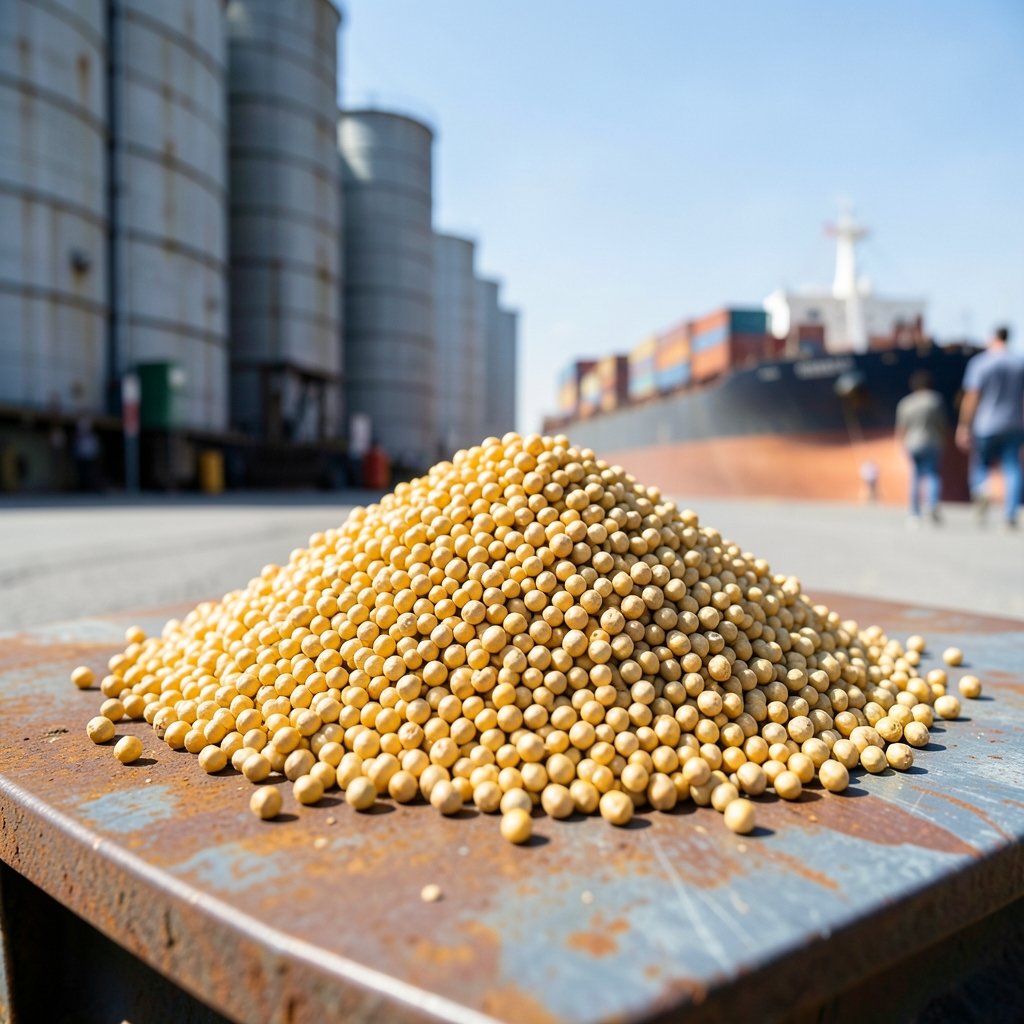
What does a power station in North Yorkshire have in common with a pine plantation in Mississippi? Quite a lot, as it turns out. The UK is one of the world’s biggest importers of wood pellets, and the trade is stranger, bigger, and more contested than most people realise. This guide unpacks where the pellets come from, how they are regulated, what the sustainability argument actually hinges on, and what to watch as the policy picture shifts.
The short version: a big trade built on one big customer
Wood pellets are small, dense cylinders of compressed sawdust and wood fibre, made for one main purpose: burning them as fuel. In the UK, that fuel goes overwhelmingly into large-scale electricity generation. The dominant buyer is Drax Power Station, which converted four of its six generating units to biomass between 2013 and 2018.
That single fact explains most of the market. When one plant’s fuel demand is measured in millions of tonnes a year, and domestic pellet production is modest by comparison, imports do the heavy lifting. The UK is a net importer, and most of its pellets arrive from North America and the Baltic region.
Domestic production exists, mostly from sawmill residues and roundwood, but it is small relative to demand. That gap between what Britain makes and what Britain burns is the entire story of the import trade in a nutshell.
Where the pellets actually come from

Drax has sourced pellets from the US South, Canada, and the Baltic states. It has also built its own pellet plants, including facilities in Mississippi and Louisiana, through its subsidiary Drax Biomass. Owning the supply chain matters when your fuel has to travel thousands of miles by ship and rail before it reaches a furnace.
The sourcing map has practical consequences. Pellets from the US South typically travel by rail to port, then cross the Atlantic. Baltic supply is closer and cheaper to ship. Canadian supply competes on fibre availability. Each route carries its own logistics costs, port constraints, and seasonal risks.
For anyone tracking the trade, official UK statistics record wood pellets under commodity codes HS 4401 31 (coniferous) and 4401 39 (non-coniferous). Those two codes are the place to start if you want to see the actual numbers rather than the rhetoric.
Why shipping distance is not the whole carbon story
It is tempting to assume that a pellet shipped across an ocean must be worse than one trucked a few hundred miles. The reality is more complicated. Shipping is relatively efficient per tonne, and the bigger question is what happens in the forest: whether the wood would have been harvested anyway, what it was replacing, and how fast new growth replaces what was cut.
That is not a defence of long-distance supply chains. It is simply a warning against assuming that transport distance equals climate impact. The accounting is where the real argument lives.
The sustainability rules that govern imports
Biomass electricity in the UK has been supported through two main schemes: the Renewables Obligation (RO) and Contracts for Difference (CfD). Ofgem administers the RO and enforces sustainability reporting. Since April 2015, the RO has required generators to report against greenhouse gas criteria and land-use criteria for biomass.
In plain terms, generators have to show their fuel meets certain standards, and they have to document it. That reporting obligation is why the pellet trade generates so much paperwork. Sustainability data travels with the fuel, from forest to furnace.
Post-Brexit, the UK set its own sustainability criteria rather than applying the EU Renewable Energy Directive (RED II) directly, though the UK criteria were designed to be broadly comparable. For importers and generators, that means a separate compliance regime with its own documentation, its own audit trail, and its own definitions.
Practical tip for anyone working in this space: the paperwork is the product. A pellet cargo without a clean sustainability data trail is worth far less than one with it, because the subsidy depends on the evidence, not the fuel itself.
The carbon accounting fight, explained fairly
Here is where the topic gets genuinely heated, and where readers deserve both sides rather than a tidy verdict.
The UK government and the biomass industry treat emissions from burning biomass as zero at the point of combustion, counting them instead in the land-use sector. Under this accounting, a power station burning pellets does not add to its own emissions total in the way a coal plant would.
Critics disagree sharply. The influential Chatham House report “Woody Biomass for Power and Heat,” published in February 2017, argued that burning imported pellets can produce higher near-term CO₂ emissions than coal, because regrowth takes decades. On that view, the carbon debt is real and immediate, even if it is eventually repaid.
Both positions are held by serious people, and the dispute is live rather than settled. What matters for readers is understanding the mechanism: the disagreement is largely about timing and boundaries. Count the carbon at the smokestack and biomass looks clean. Count it across the whole forest cycle and over a short timeframe, and the picture darkens.
This is not a technicality. It determines whether a subsidy is justified, and it shapes how the UK’s import volumes are judged by policymakers, investors, and campaigners.
Policy: where the rules are heading
The UK government published a Biomass Policy Statement in October 2021 and ran a consultation on biomass sustainability in 2022. A government response was expected to follow. The direction of travel has been toward tighter, clearer sustainability criteria, but the final legislative outcome should be checked against current government publications rather than assumed.
One live question hangs over the whole market: whether Drax’s biomass CfD support continues past 2027. That is a policy decision, not a settled fact, and it matters enormously to import volumes. If support changes, the economics of shipping millions of tonnes of pellets across an ocean change with it.
Anyone making decisions in this space should treat policy dates as moving targets and verify them against primary sources.
What the trade looks like in practice
For businesses that touch this market, whether as suppliers, logistics providers, or buyers of biomass, a few practical realities stand out.
Documentation beats price. A cheap cargo with weak sustainability evidence can be unusable under RO or CfD rules. Buyers who chase price alone often discover the compliance cost later.
Port and storage capacity is a real constraint. Pellets are hygroscopic, meaning they absorb moisture. Poor storage degrades fuel quality and creates handling and safety issues. Dust from pellets is also a recognised explosion hazard in enclosed spaces, which is why handling facilities invest heavily in dust control.
Quality specs vary by origin. Moisture content, ash content, calorific value, and durability all shift with feedstock and production method. A pellet from a Baltic plant and one from a US plant are not interchangeable without checking the spec.
Contract length matters more than spot price. Because the supply chain is capital-intensive and long, most volume moves on multi-year contracts rather than spot trades. That makes the import market slow to react to short-term price signals.
A common mistake is treating wood pellets like any other commodity where the cheapest tonne wins. In this market, the cheapest tonne is often the one that fails an audit.
A quick comparison of supply origins
| Origin | Typical advantage | Typical drawback |
|---|---|---|
| US South | Large fibre base, established port infrastructure | Long shipping distance, sustainability scrutiny |
| Canada | Strong forest certification coverage | Seasonal logistics constraints, competing domestic demand |
| Baltic states | Shorter sea routes to UK ports | Smaller volumes, exposure to regional fibre competition |
| UK domestic | Short transport, simpler compliance | Limited volume, cannot meet large-scale demand |
The table is a simplification, but it captures the trade-offs that shape real sourcing decisions. No origin wins on every dimension.
Why hair type has nothing to do with it (and why that matters for search)
Search for information on this topic and you will occasionally land on pages about 4c hair or 2b hair, because “pellets” and “wood” appear in unrelated contexts and search engines sometimes blur the edges. It is a useful reminder that the biomass trade is a specialised field with its own vocabulary, and general searches can pull in material from entirely different industries.
The same applies to policy coverage. A search for the row over biomass subsidies will surface commentary from many directions, and readers need to check whether a source is describing the science, the accounting rules, or the politics. They are three different conversations.
What to watch next
Three things deserve attention. First, the outcome of the UK’s biomass sustainability rulemaking, since it determines what counts as compliant fuel. Second, the future of subsidy support for large-scale biomass generation, which drives demand. Third, the trade data itself, which is the only reliable way to see whether import volumes are rising, flat, or falling.
On the science, watch for work that separates near-term and long-term carbon effects rather than collapsing them into a single number. That distinction is where the argument will eventually be resolved, if it is resolved at all.
Conclusion
The UK’s wood pellet import trade is a large, heavily regulated, and genuinely contested business. It exists because Britain chose to convert major generating capacity to biomass, and it persists because domestic supply cannot meet that demand. The sustainability rules are real and enforced through reporting requirements, but the carbon accounting behind them remains disputed, with credible arguments on both sides. For anyone involved, the practical lesson is simple: in this market, evidence travels with the fuel, and a cargo without a clean data trail is a cargo with a problem.
Frequently asked questions
Why does the UK import so many wood pellets?
Because large-scale biomass electricity generation creates demand far beyond what domestic pellet production can supply. The UK is a net importer, with most pellets arriving from North America and the Baltic region.
Are wood pellets from imports sustainable?
They must meet UK sustainability reporting requirements under the Renewables Obligation, including greenhouse gas and land-use criteria. Whether those criteria are strict enough is disputed, and the carbon accounting question remains contested.
What are the main countries supplying wood pellets to the UK?
The US South, Canada, and the Baltic states are the main origins, alongside smaller volumes from elsewhere. Drax has also operated its own pellet plants in the US.
How are wood pellet imports recorded in trade statistics?
Under commodity codes HS 4401 31 for coniferous pellets and HS 4401 39 for non-coniferous pellets. These codes are the basis for official UK import figures.
Did Brexit change the sustainability rules for biomass imports?
Yes. Since the end of the transition period on 1 January 2021, the UK has applied its own sustainability criteria rather than the EU Renewable Energy Directive directly, though the UK rules were designed to be broadly comparable.
Is the carbon from burning imported pellets counted as zero?
Under UK and industry accounting, combustion emissions are treated as zero and counted in the land-use sector instead. Critics argue this understates near-term emissions, because forest regrowth takes decades.
For suppliers and buyers alike, the safest posture is to keep documentation current, verify policy dates against primary government sources, and avoid treating any single year’s subsidy regime as permanent. The market has weathered scrutiny before and will likely weather more, but it rewards those who plan for compliance rather than those who assume it away. Watch the data, read the consultation responses, and keep the audit trail clean.









