

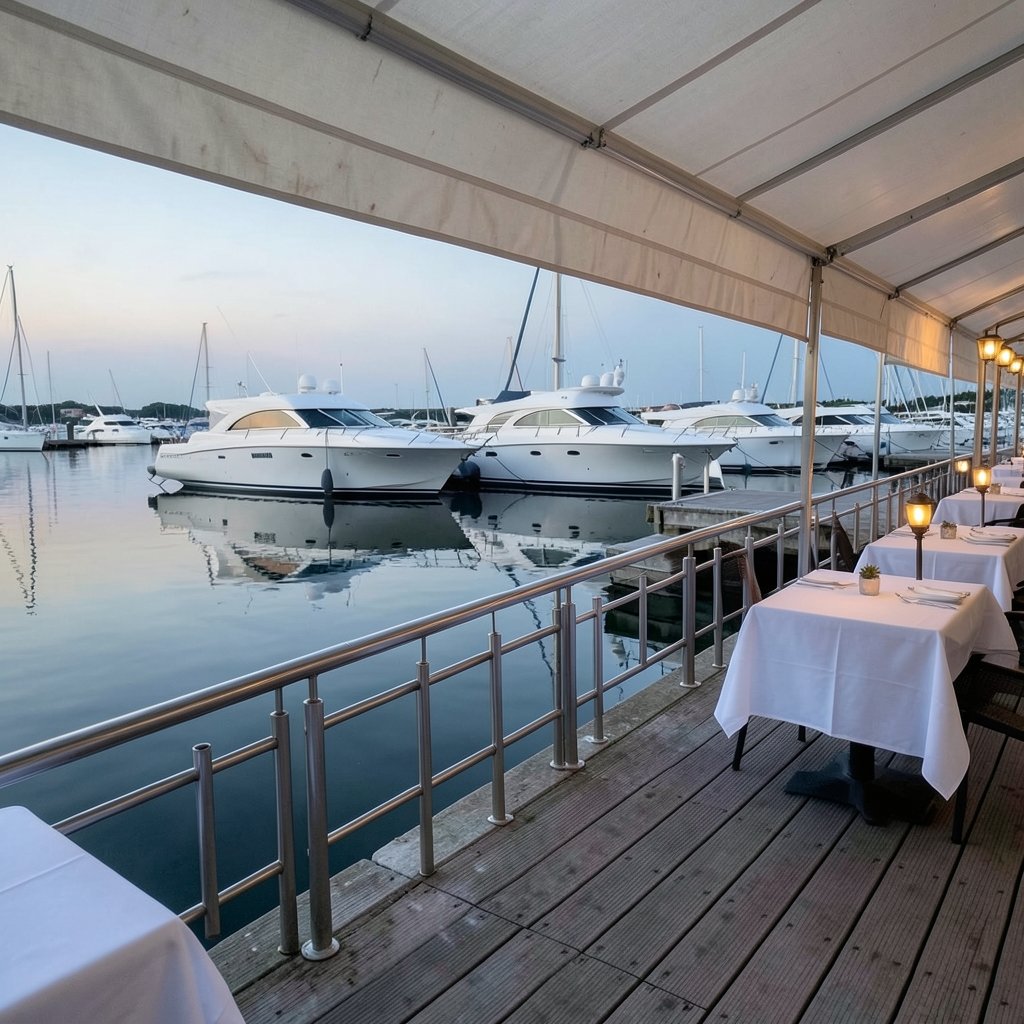
What if the hardest part of a great dinner by the water isn’t finding the food, but finding a place to park the boat? That’s the real test for anyone chasing the best waterfront restaurants with yacht docks in 2027. The view is easy. The berth is the puzzle. (2027 bridal hair trends will actually work down aisle)
This guide won’t pretend there’s an official ranking body handing out “best waterfront restaurant” trophies. There isn’t one. Every such list is an editorial call. What follows is a practical, honest framework for picking ten kinds of waterfront dining experiences that get docking right, plus the checks that separate a genuine yacht-friendly restaurant from one that just happens to sit near a marina.
Why Dock Access Is Harder Than It Looks
A restaurant’s “yacht dock” can mean three very different things, and mixing them up is the most common mistake boaters make.
First, there’s a private slip the restaurant controls. Second, there’s a leased public dock where the restaurant has an arrangement with a city or county. Third, there’s a marina berth next door, where the marina, not the kitchen, decides who ties up. A venue can advertise “dock and dine” while having zero say over the actual berth.
Dock access is regulated; it is not merely a marketing feature. In the United States, private docks and marina slips typically fall under state or county coastal and environmental rules, such as submerged-lands leases in Florida and coastal permits in California. Structures in navigable waters may also need a federal permit under Section 10 of the Rivers and Harbors Act of 1899. None of that is visible from the menu, but it shapes what a restaurant can actually offer.
The Ten Waterfront Dining Experiences Worth Booking in 2027

Because venue status changes constantly, these ten entries are organized by type rather than by a fixed address list. Treat each as a category to search within your cruising region, and verify the specifics before you cast off.
1. The Classic Dock-and-Dine Marina Restaurant
This is the workhorse of waterfront dining: a restaurant built at the edge of a working marina, with short-term tie-ups for diners. It’s the most common option and the easiest to find. The catch? Berthing usually belongs to the marina, and the restaurant may only be able to hold a slip for you as a courtesy.
What works in practice: call the marina first, not the restaurant. Ask who controls the slip, the maximum length, and whether there’s a time limit on the tie-up.
2. The Transient-Friendly Harbor Restaurant
Some waterfront restaurants sit inside harbors that received public investment in transient boating facilities. In the U.S., the Boating Infrastructure Grant program, administered by the U.S. Fish & Wildlife Service and authorized under the Sportfishing and Boating Safety Act of 1998, supports exactly this kind of short-stay infrastructure. These venues tend to have clearer signage, better cleats, and more predictable rules.
3. The Small-Craft Waterfront Bistro
Most restaurant docks accommodate tenders and small boats in the roughly 20 to 40 foot range. If that’s your vessel, you’re in the sweet spot. These bistros often have the best food-to-berth ratio because they’re not trying to be everything to everyone. Arrive early. The good slips go first.
4. The Superyacht-Adjacent Marina Dining Room
Superyacht-capable berths of 100 feet or more are rare, and they’re almost always at marinas rather than at restaurants. The smart play is to berth at a full-service marina and dine at the restaurant attached to it. Understanding what actually separates a superyacht from a standard yacht helps here, since length rules drive which berths you can even request. If you’re planning around a larger vessel, it’s worth reading up on how superyacht length rules separate it from a standard yacht before you assume a restaurant dock will fit you.
5. The Mediterranean-Style Quayside Table
In Spain, Italy, Croatia, and across the Caribbean, waterfront dining with berths is simply normal. The difference is governance: berthing is controlled by local port or marina authorities, not by the restaurant. That means one phone call to the harbor office can save you an hour of circling.
6. The Island-Resort Waterfront Restaurant
Resort restaurants often have the most forgiving docking policies because they want you to stay for more than lunch. The trade-off is cost and formality. This is the category where a well-chosen stay nearby pays off; pairing dinner with an overnight at a harbor hotel turns a meal into a weekend. Places like a well-run yacht harbor hotel on Shelter Island show how the best western-style harbor properties blend dock access with genuine hospitality, which is often the difference between a rushed dinner and a relaxed one.
7. The Seasonal Boardwalk Kitchen
Boardwalk restaurants can be fantastic in July and closed in January. Seasonal operations are also the most likely to change dock rules mid-year. Check opening dates and dock policies in the same call.
8. The Accessible Public Pier Restaurant
Public accommodations, including dock and boarding areas that serve the public, must meet accessibility requirements under the Americans with Disabilities Act of 1990. The 2010 ADA Standards for Accessible Design even include provisions for boat slips. A restaurant that takes this seriously usually takes everything else seriously too. Look for gangways with proper slopes and stable boarding points.
9. The Charter-Partner Waterfront Venue
Some of the smoothest docking experiences come bundled with a charter. If you’re weighing whether to own or charter, it helps to know what luxury yacht charters you actually pay for when you choose one, because crewed charters often include restaurant reservations and berth coordination as part of the package. That’s a real convenience, not a gimmick.
10. The Destination Waterfront Worth the Passage
The tenth slot belongs to the restaurant you’d sail an extra hour for. On a longer cruise, the dining plan is part of the itinerary, and understanding what a luxury yacht charter in Indonesia for a week really involves shows how much of a trip’s rhythm is built around meals ashore. The same logic applies closer to home: pick the destination, then pick the dock.
The Checks That Actually Matter Before You Book
Rankings are opinion. Specifications are facts. Here’s the short list of questions that separate a smooth evening from a stressful one.
| What to ask | Why it matters | Red flag |
|---|---|---|
| Maximum length, beam, and draft | “Yacht-friendly” is vague; numbers aren’t | Staff can’t quote a figure |
| Who controls the dock | Restaurant, city, or marina | “Just pull up” with no contact |
| Time limit on tie-ups | Many allow 1 to 3 hours for diners | No stated limit at all |
| Reservation policy for slips | Transient berths are often first-come | Slip “guaranteed” by phone only |
| Seasonal rule changes | Policies shift with the season | Last year’s info treated as current |
| Boarding accessibility | ADA standards apply to public areas | Steep, unstable gangway |
Two practical habits make the biggest difference. First, verify within 48 hours of arrival, not weeks ahead. Second, get the dockmaster’s direct line, not the host stand. The host stand knows the menu. The dockmaster knows the tide.
Common Mistakes Boaters Make at Waterfront Restaurants
The single biggest error is assuming a marina restaurant controls its own slips. It often doesn’t. The second is trusting a listicle’s dock specs, which are frequently copied from press releases and never re-checked.
Third is ignoring draft. A berth that fits your length can still leave you aground at low tide. Fourth is arriving at peak dinner hour expecting space; transient tie-ups are usually first-come, and the 6 p.m. rush is exactly when they’re gone.
Finally, don’t conflate “marina restaurant” with “yacht dock.” State clearly which entity controls the berth before you commit. That one sentence of clarity prevents most waterfront dining headaches.
What 2027 Will Actually Change
Honesty matters here: nobody can confirm which restaurants will still operate docks in 2027. Venues close, rebrand, and lose leases. A dock that exists this season can be gone next season, and a restaurant that’s thriving can be under new management with new rules.
What won’t change is the structure of the problem. Federal and state permitting still governs waterfront structures. Accessibility standards still apply. Transient berth capacity still lags demand. So the winning strategy for 2027 is the same as ever: pick your region, shortlist by dock type, and confirm directly with the venue or marina authority close to your date.
If your 2027 plans lean toward a bigger trip, the same discipline applies to dining ashore as to everything else. Knowing what a luxury yacht charter in Indonesia for a week really involves is the same skill as knowing which dock takes your draft. Planning beats hoping.
How to Build Your Own Top Ten
The most useful takeaway isn’t a fixed list. It’s a method. Start with your cruising range, then filter by dock type, then call. A restaurant that answers dock questions precisely and quickly is almost always a restaurant that runs a tight operation. That’s a better predictor of a good evening than any ranking.
And if the bill at the end surprises you, that’s a different puzzle worth solving: understanding the service charge versus gratuity on a restaurant bill is its own kind of docking problem, and just as worth checking before you arrive.
Conclusion
The best waterfront restaurants with yacht docks in 2027 won’t be found on a single authoritative list, because no such list exists. They’ll be found by boaters who ask the right questions: who controls the slip, what’s the maximum length and draft, how long can I stay, and what changed since last season. Ten categories, one method, and a phone call to the dockmaster. That’s the whole trick. The view takes care of itself.
Frequently Asked Questions
Do restaurants with yacht docks actually let you tie up for free?
Rarely free in any formal sense, though many waive dock fees for dining patrons. Most allow short-term tie-ups of roughly one to three hours for customers. Policies vary by venue and season, so confirm before you arrive.
What size boat can typically use a restaurant dock?
Most restaurant docks accommodate tenders and small boats in the roughly 20 to 40 foot range. Berths capable of handling 100 feet or more are rare and are usually found at marinas rather than at restaurants themselves.
Who controls a restaurant’s dock?
It depends. Some restaurants hold private slips, some operate on leased public docks, and many sit beside marinas where the marina controls all berthing. Always ask which entity sets the rules before you plan around a slip.
Do accessibility rules apply to restaurant docks?
Yes. Public accommodations, including dock and boarding areas that serve the public, must meet requirements under the Americans with Disabilities Act. The 2010 ADA Standards for Accessible Design include provisions covering boat slips.
Why do dock policies change so often?
Dock access depends on permits, leases, and seasonal demand, all of which shift. Structures in navigable waters may require federal permits, and state coastal rules add another layer. When permits or leases change, so do the rules boaters experience.
Can I trust a “best waterfront restaurants” list for dock details?
Treat rankings as editorial opinion, not verified fact. Lists are useful for discovery but unreliable for specifications. Confirm maximum length, draft, beam, and time limits directly with the venue or the marina authority close to your visit.









