

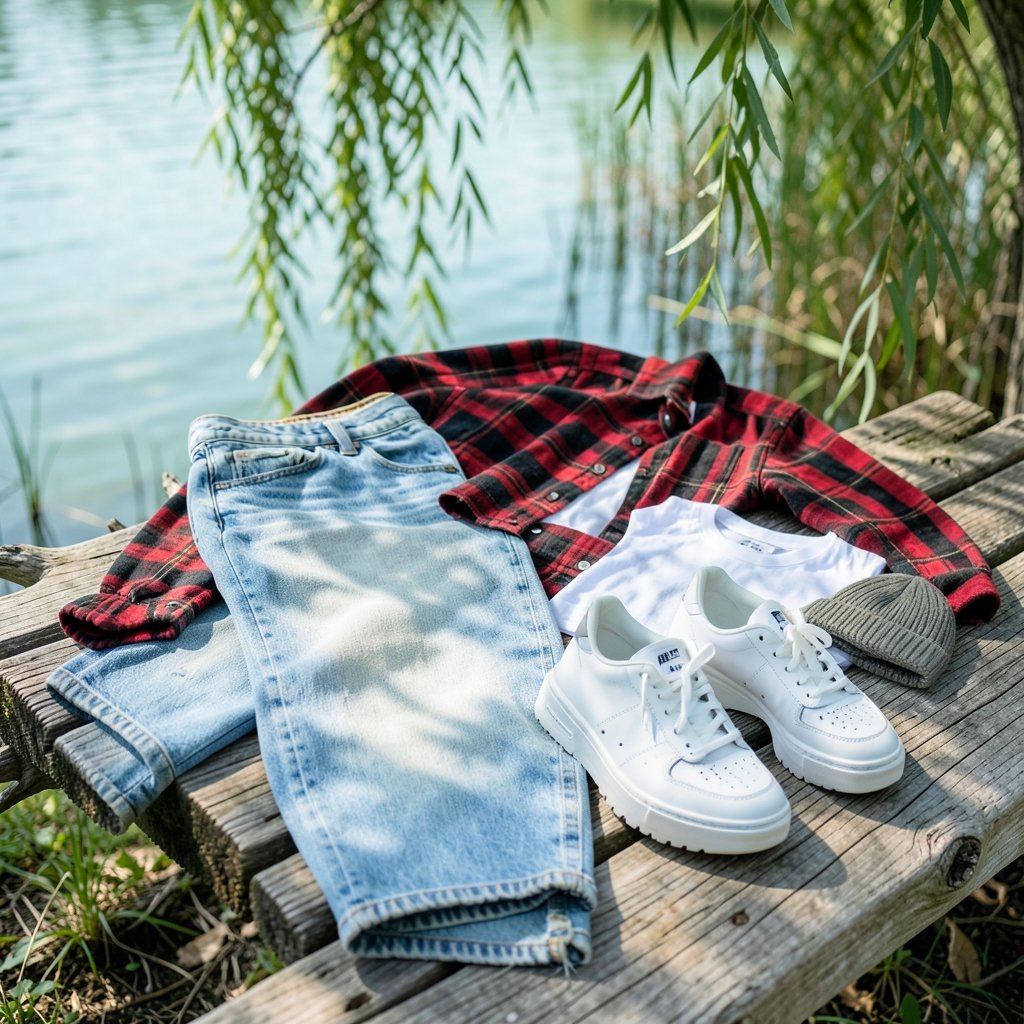
What if the most mocked decade in menswear turned out to be the most influential? That is exactly what happened to 1990s men’s fashion. The era that gave the world sagging jeans, flannel shirts tied around the waist, and sneakers the size of small boats was written off for years as a style dead zone. Then designers started borrowing from it again, and suddenly everyone from skate kids to luxury houses was chasing that slouchy, confident, slightly chaotic look.
The 1990s were not one style. They were at least four running at once: grunge, hip-hop streetwear, minimalism, and a loosening suit. Understanding how those currents fit together is the key to wearing the decade well today without looking like a costume.
Why 1990s Men’s Fashion Still Matters
The 1990s broke a rule that had held for decades: menswear no longer had to look expensive to look good. A ripped jean and a band T-shirt could carry as much authority as a tailored jacket. That shift never reversed.
The decade also set the template for everything now called streetwear. Oversized silhouettes, sportswear branding, tracksuits, and basketball sneakers moved from the street into the mainstream, with brands such as FUBU (founded in 1992) and later Sean John (founded in 1998) becoming markers of the moment. Today’s drop culture, logo-heavy hoodies, and sneaker resale market all trace a direct line back to that period.
For anyone building a wardrobe now, the 1990s are less a nostalgia trip and more a working vocabulary. The proportions are forgiving, the pieces are comfortable, and the rules are loose. That is also the danger. Loose rules make it easy to drift into fancy dress. The fix is to borrow the shapes and skip the gimmicks.
Grunge: The Flannel Revolution

Grunge as a fashion moment is usually dated to 1992–93. The look came out of Seattle’s music scene: flannel shirts, ripped jeans, band T-shirts, Dr. Martens boots, and beanies. It was deliberately anti-fashion, which is precisely why fashion noticed.
Designer Marc Jacobs famously translated the style for Perry Ellis’s Spring 1993 collection, shown in late 1992. The collection is widely reported to have been a commercial failure at the time, and Jacobs left the house soon after. History reversed the verdict. The layering, the oversized flannel, the visible wear and tear, all of it became reference points for designers for the next three decades.
How to wear grunge without looking like a costume
- Pick one grunge element, not four. An oversized flannel over a plain tee and straight jeans reads modern. Add the beanie, the ripped knee, and the combat boots at the same time and you are in costume.
- Keep the fit intentional. Grunge was sloppy on purpose. A shirt that is simply two sizes too big looks like a mistake. Look for dropped shoulders and a boxy body that sits where it should.
- Upgrade the fabric. A heavy brushed flannel in a muted check looks far better than a thin, shiny version. Texture does most of the work here.
- Anchor it with clean footwear. A plain sneaker or a polished boot balances the roughness. This is the single most common mistake people make: they go rough on top and rough on the bottom and the whole outfit collapses.
Hip-Hop and Streetwear: The Baggy Era
If grunge loosened the shirt, hip-hop loosened everything. The 1990s saw oversized silhouettes, sportswear branding, tracksuits, and basketball sneakers move from street culture into the mainstream. The baggy jean, the football jersey, the puffer jacket, and the logo hoodie all became everyday menswear.
The waistband sag became a visible and contested style through the decade, particularly in US hip-hop and skate culture. It later prompted local ordinances restricting sagging in some US municipalities from the late 1990s onward. Whatever you think of the look, its cultural footprint is undeniable, and the low-slung, wide-leg silhouette it produced still shows up in contemporary denim.
Denim sat at the center of all this. Baggy jeans, stone-washed and acid-washed finishes, and carpenter and utility styles were everywhere in 1990s men’s casual wear. Those washes have cycled back repeatedly, and the baggy cut is now a standard option in most denim ranges.
The practical rule for baggy fits
Baggy works when one half of the outfit is big and the other half is deliberate. Wide jeans with a fitted tee and a boxy overshirt is a balanced look. Wide jeans with an oversized hoodie and chunky boots turns into a silhouette with no shape at all. If you want the 1990s feel without the visual weight, size up one step on the trousers and keep the top close to your actual size.
Minimalism: The Quiet Countercurrent
Not everyone in the 1990s was drowning in fabric. A parallel current ran through the decade: minimalism, associated with designers such as Helmut Lang, Jil Sander, and Calvin Klein. Clean lines, neutral palettes, and technical fabrics defined this strand, and it is often dated to the early-to-mid 1990s.
This is the part of the decade that aged best. A plain grey crewneck, a sharply cut black trouser, a simple overcoat with no visible branding: none of it looks dated because none of it was ever loud. If you are drawn to minimalist fashion men can actually wear, the 1990s minimalists are the best starting reference point in twentieth-century menswear.
The contrast matters. Grunge and streetwear get the headlines, but minimalism is what makes a 1990s-inspired wardrobe usable on a Monday morning. The two strands also mix well. A minimal base with one streetwear or grunge element on top is one of the most reliable formulas in modern casual dressing.
The Suit Loosened Up
The 1990s changed tailoring too. Business casual spread through US workplaces across the decade, and menswear saw wider, boxier suit cuts before a return to slimmer tailoring around the late 1990s and early 2000s. The tight, sharp suit that dominated the 2000s was partly a reaction against how roomy the 1990s had been.
| Era | Suit silhouette | Shirt and tie | Overall feel |
|---|---|---|---|
| Late 1980s | Broad shoulders, nipped waist | Bold tie, spread collar | Aggressive, status-driven |
| Mid 1990s | Wide, boxy, long jacket | Looser shirt, often no tie | Relaxed, roomy |
| Late 1990s | Slightly trimmer, still soft | Slim tie returns | Transitional |
| Early 2000s | Close-fitting, short jacket | Narrow tie, high collar | Sharp, precise |
The lesson from the 1990s is that a suit does not have to be tight to look sharp. A softer shoulder and a fuller trouser can look more confident than a compressed one, especially on bodies that do not suit a narrow cut. If you are buying now, the mid-1990s proportion is the most forgiving reference: a jacket that follows the shoulder rather than pinching it, and a trouser with a straight leg and a clean break.
Sportswear Went Everywhere
Sportswear crossover accelerated sharply in the 1990s, with athletic brands and technical outerwear, including fleece and shell jackets, entering everyday menswear. This is often framed as an early phase of what later became athleisure, though the term itself is generally dated to the 2000s and 2010s and should not be pushed back onto the decade.
The pieces that survived are the useful ones: the half-zip fleece, the track jacket, the windbreaker, the retro runner. These work today because they are comfortable, layer easily, and read as casual without effort. The pieces that did not survive are the ones built purely on branding.
A practical note from experience: technical fabrics from the 1990s were often shiny and thin in a way that photographs badly in daylight. If you are buying vintage, check the hand-feel before the label. A matte fleece or a crisp nylon shell will look far more current than a high-shine piece, even if both are period-correct.
Heroin Chic and the Dark Side of the Decade
The mid-1990s brought a styling trend that drew real criticism. The media label heroin chic emerged roughly around 1996–97, describing pale, gaunt, androgynous styling in fashion photography and advertising. It attracted public condemnation, including remarks from then-US President Bill Clinton in May 1997. The episode is a reminder that 1990s fashion was not uniformly liberating. Some of its aesthetics carried a message nobody should revive, and the industry’s reckoning with that period shaped later debates about body image in fashion.
How to Wear 1990s Style Today
The decade’s looks translate well if you treat them as a set of proportions rather than a costume. Here is what actually works in practice.
- Start with one silhouette. Wide trouser or boxy top, not both at full volume. This single decision fixes most 1990s outfits.
- Buy the wash, not the wreckage. Stone-washed and acid-washed denim are back in rotation. Genuine vintage rips often sit in awkward places; a clean wash with a modern cut is more wearable.
- Use neutral colors as the base. Grey, black, navy, and ecru carry the decade’s shapes without shouting. Add one color or print on top.
- Watch the sleeve and hem length. Oversized is not the same as too long. A boxy jacket that ends at the hip looks intentional; one that ends mid-thigh looks borrowed.
- Skip the ironic accessories. Tiny sunglasses, chain wallets, and visors read as fancy dress in most settings. One period piece per outfit is plenty.
- Check the secondhand quality. 1990s garments were often built well. Look at seams, zips, and fabric weight before price. A heavy cotton tee from the era will outlast most new ones.
For readers who want to see how a single decade gets reinterpreted by designers season after season, the way Angelica hicks fashion illustrator turns runway moments into lasting visual references is a useful case study in how trends travel from street to sketch to shop floor.
If you are building a wardrobe around these ideas, it helps to know where the current season sits. A clear read on the fashion trends 2026 landscape shows how much of today’s menswear is still running on 1990s proportions. For a broader view of where the decade’s influence fits, the 2026 fashion trends guide is a solid reference point.
The 1990s also sit in a longer chain. The 1950s fashion trends men followed a completely different logic: structured, formal, and deliberately polished. Comparing the two decades shows how quickly menswear moved from constraint to comfort in the second half of the century. And if you want to see how another revival decade gets handled without tipping into costume, this take on 90s summer outfits get look without looking costumed applies the same principle to warm-weather dressing.
Conclusion
The 1990s were not a single look but a collision of them: grunge’s deliberate mess, hip-hop’s oversized confidence, minimalism’s quiet precision, and a suit that finally learned to relax. That range is why the decade keeps coming back. There is a 1990s answer for almost any mood, and most of those answers are comfortable, forgiving, and easy to find secondhand.
The trick is restraint. Pick one element from the era, get the fit right, and let the rest of the outfit stay simple. Do that and the decade reads as style. Skip it and you are wearing a costume. The 1990s gave menswear permission to be relaxed. Using that permission well is the whole skill.
Frequently Asked Questions
What defines 90s men’s fashion?
There is no single definition, because the decade ran several styles at once. The main currents were grunge (flannel, ripped denim, boots), hip-hop streetwear (oversized fits, sportswear branding, baggy jeans), minimalism (clean lines, neutral colors, technical fabrics), and a looser approach to tailoring. What ties them together is a move away from tight, formal dressing toward comfort and self-expression.
When did grunge fashion start?
Grunge as a fashion moment is usually dated to 1992–93, emerging from Seattle’s music scene. Designer Marc Jacobs translated the look for Perry Ellis’s Spring 1993 collection, shown in late 1992. The collection is widely reported to have been a commercial failure at the time, though its influence grew enormously afterward.
Why were 90s clothes so baggy?
Baggy clothing came from several directions at once. Hip-hop and skate culture favored oversized silhouettes as a statement of attitude and practicality. Grunge rejected tailored fit on purpose. And the wider suit cuts of the mid-1990s reflected a broader workplace shift toward business casual. Loose clothing was comfortable, cheap to produce, and visually distinct from the sharp 1980s.
Can you wear 90s fashion without looking like you’re in costume?
Yes, and the rule is simple: use one period element per outfit. A single oversized flannel over a plain tee and straight jeans looks current. Layering four grunge signifiers at once reads as fancy dress. Keep the palette neutral, get the sleeve and hem lengths right, and skip ironic accessories like chain wallets and tiny sunglasses.
What 90s items are worth buying today?
The most useful pieces are the ones built on proportion rather than novelty: a boxy overshirt, a wide-leg or straight jean in a clean wash, a half-zip fleece, a plain heavy cotton tee, a soft-shouldered jacket, and a retro runner sneaker. Check seams, zips, and fabric weight on vintage pieces, since 1990s garments were often made well and can outlast new equivalents.
Did 90s fashion have a negative side?
Yes. The mid-1990s “heroin chic” styling trend, which emerged roughly around 1996–97, promoted pale, gaunt, androgynous looks in fashion photography and advertising. It drew widespread criticism, including public remarks from then-US President Bill Clinton in May 1997, and contributed to later debates about body image standards in the fashion industry.














