


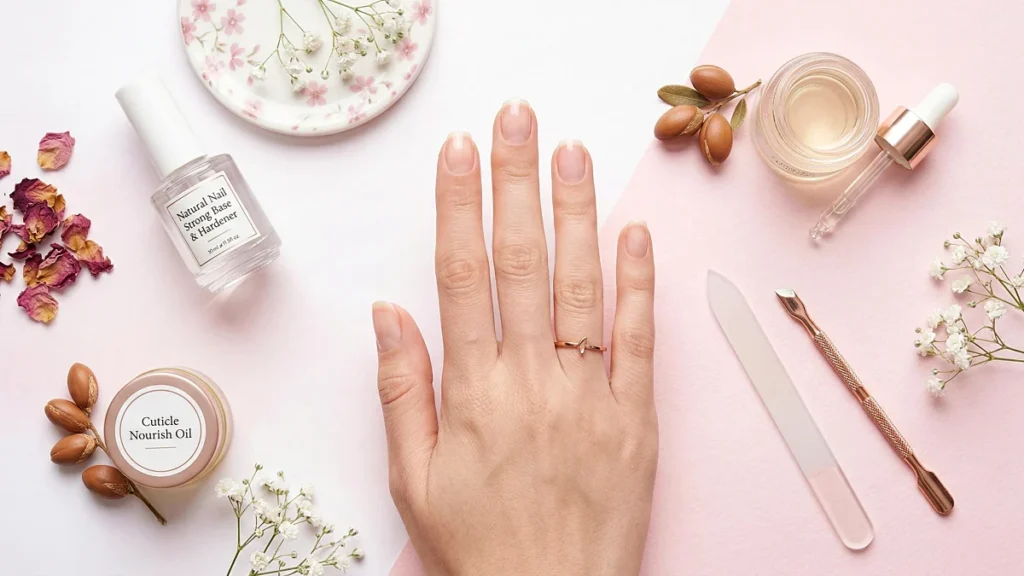
Your nails keep breaking just when they start to grow. The edges peel, the surface looks rough, and even a clear coat cannot hide the damage. Buying another nail treatment may seem like the answer, but everyday habits often matter more than another product.
Healthy-looking natural nails need consistent, gentle care. Keep them clean and properly shaped, moisturize the surrounding skin, avoid aggressive buffing, and protect your hands during chores. If you prefer the clean, barely-there manicure look, sheer pink, milky white, and nude shades can add shine without hiding the natural nail.
This guide explains what healthy nails look like, how to build a realistic care routine, which habits can cause damage, and when a nail change deserves professional attention.
AI Overview: How Do You Keep Natural Nails Healthy?
To maintain healthy natural nails, keep them at a comfortable length, file rough edges gently, moisturize your hands and nail folds, and wear gloves when cleaning or washing dishes. Avoid cutting your cuticles, picking off polish, and frequent aggressive buffing.
Sheer polish can create a clean finish, but no polish or treatment can replace basic nail care. Persistent discoloration, thickening, or nail separation should be assessed by a healthcare professional.
Key Takeaways
- Natural nails benefit most from consistent, gentle care.
- Hand cream and cuticle oil help condition the skin around the nail.
- Frequent or aggressive buffing can thin the nail plate.
- Gloves help protect nails during cleaning and prolonged water exposure.
- Sheer pink, milky white, nude, and clear gloss create a clean manicure.
- Nail breaks are useful opportunities to inspect your nails, not because nails need to breathe.
- Persistent changes in color, thickness, shape, or attachment deserve professional attention.
What Do Healthy Natural Nails Look Like?

Healthy nails do not have to look perfectly smooth or identical. Natural nail texture varies, and small vertical ridges can be normal, particularly as you get older.
Generally, healthy-looking nails have:
- A relatively smooth surface without sudden changes in texture.
- A consistent appearance that is typical for your nails.
- Firm attachment to the skin beneath the nail.
- A neat free edge without excessive peeling or splitting.
- Skin around the nail that is not persistently swollen, red, or painful.
The pale half-moon near the base is called the lunula. It is visible on some fingers and less noticeable on others. Its visibility alone is not a reliable measure of nail health.
Pay attention to changes rather than chasing a perfect appearance. New discoloration, unusual thickening, persistent grooves, or separation from the nail bed may need medical assessment. The American Academy of Dermatology’s guidance on nail changes explains which changes should be examined.
A Simple Natural Nails Care Routine

You do not need a complicated collection of products to maintain natural nails. A few consistent habits can help protect the nail plate and surrounding skin.
1. Moisturize Your Hands and Nail Folds
Frequent handwashing, soap, and cleaning products can dry the skin around your nails. Apply hand cream after washing and massage a small amount around the nail folds.
Cuticle oil can also help condition the surrounding skin. It does not repair the nail plate, but keeping the skin flexible can reduce dryness and uncomfortable hangnails.
2. File Gently
Rough edges can catch on clothing and lead to splitting. Use a fine nail file to shape your nails without applying excessive pressure.
File carefully and avoid aggressive back-and-forth sawing. Choose a length that suits your daily activities rather than keeping nails long when they repeatedly break.
3. Leave Your Cuticles Alone
Cuticles help protect the area where the nail grows. Cutting or aggressively pushing them back can damage the surrounding skin and increase the risk of irritation or infection.
If a loose piece of dead skin catches, do not pull it. Keep the area moisturized and avoid cutting living skin.
4. Wear Gloves for Wet Work
Long exposure to water can make nails swell and then shrink as they dry. Repeated cycles may contribute to splitting and peeling.
Wear waterproof gloves when washing dishes, cleaning, or handling household chemicals. This simple habit can protect both your nails and your hands.
5. Avoid Picking and Peeling
Peeling off nail polish or gel can remove layers of the natural nail surface. Picking at rough areas can also make small problems worse.
Use an appropriate remover and follow the product’s removal instructions. Never force off a coating that is still firmly attached.
Hydration and Buffing: What Actually Helps?
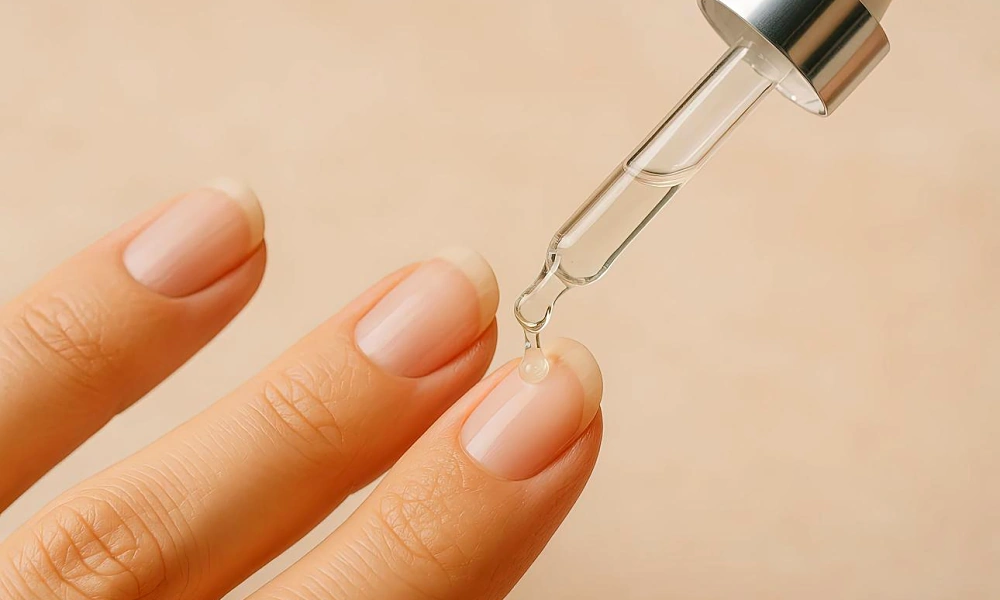
Hydration and buffing are often treated as equally important parts of a natural nail routine. They are not.
Moisturizer and cuticle oil mainly condition the skin around the nails. Buffing physically changes the nail surface, which means excessive use can create damage.
Why Cuticle Oil Is Useful
Cuticle oil helps soften and condition the skin around the nail. Apply a small amount when the surrounding skin feels dry, particularly after washing your hands.
Hand cream serves a wider purpose by moisturizing the hands and fingers. Using both can make your nails look neater because dry, rough skin is less noticeable.
How Often Should You Buff Natural Nails?
Buffing can temporarily smooth the surface and create shine, but it should be occasional and gentle.
If you buff too often, you can thin the nail plate. A thinner nail may become more vulnerable to peeling, splitting, and breakage.
For a glossy finish, consider using a clear top coat instead of repeatedly buffing the natural surface.
Habits That Can Undo Your Progress
Avoid these common mistakes:
- Cutting cuticles: This can damage the protective skin around the nail.
- Using rough files: Coarse files and aggressive filing can weaken the free edge.
- Peeling off polish: Pulling off coatings may remove layers of the nail plate.
- Over-buffing: Repeated abrasion can thin the natural nail.
- Ignoring dryness: Rough skin and hangnails can become uncomfortable and catch on clothing.
The Clean Look: Sheer Polish for Natural Nails

The clean nail look is built around a simple idea: make the natural nail look neat rather than covering it with heavy color.
Sheer pinks, soft nudes, milky whites, and clear gloss are popular choices because they add a polished finish while allowing some natural nail color to show through.
Sheer Pink
Sheer pink gives the nail a subtle, healthy-looking finish. It works well when you want a little color without a fully opaque manicure.
Milky White
Milky white creates a soft, cloudy appearance. Apply thin coats to avoid a thick, streaky finish.
If you prefer a recognizable salon shade, ask about a milky white such as OPI Funny Bunny and check the exact formula and finish available at your salon.
Nude Beige
Nude beige creates a quiet, understated manicure. Choose a tone that complements your skin rather than assuming one shade works for everyone.
Sheer Mauve
Sheer mauve offers a cooler alternative to pink. It is useful if you prefer a subtle manicure with a little more depth.
Clear Gloss
A clear top coat gives natural nails shine without adding color. It is a straightforward option if you want a neat finish but prefer to keep your nails bare.
| Shade | Finish | Overall effect |
| Sheer pink | Glossy or jelly | Soft, natural-looking color |
| Milky white | Cloudy and translucent | Clean, understated finish |
| Nude beige | Sheer or thin cream | Subtle, skin-toned appearance |
| Sheer mauve | Jelly | Cool-toned, delicate color |
| Clear gloss | Transparent | Shine without color |
For more manicure inspiration, explore these cute nail ideas.
How to Support Natural Nail Growth

Nails grow gradually, so visible progress takes patience. Fingernails generally grow a few millimeters each month, although the rate differs between people.
The main goal is not to force nails to grow faster. It is to reduce breakage so more of their natural growth remains visible.
Try these habits:
- Keep nails at a manageable length while they are prone to splitting.
- Moisturize regularly.
- Wear gloves during cleaning and dishwashing.
- Avoid using your nails to open packages or scrape surfaces.
- Maintain a varied, balanced diet.
- Avoid products that promise dramatic growth without credible evidence.
If your nails keep breaking, look at your daily routine before buying another strengthening product. Frequent water exposure, harsh handling, and repeated cosmetic treatments may be contributing factors.
Do Natural Nails Need a Break Between Manicures?
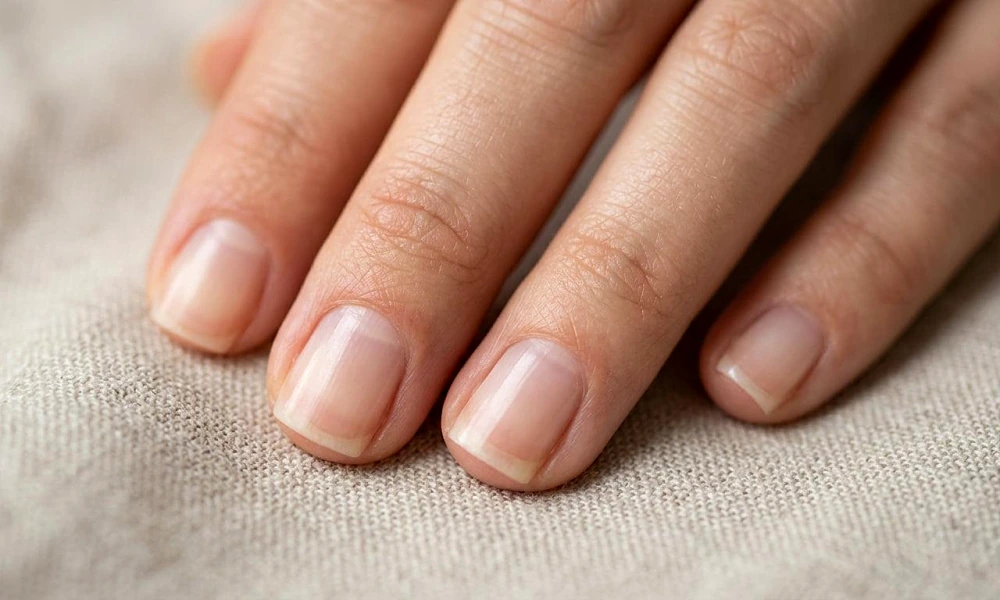
Nails are made primarily of keratin. They do not breathe, so the phrase “letting your nails breathe” is not technically accurate.
However, taking a break from polish, gel, or artificial extensions can still be useful. It gives you an opportunity to inspect the natural nail, notice changes, and reduce exposure to some manicure products and removal methods.
During a break:
- Keep nails short enough to avoid catching.
- Moisturize your hands and surrounding nail skin.
- Avoid aggressive filing and buffing.
- Do not peel away leftover coatings.
- Watch for persistent changes in color, texture, or attachment.
There is no universal schedule that every person must follow. The need for a break depends on your nail condition and the products and techniques you use.
If you wear extensions, learn about artificial nail damage and ways to reduce it.
When Should You See a Professional About Nail Changes?

Not every ridge or color variation signals a medical problem. However, new or persistent changes should not automatically be covered with polish.
Consider arranging a medical assessment if you notice:
- New or persistent discoloration.
- Unusual thickening or changes in nail shape.
- A nail separating from the nail bed.
- Persistent grooves or changes in texture.
- Swelling, pain, or redness around the nail.
- Changes that affect one nail and do not improve.
A dermatologist or other qualified healthcare professional can assess the cause. Stronger polish, buffing, or another cosmetic treatment is not a substitute for diagnosis.
Expert Tips for Making Bare Nails Look Neat

A natural manicure depends on small details. These habits can make the finish look more intentional:
- Keep a hand cream nearby. Applying it after washing your hands makes moisturizing easier to remember.
- Use a gentle file. Smooth rough edges before they catch on fabric.
- Choose a practical length. Shorter nails are often easier to maintain when breakage is a recurring problem.
- Use clear gloss for shine. It can provide a polished finish without repeated buffing.
- Take occasional photographs. Monthly photos can make gradual changes easier to notice than checking your nails every day.
Frequently Asked Questions
How can I make natural nails look good without polish?
Keep them clean, shape the edges gently, and moisturize your hands and the skin around your nails. A clear top coat can add shine if you want a more finished appearance.
Does cuticle oil really help natural nails?
Cuticle oil conditions the skin around the nail and helps reduce dryness. It does not repair or directly strengthen the existing nail plate, but it can make the surrounding area look and feel better.
How often should I buff natural nails?
Buffing should be occasional and gentle. Frequent buffing can thin the nail plate, so use a clear top coat when you want extra shine without repeatedly abrading the surface.
Do natural nails need to breathe?
No. Nails do not breathe because they are made of keratin. A break from polish or artificial nails can still be useful for inspecting the nail surface and reducing exposure to removal products.
What causes natural nails to peel or break?
Repeated wetting and drying, rough handling, aggressive filing, picking off polish, and some cosmetic treatments can contribute to peeling or breakage. Persistent problems may have other causes, so seek professional advice if they do not improve.
When should I see a doctor about my nails?
Seek an assessment for persistent or unusual discoloration, thickening, separation, changes in shape, or ongoing pain and swelling. A healthcare professional can determine whether the change needs treatment.
Final Thoughts
Natural nails do not need an elaborate routine to look good. Gentle filing, regular moisturizing, protection during household chores, and patience can make a meaningful difference to their appearance.
Choose sheer polish if you enjoy a clean finish, or leave your nails bare if that feels more comfortable. The priority is protecting the natural nail rather than constantly trying to cover or reshape it.









