


What do you do when a standard seat cover just can’t survive your life? Maybe you’re hauling tools, mud, and a dog that thinks the back seat is a trampoline. Or maybe you want a seat that looks like it belongs in a gritty anime garage rather than a showroom. Either way, the phrase “guts seat cover” points to two very different products, and mixing them up wastes money fast.
This guide separates the two meanings, then walks through materials, fit, and the mistakes that make people buy twice. If you’ve ever peeled a cheap cover off a seat and found a permanent stain underneath, you already know why the details matter.
Two Very Different Products Share This Name
The term guts seat cover gets used for two unrelated things, and the search results are a mess because of it.
The first is a graphic or themed seat cover. This covers licensed designs tied to anime, manga, and gaming culture, plus the broader category of bold print covers that put a character, logo, or slogan across a car, truck, or gaming chair seat. Buyers here care about artwork accuracy, print durability, and whether the cover fades after a summer in the sun.
The second is a heavy-duty protective seat cover built for abuse. Think work trucks, farm equipment, off-road vehicles, and dog-hauling family SUVs. “Guts” in this sense is shorthand for the guts of the seat, the padding and structure underneath, and the cover’s job is to shield that core from spills, grit, claws, and grease.
Both products live in the same shopping aisle, which is why so many buyers end up with the wrong one. A licensed character cover will not survive a wet Labrador. A rubberized utility cover will not make anyone’s day if they wanted a specific design.
The practical fix is simple: decide which problem you’re solving before you open a single product page.
Matching the Cover to the Job
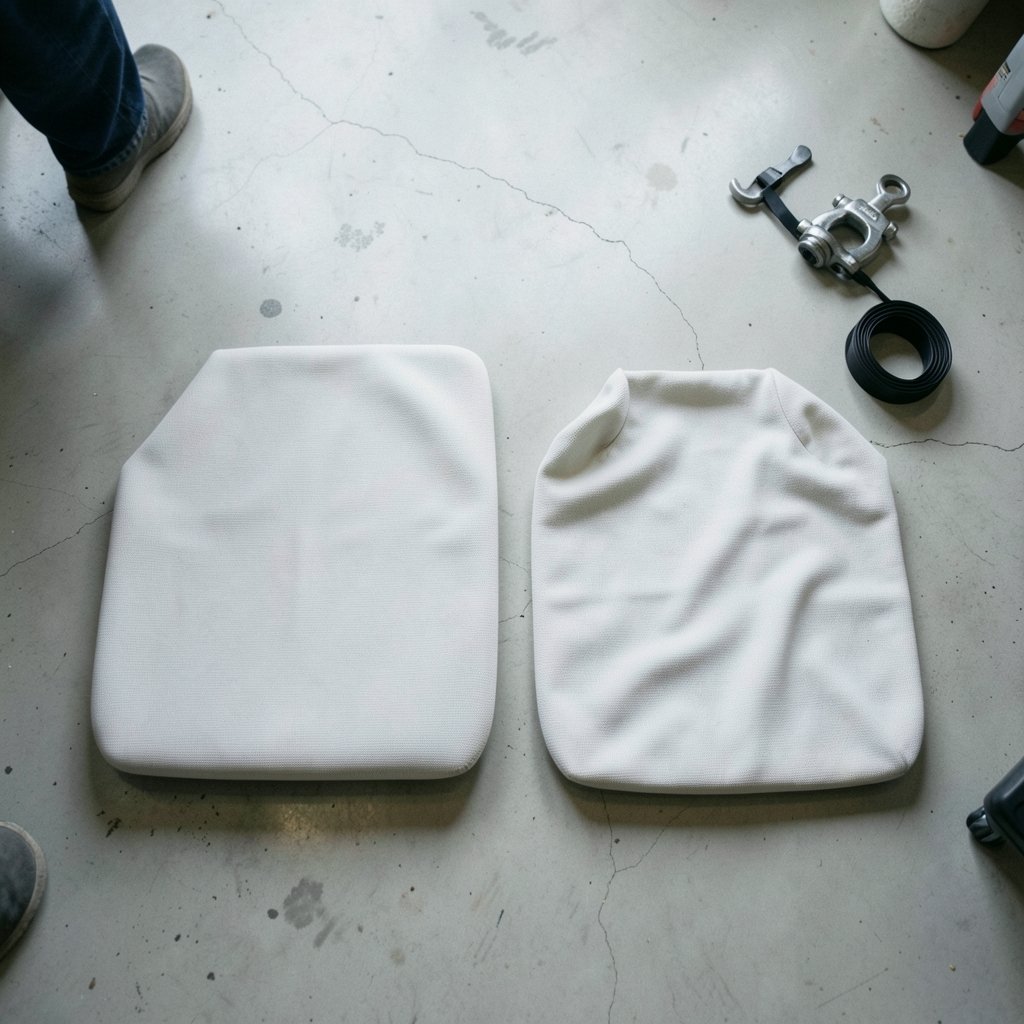
The table below maps common situations to the type of cover that actually holds up. Use it as a filter before you start comparing prices.
| Situation | Best cover type | What to prioritize |
|---|---|---|
| Work truck, tools, and dirt | Heavy-duty utility cover | Waterproof backing, reinforced seams |
| Dog transport and muddy paws | Quilted or rubber-backed cover | Grip, quick-clean surface, anchor points |
| Daily commuter car | Graphic or print cover | UV-resistant ink, snug fit |
| Gaming chair or home theater seat | Themed or plush cover | Stretch fabric, breathable weave |
| Farm or off-road vehicle | Canvas or neoprene cover | Abrasion resistance, strap system |
| Family SUV with kids | Waterproof bench cover | Spill barrier, machine washability |
Notice that price barely appears in that table. A thirty-dollar cover that fits well beats a ninety-dollar cover that bunches at every corner, and the difference shows up in week two, not day one.
Material Reality Check: What Each Fabric Actually Does
Marketing copy loves words like “premium” and “military grade.” Materials tell you more. Here’s how the main options behave in real use.
Polyester with a polyurethane backing is the workhorse of the print cover world. It takes dye well, which matters for graphic designs, and the backing blocks light spills. The weak point is heat. Left in a hot car for years, cheap polyester prints can fade and the backing can crack. Look for covers that state UV resistance rather than assuming it.
Neoprene is the dive-suit material, and it earns its reputation. It’s water-resistant, flexible, and grips the seat instead of sliding. It also traps heat, which is great in winter and unpleasant in a black truck cab in July. Neoprene covers tend to cost more and can develop a rubber smell when new.
Canvas and heavy cotton duck breathe well and resist abrasion, which is why they show up in work vehicles. They are not waterproof on their own. Untreated canvas soaks through, so a canvas cover without a waterproof layer is a sponge with good intentions.
Faux leather and vinyl clean up in seconds and look sharp. They also get hot, get cold, and can crack along fold lines in a reclining seat. If the seat articulates a lot, like a luxury recliner seat in a media room, vinyl at the hinge points is where failures start.
Quilted padded fabric adds cushioning and handles pet claws better than thin prints. The trade-off is bulk, which can interfere with seat-mounted airbags if the cover isn’t designed with a tear-away seam.
That airbag point deserves its own warning. Side airbags that deploy from the seat need a clear path. A cover that wraps the seatback tightly with no breakaway stitching can delay or block deployment. Check for an airbag-compatible label before buying anything for a front seat.
Fit Is Where Most Covers Fail
A seat cover is a fitted product pretending to be a universal one. That tension causes most of the disappointment.
Universal covers are sized in broad categories like “front bucket” or “bench.” They fit a lot of seats acceptably and almost none perfectly. Expect wrinkles, loose flaps, and straps that need improvising.
Custom covers are cut for a specific make, model, and year. They cost more and take longer to arrive, but they follow the seat’s contours, accommodate headrests and armrests, and usually include cutouts for controls.
Semi-custom covers sit in the middle. They use stretch panels and adjustable strapping to cover a range of seats. Quality varies wildly, so read reviews that mention the specific vehicle.
Here’s a test that saves returns: measure the seat’s widest point at the cushion, the height of the seatback, and the headrest width. Then compare those numbers to the product’s stated range. If a listing gives no measurements, that’s a signal.
For anyone fitting out a dedicated room rather than a vehicle, seat dimensions matter just as much. A cover that’s slightly too small will fight every recliner mechanism, so it pays to check home cinema seat sizes before ordering anything with a fixed cut.
Installation Without the Swearing
Most bad installations come from rushing the straps. A twenty-minute job done properly beats a five-minute job that shifts every time someone sits down.
- Vacuum the seat and wipe it down. Grit under a cover acts like sandpaper on the upholstery.
- Slide the cover over the seatback first, working it down from the top like a pillowcase.
- Tuck the excess into the crease between the backrest and the cushion rather than leaving it bunched at the sides.
- Connect the rear straps and pull them snug, not guitar-string tight. Over-tensioning stretches seams.
- Route any front hooks under the seat, away from seat rails and adjustment levers.
- Sit in the seat and shift your weight. Then re-tighten whatever went slack.
- Check that headrest posts, armrests, and seat controls all move freely.
The most common mistake is forgetting step six. Straps that feel tight while you’re standing beside the car loosen the moment real weight lands on the cushion.
A second common mistake is ignoring the seatbelt buckles. A cover that swallows the buckle recess makes every trip a small wrestling match.
Care That Extends the Life of the Cover
Washing advice depends on the material, but a few rules cross over.
Machine wash cold on a gentle cycle for fabric covers, then air dry. Heat from a dryer shrinks seams and degrades waterproof coatings. Never dry a coated cover on high.
Wipe vinyl and faux leather with a damp cloth and a mild soap solution. Skip harsh solvents, which strip the finish and leave the surface sticky.
Vacuum quilted covers weekly if pets ride along. Hair works into the stitching and abrades the thread from the inside.
Rotate the cover if it’s on a seat that gets uneven wear. The driver’s bolster always goes first.
And if the cover is protecting a seat you plan to keep for years, treat the cover as consumable. A sixty-dollar cover replaced every three years is cheaper than reupholstering.
Where Themed Covers Fit Into a Bigger Room
Graphic and character covers aren’t only for cars. They show up in gaming setups, home theaters, and themed rooms where the seating is part of the decor.
That’s a different buying problem. In a vehicle, the cover has to survive weather and abrasion. In a room, it has to match a design scheme and feel good for two hours at a stretch. Buyers comparing theater seating styles quickly learn that fabric choice drives both comfort and look, and a themed cover is often the cheapest way to change a room’s personality without replacing the furniture.
The same logic applies to textiles around the seat. A bold print cover next to a plain throw can look accidental, while pairing it with considered bedding and upholstery reads as intentional. Anyone refreshing a media room usually finds that luxury duvet covers and seating fabrics need to be chosen together rather than one after the other.
For a deeper comparison of styles, sizes, and configurations, this guide to luxury home cinema seating covers the trade-offs in more detail than a single article can.
What Buyers Get Wrong Most Often
A few patterns show up again and again in returns and bad reviews.
Buying on artwork alone. The design is the first thing you see and the last thing that matters if the cover slides off the seat.
Assuming waterproof means waterproof. Many covers resist splashes but soak through under sustained moisture. Check whether the listing specifies a waterproof backing or only a water-resistant face.
Ignoring the airbag question. Front-seat covers without breakaway seams are a genuine safety concern, not a nitpick.
Skipping the return policy. Fit problems are common enough that a generous return window matters more than a small discount.
Forgetting the seat heater. A thick cover insulates the seat and can make a heated seat feel lukewarm. Thin covers preserve heat better.
Overpaying for a logo. Licensed designs carry a premium. If the artwork is what you want, fine, but know that part of the price is the license, not the material.
Conclusion
The phrase guts seat cover describes two products, and the right one depends entirely on what you’re protecting. A themed cover is a design decision. A heavy-duty cover is a durability decision. Confusing the two is how people end up with a faded character print on a work truck or a rubber mat on a gaming chair.
Whatever the goal, the buying rules stay the same. Match the material to the abuse, measure before ordering, install with patience, and check the airbag compatibility on any front seat. Do those four things and the cover will outlast the enthusiasm that made you buy it. Skip them and you’ll be shopping again by next season, wondering why the first one didn’t work.
FAQ
What does “guts seat cover” actually mean?
It refers to two different products. One is a themed or graphic seat cover tied to anime, manga, or gaming designs. The other is a heavy-duty protective cover built for work trucks, off-road vehicles, and pet transport. The right meaning depends on whether you’re buying for looks or for durability.
Are universal seat covers worth buying?
They’re fine for light use and tight budgets, but expect wrinkles and some improvising with straps. Universal covers fit a broad range of seats acceptably and almost none perfectly. If the seat matters to you, a custom or semi-custom cover is usually the better spend.
Can a seat cover block a side airbag?
It can, which is why airbag-compatible covers exist. Side airbags that deploy from the seat need a clear path, and covers designed for those seats use breakaway seams that split on deployment. Look for an airbag-compatible label before buying anything for a front seat.
How often should a seat cover be washed?
Fabric covers benefit from a wash every one to two months, or monthly if pets ride along. Vinyl and faux leather need only a wipe-down with mild soap. Always air dry coated fabrics, since dryer heat degrades waterproof layers and shrinks seams.
Will a thick cover stop a heated seat from working?
It will slow it down. Thick padding and quilted layers insulate the seat, so heat takes longer to reach you and feels weaker overall. Thin covers preserve heated-seat performance much better. If warmth matters, choose a thinner material and check reviews that mention heated seats.
What’s the best material for a work truck seat cover?
Canvas with a waterproof backing or neoprene are the two strongest choices. Canvas resists abrasion and breathes well, while neoprene handles water and grips the seat. Avoid thin polyester prints, which fade and crack under sun and heavy use.









