


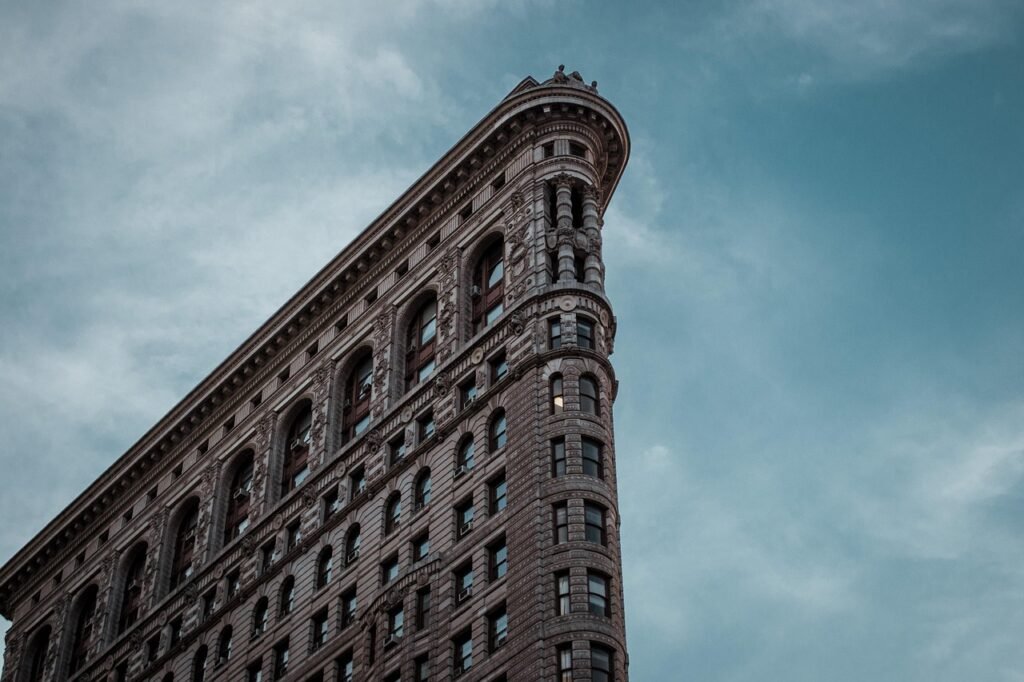
Why does a 22-story triangular office building draw more camera phones per square block than almost anywhere else in Manhattan? Because the Flatiron Building sits at the point where Fifth Avenue slices across Broadway, and the wedge of land behind it turned into one of New York’s most photographed corners. But the Flatiron District is more than one postcard shot. It is a working neighborhood of about two dozen blocks, packed with landmark architecture, a historic park, a serious restaurant scene, and a retail corridor that helped define American shopping in the 1800s. This guide covers what the district actually is, how its edges are drawn, what to do while you are there, and the mistakes visitors make when they try to see it in twenty minutes.
Where Is the Flatiron District, Exactly?
The honest answer is that nobody owns the boundaries. The Flatiron District is an informal neighborhood name, not an official administrative unit, so its edges shift depending on who is drawing the map. The most common convention runs roughly from 14th Street north to 23rd Street, between Park Avenue South on the east and Sixth Avenue on the west. Some maps stretch it a little further in one direction or another, and real estate listings are famously generous with the name because it sells.
That looseness matters if you are planning a walk. If you want to see the district’s core, aim for the few blocks around the intersection of Fifth Avenue and Broadway at 23rd Street. Everything the neighborhood is known for sits within a ten-minute radius of that point.
The name itself is younger than the buildings. It comes from the Flatiron Building, originally called the Fuller Building, completed in 1902 and designed by Daniel Burnham’s firm. The building’s triangular footprint follows the wedge where Broadway crosses Fifth Avenue, and New Yorkers thought it looked like a clothes iron. The nickname stuck and eventually swallowed the whole neighborhood. As for the official adoption of the neighborhood name, the story usually credits Manhattan Community Board 5 with formally embracing “Flatiron District” in the 1980s, partly to move past the older label “Photo District.” Treat that date as worth double-checking before you repeat it as fact.
The Building That Started It All

The Flatiron Building is a steel-frame tower at 175 Fifth Avenue, and its most famous feature is also its most misunderstood. People describe it as the thinnest building in New York, which is not quite right. The tower is narrow at its western tip, but the mass behind that tip is a full block deep. What makes it startling is the approach: walking north on Fifth Avenue, the building presents a blade of limestone and terracotta that seems to have no width at all.
It earned landmark status from the city in 1966 and was listed on the National Register of Historic Places in 1979 as part of the Ladies’ Mile Historic District. Both dates are worth verifying against the official designation reports if you are citing them in research.
Practical note for visitors: the Flatiron Building is not a public attraction with tours and an elevator to the top. It is an office building that has been converting its upper floors to residential condominiums following a 2023 auction and sale. You admire it from the street, from Madison Square Park, or from the plaza at its base. Do not expect to go inside. The best photographs come from the park’s southern end, where you can frame the full wedge, and from the corner of Fifth Avenue and 23rd Street, where the point fills the frame.
Madison Square Park: The Neighborhood’s Living Room
At the district’s northern edge sits Madison Square Park, bounded by Fifth and Madison Avenues between 23rd and 26th Streets. It has been public parkland since 1847, which makes it one of the older green spaces in Manhattan. It is small, roughly six and a half acres, and that scale is exactly why it works. You can cross it in five minutes or sit in it for two hours.
The park functions as the district’s front yard. Office workers eat lunch on the benches, dog owners cluster at the small run on the southern side, and the lawns fill on the first warm day of spring. Public art installations rotate through the park, and the surrounding trees frame some of the best views of the Flatiron Building you will get. If you only have time for one stop, make it this one: you get the park, the building view, and a sense of how the neighborhood actually lives, all at once.
Ladies’ Mile and the Retail History Underfoot
Walk south from the park along Broadway or Fifth Avenue and you are walking through Ladies’ Mile, the retail corridor that made this stretch of Manhattan the shopping capital of late 19th-century America. From roughly 14th to 23rd Streets, department stores and dry goods palaces lined the avenue, selling to a growing middle class with money to spend and streetcars to get them there. The Ladies’ Mile Historic District was designated by the New York City Landmarks Preservation Commission in 1989, which is why so many of the cast-iron facades and grand storefronts survive.
What does that mean for a visitor today? Look up. The ground floors are now chain stores, coffee shops, and gyms, but the upper stories still carry the original architecture: tall arched windows, ornate cornices, iron columns painted in muted colors. The district rewards people who lift their eyes. A block that looks like a generic shopping street at eye level turns into a museum of 19th-century commercial architecture one floor up.
This is also where hair and beauty culture has deep roots in the neighborhood’s retail identity. If you are curious about how hair typing shapes the products sold in shops like these, the difference between 4c hair and looser textures is a good place to start, and the distinction between 2b hair and wavier patterns explains a lot about why shelf space in these stores looks the way it does.
What to Actually Do in the Flatiron District
A good visit is built around walking, eating, and looking up. Here is a sequence that works well for a half day.
- Start at Madison Square Park. Enter from the south side for the classic Flatiron view, then loop the paths.
- Walk the building’s point. Cross to Fifth Avenue and 23rd Street and stand at the corner where the wedge meets the street.
- Head south on Broadway or Fifth. Pick one avenue and walk to 14th Street, keeping your eyes on the second and third floors.
- Detour for food. The district has one of the denser restaurant clusters in Manhattan, from slice shops to tasting menus, plus a strong coffee scene.
- Loop back through the side streets. West 20th and West 19th Streets between Fifth and Sixth Avenues are quieter and show the neighborhood’s residential side.
For a different angle on the area, walk east toward Park Avenue South and look back west. The skyline reads differently from there, and you get a sense of how the district sits between the taller towers of Midtown to the north and the lower-scale blocks of Chelsea and Union Square to the south and west.
If you want to see the neighborhood as a local does, go on a weekday morning. The streets are busy with office traffic, the parks are calm, and the restaurants are quiet. Weekends are better for browsing but worse for crowds around the Flatiron Building itself, where tour groups cluster at the point.
Common Mistakes Visitors Make
The first mistake is treating the district as a single photo stop. People arrive, snap the building, and leave, missing the park, the architecture, and the food. Give it two hours minimum.
The second is misjudging the walking distances. The blocks are short, but the district sits between two subway hubs, and visitors routinely underestimate how far they have walked by the end of an afternoon. Wear shoes you can stand in.
The third is expecting the Flatiron Building to be open. It is not a museum. Plan your visit around the exterior and the surrounding streets.
The fourth is eating on Fifth Avenue itself. The best food in the neighborhood sits one or two blocks off the main avenues, where rents are lower and kitchens have more room to be interesting. Walk one block west or east before you pick a table.
The fifth is ignoring the weather. The district has little tree cover along its main avenues, so a July afternoon on the sidewalk is genuinely uncomfortable. Morning or late afternoon visits are smarter, and the park offers the only real shade.
Getting There and Getting Around
The district is unusually well served by transit. The 23rd Street stations on the Broadway line and the Sixth Avenue line both put you within a block or two of the Flatiron Building, and the 23rd Street crosstown bus runs straight through the neighborhood. Union Square, two blocks south of the district’s lower edge, is a major hub for several lines, which makes it a practical starting point if you are coming from anywhere in the city.
Once you are there, walking is the only method that makes sense. The district is compact enough to cross in fifteen minutes, and the side streets are where the neighborhood reveals itself. Bikes are an option, but the avenues are busy and the protected lanes do not run through the heart of it, so plan your route before you rent anything.
Is the Flatiron District Worth Visiting?
Yes, with the right expectations. It is not a theme park and it is not a single landmark. It is a real neighborhood with a famous face, and the pleasure comes from noticing how the pieces fit: the triangular building, the park that predates it by half a century, the retail palaces that made the avenue famous, and the restaurants that keep the streets busy on a Tuesday night.
If you are interested in architecture, retail history, or urban planning, the district is close to essential. If you have one free afternoon in Manhattan and want a walk that combines a famous view with real city life, it belongs on your list. And if you are the kind of traveler who likes to look up at the second floor while everyone else stares at their phone, this is your neighborhood. The row of facades along Broadway between 14th and 23rd Streets rewards exactly that habit, and the row of storefronts on the side streets shows how a historic district keeps working for a living.
Conclusion
The Flatiron District earns its fame honestly. A strange triangular building, a park older than the neighborhood’s name, and a retail corridor that shaped how America shopped all sit within a few walkable blocks. The boundaries are fuzzy, the building is not open to the public, and the best food is rarely on the main avenue. None of that diminishes the place. Go on a weekday morning, start in Madison Square Park, walk south with your eyes on the upper floors, and give yourself enough time to eat somewhere a block off the beaten path. That is how the district stops being a photograph and starts being a neighborhood.
Frequently Asked Questions
What is the Flatiron District known for?
It is known for the Flatiron Building, the triangular 1902 tower at 175 Fifth Avenue that gave the neighborhood its name. The district is also known for Madison Square Park, the Ladies’ Mile Historic District with its surviving 19th-century retail architecture, and a dense restaurant and coffee scene.
Can you go inside the Flatiron Building?
No. The building is not a public attraction and does not offer tours. Its upper floors have been converting to residential condominiums following a 2023 auction and sale. Visitors see it from the street, from the plaza at its base, and from Madison Square Park.
What are the boundaries of the Flatiron District?
There are no official boundaries. The most common convention runs from 14th Street to 23rd Street, between Park Avenue South and Sixth Avenue, but different maps draw the edges differently. The core of the district is the intersection of Fifth Avenue and Broadway at 23rd Street.
What is the best time to visit the Flatiron District?
A weekday morning works best. The streets are busy but manageable, the park is calm, and the area around the Flatiron Building is far less crowded than on weekends. Summer afternoons are hot on the main avenues because there is little shade.
How long does it take to see the Flatiron District?
Plan at least two hours. That covers the park, the building, a walk south through Ladies’ Mile, and a coffee stop. If you want a meal and a slower walk through the side streets, budget half a day.
Is the Flatiron District the same as Ladies’ Mile?
No, but they overlap. Ladies’ Mile is a designated historic district covering the late 19th-century retail corridor along Broadway and Fifth Avenue from roughly 14th to 23rd Streets. The Flatiron District is an informal neighborhood name for a similar area. The Flatiron Building sits within the Ladies’ Mile Historic District.









