



Picture a bartender sliding a tall, narrow glass across the bar. It looks like a champagne flute, but what’s inside is amber, clear, or bright green, not bubbly. A customer points and asks, “What’s that flute shot?” The bartender pauses. Is it a shot served in a flute? A measured pour of sparkling wine? Something a menu invented last week?
That pause tells you almost everything about the term. Flute shot is not a formal, regulated category in the drinks world. It is a loose bar phrase that gets used in a few different ways, and the meaning depends entirely on who is saying it and where. This guide untangles the possibilities, explains the practical details behind each one, and shows how to order or serve a flute shot without confusing anyone.
The Short Answer: No Official Definition Exists
Anyone searching for a strict definition should know this up front. There is no recognized “flute shot” in standard cocktail references, and no weights-and-measures rule anywhere defines it. The term is informal.
That matters because drink terms usually fall into two buckets. Some are regulated, like ABV (alcohol by volume) statements on labels, which distilled spirits and wine must carry under federal labeling rules in the United States. Others are pure convention, shaped by bars, menus, and regional habits. Flute shot sits firmly in the second bucket.
So instead of one definition, readers get three plausible readings. Each one is useful in a different setting.
Reading One: A Spirit Shot Poured Into a Flute Glass
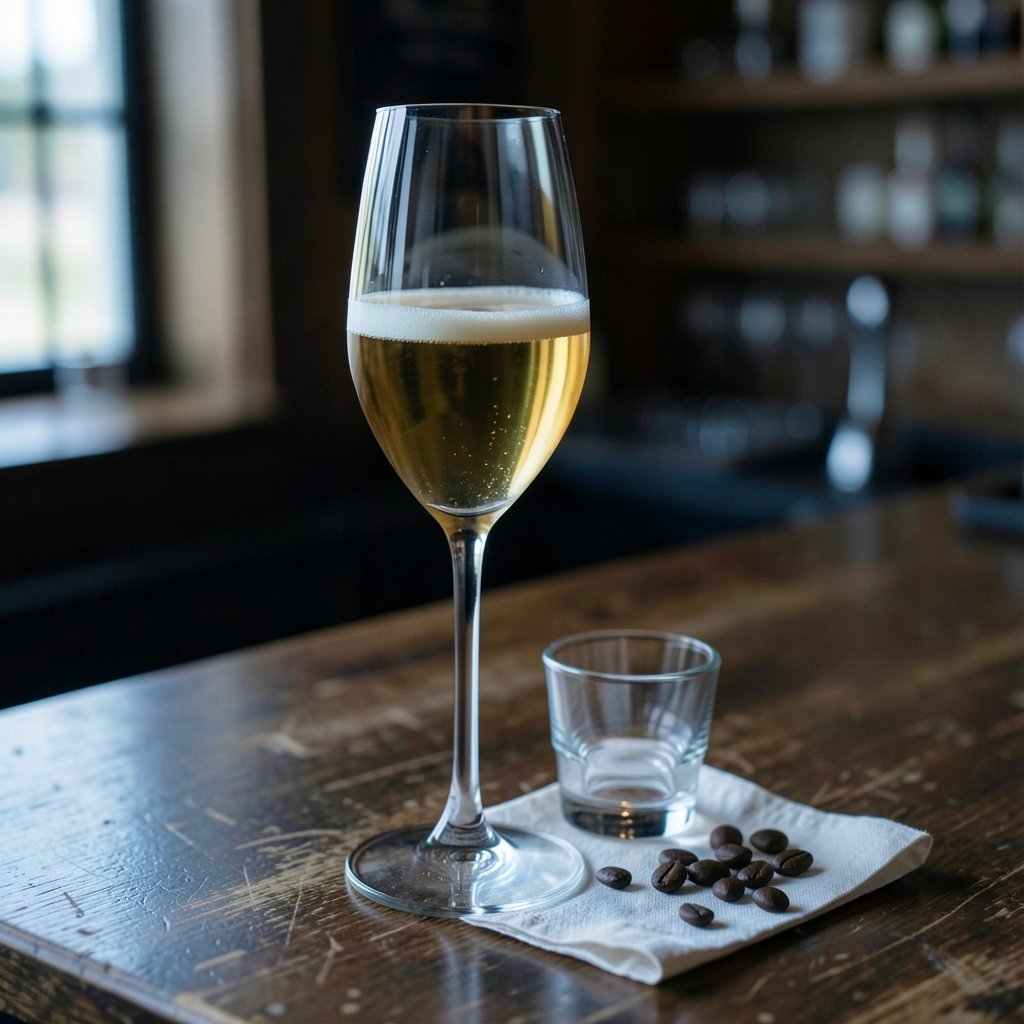
This is the most common interpretation. A bar takes a standard shot of liquor or liqueur and serves it in a champagne flute instead of a shot glass. The drink itself does not change. Only the vessel does.
Why bother? Presentation. A flute is tall, elegant, and photogenic. It makes a cheap pour look like a signature serve. Bars use this trick for:
- Layered liqueur shots that look striking in a tall glass
- Celebration shots at weddings and parties, where a flute fits the mood
- Sparkling cocktails built on a shot of spirit plus prosecco or soda
- Dessert-style shots with cream liqueurs, which sit nicely in a narrow glass
The catch is measurement. A champagne flute typically holds roughly 6 to 8 US fluid ounces, while a customary US shot is about 1.5 fluid ounces. That gap is enormous. If a bartender free-pours “a shot” into a flute, the actual amount can drift well above or below the standard. A flute shot is therefore a fuzzy quantity, not a precise one.
Why the Glass Shape Matters
The flute was designed for sparkling wine. Its narrow bowl preserves carbonation and concentrates aroma, which is why it became the classic champagne vessel. Those same traits explain its appeal for shots. The narrow opening traps volatile aromas, so a strong spirit hits the nose before it hits the tongue. For a sipping liqueur, that is a feature. For a cheap vodka, it is a warning.
Practical tip: if a bar serves a spirit in a flute, sip it. The shape encourages slow drinking, and the pour is often larger than a standard shot. Treating it like a quick slam defeats the point and can push someone past their intended intake faster than they expect.
Reading Two: A Measured Pour of Sparkling Wine
Some bars use “flute shot” to mean a small pour of sparkling wine, essentially a half-glass of prosecco or champagne served in the proper glass. This reading is closer to a tasting pour than a shot.
The logic is simple. A full flute of sparkling wine is a lot of liquid, and a bar might want to offer a smaller taste without opening a whole bottle for one guest. Calling it a “flute shot” is shorthand for “a small pour in a flute.”
The measurement problem returns here too. Because flute capacities vary by design and no rule fixes a “sparkling shot,” the pour size is whatever the house decides. Guests who care about how much alcohol they are drinking should ask.
How Drink Counting Gets Complicated
Public health guidance on alcohol relies on standard drink units, and those units differ by country. In the United States, one standard drink contains about 14 grams of pure alcohol, roughly equivalent to 1.5 fluid ounces of 40% spirits. A small sparkling wine pour at around 12% ABV lands in a similar range, but a generous flute pour can easily equal one and a half standard drinks or more.
That is the real-world takeaway. A flute shot sounds small. It often is not. Anyone tracking their intake should ask for the pour size in ounces rather than trusting the glass.
Reading Three: A Menu Invention or Regional Habit
The third reading is the messiest. Some bars invent a “flute shot” as a house signature, a branded serve with its own recipe, price, and glass. In that case the term means whatever the menu says it means, and no outside source will confirm it.
This is common in cocktail culture. Bars coin terms constantly, and a catchy name spreads faster than any standard ever could. A flute shot on one menu might be a layered liqueur, and on another it might be a sparkling cocktail with a spirit base. The word describes the format, not the contents. (The row)
There is also a translation angle. The term may have drifted in from another language or from a regional bar tradition where a flute-shaped glass carries a specific meaning. Without a primary source, that origin stays uncertain, and readers should treat any confident claim about it with suspicion.
How a Flute Shot Compares to a Standard Shot
The clearest way to understand the term is a side-by-side comparison. The table below lays out the practical differences.
| Feature | Standard shot | Flute shot |
|---|---|---|
| Typical glass | Shot glass, 1.5 to 2 oz | Champagne flute, roughly 6 to 8 oz |
| Customary pour | About 1.5 US fl oz | Undefined; often larger than a shot |
| Regulated size | State-level rules in the US, varying | No defined standard |
| Main purpose | Quick, measured serve | Presentation, sipping, celebration |
| Aroma effect | Minimal | Concentrated by the narrow bowl |
| Risk | Overpouring by free-hand | Guests underestimating the pour |
The pattern is clear. A standard shot is about measurement. A flute shot is about presentation. When the two goals collide, the guest usually loses track of quantity first.
Practical Tips for Ordering and Serving
Whether someone is behind the bar or sitting at it, a few habits prevent confusion.
- Ask for the pour in ounces. “How much is in the flute?” is a fair question, and any decent bartender will answer it.
- Do not assume the flute means less alcohol. The glass is bigger, and the pour often is too.
- Sip, do not slam. The flute shape rewards slow drinking and concentrates aroma, so treat it like a sipping serve.
- Check the menu wording. If “flute shot” appears as a signature item, ask what is in it before ordering.
- Watch the build. A sparkling flute shot combining a spirit with prosecco carries two alcohol sources, which adds up quickly.
- Pace across the night. One flute shot may equal more than one standard drink, so spacing them out matters more than counting glasses.
A common mistake is treating the flute as a novelty glass with a standard shot inside. In practice, the pour is usually generous, and the drink is often built with mixers. The glass signals a slower, more ceremonial serve, and the drinking should match.
The Presentation Trap: What Actually Works in Practice
Bars that use flutes for shots usually do it for one reason: the photo. A tall glass photographs better than a squat shot glass, and social media rewards the visual. That is a legitimate business choice, but it creates a mismatch between how a drink looks and how strong it is.
What works better in practice is honesty about the format. A menu that lists the pour size, the ingredients, and the approximate strength removes the guesswork. Guests who know a flute shot holds more than a standard shot tend to sip it, which is exactly what the glass was designed for. Guests who assume it is a small quick hit tend to drink it fast, and that is where trouble starts.
The same logic applies to home entertaining. Pouring a liqueur into a flute for a party looks polished and costs little. Just tell guests what is inside and roughly how much. A little transparency turns a confusing term into a fun serve.
Where the Term Fits in Cocktail Culture
Cocktail naming has always been loose. Classic references list hundreds of drinks, and new names appear constantly. A term like flute shot survives because it is useful shorthand in a specific setting, not because any authority blessed it. (2b hair)
That is worth remembering the next time a menu uses an unfamiliar drink word. Some terms are standards. Others are house language. The difference matters most when alcohol is involved, because a vague term can hide a larger pour.
Readers who care about hair and beauty content will not find much crossover here, but the same principle of clear labeling applies across niches. A product called one thing on the shelf and another on the label causes the same confusion a flute shot does at the bar. Clarity wins every time. (4c hair)
Conclusion: Treat the Flute Shot as a Format, Not a Rule
A flute shot is best understood as a serving format rather than a defined drink. It usually means a spirit or liqueur served in a champagne flute, sometimes a small pour of sparkling wine, and occasionally a house invention with its own recipe. No official body defines it, no standard fixes its size, and no reference work lists it as a cocktail category.
That ambiguity is not a flaw to fix. It is simply how bar language works. The practical response is straightforward. Ask what is in the glass, ask how much, and sip rather than slam. A flute shot can be a lovely, celebratory serve when everyone at the bar understands what they are drinking.
Frequently Asked Questions
What exactly is a flute shot?
A flute shot is an informal bar term for a small drink served in a champagne flute. It most often means a standard spirit or liqueur shot poured into a flute for presentation, though some bars use it for a small pour of sparkling wine or a signature house drink. No official definition exists.
Is a flute shot bigger than a regular shot?
Usually yes, or at least it can be. A champagne flute holds roughly 6 to 8 US fluid ounces, while a customary US shot is about 1.5 fluid ounces. Because the term does not define a pour size, the actual amount depends on the bar and can be well above a standard shot.
How much alcohol is in a flute shot?
It varies too much to give one number. A spirit-based flute shot may contain roughly one standard drink if poured at 1.5 ounces of 40% liquor, but a generous pour or a sparkling cocktail with two alcohol sources can easily exceed that. In the US, one standard drink is about 14 grams of pure alcohol.
Why do bars serve shots in champagne flutes?
Presentation is the main reason. A tall flute looks elegant and photographs well, which suits celebrations, weddings, and social media. The narrow bowl also concentrates aroma, which flatters liqueurs and sipping spirits. The tradeoff is that the glass size can make the pour look smaller than it is.
Is a flute shot a recognized cocktail?
No. It does not appear as a standard category in major cocktail references. It is a loose, informal term that varies by bar and region. If a menu lists a flute shot, treat it as a house item and ask what is in it rather than assuming a fixed recipe.
How should someone drink a flute shot?
Slowly. The flute shape is designed for sipping, and the pour is often larger than a standard shot. Ask for the pour size in ounces, sip rather than slam, and space drinks out across the evening. That approach keeps the serve enjoyable and keeps track of how much alcohol is actually going in.









