

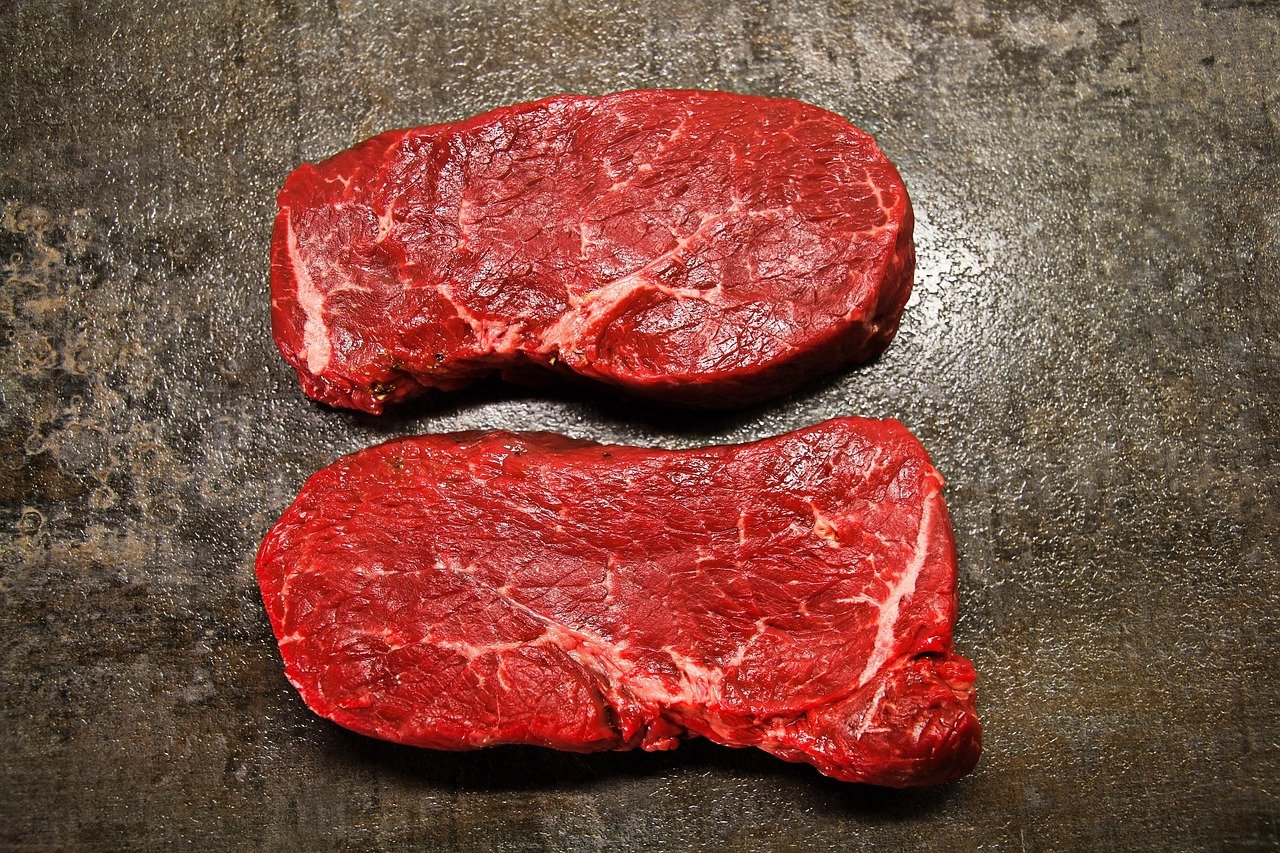
What if the best-value steak in the shop is the one most shoppers walk right past? Bavette steak looks like a long, flat, slightly ragged strip of beef. It has no thick fat cap, no marbled eye, and no neat restaurant-style shape. Yet this coarse-grained cut from the belly area delivers some of the deepest beef flavor per dollar of any steak on the counter. It just asks for a different playbook than a ribeye.
This guide covers what bavette actually is, how it compares to flank, skirt, and hanger, how to cook and slice it properly, and the mistakes that turn a great piece of meat into shoe leather. It also tackles the tricky question of doneness, where culinary tradition and food-safety guidance do not always agree.
What Is Bavette Steak, Exactly?
Bavette is a French butchers’ term. It literally means “bib,” a reference to the cut’s shape, and it describes beef from the abdominal wall. French butchery splits this area into more than one bavette, most notably the bavette d’aloyau and the bavette de flanchet. In English-language butchery, the closest everyday equivalent is flank steak, sometimes sold as “flank steak, bavette-style.”
Here is where buyers need to pay attention. The equivalence is approximate, not exact. French and American cutting standards draw muscle boundaries differently, and retailers use the word loosely. Some shops label a sirloin flap or a piece of skirt as bavette. None of these are bad steaks, but they behave differently on the grill, so it helps to look at the meat rather than trust the label alone.
What Bavette Looks Like
A true bavette is long, flat, and visibly grained. The muscle fibers run in clear parallel lines across the surface, and the meat has little intramuscular fat. That lean, open structure explains almost everything about how it cooks: it is thin, so it heats through fast, and it is lean, so it dries out fast too.
If you have cooked other coarse-grained, lean cuts, you already know the drill. The same logic applies to skirt and similar thin steaks, which reward high heat and a sharp knife over long, gentle cooking.
Bavette vs. Flank, Skirt, and Hanger

These four cuts get confused constantly, and for good reason. They are all thin, beefy, and best served sliced. The differences matter when you are standing at the butcher counter.
| Cut | Location | Grain | Best Cooking Method | Notes |
|---|---|---|---|---|
| Bavette | Abdominal wall (French cutting) | Long, coarse, parallel | Hot and fast, grilled or pan-seared | Deep flavor, very lean, easy to overcook |
| Flank | Lower belly | Long, coarse | Hot and fast, grilled | Closest US equivalent to bavette |
| Skirt | Diaphragm area | Very coarse, long | Very hot and fast | Richer, fattier, stronger flavor |
| Hanger | Plate area near diaphragm | Loose, shaggy | Hot and fast | Tender but wildly inconsistent shape |
The practical takeaway: if a recipe calls for flank and you have bavette, proceed with confidence. If you have skirt, expect a fattier, more intensely flavored result and adjust your seasoning down slightly. Hanger is its own beast, tender but loose, and it benefits from the gentlest possible handling.
Why Bavette Has a Cult Following Among Chefs
Bavette shows up on bistro menus across France and, increasingly, in steakhouses that want to signal butcher-shop credibility. The reasons are straightforward.
First, flavor density. Because the cut comes from a working muscle, it tastes more intensely beefy than a tenderloin. Second, cost. It is typically a fraction of the price of premium steakhouse cuts. Third, forgiving texture when handled right. Sliced thin against the grain, bavette eats tender despite its coarse fibers.
The catch is that all three advantages depend on technique. A bavette cooked to well-done and sliced with the grain will be chewy and disappointing. The same steak cooked to medium-rare, rested, and carved properly can rival cuts costing three times as much. That gap between best and worst outcomes is wider for bavette than for almost any other steak, which is exactly why it separates confident cooks from cautious ones.
How to Cook Bavette Steak: A Step-by-Step Method
The core principle is simple: high heat, short time, a real rest, and a thin slice across the grain. Here is a method that works on a cast-iron pan, a grill, or a screaming-hot plancha.
- Dry the surface. Pat the steak thoroughly with paper towels. A wet surface steams instead of searing, and bavette is too thin to afford a weak crust.
- Season generously, and early if you can. Salt at least 40 minutes ahead if time allows, or right before cooking. Both work; the middle ground of 10 to 15 minutes is the one to avoid, since it draws moisture to the surface without fully reabsorbing it.
- Preheat hard. Get the pan or grill properly hot before the meat goes on. You want a fast, dark crust, not a slow gray one.
- Cook briefly per side. Because the steak is thin, total cooking time is short. Stay at the pan. This is not a cut for wandering off to check your phone.
- Use a thermometer, not a timer. Timers lie when thickness varies. An instant-read thermometer tells you the truth about the center.
- Rest the steak. A few minutes off the heat lets juices redistribute so they end up on the plate rather than running out at the first cut.
- Slice thin and across the grain. Find the direction of the fibers and cut perpendicular to them. This shortens the muscle fibers into easy-to-chew segments. It is the single highest-impact step in the whole process.
The Slicing Mistake That Ruins Bavette
If there is one error that accounts for most disappointing bavette at home, it is slicing with the grain. The fibers in this cut are long and coarse. Cut parallel to them and you get long, stringy strands that resist chewing no matter how perfectly you cooked the meat. Cut across them and the same steak turns tender.
Look at the raw steak before cooking and note which way the lines run. After resting, slice perpendicular to those lines at a slight angle, keeping slices thin. On a long bavette, you may want to cut the steak into two or three shorter sections first so each slice fits comfortably on a fork.
Marinades: Helpful, Not Mandatory
Bavette does well with a marinade, though it does not strictly need one. Acidic marinades can firm up the surface texture if left too long, so keep them short. A simple oil, garlic, and herb rub applied just before cooking often does more for flavor than an overnight soak. If you do marinate, think in hours, not days.
The Doneness Question: Tradition vs. Food Safety
Here is where a good article has to be honest rather than convenient. Chefs typically cook bavette to medium-rare, and many steak lovers prefer it that way. Food-safety guidance, however, sets a higher minimum for whole cuts of beef.
The widely cited safe minimum internal temperature for beef steaks is 145 °F (63 °C), followed by a three-minute rest. Ground beef is different and requires 160 °F (71 °C). These figures come from established food-safety standards, and they exist for a reason.
So how should a home cook reconcile the two? A few practical points:
- Whole-muscle cuts carry lower risk than ground meat because bacteria sit mostly on the surface, which is what the sear hits first.
- The rest matters. The three-minute rest is part of the safety guidance, not an optional garnish.
- Your call, your kitchen. Many cooks choose medium-rare for whole steaks. Others follow the official minimum. Both positions exist, and a good recipe should tell you the trade-off rather than pretend there is none.
- Keep the danger zone in mind. Bacteria multiply fastest between roughly 40 °F and 140 °F, so do not leave cooked steak sitting out at room temperature for long stretches.
For bavette specifically, the thin profile means the center climbs quickly. If you are aiming for the official minimum, pull the steak a few degrees early and let carryover heat finish the job during the rest.
Buying and Storing Bavette
A few practical notes from the counter:
- Ask the butcher. Since labeling is loose, ask what muscle the piece actually came from. A good butcher will tell you, and often will point you toward the best-value option that day.
- Look for even thickness. A bavette that tapers from thick to paper-thin will cook unevenly. Even thickness matters more than perfect shape.
- Check the grain. You want visible, consistent fibers. Very fine, tight grain may signal a different cut.
- Store it cold and use it soon. Keep it refrigerated, wrapped, and cook it within a couple of days of purchase, or freeze it if plans change.
If you enjoy exploring how different hair textures and cuts get categorized, you will recognize the same pattern here: labels vary, and the underlying structure is what actually determines behavior. The same curiosity that leads people to compare 2b hair types or 4c hair patterns applies at the butcher counter. Category names are a starting point, not the final word.
Common Mistakes and How to Avoid Them
Most bavette failures trace back to a short list of habits.
Overcooking. The most common problem by far. Thin meat has almost no margin. Use a thermometer and stay close to the pan.
Underseasoning. Coarse-grained, lean beef needs more salt than a fatty steak. Season with confidence.
Slicing with the grain. Covered above, but worth repeating because it is the difference between tender and tough.
Skipping the rest. Cutting immediately sends the juices onto the cutting board instead of keeping them in the meat.
Cooking it cold. Let the steak sit out briefly before cooking so the center is not ice-cold, which forces a longer cook and a thicker gray band.
Expecting ribeye texture. Bavette is chewy in the best sense when sliced right, but it will never be filet tender. Judge it on flavor and beefiness, not softness.
What to Serve With Bavette
Bavette’s strong flavor stands up to bold accompaniments. Classic pairings include:
- Chimichurri, the herby, vinegary Argentine sauce that cuts through rich beef.
- Roasted potatoes or thick-cut fries, ideally cooked in beef fat if you have it.
- A sharp green salad with mustard vinaigrette for contrast.
- Grilled onions or shallots, which pick up the same char as the steak.
- Crusty bread to soak up the resting juices.
Keep sides simple. The steak is the star, and it does not need much competition.
Conclusion
Bavette steak is one of the great underappreciated cuts in the butcher case. It is lean, coarse-grained, and unforgiving of neglect, but it rewards anyone who cooks it hot and fast, rests it properly, and slices it thin across the grain. It delivers steakhouse-level beef flavor at a fraction of the price, provided you respect its limits.
The label can be confusing, since French and American butchery do not map perfectly onto each other, and retailers use “bavette” loosely. That is fine. Learn to read the meat itself, the visible grain and the flat, even shape, and you will know what you are buying regardless of what the tag says. Then cook it with confidence, keep a thermometer handy, and let your knife do the final and most important piece of work.
FAQ
Is bavette steak the same as flank steak?
Close, but not identical. Bavette is a French butchery term for beef from the abdominal wall, and the nearest common English equivalent is flank steak. The muscle boundaries differ between French and American cutting standards, so the match is approximate. Some retailers also label sirloin flap or skirt as bavette, so it pays to ask your butcher which muscle the piece came from.
Is bavette steak tough?
It can be, but mostly by mistake rather than by nature. Bavette has long, coarse fibers and very little intramuscular fat, so it turns chewy if it is overcooked or sliced with the grain. Cooked hot and fast, rested briefly, and sliced thin perpendicular to the fibers, it eats tender and intensely beefy.
What temperature should bavette steak be cooked to?
Established food-safety guidance sets 145 °F (63 °C) as the safe minimum internal temperature for beef steaks, followed by a three-minute rest. Many cooks prefer bavette at medium-rare, which is lower than that figure. The two positions conflict, and it is worth knowing both rather than assuming one is the only answer. Always use an instant-read thermometer rather than guessing.
How should I slice bavette steak?
Find the direction the muscle fibers run, then cut perpendicular to them, at a slight angle, into thin slices. This shortens the long fibers into short, easy-to-chew segments. Slicing parallel to the grain leaves stringy strands no matter how well the steak was cooked. On a long bavette, cut it into two or three shorter sections first so each slice is manageable.
Can I marinate bavette steak?
Yes, but keep it short. Bavette takes well to oil, garlic, and herbs, and an acidic marinade can add brightness. Leaving it in a strongly acidic marinade for too long can firm up the surface texture, so think in hours rather than days. Often a simple rub applied shortly before cooking does more for flavor than an overnight soak.
How do I know I am buying real bavette?
Look for a long, flat cut with clear, parallel grain lines and little visible intramuscular fat. Ask the butcher what muscle it came from and whether it is flank, sirloin flap, or skirt. Even thickness matters more than a perfect shape, since a steak that tapers from thick to thin will cook unevenly. A good butcher will happily explain the difference.









