

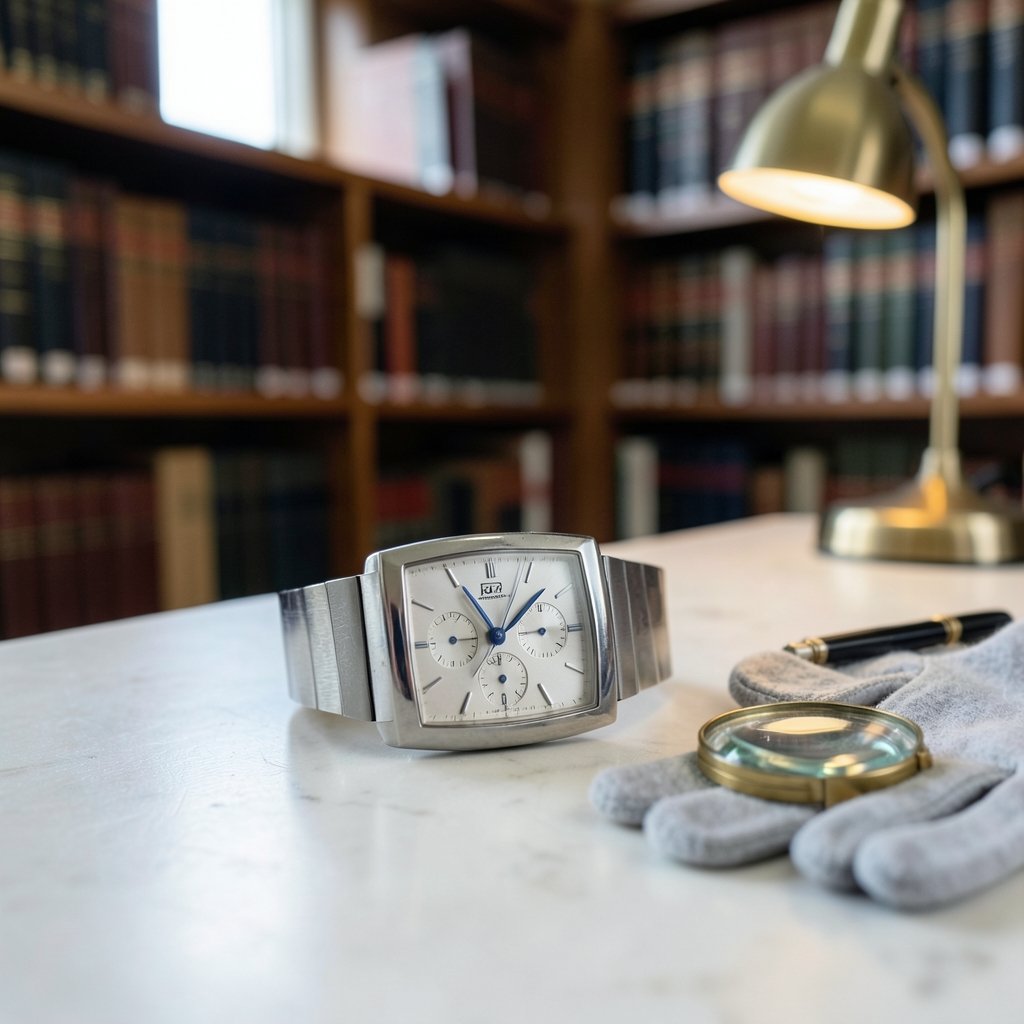
What makes a watch worth flipping over? For most timepieces, the answer is nothing. You glance at the dial, read the time, and move on. But the Jaeger-LeCoultre Reverso Tribute Chronograph invites you to do something almost no other watch asks: turn it around. On one side sits a chronograph. On the other, a completely different dial. It is a party trick with real engineering behind it, and it has become one of the most talked-about models in the Reverso family.
This guide breaks down what the Reverso Tribute Chronograph is, where it fits in watch history, how the two-dial system works, and what buyers should watch out for. It also covers the details that trip people up, from sizing to servicing, so you can decide whether this watch belongs on your wrist.
What Is the Reverso Tribute Chronograph?
The Reverso Tribute Chronograph is a rectangular wristwatch from Jaeger-LeCoultre that combines two ideas. The first is the Reverso case, a design that swivels on its axis so the watch face can flip to the back. The second is a chronograph, a stopwatch complication that lets the wearer time events with pushers on the side of the case.
The “Tribute” part of the name matters. Jaeger-LeCoultre uses Tribute as a label for Reverso models that reinterpret historical designs, especially the original 1931 Reverso, in modern sizes and finishes. So the Tribute Chronograph is not a vintage reissue. It is a modern watch dressed in heritage clothing.
The model arrived around 2023, and many versions are Duoface watches. That means the case carries two dials: a chronograph display on the front and a second time display on the back, often a second time zone or a cleaner, simpler face. Flipping the case changes which dial you see.
A Quick History of the Reverso

The Reverso was introduced in 1931. The story goes that British officers playing polo in India wanted a watch whose crystal would not shatter during a match. The solution was a case that slid and flipped, hiding the glass against the wrist. It was clever, practical, and quietly elegant.
Nearly a century later, the swiveling case is still the defining feature. The Reverso has survived quartz crises, size trends, and shifting tastes because the concept is so specific. You cannot mistake a Reverso for anything else.
The Tribute line takes that 1931 DNA and stretches it. Cases get modern proportions, dials get refined finishing, and complications get added. The chronograph is one of the more ambitious additions, because a stopwatch is not part of the original 1931 design. Putting one inside a reversible case means the movement has to work in two orientations, which is a genuine technical challenge.
How the Duoface Chronograph Actually Works
Here is the part that confuses newcomers. A normal chronograph has one dial, two or three subdials, and pushers. A Duoface Reverso has all of that on one side, plus a second full dial on the reverse.
When you flip the case, you see an engraving and a working dial connected to the same movement. The watch is generally described as using a manually wound Jaeger-LeCoultre calibre with chronograph function. There is no automatic rotor, so you wind it by hand. That hand-wound layout keeps the Reverso case thin and preserves the classic feel.
A few practical points about living with a Duoface:
- Set both dials carefully. If the back shows a second time zone, decide which dial is your reference time before you travel.
- Wind it consistently. A manual movement rewards routine. Pick a time of day and stick to it.
- Use the pushers with the case locked in place. Flipping mid-press is a bad habit and puts stress on the mechanism.
- Check water resistance before swimming. A reversible case has more seams than a standard one, so treat it as a dress watch.
The exact calibre number, power reserve, and frequency vary by reference, and catalogues change year to year. Buyers should confirm those specs against official materials for the specific model they are considering rather than relying on forum posts.
Design Language and Materials
Reverso Tribute cases are typically rectangular with a lug-to-lug span in the roughly 45 to 49 mm range, though exact dimensions differ by reference. That number matters more than case width for rectangular watches, because the distance from lug to lug decides how the watch sits across the wrist.
Typical offerings include steel and pink gold, with other precious-metal variants appearing from time to time. The dial work is where the Tribute line earns its keep. Expect applied indices, careful finishing, and a layout that nods to 1930s Art Deco proportions without feeling like a costume.
One thing worth knowing: the chronograph layout on a rectangular dial is harder to balance than on a round one. Subdials have less room, and the pushers sit on a narrow case band. Jaeger-LeCoultre has handled this by keeping the front dial relatively clean and letting the reverse dial carry a simpler display. The result is a watch that looks dressy from across the room but reveals its complexity up close.
If you are comparing this to other rectangular watches, it helps to understand how different hair types and textures behave in styling, because the same principle of matching form to function applies. A 2b hair routine, for instance, only works when the product matches the wave pattern. Watches are similar: a chronograph only works when the layout suits the case shape.
Reverso Tribute Chronograph vs. the Classic Reverso
Putting the Tribute Chronograph next to a standard Reverso makes the differences obvious.
| Feature | Classic Reverso | Reverso Tribute Chronograph |
|---|---|---|
| Dial | Single, time only or with small seconds | Chronograph front, second dial on reverse |
| Case | Slim, often smaller | Larger, rectangular, modern proportions |
| Movement | Manual, often simple | Manual with chronograph module |
| Complexity | Low to moderate | High |
| Best for | Purists and first-time buyers | Collectors who want a complication |
The classic Reverso is a study in restraint. The Tribute Chronograph is a study in restraint plus machinery. Neither is better. They serve different impulses.
Who Should Consider One
The Reverso Tribute Chronograph suits a specific kind of buyer. Someone who already owns a round sports watch and wants something with personality. Someone who appreciates watchmaking history but does not want to baby a vintage piece. Someone who likes the idea of a watch that starts conversations. (The row)
It is less suited to someone who wants one watch for everything. The manual winding, the limited water resistance, and the dressy proportions make it a poor choice for the gym, the pool, or a job that involves heavy manual work.
Practical advice from people who own reversible watches: try one on before you buy. Photos flatten the case, and rectangular watches wear very differently from round ones. A 47 mm lug-to-lug rectangle can feel larger than a 40 mm round watch because the case extends along the wrist rather than across it.
Common Mistakes Buyers Make
A few pitfalls come up again and again with this model.
Assuming all Tribute Chronographs are identical. They are not. Dial colors, materials, strap options, and even the reverse dial layout change between references. Always confirm the exact reference number.
Ignoring the service side. A chronograph with a reversible case has more moving parts than a time-only watch. Servicing costs more and takes longer. Budget for it before you buy, not after.
Overpaying for hype. Limited editions and new releases can carry a premium that fades. If you are buying to wear, buy the version you love. If you are buying to flip, understand that the market for rectangular chronographs is thinner than for round sports watches.
Skipping the strap question. The Reverso’s strap is part of its silhouette. A thick strap can make the case look smaller; a slim one can make it look larger. Many owners swap straps and find the watch transforms.
For readers who follow textured-hair communities, the parallel is familiar: 4c hair care rewards patience and the right tools, and shortcuts show. Watch ownership works the same way. The people who enjoy their pieces most are the ones who learn the rituals.
Living With It Day to Day
The Tribute Chronograph is a dress watch with a secret. On the wrist, it reads formal. The rectangular case slips under a cuff, and the front dial is legible without being loud. Flip it, and you get a second face that feels almost like a different watch.
That duality is the appeal. It is also the maintenance burden. Two dials mean two things to set, and a manual movement means daily winding. Owners often describe the winding ritual as a pleasure rather than a chore, but it is worth being honest: if you dislike interacting with your watch, this is not the model for you.
Strap changes are easy on most Reverso references, and many owners keep two straps: one leather for formal wear and one more casual option for weekends. The case shape handles both well.
The Verdict
The Reverso Tribute Chronograph is one of the more interesting watches in its price bracket because it refuses to be one thing. It is a heritage piece and a complication piece at once. It is a dress watch you can flip over. It is a conversation starter that happens to tell time twice.
It is not for everyone. The manual movement, the service costs, and the dressy proportions narrow the audience. But for the right buyer, the combination of history and machinery is hard to beat. The Reverso has been flipping since 1931, and the Tribute Chronograph proves the idea still has room to grow.
If you are considering one, do the homework. Confirm the reference, check the specs against official sources, try it on, and budget for service. Then enjoy the fact that your watch does something almost no other watch can.
Frequently Asked Questions
What is the difference between a Reverso and a Reverso Tribute?
A standard Reverso is the classic swiveling case, often with a simple time display. A Reverso Tribute is a modern reinterpretation of historical Reverso designs, usually with larger proportions and more elaborate finishing. The Tribute Chronograph adds a stopwatch function, which the original 1931 design did not have.
Is the Reverso Tribute Chronograph a Duoface watch?
Many versions are Duoface, meaning they have a chronograph dial on the front and a second display on the reverse. Not every reference is configured the same way, so buyers should confirm the dial layout for the specific model they are considering.
Does the Reverso Tribute Chronograph have an automatic movement?
It is generally described as using a manually wound Jaeger-LeCoultre calibre with chronograph function. Manual winding keeps the case thinner, which suits the Reverso’s rectangular profile. Exact calibre specifications vary by reference and should be confirmed against official materials.
Can you swim with a Reverso Tribute Chronograph?
It is best treated as a dress watch. A reversible case has more seams than a standard case, and water resistance ratings vary by reference. Check the official rating for your specific model before exposing it to water, and avoid swimming unless the rating clearly supports it.
How much does it cost to service a Reverso Tribute Chronograph?
Servicing a chronograph with a reversible case costs more than servicing a time-only watch because there are more components and more assembly steps. Exact prices depend on the service center and the work required. Budget for periodic service before buying rather than after.
Is the Reverso Tribute Chronograph a good investment?
It depends on the reference and the market at the time. Some limited editions hold value well, while others trade near retail. Rectangular chronographs have a thinner collector market than round sports watches. Buy the version you want to wear, and treat resale as a bonus rather than a plan.









