

What makes a sheet of ice good enough to skate on? The answer is not simply “cold water.” A rink surface is a small engineering project: water is treated, frozen in thin layers over a refrigerated floor, shaved and rebuilt several times a day, and held at a temperature chosen for the people gliding on it. Get any of those steps wrong and skaters feel it instantly, through their blades, as slush, chatter, or a rut that grabs an edge. This article walks through what skating ice actually is, how it gets made, why figure skaters and hockey players want different surfaces, and how to judge natural ice before trusting it.
What Skating Ice Actually Is
Rinks rely on one of two basic setups. Sheet ice is a thin layer, usually a few centimeters at most, frozen directly onto a cooled concrete or sand floor. Almost every indoor rink works this way. Depth ice is thicker and forms over a base such as a flooded field, a pond, or a prepared outdoor pad. The two behave differently: sheet ice responds quickly to the refrigeration plant beneath it, while depth ice holds more cold but is harder to control and far more variable in quality.
Underneath an indoor rink sits a network of pipes carrying a refrigerant, often a brine or glycol mixture. That loop chills the floor slab, and the slab chills the water above it. The air in the building is usually held near freezing as well, which limits melting and keeps fog from forming over the surface. So when a skater steps onto the ice, they are standing on a machine’s output, not on a frozen lake.
Why Water Quality Decides Ice Quality
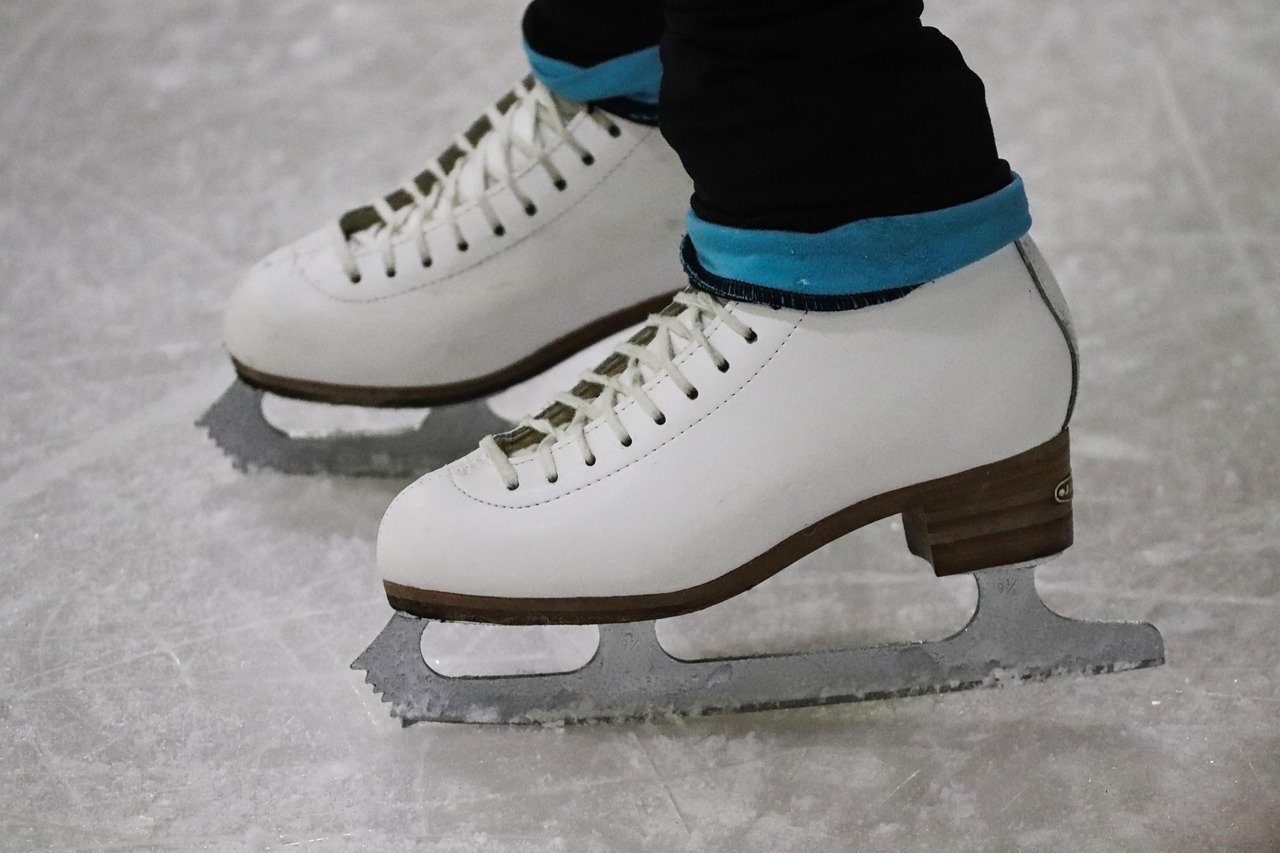
Not all water freezes into good ice. Rink operators typically treat their water to strip out dissolved gases and minerals before it ever touches the floor. The reason is simple physics: gas bubbles trapped in freezing water scatter light and weaken the crystal structure, producing cloudy, brittle ice that chips and dulls edges faster.
De-gassed water freezes clearer and harder, which is why well-made rink ice looks almost glassy. Mineral content matters too. Hard water leaves scale and deposits that can create rough patches, so many facilities filter or soften their supply. If you have ever skated on ice that looked milky white and felt soft underfoot, you have met untreated water.
How a Rink Builds Its Ice
Building a sheet of ice is done in thin passes rather than one big flood. Each layer freezes before the next goes down, which keeps the structure tight and prevents trapped air. The whole process can take days on a new rink.
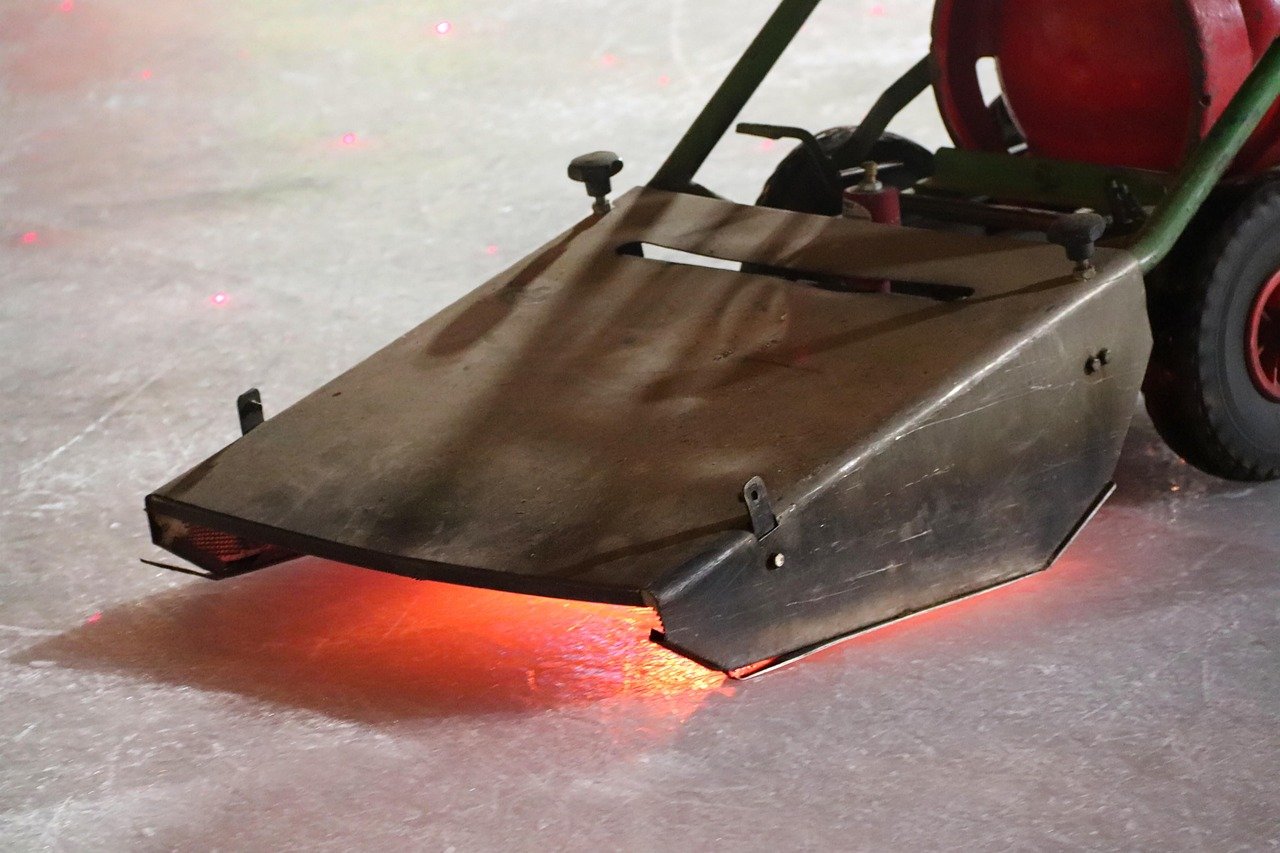
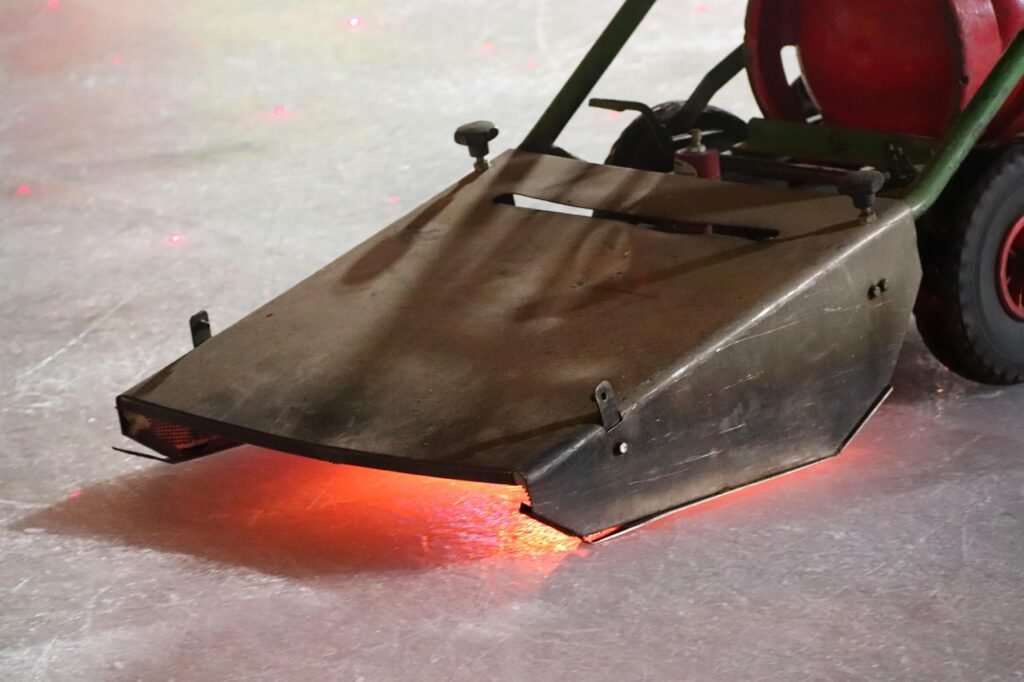
The daily version of that process is the resurfacer, the machine most people call a Zamboni. Invented by Frank Zamboni and first used in 1949 in Paramount, California, it does three jobs in one pass: it shaves off the top layer of damaged ice, washes away the shavings and debris, and lays down a thin film of fresh water that freezes almost instantly into a new skating surface. A well-run rink resurfaces between sessions, and sometimes during them.
The steps in a typical resurfacing pass
- The blade shaves a thin, even cut across the full width of the ice.
- A wash system lifts loose snow and debris out of the cut.
- Fresh water is spread behind the blade in a controlled layer.
- The water freezes on contact with the cold surface, sealing the cut.
- The operator checks edges, corners, and high-traffic zones for missed spots.
That last step matters more than people realize. Corners and goal areas take the most punishment, and a resurfacer cannot always reach them cleanly. Rinks that host heavy sessions often send staff out with hand tools to patch those zones.
Temperature: One Number Does Not Fit Every Skater
Ice temperature is a setting, not a constant, and the right setting depends on who is on the surface. Colder ice is harder and faster; warmer ice is softer and offers more edge bite. Rink managers tune the plant accordingly, and the commonly cited ranges cluster around a few degrees.
| Discipline | Typical ice temperature | Why it suits the sport |
|---|---|---|
| Figure skating | Roughly −3 to −5 °C | Softer ice lets blades dig in for jumps and landings |
| Ice hockey | Roughly −5 to −9 °C | Harder ice supports fast gliding and sharp turns |
| Speed skating | Roughly −5 to −9 °C and colder | Low friction matters more than edge grip |
| Public recreation sessions | Often on the warmer end | Softer ice is more forgiving for beginners |
Exact figures vary by source and facility, so treat these as approximate targets rather than rules. A rink hosting a figure skating club in the morning and a hockey game at night may adjust its plant between sessions, or simply accept a compromise temperature and let the resurfacer handle the rest.
Ice temperature is not air temperature
This trips people up constantly. The air in a rink might sit around freezing while the ice itself is several degrees colder, held there by the refrigeration loop. That gap explains why a rink can feel chilly but not freezing, and why the ice stays solid even when the building warms up during a busy public session. It also explains why fog forms when humid air meets a very cold surface.
What Poor Ice Feels Like, and Why It Matters
Ice quality is not just a comfort issue. Ruts, soft spots, debris, and uneven resurfacing are all associated with falls, and falls cause injuries. A blade that catches in a deep groove can twist a knee or drop a skater mid-stride. Rink maintenance schedules and ice-depth monitoring are standard risk controls for exactly this reason.
Skaters can read a surface within a few strides. Signs of trouble include:
- Snow buildup that slows blades and hides the surface underneath
- Deep ruts near the boards or in corners where traffic concentrates
- Soft, slushy patches that grab edges instead of releasing them
- Chatter under the blade, which often signals uneven or over-sharpened ice
- Visible debris such as tape, hairpins, or pebbles frozen into the surface
If a rink’s ice looks bad, saying something to staff is reasonable. Most facilities would rather send someone out with a scraper than deal with an injury report.
Natural Ice: How to Judge It Before You Step Out
Outdoor ice demands far more caution than anything indoors. Natural ice is not uniformly safe, and thickness varies with currents, snow cover, and underwater springs. Public-safety guidance in Canada and the United States commonly cites a minimum of about 10 cm, or 4 inches, to support a group of people, with more required for vehicles. Those numbers differ between jurisdictions, so treat them as guidance rather than a universal standard.
A few practical habits help. Clear, blue-black ice is generally stronger than white or gray ice, which can indicate trapped air or slush layers. Snow cover insulates the surface and slows freezing, so a snowy pond may be thinner than it looks. Moving water, narrow channels, and areas near inflows or outflows freeze last and thinnest. And no measurement beats a proper check with an auger or spud bar at several points, not just one.
Anyone skating outdoors should also carry basic rescue gear and never go alone. The safest approach is to use managed outdoor rinks and designated skating areas, which are monitored and maintained, rather than guessing at a pond’s condition.
Synthetic Ice: Useful, but Not the Same Thing
Plastic-panel synthetic ice has carved out a real niche for training, backyard rinks, and events in warm climates. It does not need refrigeration, works at room temperature, and lets players practice stickhandling and skating mechanics year-round.
It is not a substitute for the real thing, though. Synthetic panels do not glide the way frozen water does, and most performance claims come from manufacturers rather than independent testing. Treat marketing language about “near-real” glide with healthy skepticism, and try a panel before committing to a full sheet.
Matching Ice to the Skater
Different skaters want different surfaces, and knowing the difference helps people ask for what they need.
For figure skating, softer ice in the −3 to −5 °C range gives blades something to bite into on takeoffs and landings. For hockey, colder ice rewards speed and hard turns. Beginners on public sessions usually benefit from warmer, softer ice that forgives wobbly edges. Speed skaters want the hardest, fastest surface available.
Hair texture has nothing to do with any of this, but the skating world borrows language from hair typing anyway. Coaches sometimes describe a blade’s grip on soft ice the way people talk about 4c hair holding a shape: dense, textured, and slow to release. It is a loose analogy, but it sticks with beginners. Similarly, a fine, low-friction glide on hard ice gets compared to 2b hair, smooth and quick to slip through the fingers.
Rink managers think in terms of sessions rather than textures. A morning figure skating block, an afternoon public skate, and an evening hockey game each want different conditions, and the resurfacer schedule is built around those transitions. When a facility gets the rhythm right, nobody notices. When it does not, everyone does. The row of skaters waiting at the gate after a bad resurfacing is its own kind of review.
Common Mistakes Rink Staff and Skaters Both Make
A few errors show up again and again, indoors and out.
Flooding too fast. Laying water in thick passes traps air and produces cloudy, weak ice. Thin layers, patiently built, always win.
Skipping the shave. Resurfacing without a proper cut just adds water on top of damage. The blade has to take something off before new ice goes down.
Ignoring humidity. Warm, moist air over cold ice creates fog and condensation that ruins a surface fast. Dehumidification is part of ice maintenance, not an afterthought.
Trusting one thickness reading. A single measurement on a pond tells you almost nothing about the rest of it. Ice varies dramatically over springs, channels, and snow-covered patches.
Assuming colder is always better. Ice that is too cold gets brittle and chippy, and figure skaters lose the edge grip they need. The right temperature is the one that suits the session.
Conclusion
Good skating ice is a quiet piece of engineering. Treated water, thin frozen layers, a refrigerated floor, and a resurfacer making regular passes all combine to produce a surface that feels effortless under a blade. Temperature is a deliberate choice tied to the sport, not a fixed number, and the difference between −3 °C and −8 °C is the difference between a figure skater landing a jump and a hockey player flying down the wing. Outdoors, the same principles apply but the margin for error shrinks, and thickness checks, local guidance, and a bit of caution matter more than any rule of thumb. Whether the goal is a clean indoor session or a safe afternoon on a frozen pond, understanding what makes ice work is the first step to skating well on it.
FAQ
How thick should ice be for skating?
Public-safety guidance commonly cites about 10 cm, or 4 inches, as a minimum for a group of people on natural ice, with thicker ice required for vehicles. Those figures vary by jurisdiction, and thickness can change sharply over currents, springs, and snow cover, so check several points rather than trusting one reading.
Why is rink ice sometimes cloudy instead of clear?
Cloudiness usually comes from trapped air bubbles and dissolved gases in the water. Rink operators treat water to remove those gases and minerals before freezing, which produces clearer, harder ice. Untreated or hastily flooded water freezes milky and tends to chip more easily.
What temperature is ice for figure skating?
Figure skating generally calls for softer ice in roughly the −3 to −5 °C range, which gives blades more grip on takeoffs and landings. Hockey and speed skating use colder, harder ice, typically around −5 to −9 °C. Exact settings vary by facility and source.
How often does rink ice need to be resurfaced?
Most rinks resurface between every session, and busy facilities may do it more often. The resurfacer shaves off damaged ice, washes away debris, and lays a thin layer of fresh water that freezes into a new surface. Corners and goal areas often need hand patching on top of that.
Is synthetic ice as good as real ice?
No. Synthetic panels are useful for training and warm-climate rinks, but they do not glide like frozen water. Most performance claims come from manufacturers rather than independent testing, so try a panel before investing in a full sheet.
When is natural ice safe to skate on?
Natural ice is safe only when it has been measured at several points and meets local thickness guidance, typically around 10 cm for a group. Clear blue-black ice is generally stronger than white or gray ice, and areas near moving water, springs, or heavy snow cover freeze thinnest. Managed outdoor rinks are the safer choice when conditions are uncertain.









