


Quick Answer: When marnie?
“When Marnie” almost always refers to When Marnie Was There, a 1967 children’s novel by British author Joan G. Robinson that was adapted into a Studio Ghibli animated film in 2014. The story follows Anna, a lonely twelve-year-old girl who is sent to a seaside village for her health and befriends a mysterious girl named Marnie who lives across the marsh. Readers and viewers can explore the story through the original novel, the Japanese film with subtitles, or the English-dubbed version released in the United States in 2015. The book and the film differ in small but meaningful ways, so it helps to know which version you are picking up. Before diving in, consider the format, the translation or dub cast, the age of the intended audience, and whether you want the gentler book ending or the more visually dramatic film resolution.
Why does a quiet story about a lonely girl and a grand house across the marsh still pull in new readers and viewers decades after it was written? Part of the answer is that When Marnie Was There refuses to be simple. It looks like a ghost story, reads like a friendship story, and lands as a family story. Depending on which version you meet first, the book or the film, you may come away with a slightly different understanding of what actually happened to Anna and Marnie.
The 1967 Novel by Joan G. Robinson
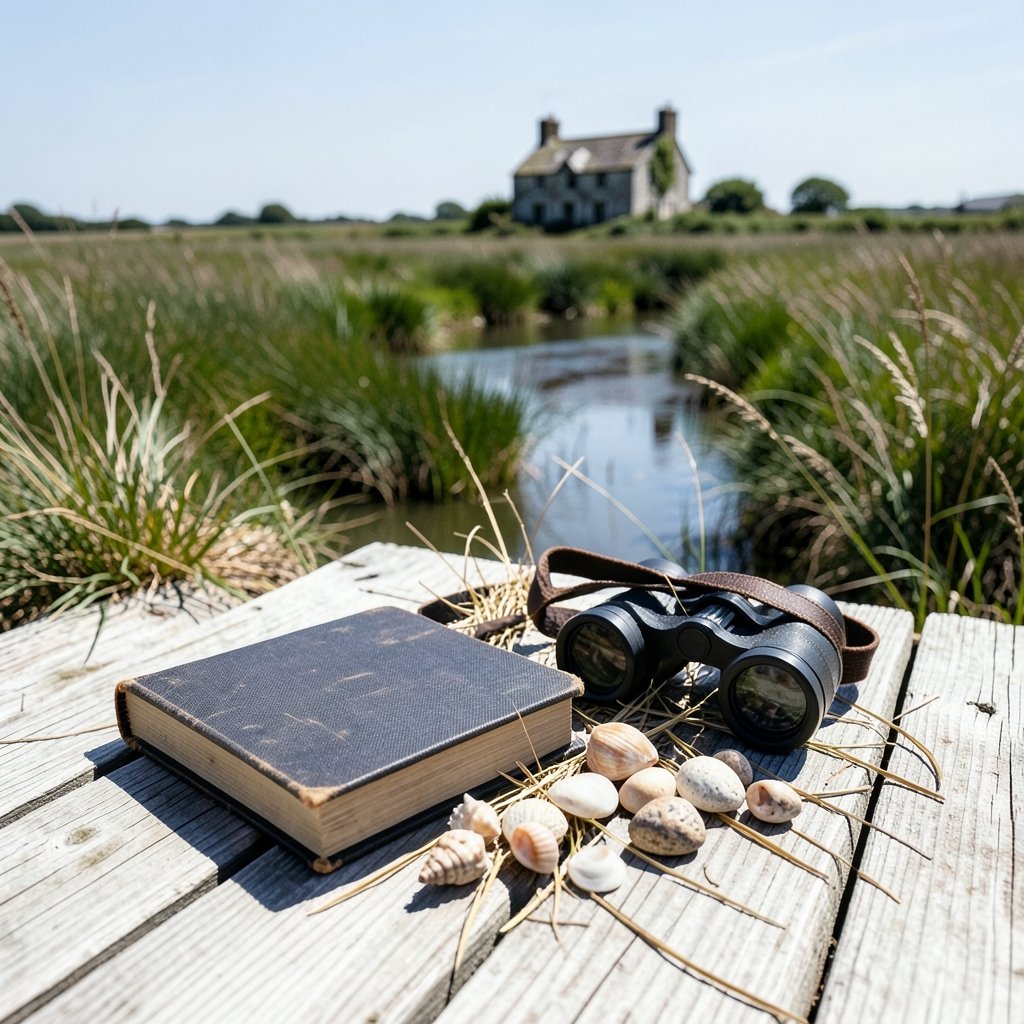
Joan G. Robinson was a British author and illustrator, born in 1910 and best known for the Teddy Robinson series of picture books. When Marnie Was There, published in 1967, was her most ambitious work, a longer children’s novel with a psychological edge that was unusual for its time. Robinson set the story in a fictional coastal village, Little Overton, and the setting draws heavily on the Norfolk coast where she lived, with its creeks, salt marshes, and tidal flats.
The plot centers on Anna, a twelve-year-old girl who has been raised by foster parents and struggles with asthma, anxiety, and a deep sense of not belonging. She is sent to stay with a family friend in Little Overton for the summer. There she becomes fascinated by a large, decaying house across the marsh, and by Marnie, a girl her own age who seems to live there. Marnie is glamorous, mercurial, and sometimes unkind, and their friendship moves through intense closeness and painful rupture. The resolution reveals the family connection between the two girls, which recontextualizes everything that came before.
What makes the book endure is its emotional honesty. Robinson does not soften Anna’s loneliness or her jealousy. The friendship with Marnie is not idealized; it is needy, uneven, and sometimes hurtful, which is exactly why young readers recognize it. The novel also treats memory, grief, and adoption with a seriousness that was ahead of its time.
The 2014 Studio Ghibli Film
Studio Ghibli’s animated adaptation, directed by Hiromasa Yonebayashi, was released in Japan on 19 July 2014 under the title Omoide no Marnie. Yonebayashi had previously directed The Secret World of Arrietty, and he brought a similar attentiveness to landscape and quiet interior moments. The film relocates the story from Norfolk to a coastal town in northern Japan, keeping the marsh, the tidal creek, and the grand house but dressing them in Japanese rural detail.
The film was widely reported at the time as potentially Ghibli’s final production before a studio hiatus announced in 2014. That framing turned out to be premature, since the studio has continued to produce work, but it shaped how the film was received. The English-dubbed version was released in the United States by GKIDS on 22 May 2015, and the film was nominated for the Academy Award for Best Animated Feature at the 88th Academy Awards in 2016.
Visually, the film is one of Ghibli’s most beautiful late works. The marsh at dusk, the house lit from within, and the long shots of Anna alone on the water all carry the story’s mood without dialogue. The film also expands the role of some secondary characters and adds a more explicit framing device around Anna’s drawings, which the book handles differently.
| Feature | 1967 Novel | 2014 Film |
|---|---|---|
| Setting | Fictional Little Overton, England, modeled on Norfolk | Coastal town in northern Japan |
| Creator | Joan G. Robinson | Directed by Hiromasa Yonebayashi, Studio Ghibli |
| Release | 1967, Collins (UK) | 19 July 2014 (Japan); 22 May 2015 (US, GKIDS) |
| Medium | Prose with Robinson’s own illustrations | Animated feature film |
| Ending | Quieter, more internal resolution | More visually dramatic, with added framing scenes |
| Recognition | Classic of British children’s fiction | Nominated for Best Animated Feature, 88th Academy Awards |
Book vs. Film: What Changes and Why It Matters
Readers who come to the film after the book often notice that the film is warmer. The book’s Anna is pricklier, and her friendship with Marnie has a sharper edge of cruelty and need. The film softens some of that friction, which makes it easier for a younger audience to follow but also removes some of the psychological texture that makes the novel distinctive.
The film also makes the mystery more explicit earlier. In the book, the reader is kept uncertain about Marnie’s nature for longer, and the possibility that she is imaginary, a ghost, or simply a projection of Anna’s loneliness is allowed to breathe. The film signals its intentions more clearly, partly because animation needs to show what prose can leave ambiguous.
Both versions keep the central reveal intact, and both land on the same emotional truth: that Anna’s connection to Marnie is bound up with her own family history and her struggle to accept being loved. If you are choosing between them, the book rewards patience and older readers, while the film is a gentler entry point and a visual experience worth having on its own terms.
Why the Story Resonates With Readers and Viewers
The most common reaction to When Marnie Was There is recognition. Many people first encountered it as children who felt out of place, and the story’s willingness to sit with loneliness rather than rush to fix it is rare. Anna is not a plucky heroine; she is withdrawn, sometimes unkind, and often unsure whether she deserves affection. That honesty is the book’s real gift.
The story also handles grief in a way that respects its audience. It does not explain everything at once, and it trusts readers to piece together the family history alongside Anna. For adults revisiting the story, the experience is often different: what read as a ghost story in childhood reads as a study of memory and inheritance later on.
There is also a craft pleasure in the setting. Robinson’s marsh is a place of tides and shifting light, and both the book and the film use landscape to carry emotion. The house across the creek is a character in its own right, and the story’s best scenes are often the quietest ones, where Anna is simply watching the water.
Practical Tips for First-Time Readers and Viewers
If you are new to the story, a few things make the experience smoother. First, decide on order deliberately. Reading the book first gives you the original psychological texture and makes the film’s choices more visible. Watching the film first is easier for younger viewers and can act as a gateway to the novel. (The row)
Second, pay attention to the translation or dub you choose. The English dub of the Ghibli film has a strong cast, but subtitles preserve more of the original Japanese performance and the film’s pacing. For the book, check which edition you have, since cover art and introductions vary and some editions are aimed at different age groups.
Third, do not rush the middle. The story’s power comes from its slow accumulation of small moments, and readers who expect a fast plot may bounce off it. Give the marsh scenes time to work.
Fourth, if you are reading with a child, be ready for questions about foster care, loss, and family. The story opens those conversations gently but directly, and it is worth planning for them rather than deflecting.
Common Mistakes People Make With This Story
The most common mistake is treating When Marnie Was There as a straightforward ghost story. That reading misses the point. The supernatural elements are deliberately ambiguous, and the story works best when you hold the possibilities open rather than resolving them too early.
Another frequent mistake is assuming the film is a faithful adaptation. It is a strong adaptation, but it changes the setting, softens the characters, and adds framing material. Viewers who expect a scene-for-scene translation of the book will be disappointed; viewers who accept it as a reinterpretation will find a lot to admire.
A third mistake is recommending the story to very young children without checking. The themes of abandonment, grief, and complicated family history are handled sensitively, but they are real, and the story is best suited to readers around ten and up, or younger children with an adult alongside them. Finally, some readers dismiss the book because it feels slow at first. The pacing is deliberate, and the payoff depends on the patience.
How the Story Fits Into a Wider Tradition
When Marnie Was There sits in a tradition of British children’s fiction that takes inner life seriously, alongside books that treat landscape and memory as central rather than decorative. It also anticipates later stories about friendship between a lonely child and a mysterious figure, a device that appears across many cultures. The Ghibli adaptation placed it in a line of films about young girls navigating grief and change, and that context helps explain why the film felt like a natural fit for the studio even though the source material was British. (2b hair)
For readers interested in hair and character design in animation, the visual choices in the film are worth studying. Anna’s cropped, slightly unruly cut and Marnie’s long, flowing hair do a lot of storytelling, and the contrast between them echoes the difference between the two girls’ temperaments. The film’s character designers made deliberate choices that readers of the book can compare against Robinson’s own illustrations, which are simpler but equally expressive. (4c hair)
Conclusion
When Marnie Was There is one of those rare stories that works on several levels at once. As a children’s novel, it is a sensitive portrait of a lonely girl finding her place. As a Studio Ghibli film, it is a visually stunning meditation on memory and family. As a piece of cultural history, it connects a British author’s Norfolk childhood to a Japanese animation studio’s late-period masterpiece. Whether you meet Anna and Marnie through Robinson’s prose or Yonebayashi’s film, the story rewards attention, patience, and a willingness to sit with uncertainty. Start with whichever version suits your mood, then try the other, and let the two readings talk to each other.
Frequently Asked Questions
Is When Marnie Was There a ghost story?
It is deliberately ambiguous. The story can be read as a ghost story, as a psychological portrait of a lonely girl’s imagination, or as a family mystery resolved through memory. The book keeps the possibilities open longer than the film, and that ambiguity is central to its power.
What age group is the story suitable for?
The novel is generally suited to readers around ten and up, and the film carries a similar rating in most markets. The themes of abandonment, grief, and complicated family history are handled sensitively but directly, so younger children may benefit from an adult reading or watching alongside them.
How does the 2014 film differ from the 1967 book?
The film moves the setting from Norfolk, England, to coastal northern Japan, softens some of Anna’s sharper edges, and adds framing material around her drawings. The central friendship and the family reveal remain intact, but the film is a reinterpretation rather than a scene-for-scene adaptation.
Who directed the Studio Ghibli adaptation?
Hiromasa Yonebayashi directed the film, having previously directed The Secret World of Arrietty. It was released in Japan on 19 July 2014 and in the United States by GKIDS on 22 May 2015, and it was nominated for Best Animated Feature at the 88th Academy Awards.
Who was Joan G. Robinson?
Joan G. Robinson was a British author and illustrator, born in 1910 and best known for the Teddy Robinson picture book series. When Marnie Was There, published in 1967, was her most ambitious novel and drew on the Norfolk coast where she lived.
Should I read the book or watch the film first?
Either order works, but the experience differs. Reading the book first preserves the original psychological texture and makes the film’s choices more visible. Watching the film first is easier for younger viewers and often acts as a gateway to the novel.









