

Can you really paint your hair like a canvas and wash the colour out by Friday? That depends on what you mean by “hair dye paint,” because the phrase covers two very different things. On one side sits the modern wave of temporary colour cosmetics: hair chalks, colour waxes, spray-on tints, and gel “paints” that coat the outside of the strand and rinse away in a shampoo or two. On the other side is the older, more serious practice of painting dye onto hair with a brush, which is how salon professionals apply permanent and demi-permanent colour with precision.
Both meanings matter, and mixing them up is where people get into trouble. Someone buys a £6 colour wax expecting permanent results and ends up disappointed. Someone else grabs a box of permanent dye and a paintbrush, hoping for a quick festival look, and ends up with a patchy result that takes months to grow out. This article sorts out the difference, explains how each type actually works, and covers the safety points that regulators on both sides of the Atlantic consider important.
What Does “Hair Dye Paint” Actually Mean?
The term is not standardised. Nobody regulates the phrase itself, and no single definition covers every product sold under it. In practice, the label usually points to one of two categories.
Temporary colour cosmetics are the products most shoppers mean. They include pressed chalk, waxy colour sticks, aerosol sprays, coloured gels, and even mascara-style wands for streaks and roots. The pigment sits on top of the cuticle, the hair’s outer layer, held there by wax, clay, or a film-forming polymer. It does not penetrate the strand.
Brush-applied dye is the professional technique. A colourist mixes dye and developer, then paints it onto sections of hair with a tint brush. The brush gives control that a squeeze bottle cannot: you can feather colour at the root, saturate a heavy section, or place a fine line of colour exactly where you want it. This is the technique behind balayage, root shadowing, and many highlighting services.
There is also a third, looser usage. In the 19th and early 20th centuries, hair dyes were commonly applied by brush and sold as powders and liquids, so “painting” hair was simply what colouring hair involved. That history is hard to pin down with a single authoritative source, so treat it as background colour rather than hard fact.
Temporary Hair Paint: How the Products Work
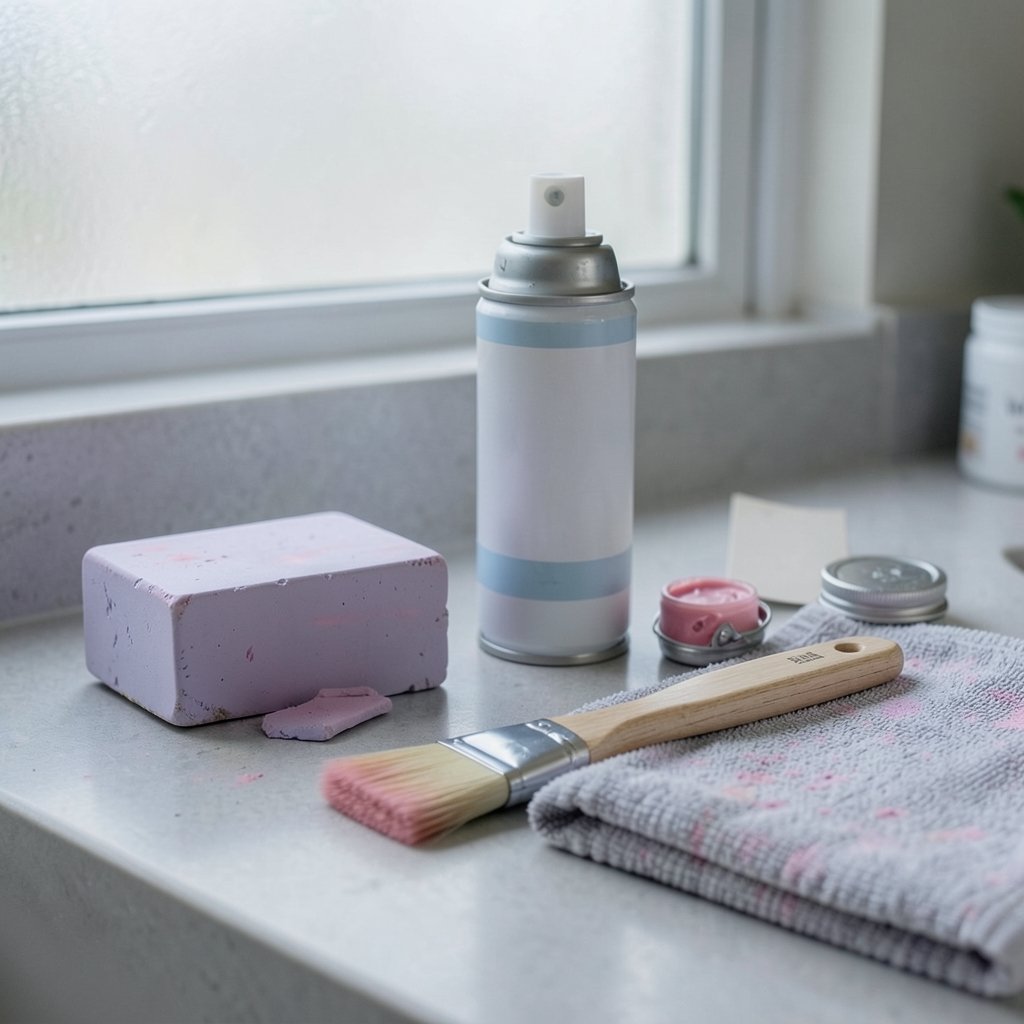
Temporary paint products rely on the same basic principle: pigment plus a carrier that sticks to hair without opening the cuticle. The carrier matters as much as the colour.
| Product type | Base | Typical wear time | Best for |
|---|---|---|---|
| Hair chalk | Pressed powder, often with wax | One wash, sometimes less | Festivals, photos, kids’ parties |
| Colour wax or balm | Wax and oil blend | One to two shampoos | Chunky streaks, sculpted looks |
| Spray-on colour | Pigment in a fast-drying solvent | One wash | All-over tint, quick touch-ups |
| Colour gel | Water-based gel | One to two washes | Defined curls, wet looks |
| Colour mascara | Cream in a wand | Until washed out | Roots, temples, small face-framing streaks |
Because these products coat rather than penetrate, they behave very differently from oxidative dye. They cannot lighten hair. They cannot shift dark hair to blonde. On dark hair, most chalks and sprays read as a subtle sheen rather than a bold colour shift, which is the single most common disappointment with the category. On light or pre-lightened hair, the same product can look vivid.
Wear time is short and variable. A chalk may drop pigment onto your collar within an hour if you sweat. A wax can survive a workout but not a swim. A spray may transfer to a pillowcase overnight. Setting the colour with a light hold hairspray can help, but nothing in this category is designed to last.
Brush-Applied Dye: The Professional Technique
When a colourist paints dye onto hair, the chemistry is the same as any other oxidative colour service. The dye contains precursors that react with a developer, usually hydrogen peroxide, to form colour molecules inside the hair shaft. That reaction is what makes the result lasting.
The brush is a tool for control, not a different kind of product. A tint brush lets a colourist:
- Section hair cleanly so each slice gets even saturation.
- Apply dye precisely at the root without overlapping previously lightened hair.
- Feather the transition between colours for a softer grow-out.
- Work quickly enough that the developer does not expire mid-application.
If you are colouring at home and want more control than a bottle offers, a cheap tint brush and a mixing bowl will do more for your result than an expensive kit. The one rule is to follow the manufacturer’s mixing ratio exactly. Developer strength and dye ratio are not suggestions, and eyeballing them is one of the most common causes of weak, uneven, or damaging results. For a full breakdown of product categories and how they differ, this hair dye guide is a useful reference before you buy anything.
The Safety Rules That Actually Matter
Temporary paint products are regulated as cosmetics, not medicines, in the United States. That means they cannot claim to treat or restore hair, but it also means they are not pre-approved for safety the way drugs are. The burden falls on the manufacturer to get the formulation right and on the buyer to read the label.
Permanent and demi-permanent dyes carry more risk, and the main concern is PPD, or p-phenylenediamine. It is the workhorse ingredient in oxidative colour and a well-documented cause of allergic contact dermatitis. In the European Union, PPD is permitted only up to 2% in the dye mixture, and products must carry an allergy warning. Reactions can be severe, ranging from scalp itching and redness to facial swelling. Once sensitised, a person tends to stay sensitised, which means a reaction can get worse with each exposure rather than better.
The single most useful habit here is the 48-hour patch test. Both US and EU regulators advise it before using hair dye. Apply a small amount behind the ear or in the elbow crease, leave it as directed, and wait two full days. It is boring. It is also the only way to catch a developing allergy before it covers your scalp.
A few practical points that experienced colourists repeat and that home users routinely skip:
- Do not mix products from different brands. Developers and dyes are formulated as systems.
- Do not stretch a dye past its processing time to chase a lighter result. You get damage, not lift.
- Do not apply permanent dye over a henna or metallic salt product without knowing exactly what is in it. The reaction can be unpredictable and sometimes dramatic.
- Do not assume “natural” means safe. Neither the US nor the EU defines “natural” or “organic” for cosmetics in a way that guarantees lower allergen risk. The allergen risk depends on the specific ingredient, not the marketing word.
Children’s play cosmetics deserve a separate mention. They are still cosmetics, and imported or unlabelled play products have drawn regulatory warnings about heavy-metal contamination. If a child is going to wear colour paint in their hair, buy from a known brand with a full ingredient list.
Matching the Product to the Job
The right choice depends on what you want the colour to do. A few scenarios cover most of it.
You want one evening of colour. Go temporary. Chalk, spray, or wax will do it, and a single shampoo resets everything. Test on a small section first, because transfer to clothing is real and permanent on fabric.
You want a streak that lasts a few weeks. Look at a semi-permanent direct dye rather than a paint product. These deposit colour without a developer and fade gradually over several washes. They are a different category from true temporary paint, and the fade is more graceful. You can read more about semi permanent hair dye if that middle ground sounds right.
You want a committed change. That is permanent or demi-permanent territory. If you are nervous, a demi permanent hair dye is the gentler starting point, since it uses a low-volume developer and fades over time rather than leaving a hard line at the root.
You want a bold, high-maintenance shade. Red is the classic example. Red molecules are large and wash out faster than almost any other colour, so maintaining it takes commitment. The same rules apply whether you paint it on with a brush or apply it from a bottle, and the red hair dye section covers the maintenance side in more depth.
One more scenario worth naming: if you are colouring around a recent hair transplant or a sensitive scalp, timing matters more than product choice. Most clinics advise waiting before any chemical service, and the recovery timeline is worth checking before you book. The hair transplant recovery guidance covers what to expect.
Common Mistakes and What Works Instead
A few errors show up again and again, and most are easy to avoid.
Painting on wet hair when the product wants dry. Most chalks and waxes grab better on dry hair. Water dilutes the carrier and the colour slides off. Read the instructions, because a few gel products are the exception.
Skipping the gloves. Temporary pigment stains hands, nails, and cuticles far more stubbornly than it stains hair. Nitrile gloves cost pennies.
Over-applying to compensate for weak colour. More product does not equal more intensity on dark hair. It equals more transfer, more crunch, and more mess. If the shade is not showing, the base is the problem, not the quantity.
Rushing the sectioning. Whether you are painting on chalk or permanent dye, clean sections produce even results. Clipping hair up properly takes two minutes and saves twenty minutes of fixing patchiness.
Ignoring the label on a product you have used before. Formulations change. A patch test on a new box, even of a brand you trust, is not paranoia.
Conclusion
“Hair dye paint” is one of those phrases that means two things at once, and the split matters. Temporary colour paints, the chalks, waxes, sprays, and gels, are low-commitment cosmetics that coat the hair and wash out fast. They are fun, they are forgiving, and they will not lighten dark hair no matter how much you layer on. Brush-applied dye is the professional technique behind precise, lasting colour, and it comes with real chemistry and real safety considerations, chiefly the allergy risk from PPD.
The practical takeaway is simple. Match the product to the outcome you actually want, patch test anything that stays on your head for more than a day, and treat the mixing instructions on permanent colour as non-negotiable. Do that, and painting your hair is a controlled experiment rather than a gamble.
Frequently Asked Questions
Is hair dye paint the same as regular hair dye?
No. Most products sold as hair paint are temporary cosmetics that sit on the surface of the hair and wash out in one or two shampoos. Regular permanent dye uses a chemical reaction with a developer to deposit colour inside the hair shaft, and it does not wash out. The two categories behave completely differently.
Can hair paint lighten dark hair?
No. Temporary paint products only add a coating of colour, so they cannot make hair lighter. On dark hair, most chalks and sprays show up as a faint sheen rather than a bold shade. For a visible change on dark hair, you need a product that lifts pigment, which means an oxidative dye service.
How long does temporary hair paint last?
Usually one wash, sometimes two. Chalk tends to be the shortest-lived, sprays sit in the middle, and waxes can survive a second shampoo. Sweat, rain, and swimming all shorten wear time, and transfer to clothing and pillows is common.
Do I need a patch test for hair paint?
Regulators advise a patch test before using hair dye, and it is a sensible habit for any product you leave on the scalp. Apply a small amount behind the ear and wait 48 hours. This matters most for permanent and demi-permanent colour, where PPD allergy is a genuine risk and reactions can be severe.
What is PPD and why does it matter?
PPD stands for p-phenylenediamine, the main colour-building ingredient in most permanent dyes. It is a well-documented cause of allergic contact dermatitis. In the EU it is capped at 2% in the dye mixture and products must carry an allergy warning. Once someone becomes sensitised, later exposures can trigger stronger reactions.
Is “natural” hair paint safer?
Not automatically. Neither the US nor the EU defines “natural” or “organic” for cosmetics in a way that guarantees lower risk. Allergen risk depends on the specific ingredients in the formula, not on the marketing language on the box. Check the ingredient list and patch test regardless.









