


What happens when a brand built on sensible, foldable nylon totes teams up with a designer whose name is synonymous with downtown New York whimsy? That is the story behind the Baggu Sandy Liang collaboration, a limited capsule that turned a practical shopping bag into a genuine fashion object. For anyone who has watched a reusable tote sell out in minutes or paid resale prices for a pouch, this partnership explains a lot about how modern accessories become collectible.
The pairing makes sense once you look at both brands. Baggu is the reusable-bag company founded in 2007, best known for its Standard Baggu, a lightweight nylon tote designed to replace single-use plastic. Sandy Liang is a New York designer who founded her namesake label in 2014 after graduating from Parsons, building a following around bows, fleece, gingham, and nostalgic references to a Lower East Side childhood. Put them together and you get the kind of crossover that feels almost inevitable: everyday utility dressed up in a designer’s playful handwriting.
Why the Baggu Sandy Liang collaboration mattered
Collaborations are everywhere in fashion, so it takes something specific for one to stand out. The Baggu and Sandy Liang capsule worked because it did not try to turn Baggu into a luxury brand. Instead, it took Baggu’s existing shapes and covered them in prints and colorways that carried Sandy Liang’s signature mood. The result was a product that stayed affordable in spirit even as it became hard to find.
That tension is the heart of the story. Baggu’s whole identity rests on the idea that a bag should be reused, not collected. Sandy Liang’s identity rests on pieces that feel personal, a little nostalgic, and very tied to a specific place and aesthetic. When the two meet, a humble tote becomes something people want to own in multiples, which is exactly the kind of contradiction that makes a drop go viral.
It also helps that both brands have devoted communities. Baggu fans are famously loyal to colorways and prints, treating each new release as a small event. Sandy Liang’s audience is equally engaged, drawn to the bows and fleece that have become her calling card. A collaboration between them reaches two passionate groups at once, and that overlap is what turns a limited run into a scramble.
What the collection actually included
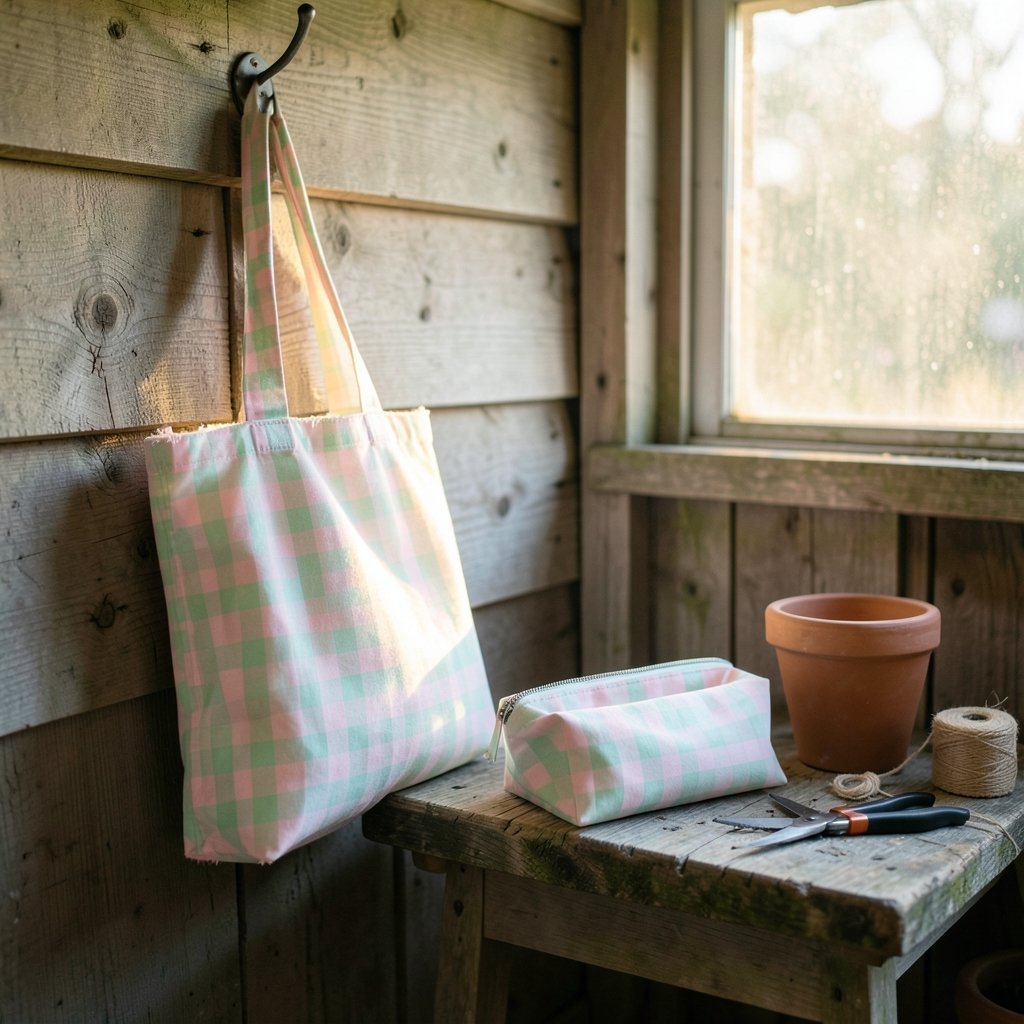
The capsule centered on the products Baggu does best. According to reporting around the release, the collection featured Baggu’s standard reusable bags and pouches reworked in Sandy Liang prints and colorways. In other words, the shapes were familiar to longtime Baggu shoppers, while the surfaces were unmistakably Sandy Liang.
| Element | What it looked like in practice |
|---|---|
| Core shapes | Reusable totes and pouches, the formats Baggu is known for |
| Design language | Prints and colorways drawn from Sandy Liang’s nostalgic, playful aesthetic |
| Positioning | A limited capsule rather than a permanent line addition |
| Audience | Existing Baggu collectors and Sandy Liang fans, with heavy overlap |
| Availability | A short-lived drop that sold out and resurfaced on resale |
For shoppers used to Baggu’s plain or subtly patterned nylon, the designer prints were a shift. For Sandy Liang fans, the appeal was getting a piece of her world at a Baggu price point rather than a designer price point. That accessibility is part of why the drop resonated. It let people participate in a designer collaboration without committing to a full-priced garment.
It is worth being precise here: the exact inventory, print names, and price points are the kind of detail that varies by drop and is easy to misremember. What is well established is the formula. Baggu supplied the shapes and the manufacturing know-how, Sandy Liang supplied the visual identity, and the limited nature of the release did the rest.
The sell-out pattern that defines modern drops
If you have tried to buy a Baggu designer capsule, you already know the rhythm. The collection launches, word spreads through social media and group chats, and the most wanted pieces disappear fast. Resellers list them above retail within days. The Baggu Sandy Liang release followed this pattern, and it is worth understanding why, because the mechanics repeat across the industry.
Scarcity is the engine. A limited run signals that the item will not be restocked, which pushes buyers to act immediately rather than think it over. Social media compresses the timeline further. One influencer post or a single well-timed photo can send a specific print from “nice” to “must have” in an afternoon. And because Baggu’s products are relatively inexpensive to begin with, the jump to resale prices feels tolerable to buyers who missed out, which keeps the secondary market alive.
There is a practical lesson buried in all this. If a drop matters to you, the reliable strategy is to know the launch time in advance, have your account and payment details ready, and buy the piece you actually want first rather than filling a cart and deliberating. Carts do not reserve inventory on most drop-based retail sites, and the item you hesitated on is often the one that sells out.
How to tell a genuine drop from hype
Not every collaboration deserves the scramble. A few signals separate a drop with staying power from one that fades in a week. First, does the design feel like a real meeting of two brands, or does it look like a logo slapped onto a stock product? The Baggu and Sandy Liang capsule passed this test because the prints carried her actual aesthetic rather than a generic co-brand. Second, is the underlying product good? A Standard Baggu is useful whether or not it has a designer print, which means buyers keep using it long after the hype fades. Third, does the brand have a track record with capsules? Baggu has released multiple designer collaborations, and that history shapes how collectors respond to each new one.
Getting the most from a reusable tote, designer or not
Strip away the collaboration and you are left with a nylon tote, and that is where the practical advice lives. A reusable bag earns its place when it is actually carried, not saved for a special occasion. The most common mistake people make is treating a designer print as too precious to use, which defeats the entire purpose of a reusable bag. The second most common mistake is overstuffing it. Nylon totes are strong but not rigid, so heavy, sharp, or awkwardly shaped items wear the fabric and strain the seams.
A few habits make a real difference. Fold the bag flat and keep it somewhere you will actually reach for it, like a coat pocket, a work bag, or the car. Wash it according to the care instructions rather than tossing it in with a hot load, since heat and harsh detergent can dull prints. Rotate between a couple of bags so no single one takes all the wear. And if you own a printed capsule piece, store it away from anything that might transfer dye, because light nylon picks up color easily.
For readers who want to explore the wider world of textured and patterned hair and style references that overlap with this aesthetic, the site’s tag pages offer more context, including 4c hair and 2b hair. The same community that follows playful designer drops also tracks how styling references move through fashion and beauty, and the row is another thread worth following if you enjoy seeing how trends connect.
Where the collaboration sits in both brands’ stories
For Baggu, the Sandy Liang capsule fits a clear pattern. Since its founding by Emily Sugihara, with her mother Joan Sugihara, in 2007, the company has built its reputation on reusability. Collaborations let it refresh that message without changing the product. A designer print brings new eyes to a bag that has always been about reducing waste, and that is a smart way to stay relevant without abandoning a core principle.
For Sandy Liang, the collaboration extended her reach beyond apparel and into an everyday object. Her label, founded in 2014, grew out of a distinct personal vision tied to downtown New York and the aesthetics of her childhood. Accessories like a printed tote let more people carry a piece of that vision, and they do it at a price that is far below her main line. It is a natural extension rather than a detour.
The broader takeaway is about how small accessories became the front line of fashion collaborations. A tote or pouch is an easy entry point for a new audience, it photographs well, and it carries a designer’s identity without requiring a full wardrobe commitment. Expect more of these partnerships, not fewer.
Common mistakes buyers make with limited drops
Watching people navigate these releases, a few errors come up again and again. Buying from resellers without checking authenticity is one; printed nylon is not hard to counterfeit, and the secondary market for popular capsules is exactly where fakes appear. Paying a premium for a piece you will not use is another. A designer tote is only worth resale prices if you genuinely want to carry it.
Another mistake is assuming a restock is coming. Limited capsules are often one-and-done, and waiting for a second chance frequently means missing out entirely. Conversely, some buyers assume every drop will sell out and panic-buy multiple pieces, then struggle to use or resell them. The balanced approach is to decide before launch which one or two items you actually want, buy those, and let the rest go.
Finally, there is the care mistake. People spend real money on a printed capsule bag and then treat it like a disposable grocery tote, cramming it with heavy items and washing it carelessly. A little attention to how you load and clean it keeps the print sharp and the fabric intact for years.
Conclusion
The Baggu Sandy Liang collaboration is a small case study in how a practical object becomes a coveted one. Baggu brought the shapes and the reusability mission it has carried since 2007. Sandy Liang brought the nostalgic, playful identity she has built since founding her label in 2014. Together they produced a limited capsule of totes and pouches that sold out quickly and lived on in resale listings, which tells you how much people wanted a piece of it.
The lesson for shoppers is straightforward. Know what you want before a drop, buy it early, and then actually use it. A designer print on a reusable bag is only worth the scramble if it ends up in your daily rotation rather than folded away in a drawer. That is the difference between collecting hype and owning something useful.
FAQ
What was the Baggu Sandy Liang collaboration?
It was a limited capsule collection between the reusable-bag brand Baggu and the New York designer Sandy Liang. It featured Baggu’s standard reusable bags and pouches reworked in Sandy Liang prints and colorways, released as a short-lived drop rather than a permanent addition to either brand’s line.
When did the Baggu and Sandy Liang collection come out?
The capsule is widely associated with a release around 2023, though exact drop dates and any restocks are the kind of detail that is easy to misremember and varies by release. If precise timing matters to you, check the brands’ own announcements rather than relying on secondary summaries.
Did the collection sell out?
Yes, the drop was widely reported as selling out quickly, with pieces resurfacing on resale sites above retail. This follows the pattern of many Baggu designer capsules, where limited runs plus social media attention create fast sell-through and a lively secondary market.
Who is Sandy Liang?
Sandy Liang is a New York fashion designer who founded her namesake label in 2014 after graduating from Parsons. Her brand is known for a playful, nostalgic aesthetic built around bows, fleece, gingham, and references to a Lower East Side childhood.
Who founded Baggu?
Baggu was founded in 2007 by Emily Sugihara, with her mother Joan Sugihara. The company built its reputation on reusable nylon bags, most famously the foldable Standard Baggu, and positions reusability as its core mission.
Is a designer Baggu tote worth buying?
It depends on whether you will use it. The underlying product is a practical, lightweight reusable bag, so a printed capsule version is worth it if you genuinely carry it. Treating it as too precious to use, or paying steep resale prices for a piece you will not carry, is where buyers usually go wrong.









