

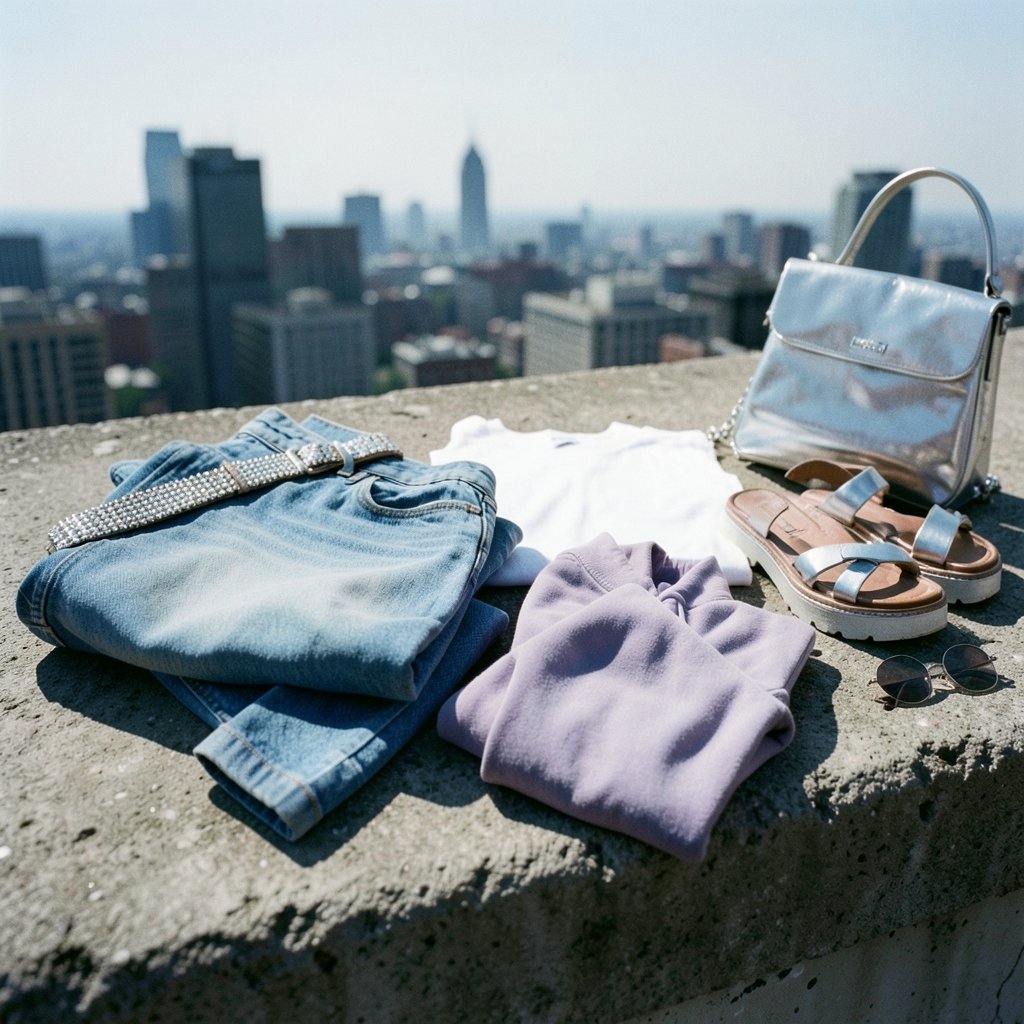
What do velour tracksuits, exposed thongs, and a $20 baby tee have in common? They all belonged to the same chaotic, glittery, deeply divisive era: 2000s fashion. Love it or cringe at it, the decade rewired how clothes were made, sold, and photographed. It turned pop stars into stylists, sped up trend cycles until they snapped, and gave the world a look so specific that designers are still copying it two decades later.
Why the 2000s Still Won’t Go Away
The 2000s were not one style. They were at least four styles stacked on top of each other, often in the same closet. The era opened with the tail end of Y2K sparkle, slid into boho-chic around 2004, hardened into neon and skinny jeans by 2007, and then went quiet after the 2008 financial crisis.
That messiness is exactly why the decade keeps returning. Fashion history often periodizes the 2000s loosely, sometimes as 2000 to 2009 and sometimes as overlapping waves like Y2K from roughly 1998 to 2003 and indie sleaze from about 2006 to 2011. Sources genuinely disagree on where the boundaries sit, which tells you something: the 2000s were a mood more than a rulebook.
The Y2K Sparkle Years, Roughly 2000 to 2003
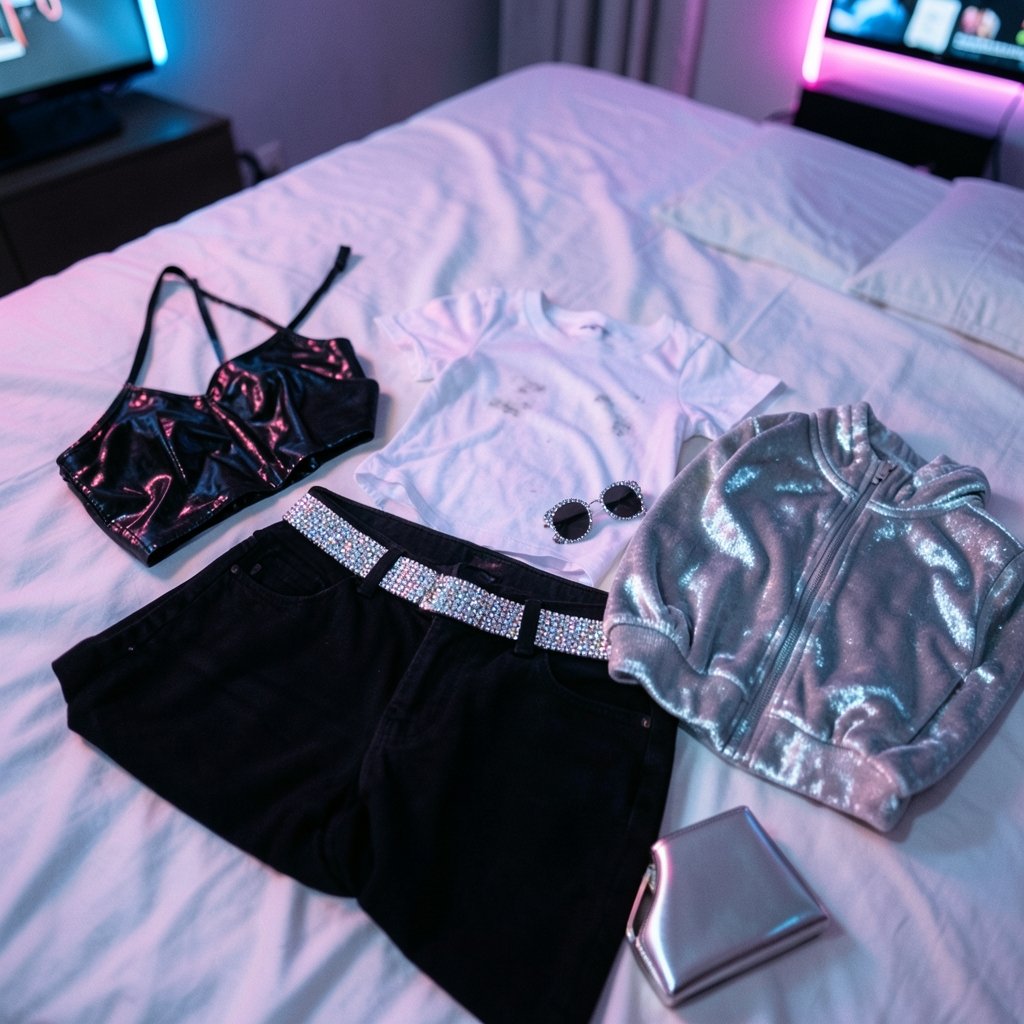
Y2K fashion is the retroactive label for late-1990s and early-2000s styles: metallic fabrics, baby tees, low-rise denim, and velour. Fun fact for trivia night: the term “Y2K” originally described the Year 2000 computer problem, not clothes. The fashion usage came later.
What defined this opening chapter:
- Low-rise jeans and exposed midriffs. The early-to-mid 2000s silhouette was built around a waistband that sat dangerously low, popularized by pop stars and celebrity culture between roughly 2000 and 2005.
- Juicy Couture tracksuits. Velour sets, often paired with Ugg boots, became the celebrity-casual uniform from about 2001 to 2006.
- Logos everywhere. Monograms, tiny sunglasses, and denim on denim.
- Going-out dressing. Think halter tops, rhinestones, and accessories that caught the light.
The practical lesson for anyone shopping this era today: proportion is everything. A low-rise jean works differently on every body, and the original styling leaned on a cropped top to balance the drop. If the waistband sits low and the top sits long, the whole outfit sags. That single mistake is why so many Y2K revivals look off in photos.
Boho-Chic and the Soft Middle, Around 2004 to 2006
Then the pendulum swung. Boho-chic peaked around 2004 and 2005, associated with Sienna Miller and the 2004 film Alfie. Out went the rhinestones, in came floaty tunics, belts over dresses, slouchy boots, and layers that looked like they had been found in an attic.
It was a strange pivot, and it worked because it offered comfort after years of tight, shiny going-out clothes. The era’s styling trick was mixing textures rather than matching them: crochet with leather, silk with denim, gold with wood. For readers tracking how these cycles recycle, the broader arc shows up in every serious 2026 fashion trends guide, where boho references keep resurfacing in softened, modern cuts.
Fast Fashion Rewrote the Rules
Here is the part of 2000s fashion that mattered more than any hemline. Zara, H&M, and later Forever 21 expanded rapidly through the decade, and trend cycles got shorter with every season. H&M’s designer collaboration era began with Karl Lagerfeld in November 2004, a moment that made high-low dressing a mainstream habit rather than a fashion-insider trick.
The effect was structural, not merely aesthetic. Trends that once took a year to travel from runway to mall now took weeks. A pop star’s outfit on a red carpet could be copied and hanging on a rack before the magazine coverage even printed. That acceleration is the direct ancestor of today’s micro-trend economy, and it is why discussions of 2026 fashion trends female almost always circle back to speed, volume, and overproduction.
What Actually Worked, and What Didn’t
In practice, the fast-fashion boom taught shoppers two habits, one good and one bad.
The good habit: mixing cheap basics with one strong statement piece. A plain tank under a loud jacket still reads as intentional.
The bad habit: buying disposable trend items with no thought to fit. The 2000s are littered with purchases that fell apart after three washes, and the resale market is still full of them. Anyone rebuilding a 2000s wardrobe today should check seams, fabric weight, and whether the piece survives a gentle pull. Thin jersey that stretches out at the neckline is the classic tell of a bad fast-fashion buy from that era.
Skinny Jeans, Neon, and the Indie Sleaze Turn
By the late 2000s, skinny jeans had overtaken bootcut and flared denim, helped along by leggings and the jeggings trend around 2009 and 2010. The exact turning point is debated, but the direction is not.
Alongside the skinny jean came what is now called indie sleaze or electro-pop style: American Apparel basics, neon accents, flash photography, and a deliberately messy aesthetic. The label itself was coined much later, around 2021, which is a useful reminder that we rarely name an era while living through it. The same retrospective labeling shows up in analyses of how 2010s fashion athleisure streetwear Instagram rewrote the rules, where the 2000s party look gave way to comfort and performance fabric.
Fashion blogging changed the game too. Scott Schuman’s The Sartorialist, launched in 2005, helped push street style into the mainstream, and by the late 2000s what real people wore outside shows mattered as much as what walked the runway. If you want a sense of how image-driven fashion storytelling evolved from there, this piece on how Angelica Hicks turns runway moments into illustrations captures the same instinct: the outfit is only half the story, the documentation is the other half.
The 2008 Crash and the Great Fashion Cool-Down
The 2008 financial crisis is generally credited with pushing fashion toward more subdued, recession-era styles around 2008 and 2009. Fashion historians debate how much was cause and how much was coincidence, and that caution is fair. Correlation is not causation, even in hemlines.
What is clear is the shift in tone. Logos shrank. Black returned. Extravagance started to look tone-deaf. The decade that opened with rhinestones closed with restraint, and the 2010s picked up from there.
A Quick Comparison: The Four 2000s Looks
| Era | Rough Dates | Signature Pieces | Styling Cue |
|---|---|---|---|
| Y2K sparkle | 1998 to 2003 | Low-rise jeans, baby tees, velour tracksuits | Cropped top to balance the low waist |
| Boho-chic | 2004 to 2006 | Flowy tunics, belts over dresses, slouchy boots | Mix textures, not patterns |
| Indie sleaze | 2006 to 2011 | Skinny jeans, neon, American Apparel basics | Messy hair, flash photography energy |
| Recession cool | 2008 to 2009 | Black, minimal logos, simpler tailoring | Let one piece carry the outfit |
How to Wear 2000s Fashion Today Without Looking Like a Costume
The biggest mistake people make with 2000s revivals is going full outfit. Head-to-toe Y2K reads as fancy dress. One or two references read as style.
Practical rules that hold up:
- Pick one era, not all four. A velour hoodie with boho jewelry and neon leggings fights itself.
- Upgrade the fabric. The original pieces were often thin and cheap. Modern versions in heavier cotton or real denim photograph better and last longer.
- Watch the waistband. If you go low-rise, keep the top fitted and cropped. If you go high-rise, you are already in different territory.
- Choose one logo. A monogram bag with a logo tee and logo sneakers is a lot. One is a statement.
- Balance skin. An exposed midriff with a mini skirt is a period costume. An exposed midriff with wide-leg trousers is a modern outfit.
For anyone mapping the current cycle against the last one, the tag archive on fashion trends 2026 is a useful mirror, and the revival conversation keeps circling the same question: how much nostalgia is too much? Readers who want the wider context of how Italian houses shaped logo culture in that decade can dig into Italian luxury fashion for the origin story behind half the monograms on 2000s red carpets.
Conclusion
The 2000s were fashion’s loudest experiment in speed. Low-rise denim, velour, boho layers, skinny jeans, and neon all shared a stage within ten years, and fast fashion made sure every trend arrived faster than the last. The decade’s real legacy is not a single garment. It is the machine that produced them, and the way celebrity, blogs, and cheap production turned personal style into a public performance. Wear the references if you like them. Just check the seams first.
The 2000s in the Rearview Mirror
Looking back, the most striking thing about 2000s fashion is how thoroughly it documented itself. The decade arrived just as digital cameras, camera phones, and early social platforms made every outfit potentially permanent. A look that once lived only in a magazine spread or a red-carpet broadcast could now circulate endlessly, get remixed, and return years later as a mood board. That visibility is part of why the era feels so available to us now. We are not reconstructing it from memory alone; we are scrolling through it.
It also explains why the revival has been so fragmented. When people say they want “2000s style,” they usually mean one specific memory: the metallic mini dress, the tracksuit, the peasant blouse, the skinny jean. Each carries its own emotional charge, and each belongs to a slightly different moment. The decade never had a single silhouette, so the comeback never had a single form either.
What the Decade Left Behind
Strip away the trends and three lasting shifts remain:
- Speed as a default. The fast-fashion acceleration of the 2000s became the baseline expectation for how quickly trends should arrive. Every later micro-trend debate traces back to this period.
- Celebrity as designer. Pop stars and actresses moved from wearing clothes to launching them, blurring the line between performer and brand.
- Documentation as style. Street style blogs and digital photography made being seen part of getting dressed. The outfit and its audience became inseparable.
A Closing Note on Nostalgia
Nostalgia is rarely about the clothes themselves. It is about the feeling attached to them, and the 2000s carry a particular charge because they were the last decade before fashion’s memory became fully searchable in real time. The era is close enough to remember and distant enough to romanticize. That gap is where revivals live.
The healthiest way to engage with it is to treat the 2000s as a reference library rather than a uniform. Borrow the proportion, the texture, or the attitude. Skip the disposable fabric and the head-to-toe commitment. The decade’s best lesson may be its least glamorous one: style outlasts the trend cycle only when the pieces are made well enough to survive it.
Wear the references if you like them. Just check the seams first, and remember that the most durable 2000s accessory was never a tiny bag or a rhinestone belt. It was confidence, worn lightly.
The decade’s influence also endures behind the scenes: casting, styling, and campaign photography all borrowed its appetite for speed and spectacle, shaping how fashion sells itself today. Whether the next revival softens the excess or amplifies it, the 2000s remain the reference point every trend cycle must answer to.
The decade’s influence also endures behind the scenes: casting, styling, and campaign photography all borrowed its appetite for speed and spectacle, shaping how fashion sells itself today. Whether the next revival softens the excess or amplifies it, the 2000s remain the reference point every trend cycle must answer to. What makes that legacy durable is its honesty: the 2000s never pretended to be timeless. They were of their moment, loudly and unapologetically, and that is precisely why they keep returning. Each revival strips away the excess and keeps the attitude, proving that even the most disposable decade can teach lasting lessons about taste, restraint, and the courage to have fun with clothes.














