

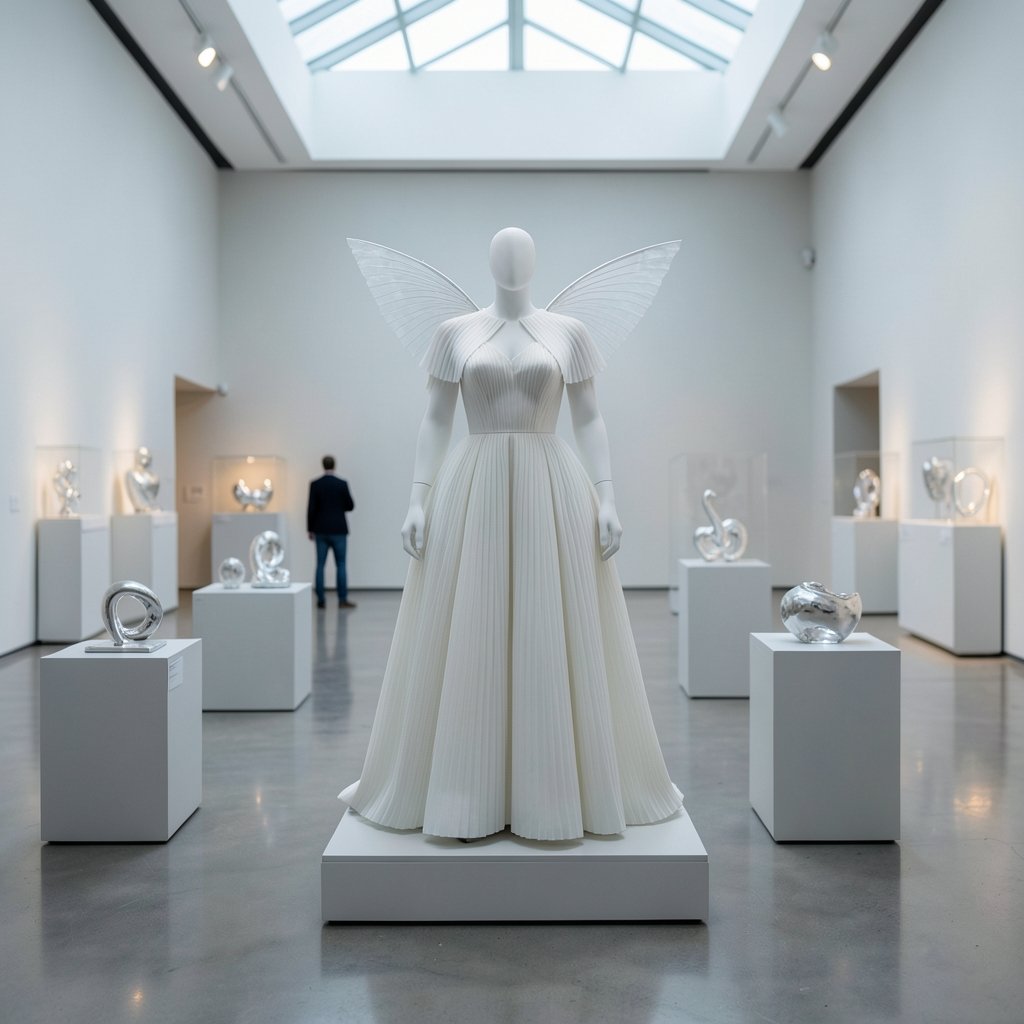
What makes a dress a piece of art? Is it the hand that made it, the museum that displays it, or the idea it carries? Anyone who has stood in front of a lobster-print gown or a jacket with no armholes has probably asked some version of that question. The answer is messier, and more interesting, than most people expect.
Art fashion is a loose, contested term. It can mean clothing designed by artists, fashion shown as installation, or historic dress curated in museums. There is no single official definition, and that ambiguity is exactly why the subject rewards a closer look. This guide walks through the history, the big exhibitions, the practical ways to read a garment as art, and the mistakes people make when they try.
What Does Art Fashion Actually Mean?
The phrase gets used in at least three different ways, and mixing them up causes most of the confusion.
| Use of the term | What it describes | Typical example |
|---|---|---|
| Artist-designed clothing | Artists collaborating on or making wearable pieces | Surrealist artist and couturier partnerships |
| Fashion as art presentation | Runway shows staged as installations or performances | Conceptual collections shown in galleries |
| Museum-curated dress | Garments collected, conserved, and displayed as design objects | Costume collections in major museums |
None of these is wrong. But a person who says “that’s art fashion” about a gallery installation is talking about something quite different from someone describing a hand-painted jacket. Knowing which sense is meant keeps the conversation honest.
The academic debate is real, too. Scholars writing in the journal Fashion Theory, founded in 1997, have argued both sides: that fashion’s commercial function separates it from art’s autonomy, and that dress is a legitimate art medium in its own right. That tension never fully resolves, and it probably shouldn’t.
How the Art and Fashion Worlds First Collided
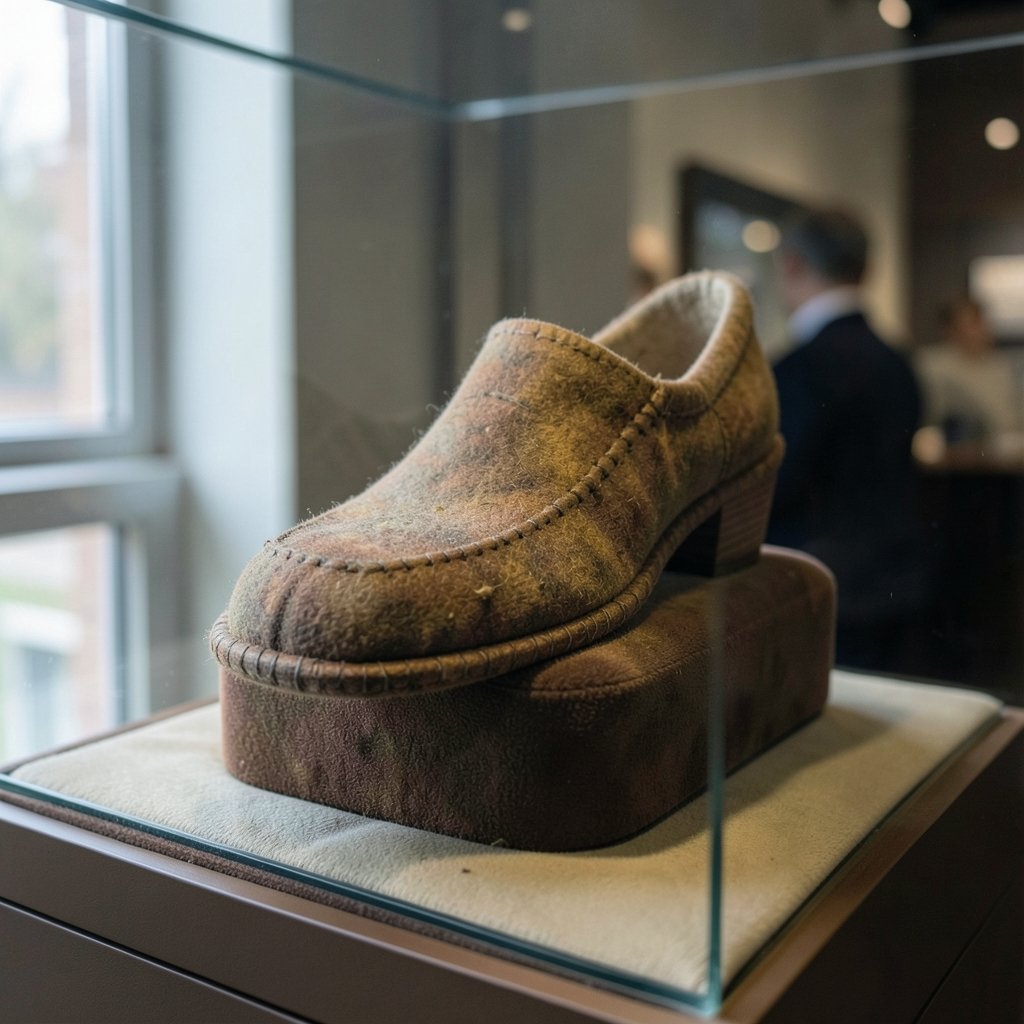
The most cited early example of true co-authorship between an artist and a designer comes from the 1930s. Elsa Schiaparelli worked directly with Salvador Dalí on pieces including a lobster dress in 1937 and a shoe-shaped hat from 1937 to 1938. These were not prints licensed from a painter. They were shared ideas, argued over and built together.
That partnership matters because it established a template. The Surrealist toolkit, which includes displacement, the uncanny, and the readymade, turned out to translate almost perfectly into dress. A hat shaped like a shoe is a joke about function. A lobster crawling across a skirt is a joke about appetite. Fashion has always been good at jokes.
Richard Martin, a longtime curator at the Fashion Institute of Technology, edited the essay collection Fashion and Surrealism in 1987, which remains a standard reference for the argument that the two fields share methods rather than merely borrowing from each other. If you want one book to understand the crossover, that is the one most often recommended.
The Museum Becomes the Stage
The institutional side of art fashion has its own timeline. The Met’s Costume Institute gala began in 1948 as a midnight dinner for the fashion press, founded by publicist Eleanor Lambert. It grew into a major fundraiser and, from the 1970s onward, became tied to themed exhibitions.
Then came the blockbusters. The Alexander McQueen retrospective Savage Beauty opened at the Met in 2011 and at the Victoria and Albert Museum in 2015. It is widely cited as the moment fashion exhibitions became mass-audience museum events, with queues to match.
The Met followed with Rei Kawakubo/Comme des Garçons: Art of the In-Between in 2017, running from May to September. Framing a living fashion house explicitly as art was a curatorial statement, not a neutral choice. In 2024, the theme Sleeping Beauties: Reawakening Fashion shifted focus to the Costume Institute’s own collection and the work of conservation rather than a single designer. That shift is telling: the institution itself became the subject.
Why the “Is It Art?” Question Keeps Coming Back
Here is the practical problem. A painting exists to be looked at. A coat exists to be worn, sold, and eventually worn out. Critics who resist the art label point to that commercial function. Defenders point out that plenty of art is bought and sold, and that a garment can carry an idea as precisely as a canvas can.
The V&A’s fashion collections, with galleries that treat dress as design objects, sit firmly on the “yes, it’s art” side of the fence. Curators there catalogue, conserve, and interpret clothing with the same rigor applied to sculpture. That institutional practice has quietly settled a debate that critics still argue about.
For readers tracking how this plays out commercially, the crossover shows up in unexpected places. The Barbie world tour book is a good example of how a film’s costume design gets reframed as collectible fashion content, with the movie’s wardrobe treated as the main event rather than a backdrop.
How to Read a Garment as Art: A Practical Method
Most people look at an exhibition dress the way they look at a shop window: quickly, and mostly for whether they’d wear it. Reading a garment as art takes a different set of habits. Here is a sequence that works.
- Identify the maker and the collaboration. Was this designed by one person, a house, or a pair? Co-authored pieces usually carry the most conceptual weight.
- Look for the idea before the silhouette. Ask what the garment is arguing. A jacket that restricts movement is making a point about restriction.
- Check the construction. Hand-finished seams, unusual materials, and structural experiments signal intent beyond ready-to-wear.
- Read the display. A garment on a mannequin in a vitrine is being framed as an object. The same garment on a runway is being framed as an event.
- Ask who paid for it. Commercial backing does not disqualify a piece, but it does shape what gets made.
That last step is the one people skip. A couture piece commissioned by a house with a fragrance line to protect is operating under different pressures than a one-off made for a gallery. Both can be art. They are not the same kind of art.
Common Mistakes People Make
The biggest error is assuming that anything shown in a museum is automatically good, or automatically art. Museums collect documents, too. A costume collection includes everyday pieces that are historically valuable and conceptually thin, and that is fine.
The second mistake is treating “wearable” and “artistic” as opposites. Some of the most conceptually ambitious garments in museum collections were designed to be worn, and some of the least wearable pieces are essentially sculpture with sleeves.
The third is ignoring conservation. A dress made of fresh flowers or unstable plastics may be impossible to display again, which changes how a museum treats it. The 2024 Met exhibition put this problem front and center. Fragile pieces cannot simply be hung on a rail, and that constraint shapes what the public ever gets to see.
The Runway as Gallery
Designers have leaned into the art framing deliberately. Runway shows now borrow the grammar of installation art: single-file pacing, site-specific sets, silence instead of music, models who walk a route rather than a catwalk. The audience is invited to read the collection as a body of work rather than a shopping list.
This is where the term gets slippery again. A show staged in a gallery is not automatically art, and a show staged in a tent is not automatically commerce. What matters is whether the presentation adds meaning to the clothes or simply decorates them.
For anyone following how this aesthetic filters down into everyday style, the crossover between conceptual runway ideas and wearable trends is worth watching. The 2026 fashion trends guide tracks which high-concept ideas actually survive the trip into real wardrobes, and which stay on the runway. The same is true of the broader fashion trends 2026 conversation, where art-school references keep resurfacing.
Illustrators play a quiet role here too. The way a runway moment gets translated into a drawing, with all its exaggeration and emphasis, often shapes public memory of a collection more than the photographs do. That process is explored in Angelica Hicks’s approach to turning runway moments into illustration, which shows how an artist’s eye edits a garment down to its essential idea.
Who Gets to Be Called an Artist?
There is a gender dimension to this debate that rarely makes the exhibition wall text. Women have historically dominated fashion design as a profession while being underrepresented in the fine art market, and the art fashion crossover inherits both patterns. A woman designing conceptual garments is often described as a designer. A man making comparable work is more likely to be called an artist.
That imbalance is part of a wider pattern in the art world. The gender gap in art is well documented in gallery representation and auction records, and the fashion crossover does not escape it. Naming the pattern is the first step toward reading exhibitions more critically.
There is also a geographic story. The Italian luxury houses built the infrastructure that made large-scale art-fashion collaboration possible, from artisan workshops capable of realizing impossible ideas to the funding that supports museum partnerships. The Italian luxury fashion tradition is a big part of why a designer’s wildest concept can actually be produced.
And the audience is changing. Younger buyers increasingly treat clothing as a form of self-expression with conceptual weight, which is visible in the 2026 fashion trends for women and in the way personal style gets discussed online. Even something as small as nail art ideas now circulates with the same reference-heavy language once reserved for gallery reviews. The line between getting dressed and making a statement keeps thinning.
What Actually Works If You Want to Explore Art Fashion
Practical advice, based on how exhibitions and collections are actually organized.
Start with permanent collections rather than blockbuster shows. Major museums with costume departments display pieces year-round, often with far less crowding and more context than a headline exhibition. Look for object labels that name materials and construction techniques as well as the designer.
Go to a show twice if you can. The first pass is for the spectacle. The second is for the details: the seams, the closures, the places where a garment refuses to behave like clothing.
Read the catalogue. Exhibition books often contain the curatorial argument that the wall text compresses into three sentences. The 1987 Martin volume on Surrealism is still the best entry point for the historical side.
Skip the assumption that price equals significance. A piece can be historically important and relatively inexpensive, or expensive and conceptually empty. Museum acquisition records are a better guide than retail price.
Finally, be skeptical of the word “art” used as a marketing term. When a brand calls a collection art, ask what the claim is doing. Sometimes it is a genuine invitation to look closer. Sometimes it is a way to charge more for a jacket.
Conclusion
Art fashion is not one thing, and that is its strength. It is Schiaparelli and Dalí arguing over a lobster. It is a museum deciding that a coat deserves the same care as a sculpture. It is a runway staged like a gallery and a gallery staged like a wardrobe. The term resists a clean definition because the practice keeps moving.
What holds it together is intent. When a garment is made to carry an idea, and someone builds the conditions for that idea to be seen, the crossover happens. Whether you call the result art is a matter of taste and argument. Whether it is worth your attention is not really in question.
Frequently Asked Questions
What is art fashion in simple terms?
Art fashion is clothing that is made or presented primarily to carry an idea rather than to sell as everyday wear. It covers three overlapping things: clothing designed by or with artists, fashion shows staged as art installations, and historic dress displayed in museums as design objects.
When did artists and fashion designers start collaborating?
The most cited starting point is the 1930s, when Elsa Schiaparelli worked directly with Salvador Dalí on pieces including a lobster dress in 1937 and a shoe-shaped hat from 1937 to 1938. These were genuine co-authored works rather than licensed prints, and they set the template for later collaborations.
Is fashion actually considered art by museums?
Many major museums treat it that way. The Costume Institute at the Met collects and catalogues dress as design objects, and the V&A’s fashion collections display clothing with the same curatorial care given to sculpture. Academic debate continues, with scholars in the journal Fashion Theory arguing both sides since 1997.
Which exhibitions made fashion a blockbuster museum event?
The Alexander McQueen retrospective Savage Beauty, shown at the Met in 2011 and the V&A in 2015, is most often credited with turning fashion exhibitions into mass-audience events. The Met’s 2017 Kawakubo exhibition and its 2024 Sleeping Beauties show continued that trajectory in different directions.
Why is the term art fashion so hard to define?
Because it is used for at least three different practices: artist-designed clothing, fashion presented as art, and museum-curated dress. No single authority has standardized the term, so context decides which meaning applies. Mixing the three is the most common source of confusion in discussions about it.
How can someone new to this start exploring it?
Begin with permanent costume collections at major museums rather than crowded blockbuster shows, read the object labels for materials and construction, and pick up an exhibition catalogue for the fuller argument. Reading Fashion and Surrealism, edited by Richard Martin in 1987, is a solid historical starting point.














