

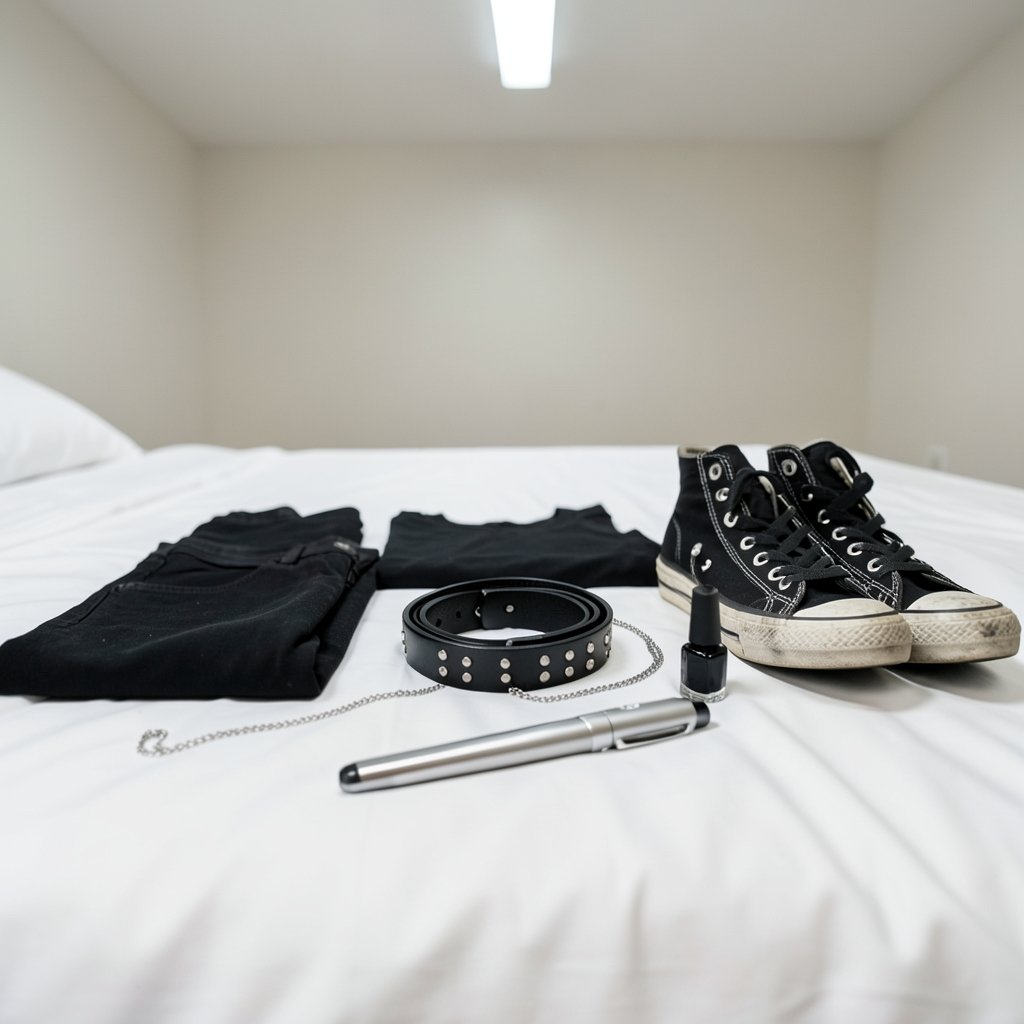
What makes a style stick around for forty years, survive a moral panic, get mocked on television, and then come back looking cooler than ever? That is the strange arc of emo fashion. It started as the uniform of a small group of punk kids in Washington, D.C., and ended up on red carpets, in mall stores, and eventually in Gen Z bedrooms. Along the way, it became one of the most recognizable youth styles of the 2000s, and one of the most misunderstood.
This piece walks through where emo style came from, what it actually looked like at each stage, why adults freaked out about it, and how to wear it today without looking like a costume.
Where Emo Fashion Actually Began
Most people picture emo as a mid-2000s mall phenomenon. The roots go back much further, to roughly 1985 and the Washington, D.C. hardcore punk scene. Bands like Rites of Spring and Embrace played faster, more emotional music than their peers, and the term “emotional hardcore” started to stick. At this point, there was no separate emo fashion. Kids wore what every hardcore kid wore: ripped jeans, band shirts, beat-up sneakers, and whatever they could find cheap.
The split came in the 1990s with second-wave emo, often called midwest emo. This era brought a softer, more bookish image: thrift-store cardigans, thick glasses, messy hair, and a general air of someone who had been reading sad poetry in a basement. It was a deliberate step away from hardcore’s aggression. The look was less about spikes and more about sweaters.
Then came the third wave, and everything changed. From roughly 2004 to 2009, emo broke into the mainstream, and the fashion became a full-blown youth style with rules, rituals, and a whole retail ecosystem behind it.
The Mid-2000s Look, Item by Item
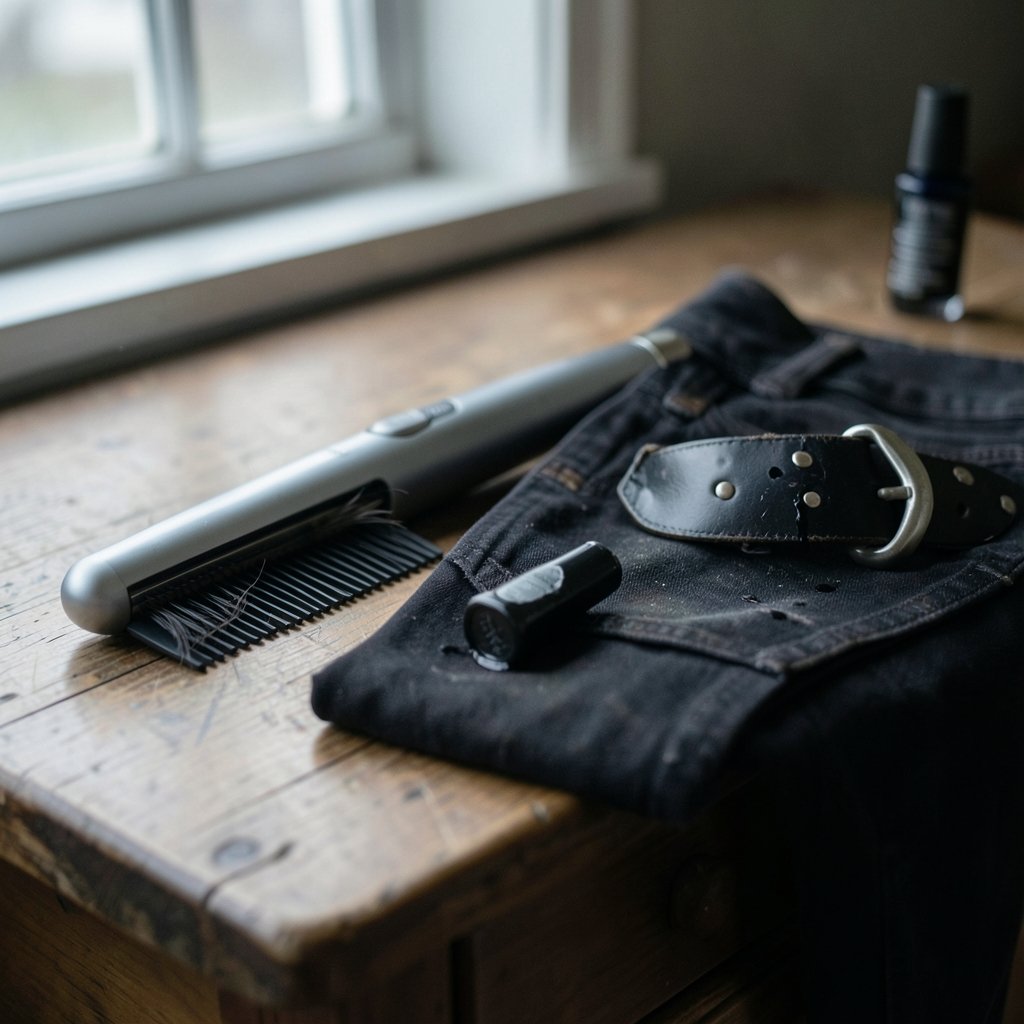
The classic mall-emo uniform was remarkably specific. If you lived through it, you can probably still list the pieces from memory.
| Element | What It Looked Like | Why It Mattered |
|---|---|---|
| Hair | Dyed black, straightened, long side-swept bangs | The single most important signal, often covering one eye |
| Tops | Tight band T-shirts, sometimes layered | Showed music taste and scene credibility |
| Pants | Skinny jeans, often dark or black | A sharp break from the baggy jeans of the late 1990s |
| Belt | Studded belt, usually black with metal pyramids | Cheap, visible, and instantly readable |
| Shoes | Converse or Vans | Practical and affordable for teenagers |
| Accessories | Wristbands, rubber bracelets, band pins | Trading and stacking them was a social activity |
| Makeup | Heavy black eyeliner, for boys and girls | The most controversial part of the look |
The side-swept bangs deserve their own paragraph. Straightening irons became a household appliance, and the swoop of hair across the forehead was the closest thing the subculture had to a membership card. It took time, effort, and a lot of heat protectant.
The overlap with scene culture complicates the picture. Scene kids shared the tight jeans and band shirts but added neon colors, layered choppy hair, and a lot more brightness. Outsiders often lumped the two together. Inside the subculture, the distinction mattered, and people argued about it constantly.
Why Adults Panicked
Parents gave emo fashion side-eye. Around 2006 to 2008, schools and media in the UK and the US also openly debated whether emo was a danger to teenagers. Some schools restricted emo-associated dress or hairstyles. The concern combined a few different fears: the dark aesthetic, the introspective lyrics, and a general suspicion of any youth style adults could not understand.
It is worth being clear about what the evidence supports. Specific incidents and school policies are poorly documented and often reported secondhand, so sweeping claims about a coordinated crackdown are hard to stand behind. What is well documented is the mood: a genuine moral panic, the kind that has greeted every youth subculture from rock and roll onward.
The fashion itself was never the real issue. It was a visible marker of a group that adults found hard to read, and visible markers make easy targets.
The Theory Behind the Black Eyeliner
There is a useful academic lens for all of this. Dick Hebdige’s 1979 book Subculture: The Meaning of Style treats punk dress as a form of semiotic resistance, where ordinary objects get recombined to signal refusal of mainstream norms. Emo fashion fits that model neatly, even though Hebdige was writing well before emo existed as a fashion label. A studded belt from a cheap store, worn a certain way, becomes a statement.
The same tradition describes a familiar cycle: a subcultural style emerges, gets noticed, gets copied by retailers, and gets sold back to the mainstream until its original meaning thins out. Emo rode that cycle hard. By 2007, you could buy pre-ripped skinny jeans and a studded belt at the mall without ever hearing a single emo band.
That commodification is not a tragedy, exactly. It is just how youth styles travel. The interesting part is what survives the trip. Today, the eyeliner and the band tee have outlived the mall-store version of emo by a wide margin.
The 2020s Revival and Its New Rules
Emo and adjacent alt aesthetics came back strong among Gen Z from roughly 2020 to 2023. The revival mixed 2000s emo signifiers with newer internet-born looks like e-girl and e-boy, plus a heavy dose of Y2K nostalgia. It is worth flagging that “revival” is largely a media framing. Scholarly documentation of the 2020s wave is thin, and the dates are fuzzy and source-dependent.
What did the revival actually look like? Less commitment to a single uniform, and more remixing. Think black eyeliner with a pastel hoodie, or a band tee tucked into wide-leg jeans. The 2000s version had strict rules. The 2020s version treats those rules as a palette.
If you want to see how runway culture and internet culture feed each other now, the way Angelica Hicks turns runway moments into illustrations is a good example of how fast a look travels from catwalk to feed. Emo’s revival followed the same path in reverse: from bedroom to feed to mainstream retail.
How to Wear Emo Style Today Without Looking Like a Costume
This is where practical advice helps more than history. A few things actually work, and a few reliably backfire.
Start with one anchor piece. The easiest entry point is a band tee or a pair of black skinny or straight jeans. Build the rest of the outfit around that, not the other way around. People who try to wear every element at once end up looking like they raided a party store.
Keep the eyeliner intentional. Heavy black liner still reads as emo, but the modern version is usually cleaner and less smudged. A single strong line or a soft smoked edge works better than a full raccoon situation for everyday wear.
Mix eras on purpose. Pairing a 2000s element with something clearly current, like a wide-leg trouser or a chunky boot, signals that you know what you are doing. All-2000s all at once reads as fancy dress.
Watch the hair commitment. The side-swept bang is iconic, but it is also the hardest element to undo. If you are experimenting, clip-in sections or a temporary dye are the low-risk route.
Do not skip the shoes. Converse and Vans still work, but so do chunky platform boots. Footwear is where the revival has drifted furthest from the original look.
Avoid the “sad” shortcut. The most common mistake is treating emo as a mood rather than a style. The fashion was always about music, community, and self-expression, not about looking miserable. Wear it with some energy and it reads completely differently.
Common Mistakes People Make
- Buying a full outfit at once instead of building gradually
- Overdoing the black until nothing stands out
- Ignoring fit, which matters more than any single item
- Treating scene and emo as identical when they had different rules
- Forgetting that comfort matters, since emo style was always practical for shows
Emo Fashion’s Place in the Wider Style Map
Emo did not exist in a vacuum. It sits in a long line of youth styles that used darkness and DIY as a signal, and it fed directly into the styles that followed. The 2010s athleisure and streetwear wave borrowed emo’s comfort-first logic even as it abandoned the aesthetic. Both movements understood that young people dress for their actual lives, not for a magazine spread.
You can also see emo’s fingerprints on Italian luxury fashion in unexpected ways. Designers have repeatedly mined subcultural dress for runway collections, stripping the politics and keeping the silhouette. The studded belt and the skinny black jean have both had luxury reincarnations.
If you want to track where the current cycle is heading, the 2026 fashion trends guide is a useful reference point for how much subcultural reference the mainstream is currently absorbing. Emo’s revival did not happen in isolation. It arrived alongside a broader appetite for fashion trends in 2026 that pull heavily from the 2000s.
For anyone who wants to follow this stuff closely without drowning in newsletters, there are ways to find the best fashion substacks without wasting your inbox. Subculture writing tends to live in those smaller, more obsessive spaces rather than in mainstream coverage.
What Emo Fashion Got Right
Strip away the moral panic and the mall-store knockoffs, and emo fashion was remarkably democratic. It was cheap. It was DIY. It rewarded effort over money. A teenager with a straightening iron, a cheap belt, and a band shirt could participate fully. That accessibility is a big part of why it lasted.
It also gave people a vocabulary for feeling things openly. The style was never just about looking a certain way. It was a visible signal that it was acceptable to be sad, introspective, or angry, which is a genuinely useful thing for a fifteen-year-old to find.
That is probably why the revival landed. The clothes are easy to copy. The underlying permission to feel things is harder to manufacture, and it is what keeps drawing new people back to the look.
Conclusion
Emo fashion traveled a long way from a D.C. hardcore scene to a TikTok feed. It moved through thrift-store cardigans, mall-store skinny jeans, a genuine moral panic, and a Gen Z remix, and it kept its core intact: dark clothes, loud music, and a refusal to pretend everything is fine. Whether you are building a first outfit or revisiting a phase you thought you had outgrown, the smart approach is the same. Start with one strong piece, keep the styling intentional, and let the rest follow. The style was always about self-expression first. The eyeliner was just the announcement.
Frequently Asked Questions
What defines emo fashion?
Emo fashion is defined by a handful of core signals: dark clothing, tight band T-shirts, skinny jeans, studded belts, Converse or Vans, wristbands, and heavy black eyeliner. The most recognizable element is dyed black hair with long side-swept bangs. The look peaked in the mainstream between roughly 2004 and 2009, but it has roots going back to 1980s hardcore punk.
Is emo fashion the same as scene fashion?
No, though the two are often confused. Scene style overlapped with emo in the mid-to-late 2000s but added neon colors, layered choppy hair, and much more brightness. Classic emo leaned almost entirely on black. People inside the subculture drew a sharp line between the two, even though outsiders frequently lumped them together.
When did emo fashion start?
The music that became emo emerged around 1985 in Washington, D.C., but there was no distinct emo fashion at that point. Kids dressed like other hardcore fans. A separate look developed in the 1990s with second-wave emo, and the recognizable mall-emo uniform arrived in the mid-2000s. The exact first use of the term “emo” is disputed among scene accounts.
Why did schools ban emo clothing?
In the mid-2000s, some schools in the UK and the US restricted emo-associated dress or hairstyles amid a broader moral panic about the subculture. The restrictions were driven by adult concern about dark aesthetics and introspective lyrics rather than by any documented harm from the clothing itself. Specific incidents and policies are poorly documented and often reported secondhand.
Can you wear emo style if you are not part of the subculture?
Yes, and people do it constantly. The practical advice is to treat it as a style rather than a costume. Pick one or two anchor pieces, mix in something current, and avoid assembling the full 2007 look all at once. The aesthetic has been absorbed into mainstream fashion many times over, so there is no gatekeeping rule against it.
Why has emo fashion come back?
Emo and adjacent alt aesthetics saw a revival among Gen Z from roughly 2020 to 2023, mixing 2000s signifiers like eyeliner and band tees with newer internet-born looks such as e-girl and e-boy. Part of the appeal is nostalgia, and part is that the style is cheap, expressive, and easy to personalize. The term “revival” is largely a media framing, and scholarly documentation of the recent wave is thin.














