

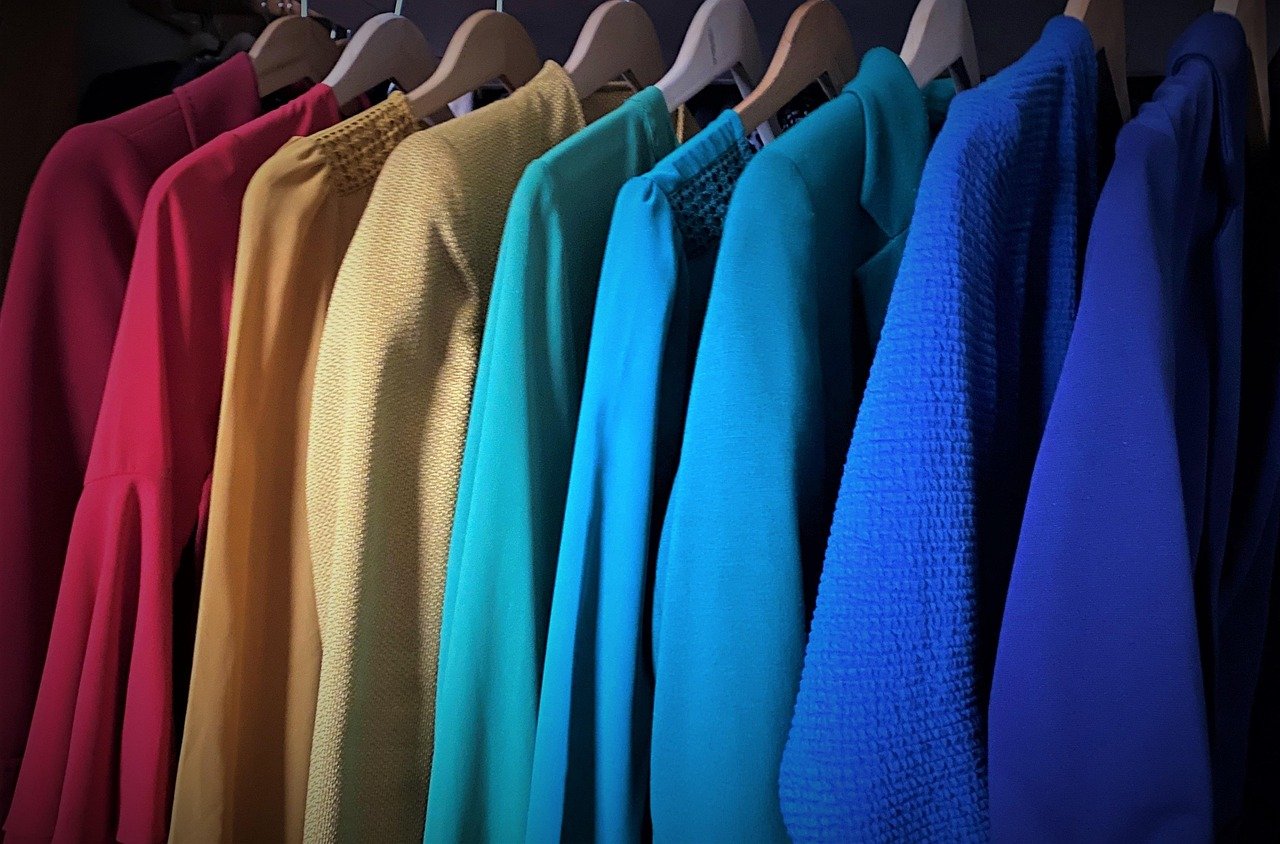

What makes a rainbow so hard to ignore? Part of it is physics: a full arc of colour against a grey sky is genuinely rare. Part of it is what we have loaded onto those stripes over the last fifty years. Rainbow fashion sits right where those two things meet, and that is why a six-colour stripe on a T-shirt can feel like a cheerful design choice to one person and a public statement to another.
This guide unpacks what rainbow fashion actually means, where it came from, how it behaves as a trend, and how to wear it without looking like you raided a party shop. It also covers the awkward parts, because the commercial side of rainbow clothing has a complicated record.
What does “rainbow fashion” actually mean?
There is no official industry definition. Rainbow fashion is a loose label for clothing and accessories that feature rainbow motifs, gradient colour runs, or deliberately clashing multicolour palettes. It gets used in three quite different ways, and mixing them up causes most of the confusion around the topic.
The first is Pride-linked rainbow clothing: garments carrying the six-stripe flag or its colours as an act of visibility and solidarity. The second is rainbow as pure design: colour-block knits, ombré dresses, striped socks, kids’ raincoats. The third is rainbow as nostalgia or camp, where bright multicolour reads as playful, retro, or deliberately over the top.
The rainbow itself long predates any of this. It appears as a covenant symbol in biblical tradition, as the Rainbow Serpent in Aboriginal Australian stories, and as insignia on military patches such as the US Army’s 42nd “Rainbow Division” in the twentieth century. So when someone says rainbow fashion, ask which rainbow they mean. The answer changes everything about how the garment is read.
How the Pride flag became a fashion motif
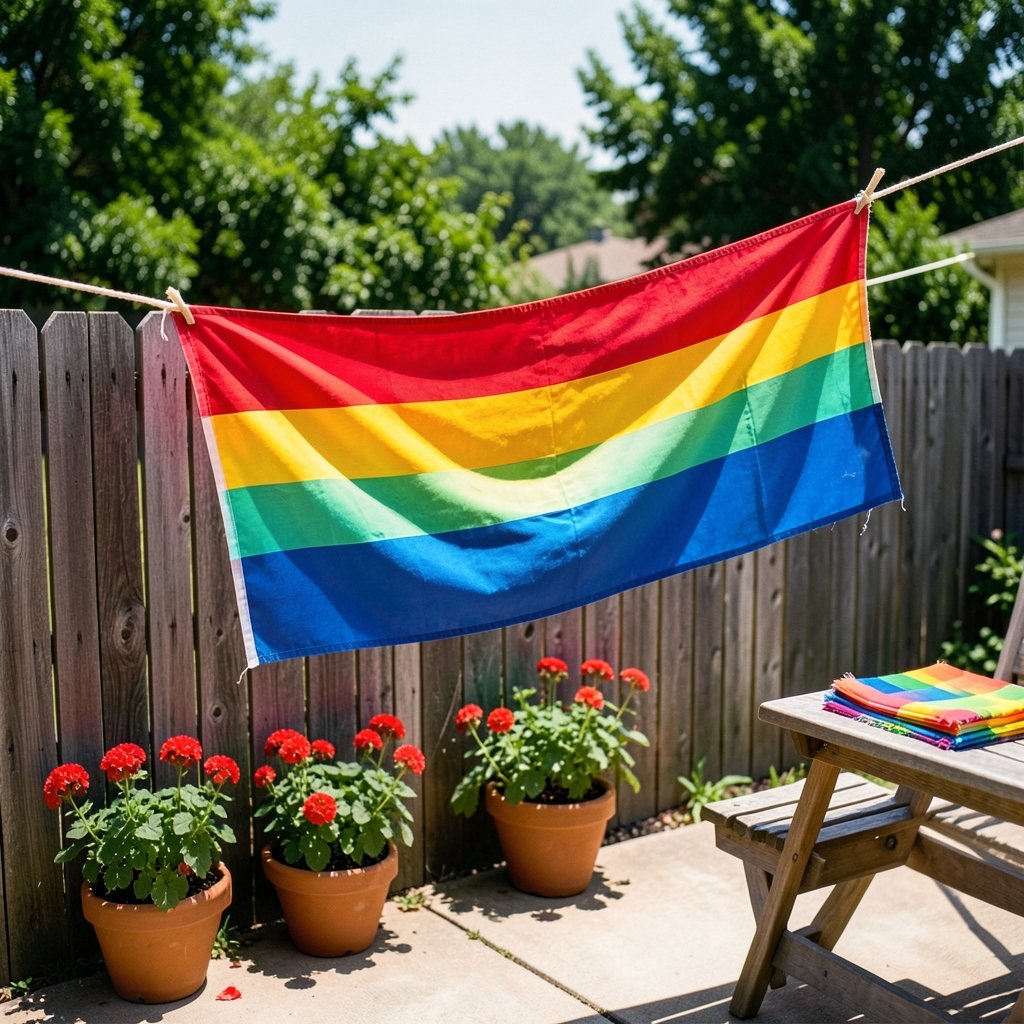
The modern association starts with a specific object. The rainbow flag was designed by Gilbert Baker and first flown at the San Francisco Gay Freedom Day Parade on 25 June 1978. It originally carried eight stripes. Hot pink was dropped within about a year because the fabric was hard to source, and indigo was later folded into violet, leaving the six-stripe version most people recognise today.
Baker assigned meanings to his eight colours: pink for sex, red for life, orange for healing, yellow for sunlight, green for nature, turquoise for magic or art, indigo for serenity, and violet for spirit. Those meanings are widely repeated, though they rest largely on Baker’s own later accounts rather than on a contemporaneous written record. Treat them as cultural history, not chemistry.
What matters for fashion is the translation step. A flag is a flat rectangle with fixed proportions. A garment is not. Once the stripe pattern moved onto T-shirts, socks, caps and lanyards, it became a graphic that designers could crop, repeat, fade, or splice into other patterns. That flexibility is why rainbow motifs survived as clothing long after they stopped being strictly ceremonial.
The 2026 context: multicolour in a quieter market
Fashion’s mood swings matter here. After several seasons dominated by muted neutrals and “quiet” dressing, colour has been pushing back. Rainbow and multicolour pieces tend to do well at exactly these turning points, because they offer maximum visual payoff with minimum commitment to a single shade.
If you want the wider picture, the 2026 fashion trends guide maps out where colour sits against the season’s other big moves, and the running fashion trends 2026 tag collects the individual threads. The short version: rainbow works best right now as an accent rather than a full outfit, which is a practical point worth remembering before you buy.
There is also a strong Italian angle. Houses built on Italian luxury fashion have long used multicolour knitwear and striped silk as a signature, treating bright colour as a craft question rather than a novelty one. That tradition is a useful counterweight to the cheap-print version of rainbow dressing.
Rainbow fashion as a trend cycle
Rainbow clothing behaves like most trends: it moves from subculture to mainstream, gets absorbed, gets overproduced, and then retreats. The difference is that Pride gives it a recurring annual spike every June, which keeps the category commercially alive in a way most motifs never manage.
The 2010s were the acceleration decade. Social platforms rewarded high-contrast, photogenic outfits, and rainbow pieces were built for that. The 2010s fashion story of athleisure, streetwear and Instagram explains how quickly a visual signal could become a product category. Rainbow socks and stripe-heavy sportswear rode exactly that wave.
Then came the correction. Major retailers had sold Pride-themed apparel since at least the 2010s, but in 2023 several faced organised backlash and pulled items, most visibly Target in May 2023. The lesson for anyone watching the trend is blunt: rainbow fashion is not a neutral commercial category. It carries a read that designers cannot fully control, and brands that treat it as a seasonal cash-in tend to get caught out.
How to wear rainbow fashion without the costume effect
This is where most people go wrong, and the fix is almost always the same: reduce the number of colours in play at once, or reduce the area they cover.
Start with one rainbow piece
Pick a single item and let everything else stay quiet. Rainbow-striped socks under tailored trousers. A multicolour knit over plain denim. A gradient bag against a black coat. The garment does the talking; the rest of the outfit provides the pause.
Use the flag’s own logic
The six-stripe pattern works because the colours sit in a fixed order. Garments that scramble the sequence often look muddled rather than bold. If you are choosing between two rainbow prints, the one with a clean, ordered stripe usually reads better and lasts longer stylistically.
Match saturation, not hue alone
A common mistake is pairing a bright rainbow with other brights. Two high-saturation pieces fight each other. Instead, match the rainbow to neutrals at the same “temperature”: crisp white and navy for cool, warm cream and tan for earthy. This is the single most reliable trick in the book.
Check the base fabric
Cheap rainbow prints tend to sit on top of the cloth and crack. Look for knit-in stripes, dyed yarn, or properly screen-printed cotton. A rainbow T-shirt that survives forty washes is worth three that pill after five.
Know the setting
Rainbow clothing in a workplace or school can raise dress-code questions. In the US, public schools may set dress codes, but student expression cannot be suppressed without a showing that it would substantially disrupt school operations, the standard set in Tinker v. Des Moines in 1969. For employment, the Supreme Court held in Bostock v. Clayton County in 2020 that Title VII of the Civil Rights Act of 1964 bars discrimination based on sexual orientation or gender identity. Neither case is specifically about clothing, so outcomes depend on the facts. In the UK, the Equality Act 2010 lists sexual orientation and gender reassignment as protected characteristics, and dress-code disputes are usually argued as indirect discrimination. Practical takeaway: read the policy, ask before assuming, and keep a record of what you were told.
What the colour meanings do and do not do
There is a persistent belief that specific colours reliably produce specific feelings. The research base for that is weak, and effects are heavily dependent on context and culture. A red dress means something different at a wedding in one country and a funeral in another. Rainbow clothing is a good example of why fixed colour meanings are shaky: the same six stripes can read as celebration, as protest, as children’s wear, or as pure pattern, depending on who is looking.
That does not make the symbolism meaningless. It makes it social rather than psychological. The stripes mean what a community has agreed they mean, and that agreement can shift. Designers who understand this treat rainbow as a language with grammar, not a paint pot.
Where rainbow fashion goes next
Three directions look most likely. First, craft-led multicolour: intarsia knits, woven stripes, hand-dyed gradients, the kind of work that justifies the price and resists the disposable feel. Second, rainbow as detail: piping, lining, stitching, a single sock, a phone case. Small-area colour is easier to wear and harder to get wrong. Third, regional and historical rainbow references that have nothing to do with Pride, which gives designers fresh ground and gives wearers a less loaded option.
Illustration is part of this too. Runway colour tends to get flattened by photography, and illustrators often capture the intent better, as Angelica Hicks’ fashion illustration work shows in its handling of bold palettes. If you are planning a rainbow purchase, looking at drawn or painted versions of a garment is a surprisingly good test of whether the colour balance actually works.
For a wider view of where womenswear colour is heading, the 2026 fashion trends female collection is a reasonable starting point, and if you prefer reading rather than scrolling, this guide to finding good fashion newsletters without inbox clutter will save you a lot of unsubscribing later.
Conclusion
Rainbow fashion is two things at once, and that is the whole story. It is a design language built on ordered colour, and it is a piece of living social history that started with a flag flown in San Francisco in June 1978. Neither half cancels the other. The best rainbow clothing respects both: it is well made, it uses colour with intent, and it does not pretend the stripes are meaningless.
If you take one practical rule away, make it this. Buy fewer rainbow pieces, buy better ones, and wear them with quiet surrounding clothes. The colours will do the rest.
Frequently asked questions
When did rainbow clothing become popular?
Rainbow motifs existed in clothing long before the Pride flag, but the modern association took hold after the flag’s debut in June 1978. Commercial Pride apparel expanded through the 2010s as social media rewarded photogenic, high-contrast outfits. The category now spikes every June and has become a fixture rather than a novelty.
Is wearing rainbow colours always a Pride statement?
No. Rainbow stripes appear in children’s raincoats, sportswear, knitwear and formalwear with no Pride intent. Context decides: the setting, the specific pattern, and any accompanying text or symbols. A six-stripe flag pattern in June reads differently from a multicolour Fair Isle sweater in November.
What do the Pride flag colours mean?
Gilbert Baker assigned meanings to his original eight stripes: pink for sex, red for life, orange for healing, yellow for sunlight, green for nature, turquoise for magic or art, indigo for serenity, and violet for spirit. These are widely repeated but rest mainly on Baker’s later accounts. The flag was later reduced to six stripes.
Can a school or employer ban rainbow clothing?
It depends on the jurisdiction and the specific policy. In the US, public schools may set dress codes, but under Tinker v. Des Moines (1969) student expression cannot be suppressed without evidence of substantial disruption. Employment protections under Title VII, as interpreted in Bostock (2020), cover sexual orientation and gender identity but do not directly address clothing. In the UK, the Equality Act 2010 covers sexual orientation and gender reassignment, with dress-code claims typically argued as indirect discrimination.
How do I style rainbow pieces without looking costumey?
Limit the rainbow to one item and keep everything else neutral. Choose prints with a clean, ordered stripe rather than scrambled colour. Match the rainbow’s saturation to your neutrals rather than adding more brights. And check the fabric: knit-in or dyed colour lasts far longer than a print sitting on top of the cloth.
Is rainbow fashion just a seasonal trend?
Partly. It has a reliable annual spike around Pride month, which keeps it commercially active. But multicolour clothing has appeared across many periods and cultures, so it never fully disappears. The current shift is toward craft-led pieces and small-area colour details rather than all-over novelty prints.














