

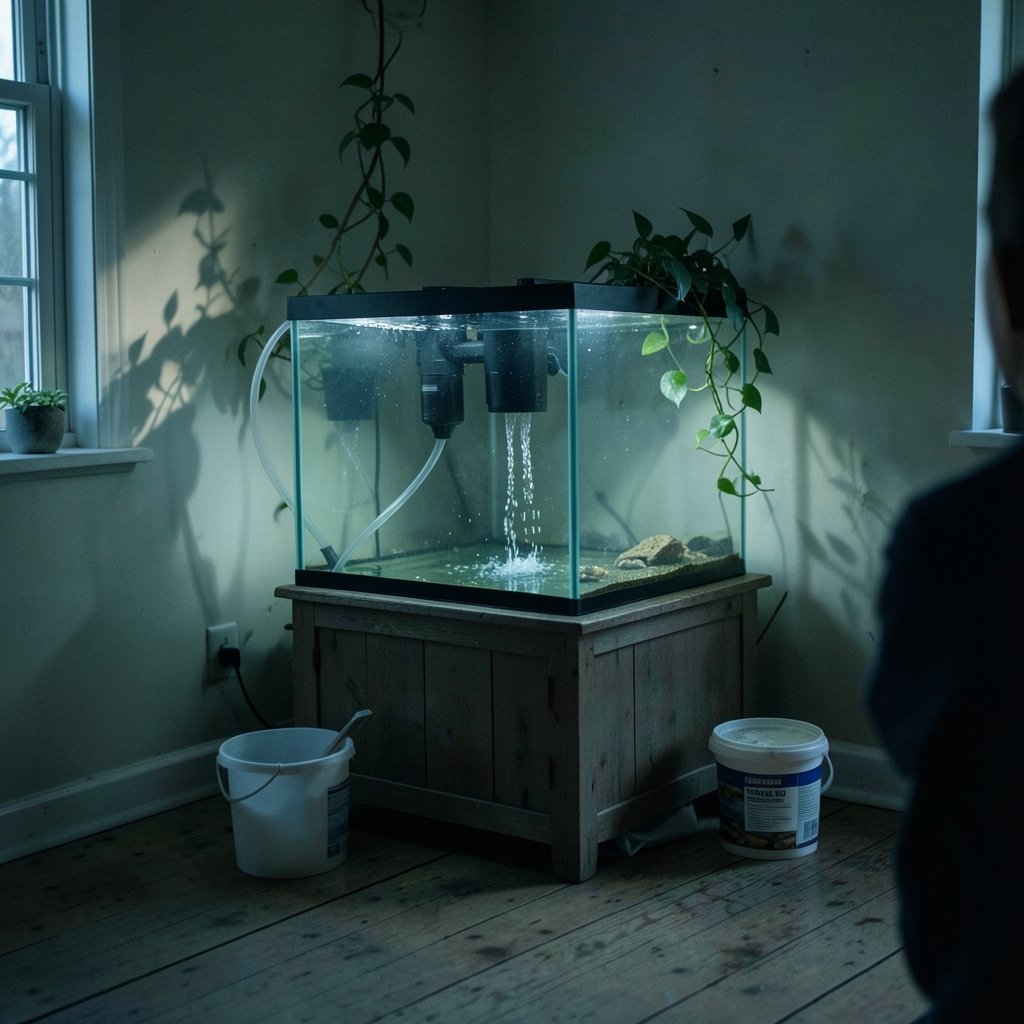
What if the single most important piece of equipment in your aquarium is also the one most people buy almost at random? Walk into any fish store and you will see shelves of filters making big promises. Some cost less than a pizza. Others cost more than the tank itself. And yet the fish keeper who picks the wrong one usually finds out weeks later, when the water turns cloudy and the fish start gasping at the surface.
The truth is that “best” is not a brand. It is a match between a filter’s design and what your tank actually needs. This guide breaks down the real job of a filter, the main types on the market, and the mistakes that quietly kill fish even when the equipment is technically fine.
What a Fish Tank Filter Actually Does
Most beginners think a filter cleans the water the way a coffee filter strains grounds. That is only a small part of the story. A good filter performs three separate jobs, and one of them matters far more than the others.
Mechanical filtration traps floating particles like fish waste, uneaten food, and plant debris. This keeps the water clear. It is the job people can see, which is why it gets overrated.
Biological filtration is the invisible workhorse. Fish constantly release ammonia through their gills and waste. Ammonia is toxic, and in a closed tank it has nowhere to go. Beneficial bacteria colonize the filter media and convert that ammonia into nitrite, then into nitrate, which is far less harmful and gets removed through water changes. This process is the nitrogen cycle, and it is the reason a filter is often described as a home for bacteria rather than a strainer for water.
Chemical filtration uses materials like activated carbon to pull out dissolved compounds, medications, or odors. It is optional and situational, not a core requirement.
Here is the practical takeaway: a filter with huge mechanical capacity but tiny biological surface area is a bad filter for most tanks. Judge every model by how much media it holds and how well water flows through that media. Aesthetics come last.
The Main Filter Types and Who They Suit
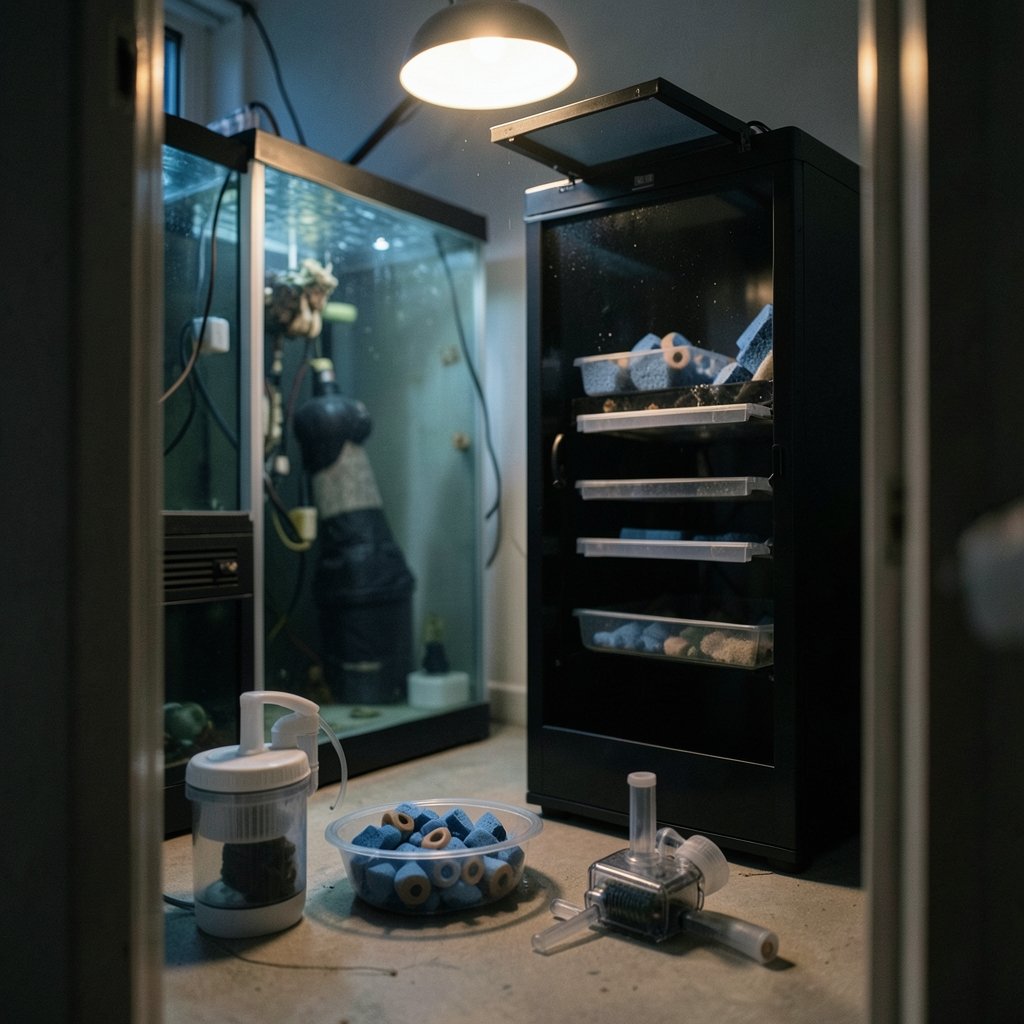
There is no universal winner, because each design solves a different problem. The table below compares the common categories on the factors that matter most.
| Filter type | Best for | Strengths | Watch-outs |
|---|---|---|---|
| Hang-on-back (HOB) | Beginner and mid-size tanks | Cheap, easy to clean, good flow | Small media volume; intake can suck up small fish |
| Canister | Large tanks, heavy stock | Huge media capacity, strong flow | Priming hassle, higher cost, leaks if neglected |
| Sponge (air-driven) | Fry, shrimp, quarantine tanks | Safe for tiny animals, great bio surface | Weak mechanical capture, needs an air pump |
| Internal power filter | Small tanks, bedrooms | Compact, quiet, submerged | Eats up tank space, limited media |
| Undergravel | Low-tech setups | Cheap, simple | Hard to clean, outdated for most uses |
| Sump | Big custom systems | Massive volume, hides equipment | Complex, needs overflow plumbing |
Hang-on-Back Filters
The HOB filter hangs on the back rim and pulls water up through a cartridge. It is the default choice for a first tank because it is inexpensive, simple, and easy to service. The main weakness is media volume. Many models ship with thin cartridges that hold little bacteria, so the smart move is to swap in reusable media like ceramic rings or coarse sponge. That single change often does more for water quality than upgrading the whole unit.
Canister Filters
Canister filters sit outside the tank and push water through stacked trays of media. They hold far more biological material, which makes them a strong pick for larger tanks or heavily stocked communities. The trade-off is maintenance. Priming can be fiddly, hoses need cleaning, and a neglected canister becomes a sludge trap. They reward owners who actually keep up with a cleaning schedule.
Sponge Filters
Sponge filters run on an air pump and pull water through a block of foam. They are common, underappreciated hobby equipment. Because there is no high-flow intake, they never shred fry or baby shrimp. Breeders and quarantine setups rely on them heavily. The catch is that they capture fine particles poorly, so they work best alongside another filter or in tanks where crystal-clear water is not the priority.
Internal and Sump Systems
Internal power filters save space outside the tank but take up room inside it and hold limited media. Sumps are the opposite extreme: a separate tank of water and media hidden below, offering enormous capacity for custom builds. Sumps are excellent but demand planning, plumbing, and a willingness to troubleshoot.
How to Size a Filter Correctly
Sizing is where most buying mistakes happen. Manufacturers rate filters by tank volume, but those numbers assume light stocking and are often generous. A common hobby rule of thumb is to turn the tank volume over four to ten times per hour, though this is a guideline, not a rule set in stone. A heavily stocked tank or one full of messy eaters needs more.
Flow rate alone is not enough, though. Water has to move slowly enough through the media for bacteria to do their work. A filter that blasts water through a tiny cartridge offers less biological filtration than a gentler unit packed with media. When comparing models, look at media capacity first and flow rate second.
Stocking style matters too. A tank of small schooling fish produces far less waste than a few large, heavy-bodied species. If you keep fish that graze on the bottom and stir up debris, choose a filter with strong mechanical capture and plan to rinse it often. Even something as niche as the haddock, the north atlantic fish behind fish and chips, shows how much a species’ feeding habits shape the waste it produces, and aquarium fish are no different.
The Maintenance Habits That Decide Success
Here is the uncomfortable truth: a mid-range filter maintained well will outperform a premium filter maintained badly. The bacteria living in your media are the real engine, and they are easy to destroy by accident.
The biggest mistake is rinsing filter media under tap water. Municipal tap water contains chlorine, which kills nitrifying bacteria. Rinse media in water pulled from the tank during a water change instead. That preserves the colony while clearing physical debris.
The second mistake is replacing cartridges on a fixed schedule. Manufacturers push this because it sells cartridges, but swapping out all the media at once throws away your bacteria. Clean media in tank water and only replace it when it is literally falling apart.
The third mistake is over-cleaning. A filter that is scrubbed spotless every week never matures. A gentle rinse every few weeks, staggered so you never clean all the media at once, keeps the colony stable.
Finally, keep an eye on the intake. Small fish, shrimp, and snails get pulled in more often than people expect. A pre-filter sponge over the intake solves this cheaply and adds a bit of biological surface as a bonus. The same protective thinking applies to any small livestock, much like the care that goes into keeping a tang fish or surgeonfish healthy in a reef or aquarium setup, where intake safety and water quality are part of the same equation.
Cycling a New Tank Before You Stock It
No filter is “ready” the moment it is plugged in. A new tank has no bacteria, so ammonia from the first fish has nothing to break it down. This is why new tanks crash. The fix is cycling, and the most humane approach is fishless cycling: add a source of ammonia, wait for bacteria to establish, and test until ammonia and nitrite read zero before adding fish.
This step takes patience, often several weeks. Test kits for ammonia, nitrite, and nitrate are the cheapest insurance in the hobby. Skipping them is like driving without a fuel gauge. Once the cycle is complete, the filter’s job shifts to maintaining that colony, and regular water changes remove the nitrate that builds up at the end of the chain.
Matching the Filter to the Fish and the Room
Equipment choices have effects beginners do not expect. A filter with too much flow turns a calm tank into a washing machine and exhausts fish that prefer still water. A filter with too little flow lets waste accumulate. Some fish, like bettas, dislike strong current and do better with a sponge filter or a baffled outflow.
Noise matters too. HOB and canister filters hum; air-driven sponge filters bubble. If the tank sits in a bedroom, that difference decides whether the setup is livable. And placement matters for maintenance: a canister tucked behind a cabinet that requires moving furniture to reach will get cleaned less often, and less often means worse water.
Design and function also intersect in other contexts. The herringbone pattern, a fish skeleton design that became a classic shows that structure and flow are engineering and aesthetic concerns, and a well-planned aquarium balances both.
Electrical Safety Around Water
Aquarium equipment sits inches from water, which makes electrical safety non-negotiable. Any pump, heater, or light should run on a circuit protected by a GFCI (ground fault circuit interrupter) or the regional equivalent, such as an RCD. These devices cut power when current leaks, preventing shocks. Drip loops in cords, covered outlets, and keeping splashes away from power strips are simple habits that prevent serious accidents.
Common Mistakes That Undo Good Equipment
Even a well-chosen filter fails when paired with bad habits. The recurring culprits include overstocking, overfeeding, and skipping water changes. Food that is not eaten decays and feeds ammonia. Fish packed too densely overwhelm any filter. Water changes remove nitrate that no filter eliminates on its own.
Another quiet mistake is buying a filter for the tank you have rather than the tank you want. Upgrading later costs more than buying the right size once. The same logic applies to consumables: it pays to understand what you are actually buying before committing, whether that is filter media or a refrigerator water filter, where knowing what actually matters before you buy saves money and regret.
Conclusion
The best fish tank filter is not the most expensive one on the shelf. It is the one whose biological capacity matches your stocking, whose flow suits your fish, and whose maintenance you will actually keep up with. Prioritize media volume over marketing claims, rinse that media in tank water, cycle the tank before adding fish, and test the water instead of guessing. Do those things and almost any decent filter will keep your fish healthy for years.
Frequently Asked Questions
What is the best type of fish tank filter for beginners?
A hang-on-back filter is usually the easiest starting point because it is affordable, simple to clean, and widely available. Pair it with reusable biological media rather than disposable cartridges. Beginners with small or sensitive fish may prefer a sponge filter for its safety and simplicity.
How often should I clean my aquarium filter?
Rinse the media in tank water every two to four weeks, or whenever flow drops noticeably. Never clean all the media at once, and never rinse it under tap water, because chlorine kills the bacteria your fish depend on. Replace media only when it is physically falling apart.
Can a filter be too strong for a tank?
Yes. Excessive flow stresses fish that prefer calm water and can batter weak swimmers. If fish are pinned to the glass or hiding constantly, the current is too strong. Baffle the outflow, add a spray bar, or choose a gentler filter.
Do I need a filter if I change the water often?
Yes. Water changes remove nitrate and dilute waste, but they do not provide the constant biological processing that fish waste requires between changes. A filter hosts the bacteria that convert toxic ammonia continuously. Water changes and filtration work together, not as substitutes.
How long does it take for a new filter to start working?
A new filter begins working immediately as a mechanical device, but the biological colony takes several weeks to establish. Test for ammonia and nitrite and wait until both read zero before adding fish. Adding a bit of established media from a healthy tank can speed the process considerably.
Is activated carbon necessary in a fish tank filter?
No. Carbon is useful for removing medications, odors, and discoloration, but it is not needed for routine biological filtration and it exhausts quickly. Many experienced keepers run without it and rely on biological media plus regular water changes instead.














