


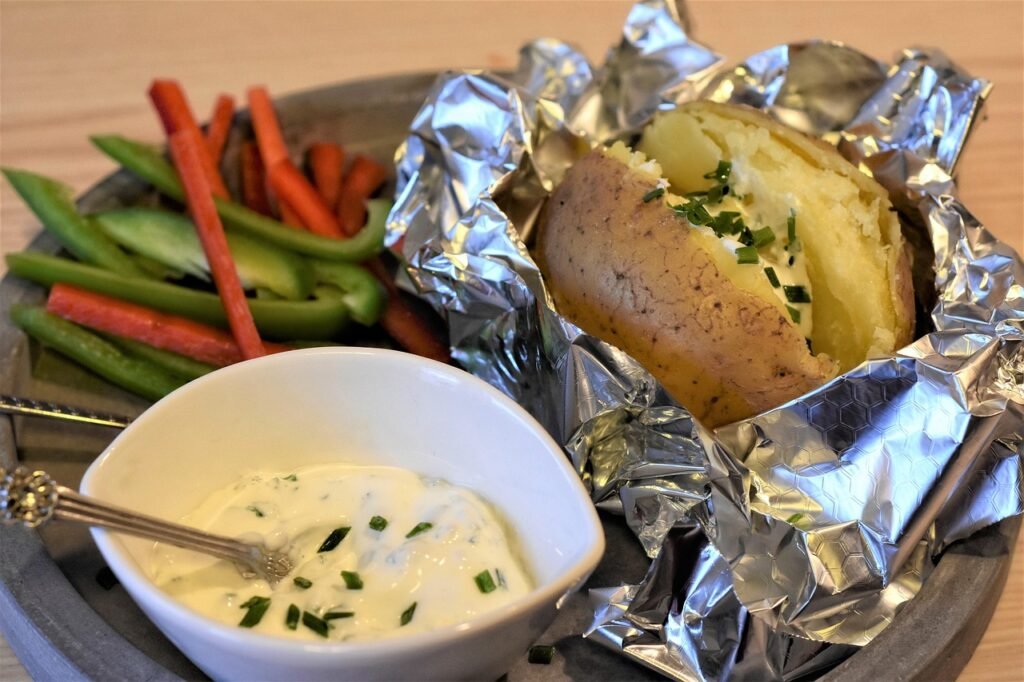
What makes a baked potato worth eating? It is not the toppings, and it is not the butter. It is the contrast: a skin that shatters when you press it, and an inside so light and dry that it almost steams when you open it. Most home bakers get one or the other, never both. The skin comes out leathery while the middle is fine, or the middle turns gluey while the skin looks great.
The good news is that this is a solvable problem. It comes down to picking the right potato, driving off moisture in the right order, and resisting a few shortcuts that feel helpful but quietly ruin the texture. Below is what actually works, what does not, and where even the experts disagree.
Start With the Right Potato, Not the Right Recipe
Before any technique matters, the variety does. Potatoes split into rough camps: starchy, waxy, and all-purpose. Starchy potatoes like the russet (often sold as Idaho) are high in starch and low in moisture, which is exactly what you want for baking. When they cook, the starch granules swell and separate, giving that dry, fluffy, fork-splittable interior. Waxy potatoes like reds and fingerlings hold their shape, which is why they are great boiled and terrible baked. All-purpose varieties sit in the middle and make a decent but not spectacular baked potato.
A russet is also the right shape. Long and oval, it gives you more surface area for skin and a good ratio of skin to flesh. If you can only find round white potatoes, they will work, but expect a denser interior.
Size matters more than most people think. A very large potato can finish unevenly, with a dry exterior and a slightly underdone core. Medium russets, roughly 8 to 12 ounces each, bake more predictably. If you are baking a mix of sizes, sort them and pull the small ones out early.
One practical tip that saves disappointment: choose potatoes with intact skin and no green patches or sprouts. Green skin indicates solanine, which is bitter and not something you want on the plate. Cut those spots away or pick a different potato.
The Core Method: Hot Oven, Dry Skin, No Foil

Here is the method that produces the best results for most people. It is simple, and the simplicity is the point.
- Heat the oven to 220 °C (about 425 °F). A hot oven sets the skin before the interior releases too much steam, which is the first step toward crispness.
- Wash and dry the potatoes thoroughly. Dry skin is non-negotiable. Any water left on the surface turns to steam and softens the skin.
- Prick each potato a few times with a fork. This lets steam escape and reduces the chance of a burst. It is standard food-safety and cooking advice, and it takes seconds.
- Rub with a little oil and coarse salt. A thin coat of oil helps the skin crisp and brown, and the salt adds texture. Do not drown them; a teaspoon per potato is plenty.
- Bake directly on the oven rack, with a tray underneath. The rack lets hot air circulate around the whole potato. The tray catches drips.
- Bake 45 to 60 minutes, depending on size. Turn them once at the halfway point. They are done when a fork slides in with almost no resistance.
- Rest for 5 minutes before opening. This lets the interior settle so it does not turn gummy when you split it.
That is the whole method. The variables that matter most are a dry surface, a hot oven, and enough time. Everything else is preference. (4c hair)
Why Foil Is a Trap
Wrapping potatoes in foil is one of the most common habits, and it works against you. Foil traps steam against the skin, so instead of crisping, the skin steams and turns soft and pale. You get a potato that looks baked but tastes boiled.
There is also a food-safety angle that is worth knowing. Baked potatoes wrapped in foil and left at room temperature have been linked to botulism risk, because the foil creates a low-oxygen environment where bacteria can grow. The guidance is straightforward: do not store foil-wrapped baked potatoes at room temperature. If you must hold them, keep them hot or refrigerate them promptly and unwrapped.
The Microwave Shortcut, Done Properly
A fully microwaved potato is fast but usually disappointing. The interior turns dense and slightly rubbery, and the skin never crisps. But a hybrid method works surprisingly well, and it is the one to use on a weeknight when you do not have an hour.
Prick the potato, microwave it on high for 5 to 7 minutes until it is partly tender, then rub with oil and salt and finish it in a 220 °C oven for 15 to 20 minutes. The microwave cooks the interior from the inside out, and the oven dries and crisps the skin. The result is close enough to a fully oven-baked potato that most people will not notice, and it cuts the total time roughly in half.
The mistake people make is skipping the oven finish, or finishing at too low a temperature. A quick blast of high heat is what gives you the skin.
What About Boiling First?
Some cooks parboil potatoes before baking, on the theory that it speeds things up and seasons the flesh. It does speed things up, but it also adds water back into the potato, which is the opposite of what you want. The interior comes out heavier and less fluffy. If you are in a hurry, the microwave hybrid is the better shortcut. Boiling is for potatoes you plan to roast in chunks, not for whole baked potatoes.
Salting, Oil, and the Skin Debate
Rubbing the skin with oil and coarse salt is a popular technique, and it does produce a crisper, more seasoned skin. But it is a technique convention, not a tested standard, and there is real disagreement about it.
| Approach | Skin result | Interior result | Best for |
|---|---|---|---|
| Oil and coarse salt | Crisp, browned, seasoned | Fluffy | Most people |
| No oil, dry skin | Crisp but paler | Fluffy | Cleaner flavor |
| Foil wrap | Soft, steamed | Dense | Not recommended |
| Microwave only | Soft, no crisp | Dense | Speed above all |
| Microwave then oven | Fairly crisp | Fluffy | Weeknights |
The oil-versus-no-oil question is mostly about preference. Oil helps browning and salt adhesion. If you skip it, you still get a good potato, just a paler one. What matters far more is drying the skin and using enough heat. (The row)
How to Tell When It Is Done
A fork is your best test. Slide it into the center; if it goes in with almost no resistance, the potato is done. If there is any firmness in the middle, give it another 10 minutes.
There is also a food-safety benchmark worth knowing. Whole baked potatoes are considered safe at an internal temperature of about 99 °C (210 °F). That is a safety threshold, not a taste one. A potato at that temperature is cooked through, but whether it tastes good depends on how dry and fluffy the interior is, which comes from the baking method, not the thermometer.
Opening and Fluffing: The Step Everyone Rushes
This is where a good potato becomes a great one. Split the potato lengthwise with a knife, then push the ends toward each other so the interior opens up. Use a fork to fluff the flesh gently, breaking up the dense center and letting steam escape. Do this over the sink or hold it with a towel, because a hot potato releases a lot of steam.
Add butter or olive oil immediately, while the flesh is still hot, so it melts into the fluff instead of sitting on top. Season the inside as well as the skin. A pinch of salt inside makes a bigger difference than anything you put on top.
If you want to go further, a little sour cream, chives, or grated cheese works. But the potato should be good enough to eat with just butter and salt. If it is not, the problem was upstream.
Common Mistakes That Ruin a Baked Potato
Most bad baked potatoes come from a short list of avoidable errors.
- Wet skin going into the oven. This is the single biggest cause of soft, pale skin.
- Foil wrapping. It steams the potato instead of baking it.
- Too low an oven. Under 200 °C, the skin never crisps properly.
- Underbaking. A slightly firm center turns gummy when you fluff it.
- Skipping the rest. Opening a potato immediately after baking releases steam unevenly and can make the flesh gluey.
- Using waxy potatoes. Reds and fingerlings will never give you a fluffy interior.
Fix those six things and the results improve immediately, even without changing anything else.
Storing and Reheating Leftovers
Baked potatoes keep well if you handle them right. Cool them quickly, wrap them loosely, and refrigerate within two hours. Do not leave them out at room temperature, especially if they were wrapped in foil at any point.
To reheat, split them and heat in a hot oven or a skillet cut-side down, which brings back some crispness. A microwave works but softens the skin. Reheated potatoes are best used in another dish, like a hash or a soup, rather than served as a baked potato again. (2b hair)
Conclusion
The best baked potato is not a secret recipe. It is a russet, scrubbed and dried, pricked, rubbed with a little oil and salt, and baked in a hot oven until a fork slides through with no resistance. No foil, no boiling, no rushing the finish. The microwave hybrid is a fair shortcut when time is tight, and the oil-and-salt question is mostly a matter of taste.
What separates a good baked potato from a forgettable one is attention to moisture. Dry the skin, drive off steam, and let the starch do its work. Do that, and the potato will be crisp outside, fluffy inside, and good enough to eat with nothing but butter.
Frequently Asked Questions
What is the best potato for baking?
Russets are the classic choice because they are high in starch and low in moisture, which gives a dry, fluffy interior. Waxy potatoes like reds and fingerlings hold their shape and are better boiled. All-purpose varieties work but are less fluffy.
Should you wrap a baked potato in foil?
No. Foil traps steam against the skin, so the potato steams instead of baking and the skin turns soft and pale. There is also a food-safety concern: foil-wrapped baked potatoes left at room temperature have been linked to botulism risk, so they should not be stored that way.
How long does a baked potato take in the oven?
At 220 °C (about 425 °F), a medium russet takes roughly 45 to 60 minutes, depending on size. Turn it once halfway through and test with a fork. If the fork meets resistance in the center, give it another 10 minutes.
Can you microwave a potato and then bake it?
Yes, and it is a good weeknight shortcut. Microwave the pricked potato for 5 to 7 minutes until partly tender, then rub with oil and salt and finish in a 220 °C oven for 15 to 20 minutes. The oven finish is what crisps the skin, so do not skip it.
Why is my baked potato gummy inside?
Usually it is underbaking or too much moisture. A potato that is slightly firm in the center turns gluey when fluffed, and a wet skin or foil wrap traps steam that makes the flesh dense. Bake until a fork slides in easily and let it rest a few minutes before opening.
Do you have to prick a potato before baking?
It is strongly recommended. Pricking lets steam escape and reduces the chance of the potato bursting in the oven. It takes a few seconds with a fork and is standard cooking and food-safety advice.














