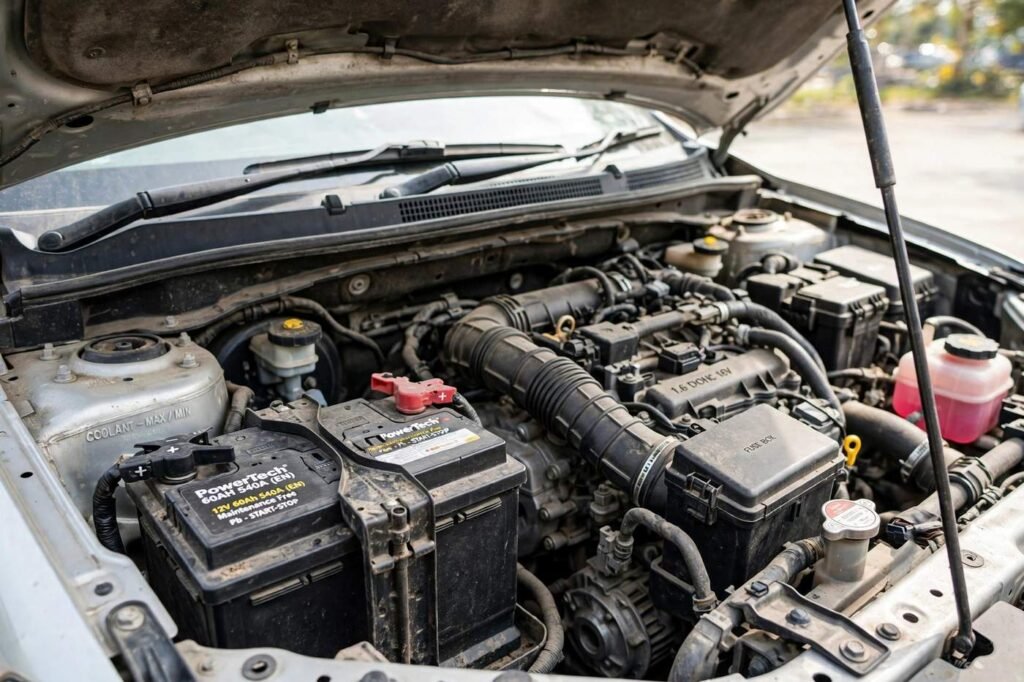
You turn the key on a cold morning and the engine cranks slowly, or it clicks and does nothing at all. The dashboard lights are dim, the radio cuts out, and you are already late. A dead car battery is one of the most common reasons a car will not start, and it is also one of the cheapest problems to fix.
So how much does a car battery replacement cost? For a standard petrol car, expect roughly £100 to £250 in the UK, or $120 to $300 in the US, including fitting. Diesel cars, cars with start-stop systems and premium models usually cost more. This guide explains what affects the price, how to tell when a battery is failing, and how to keep the cost down.
Key takeaways:
- A standard car battery replacement typically costs £100 to £250 in the UK, or $120 to $300 in the US, including fitting, but diesel, start-stop and premium cars cost more.
- The price depends on the battery type, the size your car needs, and whether a garage fits it.
- Most car batteries last three to five years, and slow starting and dim lights are the early warnings.
- A weak battery can be tested before you pay for a new one, and many garages and parts shops test it free.
How much does a car battery replacement cost?
The cost of a car battery replacement has two parts: the battery itself and the fitting. A standard lead-acid battery for a small petrol car usually costs around £80 to £150 for the part in the UK, or $100 to $200 in the US, and a garage typically charges £30 to £60, or $40 to $80, to fit it. That puts a typical fitted replacement at roughly £100 to £250, or $120 to $300, for an ordinary car.
Larger and more advanced batteries cost more. A diesel car needs a bigger battery with more cranking power, so the part alone can cost £150 to £250. Cars with start-stop systems need an EFB or AGM battery, which can cost £150 to £300 or more for the part. Premium cars and SUVs take larger batteries too, and a replacement can reach £300 to £400 fitted, or $350 to $500 in the US.
These are typical ranges, not fixed prices: the price varies by car, battery type, brand and region, so get a quote for your car before you buy. Our guide to the best used SUVs covers what to check when buying a car.
What affects the price of a car battery?
Battery type is the biggest factor. A standard flooded lead-acid battery is the cheapest and suits most older petrol cars. An EFB battery, short for enhanced flooded battery, handles the frequent restarts of a start-stop system and costs more. An AGM battery, short for absorbent glass mat, is the most expensive of the three, and it is fitted to many modern cars with start-stop, regenerative braking and heavy electrical loads.
Size matters too. Batteries are sized by group number, and a car needs the right physical size and the right cold cranking amps, which is the power the battery can deliver in cold weather. A bigger engine needs more cranking power, which is why diesel batteries cost more than petrol ones. A premium brand with a longer warranty costs more than a budget battery, though the cheapest is not always the best value.
Labour is the last part of the bill. Fitting a battery is usually a quick job, taking 15 to 30 minutes, and many parts shops fit a battery free when you buy it from them. Some modern cars need the new battery registered or coded to the car’s computer, which adds a small charge at a garage.
How long does a car battery last?
Most car batteries last three to five years, though some last longer and some fail sooner. Heat is the main enemy: a battery in a hot climate ages faster than one in a cool climate, because heat speeds up the chemical wear inside the battery. Cold weather does not damage a battery the same way, but it exposes a weak one, because an engine needs more power to start when it is cold.
How you use the car matters as well. Short journeys are hard on a battery, because the engine does not run long enough to recharge what starting took out. Cars that sit unused for weeks slowly drain their batteries, and a car with lots of electrical extras puts more demand on the battery.
How do you know when your car battery needs replacing?

The earliest sign is slow starting. The engine turns over more slowly than usual, especially on a cold morning, and it may take a second or two longer to catch. Dim headlights and a dim dashboard are another warning, and so is a clicking sound when you turn the key, which usually means the battery has too little power left to turn the starter motor.
Other signs are worth checking. A battery warning light on the dashboard, electrical accessories that behave oddly, a battery case that looks swollen or cracked, and a smell of rotten eggs around the battery all point to a battery at the end of its life. If your battery is more than four years old and the car starts slowly, have it tested before it fails.
The simplest step is a battery test. Most garages and parts shops will test a battery free, and the test takes a few minutes. It measures the voltage and the cranking power, and it tells you whether the battery is healthy, weak or dead. Testing first saves you from replacing a good battery, and it catches a weak one before it leaves you stranded. Our guides to the best reliable SUVs and the best SUVs for the money cover dependable cars and running costs.
Should you replace a car battery yourself or use a garage?
Replacing a car battery yourself is a straightforward job on many cars, and it saves the labour charge. The battery is usually under the bonnet, held by a clamp, with two terminals to undo. Disconnect the negative terminal first, then the positive, lift the old battery out, fit the new one, and reconnect the positive first and the negative last. Wear gloves and eye protection, and keep the battery upright.
A garage is the better choice for many modern cars. Some cars need the new battery registered to the car’s computer, or the start-stop system will not work properly and the battery may wear out early.
Leave two jobs to a garage: any car where the battery is hard to reach, such as under a seat or in the boot, and any hybrid or electric car, where the high-voltage system is dangerous and the 12-volt auxiliary battery may need specialist handling.
How can you save money on a car battery replacement?
The easiest saving is to compare prices before you buy. A battery from a parts shop is usually cheaper than the same battery from a main dealer, and many parts shops fit it free. A battery with a three-year warranty is often better value than a cheaper one with a one-year warranty.
Look after the battery you have, and it will last longer. Keep the terminals clean, because corrosion adds resistance and makes the battery work harder. Drive the car regularly, and take it for a longer run now and then so the battery fully recharges.
Do not pay for a replacement you do not need. A flat battery is not always a dead battery: a car left with its lights on can usually be jump-started and recharged by driving. Ask the garage to check the alternator too, because a battery that keeps going flat may be a charging problem.
Car battery types and costs compared
| Battery type | Typical fitted cost | Best for | Watch out for |
|---|---|---|---|
| Standard lead-acid | £100 to £250 / $120 to $300 | Older petrol cars | Not suitable for start-stop cars |
| EFB (enhanced flooded battery) | £180 to £320 / $200 to $380 | Basic start-stop cars | Must match the original specification |
| AGM (absorbent glass mat) | £250 to £400 / $300 to $500 | Modern cars with start-stop | Needs registering to the car |
| Diesel battery | £200 to £350 / $250 to $450 | Diesel engines | Bigger size, higher cranking power needed |
Prices change often, so treat these ranges as a guide rather than a promise, and get a quote for your car before you buy.
Your car battery checklist
Work through this list before you pay for a replacement.
- Get the battery tested first: a free test tells you whether the battery is really the problem.
- Check the battery’s age: a battery over four years old with slow starting is ready for testing.
- Match the specification: buy the right size, type and cranking power for your car.
- Compare at least two quotes: a parts shop is usually cheaper than a main dealer.
- Check the warranty: a longer warranty is often better value than a lower price.
- Ask about registration: modern cars may need the new battery coded to the car.
- Recycle the old battery: garages and parts shops take it, and it must not go in household waste.
Frequently asked questions
How long does it take to replace a car battery?
Usually 15 to 30 minutes at a garage, including testing the old battery and fitting the new one. A home replacement takes about the same time on a car where the battery is easy to reach under the bonnet.
Can a dead battery be recharged instead of replaced?
Sometimes. A battery that went flat because the lights were left on can often be jump-started and recharged by driving for 30 minutes or more. A battery that is old, swollen or fails a load test will not hold a charge.
Does a new car battery need coding or registering?
Many modern cars do need it, especially those with start-stop systems and AGM batteries. The car’s computer adjusts how it charges the battery based on its age and type, so an unregistered battery can wear out early.
Will my car lose its settings when the battery is replaced?
It can do. A car may forget radio presets, the clock and window settings when the battery is disconnected. A garage can use a memory saver to keep the settings, and most are easy to put back yourself.
How do I dispose of an old car battery?
Take it to a garage, a parts shop or a recycling centre, which will accept it free. Car batteries contain lead and acid, so they must never go in household waste.
Sources
Cost ranges and battery guidance in this article reflect widely published advice from motoring organisations and battery makers on battery types, lifespan and testing. Prices vary by car, battery type, brand and region, so get a quote for your car before you buy.
The bottom line
A car battery replacement is one of the cheapest repairs a car can need. A standard replacement costs roughly £100 to £250 in the UK, or $120 to $300 in the US, and a free test tells you whether you need one at all.
Your next step is simple: if your car is starting slowly, get the battery tested this week, before it fails on a cold morning. And if it does need replacing, compare two quotes, match the specification, and check the warranty.
Take care with car batteries: wear gloves and eye protection, disconnect the negative terminal first, never smoke near a battery, and get help from a garage if you are unsure.