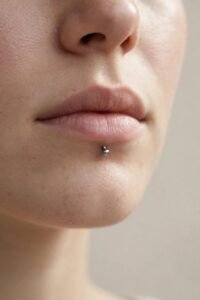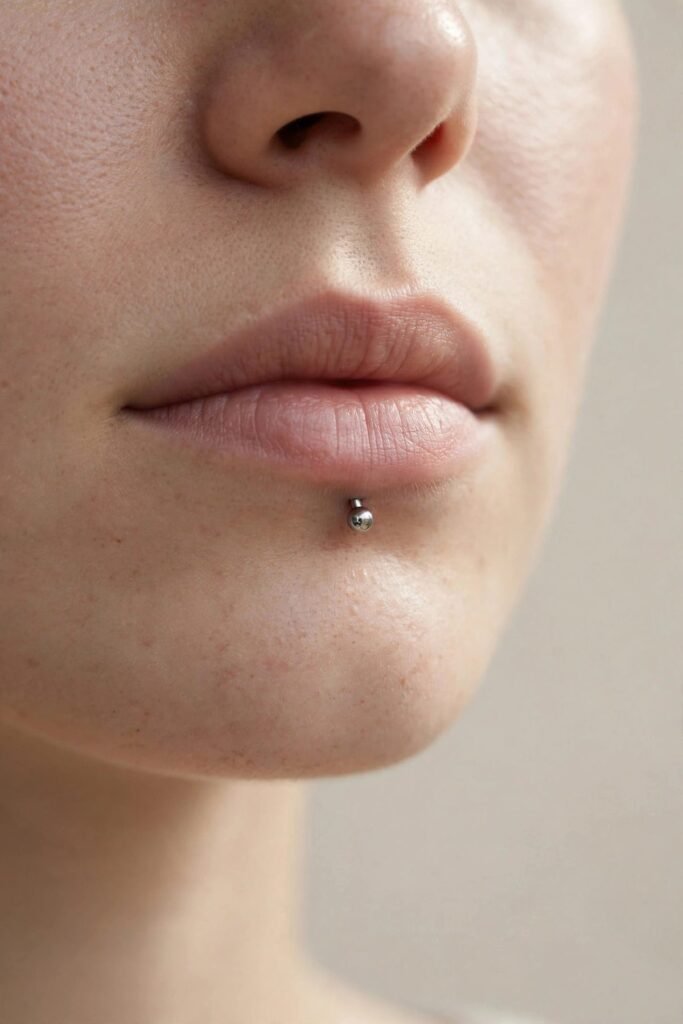
A labret piercing is a piercing through the skin just below the centre of the lower lip, worn with a small stud that sits neatly against the lip. It is one of the most popular lip piercings, because it is subtle and easy to dress up or down.
So what should you know before you book one? It is a quick procedure with a sharp pinch, a few weeks of swelling and tenderness, and several months before it is fully healed, but the aftercare is simple. This guide covers the jewellery, the procedure, pain, healing, aftercare and the warning signs.
Key takeaways:
- A labret piercing sits just below the centre of the lower lip.
- Expect a sharp pinch, a few days of swelling, and months of healing.
- Clean it twice a day with saline, and leave it alone otherwise.
- Do not change the jewellery early, play with it, or sleep face down.
- See your piercer promptly if pain, swelling or discharge gets worse.
What is a labret piercing?
A labret piercing passes through the tissue below the lower lip, with a flat disc resting against the inside of the lip and a small stud or gem showing on the outside. The name comes from the Latin word for lip.
It is often confused with a lip piercing in general, but the labret is one specific placement, and your piercer will talk through the exact spot before anything happens.
Placement and variations
The classic labret sits dead centre below the lower lip, in the small dip between the lip and the chin. Most people choose this spot first, because it is symmetrical and easy to clean.
Central labret: the standard placement, a single stud below the middle of the lower lip. It suits a small stud or a gemstone, and it is the easiest version to heal.
Vertical labret: the piercing runs through the lip itself, entering below the lip and exiting through the top of the lower lip. It suits a curved barbell rather than a flat-backed stud.
Side labret: the stud sits to one side of the centre, below the corner of the lower lip. It is an asymmetrical look that works well on its own or paired with a central labret.
Double labret: two studs side by side below the lip, usually spaced evenly. It is a bolder look that needs a little more care while healing, since two fresh piercings sit close together.
Jewellery types
Most piercers begin with a labret stud: a straight bar with a flat disc on the inside and a small ball or gem on the outside, usually in implant-grade titanium.
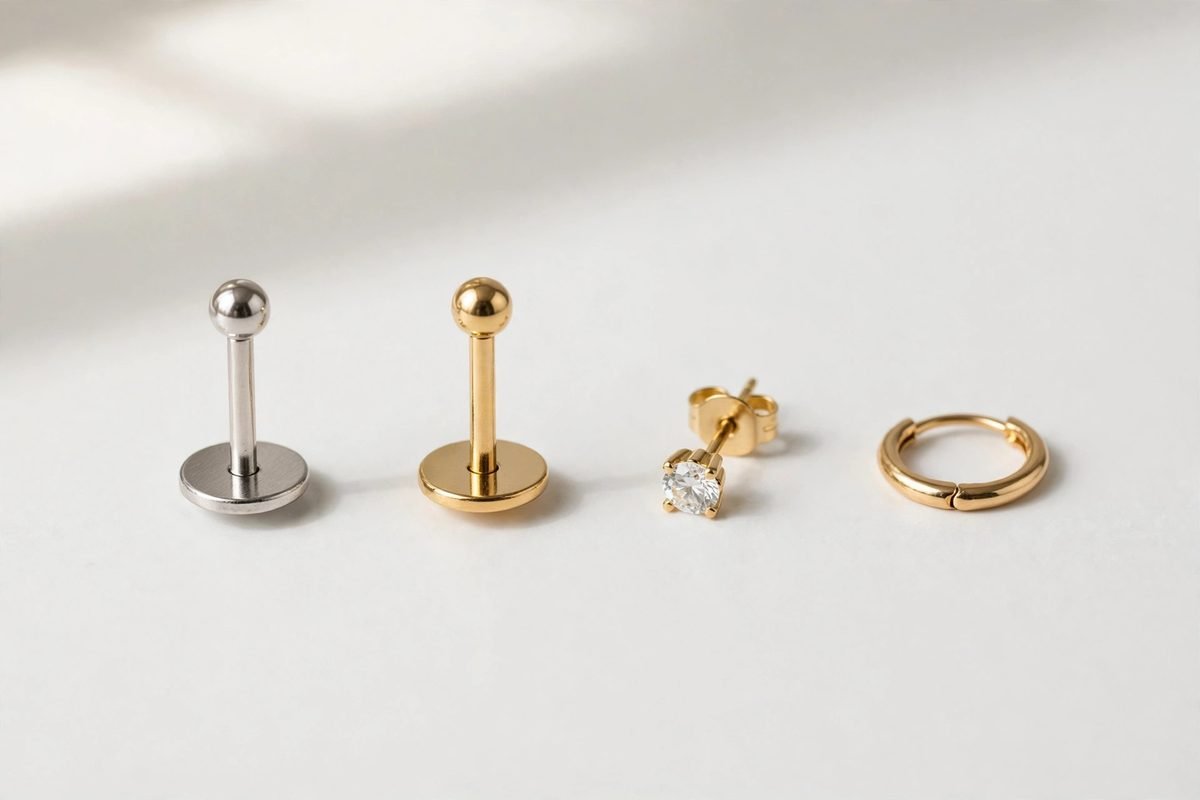
The flat back is the key detail. It sits flush against the inside of the lip, so it is comfortable against the teeth and gums. A hoop is not a good first piece for a labret, because it moves more, catches on things, and can slow healing.
| Jewellery | Best for | When to wear it |
|---|---|---|
| Labret stud | Healing and everyday wear | From day one |
| Gemstone stud | A little sparkle | Once fully healed |
| Small hoop | A bolder look | Once fully healed |
| Curved barbell | A vertical labret | From day one |
Once the piercing is healed, the choice opens up. A gemstone stud is the most popular everyday option, and a small hoop gives a softer, more relaxed look.
Quality matters more here than with an ear piercing, because the jewellery sits against the teeth and gums. Cheap jewellery is often made from mystery metals with rough finishes, and a rough surface can irritate a healing piercing. Buy from your piercer or a reputable maker.
The procedure
The procedure itself is quick, usually over in a few minutes. Your piercer will talk through the placement first, mark the spot with a pen, and ask you to check it in a mirror. This is your chance to ask for the mark to move, and a good piercer will never rush you past this step.
Next comes the cleaning and the piercing. The area is cleaned, a sterile needle passes through the marked spot, and the jewellery is fitted straight away. The needle is single-use and sterile, and it is opened in front of you. It is over in a second or two, and most people say the build-up was worse than the piercing itself.
Afterwards, your piercer will check the fit, talk you through aftercare, and tell you when to come back for a downsize.
Pain and healing
A labret piercing hurts, but briefly. The needle passes through soft tissue below the lip, so it feels like a sharp pinch followed by a dull ache, and it is over in a second or two. If you have had an ear piercing, the feeling is similar, just a little sharper. Most people describe it as uncomfortable rather than painful, and far less dramatic than they expected.
Swelling is the main story of the first week. The lip may swell, feel tender and look a little uneven, and eating, talking and smiling can feel awkward for a few days. This is normal, and it settles as the week goes on.
Full healing takes months, not weeks. Soreness and swelling usually settle within a few weeks, but the piercing is not fully healed until the channel through the tissue has settled. Many piercers say to expect three to six months.
Aftercare step by step
Aftercare is simple, and simple is the point. Clean the piercing twice a day, keep your hands off it, and let it heal in its own time.
- Rinse with saline: clean the outside twice a day with a sterile saline solution.
- Rinse your mouth: rinse with plain water or an alcohol-free mouthwash after eating.
- Wash your hands: wash your hands before you touch the piercing.
- Leave it still: do not twist, turn or play with the jewellery.
- Eat gently: eat slowly for the first few days, and avoid very hot, spicy or acidic food.
- Sleep on your back: avoid sleeping face down, and change your pillowcase often while the piercing is fresh.
Avoid swimming for the first few weeks, and longer if your piercer advises it. Pools, the sea and hot tubs carry bacteria a fresh piercing does not need, while showers are fine.
Risks and warning signs
Most labret piercings heal without drama, but a few problems are common enough to know about. The most frequent is irritation, usually from knocking the piercing, playing with it, or changing the jewellery too early, and it settles once the irritation stops.
Infection is the problem people worry about most, and it is less common than the worry suggests. Watch for spreading redness, pain that gets worse instead of better, swelling that increases after the first few days, and yellow or green discharge. If you notice those signs, see your piercer first, and a clinician if the symptoms spread.
Do not take the jewellery out if you think the piercing is infected, as removing it can trap the infection inside as the hole closes. Keep cleaning it gently, and get professional advice promptly.
Choosing a reputable piercer
A good piercer is the single biggest factor in a good piercing, so choose carefully. Look for a clean, licensed studio and read reviews. A reputable piercer will talk through placement, jewellery and aftercare before they pick up a needle.
Ask what metal they use, whether the jewellery is implant-grade titanium, and whether the needle is single-use and sterile. If the studio looks dirty, the piercer rushes you, or they offer to pierce you with a gun, walk away. A piercing gun is not suitable for a labret, and a good studio will never use one.
Downsizing and changing jewellery
Downsizing is the first jewellery change, and it matters. The first stud is long to allow for swelling, and once the swelling has settled, usually after a few weeks, your piercer will fit a shorter bar. A bar that is too long catches on teeth and gums, so do not skip this step. A bar that is too long catches on teeth and gums, so do not skip this step.
Wait until the piercing is fully healed before you change the jewellery yourself, which usually takes three to six months. Changing it early can tear the healing tissue and set the piercing back by weeks.
Your labret piercing checklist
Run through this list before you book, and again in the first week.
- Choose a reputable piercer: check reviews and make sure the studio is clean and licensed.
- Start with a stud: a flat-backed labret stud in implant-grade titanium heals most calmly.
- Clean twice a day: sterile saline outside, and a rinse after eating.
- Leave it alone: no twisting, turning, playing with it or early changes.
- Eat gently: small bites, and avoid very hot, spicy or acidic food at first.
- Book the downsize: a shorter bar once the swelling has settled.
- Know the warning signs: spreading redness, worsening pain and coloured discharge mean getting advice.
Frequently asked questions
Does a labret piercing hurt a lot?
It hurts briefly, like a sharp pinch followed by a dull ache, and it is over in a second or two. Most people say the build-up was worse than the piercing, and the swelling over the next few days is more noticeable than the pain itself.
How long does a labret piercing take to heal?
Expect three to six months for full healing, though soreness and swelling usually settle within a few weeks. The piercing often looks healed long before it is, so do not change the jewellery early, and let your piercer confirm it is ready. Healing times vary from person to person, so use your piercer’s advice as your guide.
Can I eat normally with a new labret piercing?
Yes, but eat slowly and take small bites for the first few days, and rinse your mouth after eating. Avoid very hot, spicy or acidic food at first.
Will a labret piercing damage my teeth?
It can, over time, if the jewellery is too long or you play with it. A well-fitted flat-backed stud sits close to the lip and moves less, which lowers the risk, and downsizing on time matters. See your piercer if the jewellery keeps catching on a tooth.
Can I take a labret piercing out?
Yes, and a fresh piercing can start to close within hours, while a healed one can still narrow if the jewellery is left out for weeks. If you remove it briefly, put it back in as soon as you can.
Sources
This guide reflects widely published advice from professional piercers on lip piercing, healing and aftercare. For more on another piercing and its healing time, read our guide to helix piercing, and for jewellery inspiration, see our guide to the August birthstone. For another body treatment guide, see our guide to Brazilian wax.
The bottom line
A labret piercing is a small, neat piercing with a big effect. It hurts briefly, it takes months to heal, and it asks for almost nothing in return: saline twice a day, hands off the rest of the time, and no playing with the jewellery.
Your next step is simple: find a reputable piercer, ask about a titanium stud to start with, and book when you have a quiet few weeks ahead.
Safety note: this guide is general information, not medical advice. Piercing carries a small risk of infection, scarring, gum recession and allergic reaction. Seek advice from a qualified professional piercer, and for any health concern, speak to a clinician promptly.