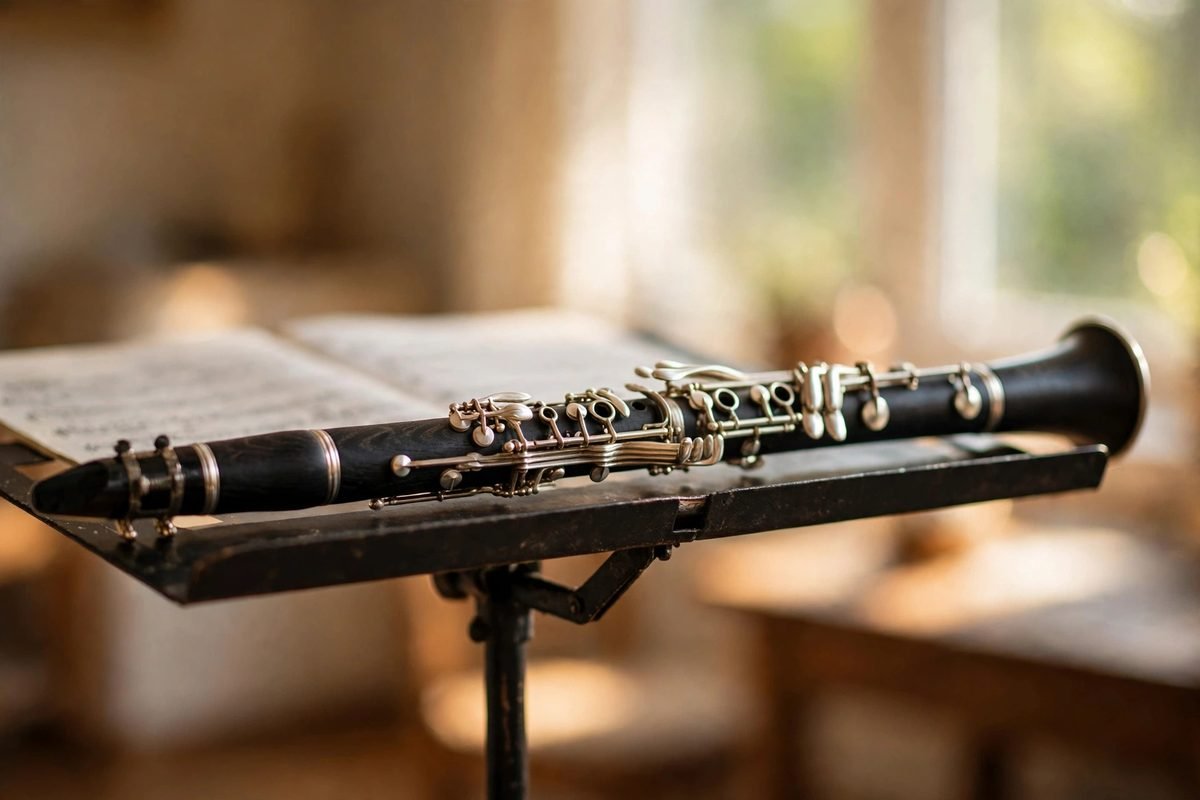
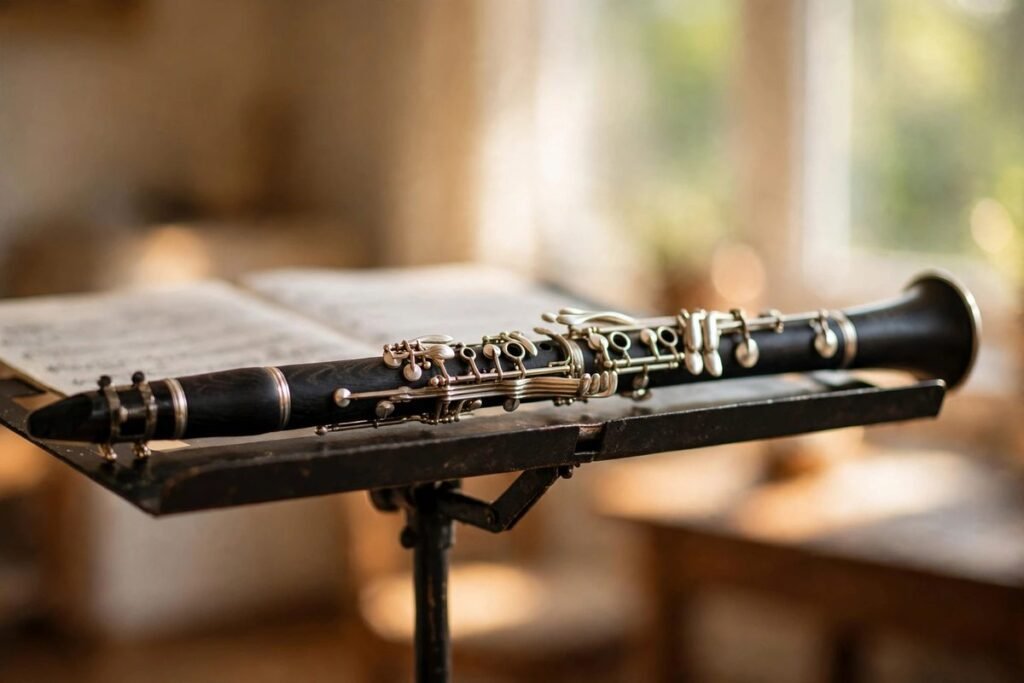
The clarinet is the woodwind instrument with the warm, liquid sound you have heard in jazz, in orchestras and in film scores, and it is one of the most rewarding instruments a beginner can pick up. A clarinet is a single-reed woodwind: you blow across a thin cane reed fixed to the mouthpiece, and the reed vibrates to make the sound. The player changes the pitch by covering and uncovering holes with the fingers and the keys.
So is the clarinet a good instrument to learn? Yes, for most people. It is lighter and cheaper than many instruments, it plays in almost every style of music, and a beginner can usually produce a pleasant note within the first few lessons. This guide explains what it is, the main types, how to choose one, how to start learning, and how to look after it.
Key takeaways:
- The clarinet is a single-reed woodwind, and the standard beginner instrument is the B-flat clarinet.
- Most beginners start on a plastic student clarinet, which is durable, affordable and easy to keep in tune.
- A good reed, a comfortable mouthpiece and a teacher or a structured course matter more than an expensive instrument.
- Daily practice of twenty to thirty minutes, plus cleaning the instrument after every session, will take you further than occasional long sessions.
What is a clarinet?
The clarinet belongs to the woodwind family, alongside the flute, oboe, bassoon and saxophone. Unlike the flute, which has no reed, and the oboe, which has two, the clarinet has a single reed: a thin strip of cane, or a synthetic equivalent, clamped to a mouthpiece. When you blow into the mouthpiece, the reed vibrates, and that vibration makes the sound.
The body is usually made of wood, most often African blackwood, known as grenadilla, or of a durable plastic resin on student models. It is built in five main parts: the mouthpiece, the barrel, the upper joint, the lower joint and the bell. The parts fit together with cork joints, and the whole instrument packs down into a small case.
The clarinet has the widest range of any woodwind instrument, covering nearly four octaves. Its low notes are dark and mellow, its middle notes are warm and singing, and its high notes are bright and clear. That range is one reason it turns up everywhere: in the orchestra, in jazz, where Benny Goodman made it famous, and in school bands around the world.
The main types of clarinet
Most players start on one type and meet the others later, so it helps to know the family before you buy. The differences are mostly about pitch and size, not about how the instrument works: the fingering is similar across the family.
The B-flat clarinet
The B-flat clarinet is the standard clarinet, and it is the one this guide means when it says “clarinet” without qualification. It is used in school bands, orchestras and jazz, and almost every beginner starts on it. When a B-flat clarinet plays a written C, the note that comes out is a B-flat, which is why it is called a transposing instrument. You do not need to worry about this as a beginner. A B-flat clarinet is about 60 centimetres long when assembled, and it suits most hands, including those of older children.
The bass clarinet
The bass clarinet is much larger than the B-flat, with a curved metal neck and a bell that points upwards, and it sounds an octave lower. It has a deep, warm voice that suits orchestral music, jazz and film scores, but it is not a beginner’s instrument. It is heavier, more expensive, and it needs a stronger air supply, so most players come to it after several years on the B-flat clarinet.
The E-flat clarinet
The E-flat clarinet is smaller and higher than the B-flat, and it sounds a minor third higher than written. It is used in orchestras and wind bands for bright, piercing passages. It is also the most demanding of the three to play in tune. Beginners should not start on it: its finger spacing is tighter and its reed is smaller.
How do the clarinet types compare?
| Type | Size | Sound | Best for |
|---|---|---|---|
| B-flat clarinet | Standard, about 60 cm | Warm and versatile | Beginners, bands, jazz, orchestras |
| Bass clarinet | Large, with a curved neck | Deep and mellow, an octave lower | Experienced players, orchestras, jazz |
| E-flat clarinet | Small | Bright and piercing | Orchestral specialists |
| A clarinet | Standard, slightly longer than B-flat | Warm and rounded | Orchestral players |
| Alto clarinet | Larger than B-flat | Mellow, between B-flat and bass | Wind bands |
How to choose a clarinet
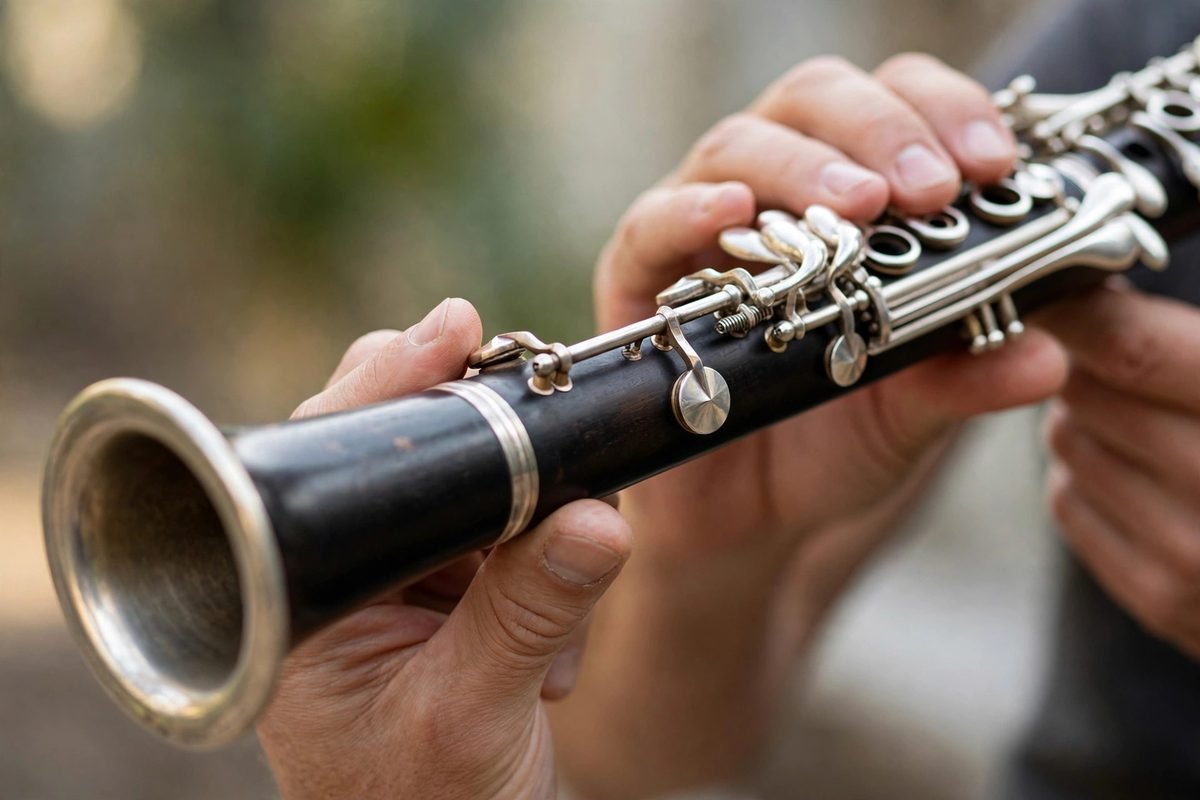
Choosing a first clarinet is simpler than the catalogues make it look. The main decision is between a student plastic clarinet and a wooden one, and for a beginner the plastic one usually wins. Student clarinets are made from a durable resin, they cope with knocks and changes in temperature, and they hold their tuning well. A wooden clarinet sounds warmer, but it costs more and can crack if it dries out or gets cold.
The second decision is new or second-hand. A new student clarinet from a known maker is the safest buy, because it comes with a warranty and a mouthpiece that fits. A second-hand instrument can be excellent value, but only if a repairer has checked it: pads wear out, keys bend, and a clarinet that leaks air is miserable to play.
Brands matter less than condition and setup, but buy from a maker with a reputation for student instruments, such as Yamaha, Buffet Crampon, Jupiter or Selmer. Spare parts are easy to find and teachers know how they play. A very cheap instrument from an unknown maker is a false economy: it is often hard to play in tune, and a repairer may not be able to get parts for it.
The mouthpiece and reed deserve as much attention as the instrument itself. Most student clarinets come with a usable mouthpiece, so do not rush to replace it. Reeds, though, are a running cost: a beginner usually starts on a soft reed, strength 2 or 2.5, and moves to a harder reed as the mouth muscles strengthen. Buy a box of reeds, not a single one.
Learning the clarinet: the basics
The first lesson is about the embouchure, the shape your mouth makes around the mouthpiece. The upper teeth rest on the mouthpiece, the lower lip curls over the lower teeth, and the corners of the mouth stay firm. It feels strange at first, and the muscles tire quickly, which is normal. Short, frequent practice builds it far better than one long session a week.
Breathing comes next, and it is the foundation of a good sound. Clarinet playing uses deep breaths from the diaphragm, rather than shallow breaths from the chest. Your teacher will show you how to breathe in quickly and let the air out slowly and steadily, which keeps a long note steady and in tune. Good breathing is also why posture matters: sitting or standing tall lets the air move freely.
Fingering follows a logical pattern, and the first notes are the easiest. Most beginners learn the low notes first, then work upwards, adding one note at a time. The left hand covers the upper joint and the right hand the lower joint, and the thumbs support the instrument and work the keys. A practice book or a teacher will take you through the notes in an order that builds on what you already know.
Reading music is part of learning the clarinet, though not everyone starts at the same time. Some beginners learn tunes by ear first and add reading later, while others learn to read from the first lesson. What matters is regular practice: twenty to thirty minutes a day, five or six days a week, will take a beginner further in a year than occasional hour-long sessions.
How to look after a clarinet
A clarinet needs a few minutes of care after every session. The inside collects moisture from your breath, so run a cleaning swab through the body after you play, and dry the mouthpiece and reed separately. Never leave a wet reed on the mouthpiece.
Grease the cork joints lightly when they feel stiff, and never force them together. Hold the instrument by the joints, not by the keys, when you assemble it, and keep it in its case when you are not playing. Wooden clarinets are sensitive to sudden changes in temperature and humidity, so do not leave one in a cold car or next to a radiator. A yearly service by a repairer is money well spent.
Reeds are the one part of the clarinet that wears out quickly. A reed lasts a few weeks of regular playing. Rotate three or four reeds so that no single reed does all the work, and replace a reed when it chips, splits or feels dull.
Your clarinet buying checklist
Work through this list before you buy, and you will avoid the common mistakes.
- Start with a B-flat clarinet: it is the standard instrument, with the widest choice of music.
- Choose plastic for a first instrument: a student resin clarinet is durable and affordable.
- Buy from a known maker: Yamaha, Buffet Crampon, Jupiter or Selmer are safe choices for a beginner.
- Try before you buy: ask a teacher to play the instrument and check that every note speaks easily.
- Check second-hand instruments carefully: budget for a service, and have a repairer check the pads and keys.
- Start on a soft reed: strength 2 or 2.5 is right for most beginners.
- Budget for the extras: a case, a swab, cork grease and a reed case are all part of the cost.
- Plan for lessons: a teacher or a school band will take you further, faster, than playing alone.
Frequently asked questions
Is the clarinet hard to learn?
The clarinet is one of the easier wind instruments to start on, because the fingering is logical and the first notes come fairly quickly. It takes time to build a good sound and to play in tune, but most beginners play a simple tune within a few weeks.
How much does a clarinet cost?
Prices vary widely by maker, material and condition, so check current prices from a reputable music shop rather than relying on a figure in a guide. A new student plastic clarinet is the most affordable route, and a wooden student instrument costs more.
What age can a child start the clarinet?
Most children start between the ages of eight and ten, when their hands are big enough to cover the holes and their front teeth are settled. Adults can start at any age.
Can you learn the clarinet without a teacher?
You can make a start with books, videos and apps, and many players do. A teacher is still worth having at the beginning, because embouchure and breathing are hard to correct from a screen.
Sources
Instrument guidance here reflects widely published advice from clarinet makers, teachers and method books on types, reeds and care.
The bottom line
The clarinet is a warm, versatile instrument that suits almost every kind of music, and the B-flat clarinet is the right place to start. A durable student instrument, a soft reed and a little daily practice are all you need to begin.
Your next step is simple: try a B-flat clarinet at a music shop or a school, take a lesson or two, and practise for twenty minutes a day for a month. By the end of that month you will know whether the clarinet is your instrument.