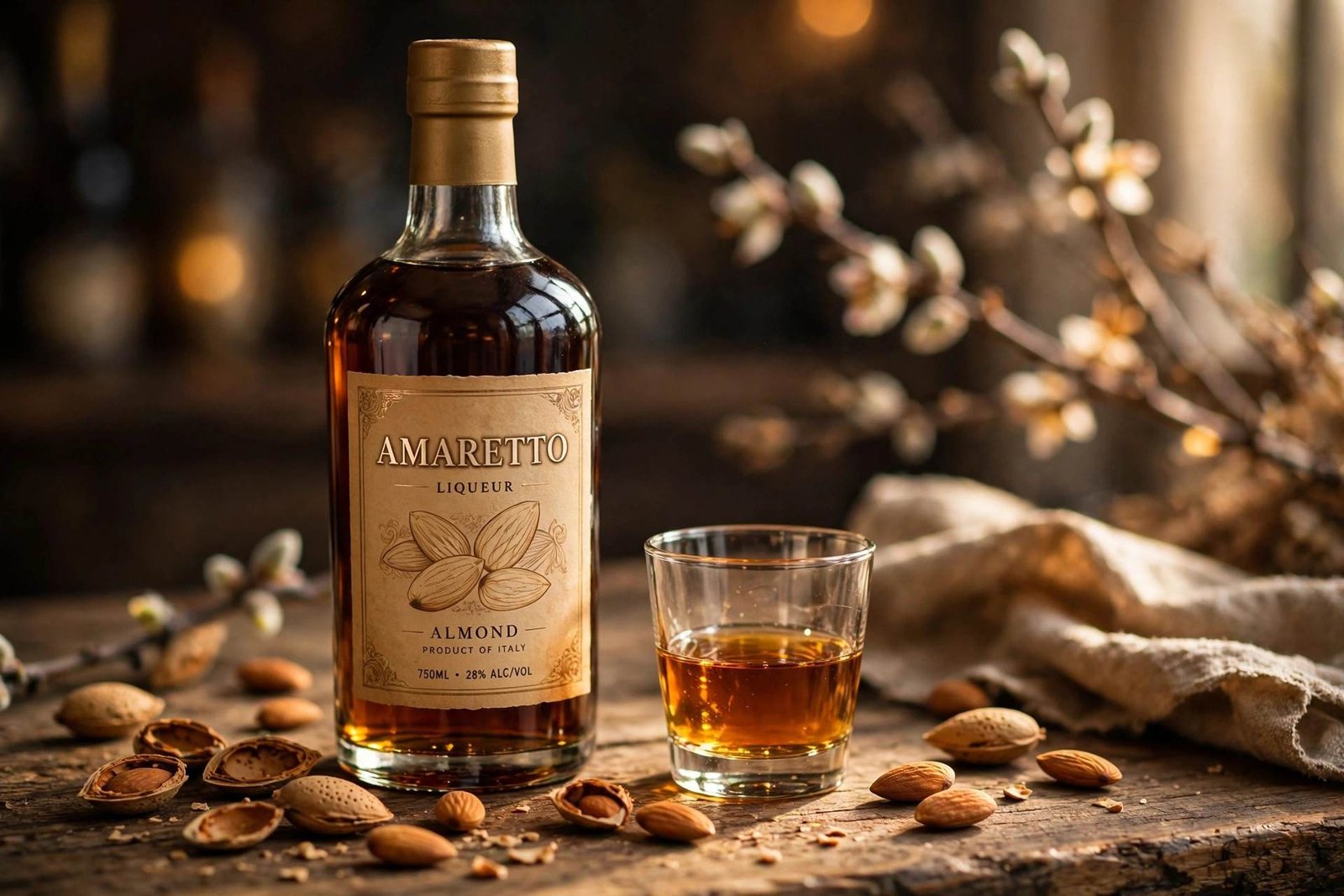
Amaretto is the sweet almond liqueur that turns up everywhere, from the back of the drinks cabinet to the dessert menu, yet most people who have tasted it could not say what it actually is. It is an Italian liqueur flavoured with almonds and apricot kernels, and its warm, marzipan-like sweetness makes it one of the most versatile bottles you can own.
So what should you do with a bottle of amaretto? You can sip it neat over ice, mix it into a sour or a coffee, or use a splash to lift a cake, a trifle or a tiramisu. This guide explains what amaretto is, how it is made, what it tastes like, and the classic serves and cooking uses.
Key takeaways:
- Amaretto is an Italian liqueur flavoured with almonds, apricot kernels or both, and its signature flavour is sweet marzipan with vanilla and spice.
- Most amaretto is bottled at around 24 to 28% alcohol by volume — gentler than whisky or vodka, stronger than wine.
- The classic serves are neat over ice, with soda or lemonade, in an amaretto sour, or in coffee.
- Amaretto keeps well after opening and adds almond warmth to cakes, trifles and tiramisu.
What is amaretto?
Amaretto is a sweet Italian liqueur whose name comes from the Italian word amaro, meaning bitter, with the diminutive ending giving it the sense of “a little bitter”. The name is a small joke: amaretto is famously sweet, although a faint bitter-almond note sits underneath the sugar. It is one of Italy’s best-known liqueurs, made around Saronno, in Lombardy, for centuries.
The flavour that defines amaretto is almond, but the story is slightly more complicated. Many amarettos are flavoured with apricot kernels rather than almonds, or a mixture of the two, because apricot kernels contain the same compound that gives almonds their scent. Some producers use bitter almonds, which carry a stronger, more perfumed character.
Amaretto is usually a rich amber-brown colour, sweet enough to drink on its own yet complex enough to mix. It sits in the same family as Frangelico, the Italian hazelnut liqueur.
How is amaretto made?
There is no single recipe for amaretto, and the best-known producers keep their exact methods private. The general approach is widely understood: a neutral spirit or brandy base is infused with almonds, apricot kernels or both, along with vanilla, herbs and spices, then sweetened and sometimes aged in oak.
The most famous amaretto, Disaronno, has been made in Saronno since the early twentieth century, and its recipe remains a closely guarded secret. The company says it is made from herbs, fruits and secret ingredients, and it contains no almonds at all — the almond flavour comes from apricot kernel oil. That is why people with nut allergies should always check the label, since recipes vary from brand to brand.
Other producers steep bitter almonds in spirit and add vanilla, caramel and a touch of spice, and some age the liqueur briefly in oak, which softens the sweetness. Whatever the route, the result is sweet, smooth and unmistakably almond-scented, with a warmth that lingers after each sip.
Most amaretto is bottled at between 24 and 28% alcohol by volume — well below spirits such as whisky and vodka, usually bottled at 40% or more, and well above wine.
What does amaretto taste like?
Amaretto tastes of sweet almonds and marzipan first, with vanilla, caramel and a whisper of cherry underneath. The flavour is warm and rounded, and the sweetness is balanced by a faint bitter-almond edge that stops it becoming cloying. The finish is smooth, with the almond scent lingering.
The flavour changes with the serve. Neat, at room temperature, the sweetness and vanilla come forward most strongly. Over ice, the chill softens the sugar and lets the bitter-almond note show itself. Mixed with lemon juice, the almond brightens and the sweetness recedes, which is why the amaretto sour works so well.
Different brands taste noticeably different. Disaronno is smooth and sweet, with a strong vanilla and marzipan character, while some smaller producers make drier, more bitter versions with a pronounced apricot-kernel edge. If you only know one amaretto, trying a second is worthwhile: the difference between brands is larger than many people expect.
| Liqueur | Main flavour | Typical strength | Best for |
|---|---|---|---|
| Amaretto | Sweet almond, marzipan, vanilla | 24 to 28% ABV | Sours, coffee, desserts |
| Frangelico | Toasted hazelnut, cocoa | 20% ABV | Coffee, cream drinks, desserts |
| Kahlúa | Coffee, vanilla, caramel | 16 to 20% ABV | White Russians, espresso martinis |
| Triple sec | Sweet orange peel | 30 to 40% ABV | Margaritas, cosmopolitans |
How should you serve amaretto?
The simplest serve is also one of the best. Pour amaretto over a large cube of ice in a rocks glass and drink it slowly, letting the ice melt and soften the sweetness as you go. A squeeze of lemon, or a twist of lemon peel, adds a fresh note that keeps the drink from feeling too rich.
For a longer drink, mix amaretto with soda water or lemonade over plenty of ice. Soda keeps the almond flavour clear and makes a light aperitif; lemonade makes it sweeter and softer. Start with one part amaretto to three parts mixer and adjust to taste.
Amaretto also works beautifully in coffee. A splash in a strong black coffee, sometimes with a little cream, makes a warming after-dinner drink. Our guide to the best bourbon covers the stronger end of the after-dinner drinks cabinet, while our guide to cider offers a lighter alternative for a summer afternoon.
Classic amaretto cocktails and serves
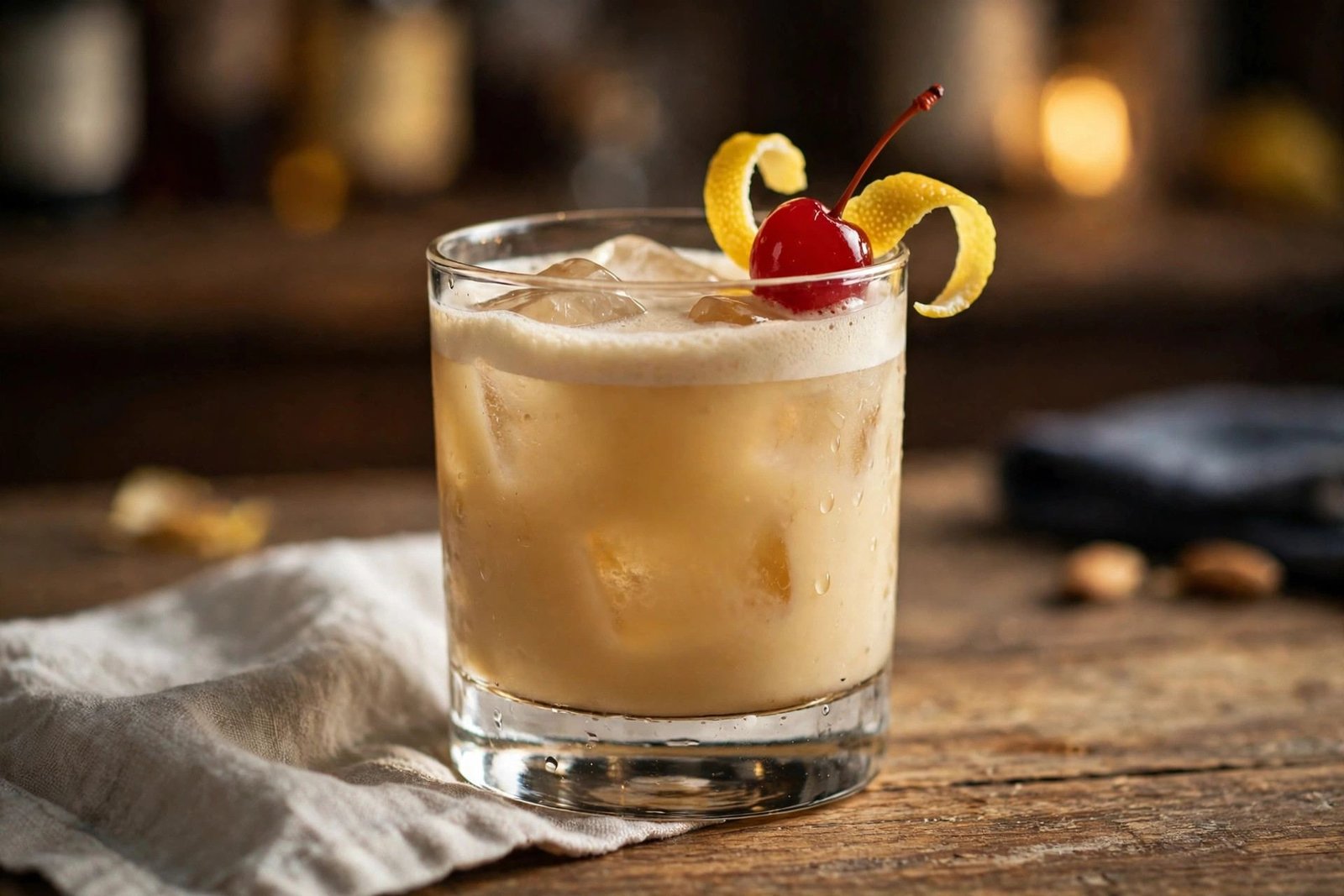
The amaretto sour is the classic amaretto cocktail, and it deserves its reputation. It combines amaretto with fresh lemon juice and a little sugar syrup, shaken with ice and served in a rocks glass, often with a cherry and a slice of orange. The lemon brightens the almond sweetness and turns a liqueur that can feel rich on its own into a balanced drink.
The Godfather is the simplest amaretto cocktail of all: equal parts amaretto and Scotch whisky, stirred over ice. The whisky adds smoke and depth, the amaretto adds sweetness and almond warmth. Replace the Scotch with vodka and the drink becomes a Godmother, which is lighter and cleaner. Both are strong, short drinks, best sipped slowly.
The French Connection pairs amaretto with cognac in equal parts, stirred over ice: the cognac brings dried fruit and oak, the amaretto brings almond sweetness. The Italian Surfer, by contrast, is a tall drink of amaretto, pineapple juice and cranberry juice over ice, which suits a party.
If you are making an amaretto sour at home, use fresh lemon juice rather than bottled, and taste before adding sugar syrup, since amarettos vary in sweetness. Shake hard with ice, strain over fresh ice, and garnish with a cherry and an orange slice. A dash of egg white gives the drink a silky foam on top.
How do you cook with amaretto?
Amaretto is one of the most useful liqueurs in the kitchen, because its almond flavour suits both baking and desserts. A splash in a cake batter adds warmth and depth, and it works especially well in almond cakes, chocolate cakes and fruit cakes. It is also the traditional liqueur for soaking the sponge fingers in tiramisu.
For cold desserts, amaretto is even easier to use. Stir a little into whipped cream to serve with berries or chocolate mousse, or drizzle it over vanilla ice cream with toasted almonds. It lifts a trifle and brightens a fruit salad. A tablespoon or two is usually enough for a dessert that serves four.
When you cook with amaretto, the alcohol does not always disappear. Simmering drives off most of it, but a splash stirred into cold cream or drizzled over ice cream keeps its full strength. If you are cooking for children or for someone who avoids alcohol, use almond extract instead. Our guide to the best chocolate cake is a good starting point for baking with amaretto, and our guide to the classic margarita recipe covers another cocktail built on fresh citrus.
How should you store amaretto?
Amaretto is a forgiving bottle to own. An unopened bottle keeps for years in a cool, dark cupboard, and once opened it keeps its flavour for a long time, far longer than wine or a cream liqueur. Store it upright, away from sunlight and heat.
Unlike wine, amaretto does not improve with age once bottled, and it does not spoil quickly: the sugar and alcohol act as preservatives, so an opened bottle will still taste good a year later. There is no need to refrigerate it — a cool cupboard is ideal.
Your amaretto checklist
Use this list the next time you buy, serve or cook with amaretto.
- Check the label: some amarettos contain almonds and some use apricot kernels — read the ingredients if you have a nut allergy.
- Start neat over ice: taste the liqueur on its own before you mix it, so you know how sweet your bottle is.
- Use fresh lemon: an amaretto sour needs fresh lemon juice, not bottled — taste before adding sugar syrup.
- Keep it simple: the best serves are the simplest — over ice, with soda, or in a two-ingredient cocktail.
- Cook with a light hand: a tablespoon or two is enough for a dessert.
- Store it upright: a cool, dark cupboard keeps an opened bottle tasting good for a year or more.
- Drink in moderation: amaretto is for adults of legal drinking age, and it is sweet enough to drink faster than you realise.
Frequently asked questions
Is amaretto made from almonds?
Some amarettos are made with almonds, but many, including the best-known brand Disaronno, are flavoured with apricot kernel oil instead. Always check the label if you have a nut allergy.
How strong is amaretto?
Most amaretto is bottled at between 24 and 28% alcohol by volume — stronger than wine, gentler than spirits such as whisky or vodka, usually bottled at 40% or more.
What is the best way to drink amaretto?
Neat over a large ice cube is the best way to taste it, with a twist of lemon if you like. For a longer drink, mix it with soda water or lemonade. The classic cocktail is the amaretto sour, made with fresh lemon juice and sugar syrup.
Does amaretto go off after opening?
Amaretto keeps well after opening, thanks to its sugar and alcohol content. Stored upright in a cool, dark cupboard, an opened bottle will still taste good a year later.
Can you cook with amaretto?
Yes. Amaretto adds almond warmth to cakes, trifles, tiramisu, whipped cream and ice cream. Remember that alcohol stirred into cold desserts does not cook off, so use almond extract instead when cooking for children.
Sources
Production and flavour details reflect standard reference material on Italian liqueurs, including the history of amaretto from Saronno and the published descriptions of the best-known brands. Alcohol strength figures follow the labels of the leading amarettos, and the responsible-drinking note reflects the UK Chief Medical Officers’ low-risk drinking guidelines.
The bottom line
Amaretto is one of the easiest bottles to love and one of the hardest to waste. It is sweet enough to sip on its own, bright enough to mix into a sour, and useful enough to earn its place in the kitchen.
Your next step is simple: pour a measure over a large ice cube, add a twist of lemon, and taste it properly for the first time. That one glass will tell you more about amaretto than any guide can.
Amaretto is for adults of legal drinking age only. Please drink in moderation and never drink and drive.