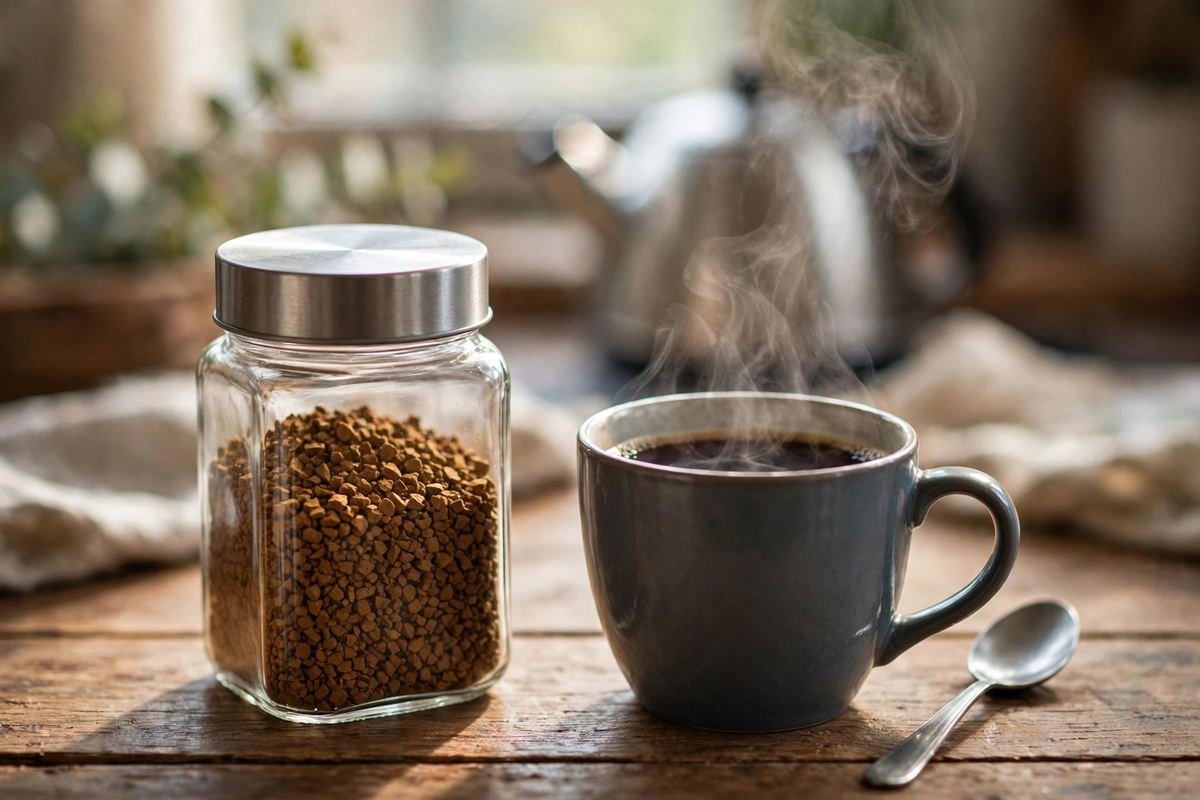
It is seven in the morning, you need coffee now, and the best instant coffee is the one that tastes like a proper cup . The jar on the shelf promises a lot, Some jars taste flat and bitter, while others are smooth, rich and genuinely enjoyable.
So which instant coffee should you buy? The short answer is a freeze-dried Arabica: it keeps the most flavour, dissolves cleanly and suits black coffee as well as milk. A microground instant is the closest to a fresh brew, and instant espresso is the one for lattes. This guide compares the ten best instant coffees in 2027 and shows how to brew a better cup from any of them.
Key takeaways:
- Freeze-dried Arabica is the best all-round instant coffee, with the fullest flavour and cleanest cup.
- Freeze-dried keeps more aroma than spray-dried, and microground adds real ground coffee for body.
- Water temperature and dose matter more than brand: use water just off the boil.
- Instant espresso suits milk drinks, decaf suits evenings, and instant cold brew suits iced coffee.
What makes a good instant coffee?
Instant coffee starts life as ordinary brewed coffee, which is then dried into granules or powder that dissolve in hot water. The drying method decides much of the flavour. Freeze-drying freezes the brewed coffee and removes the water gently, which keeps more of the aroma, while spray-drying blasts it with hot air, which is faster and cheaper but loses some of the finer notes. Freeze-dried coffee usually tastes smoother, and costs a little more.
The bean matters too. Arabica gives a smoother, sweeter cup; Robusta gives a stronger, more bitter cup with more caffeine. Most instant coffee blends the two: more Arabica means a gentler cup, more Robusta a punchier one. A good instant coffee smells fresh, dissolves without grit, and leaves a clean flavour.
How to brew a better cup of instant coffee
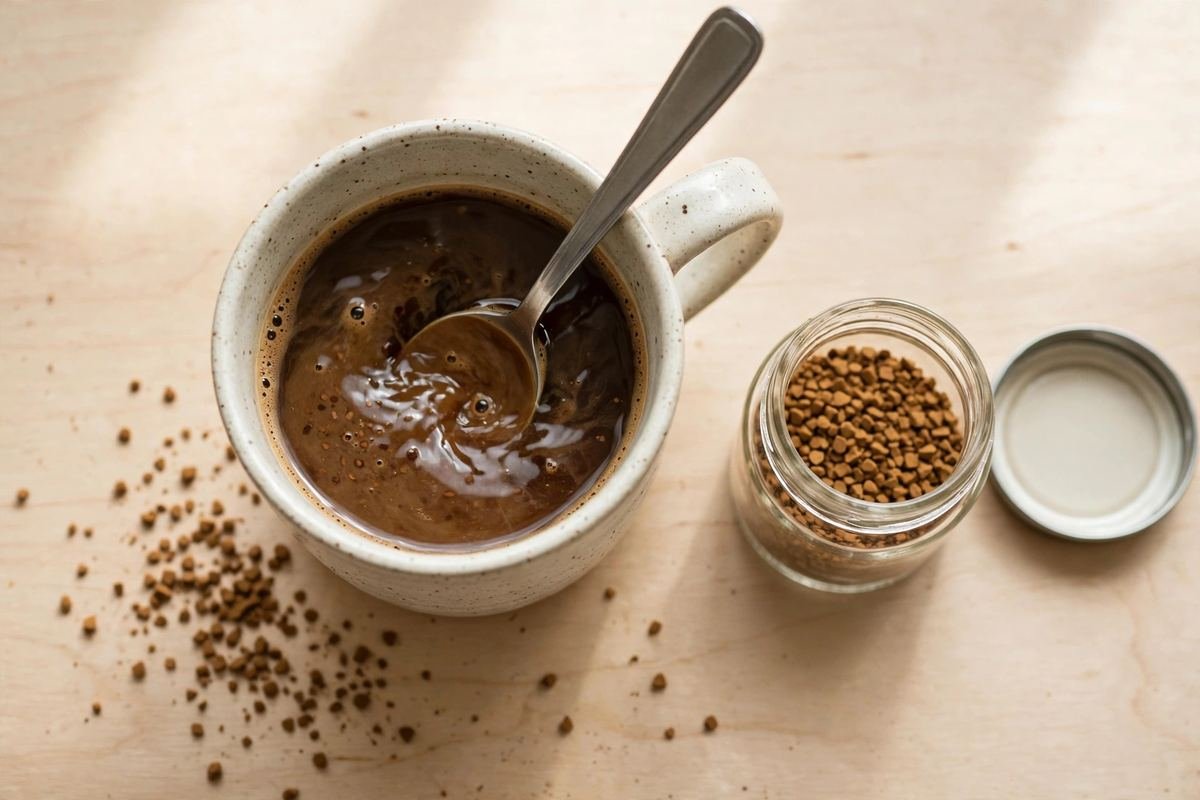
Most bad instant coffee is badly brewed rather than badly made. Start with fresh water, heated to just off the boil — around 90 to 95 degrees Celsius — because boiling water scorches the coffee and brings out bitterness. Measure the granules: one to two teaspoons per mug is the usual range. Stir well so every granule dissolves.
Milk and sugar hide as much as they help. A splash of warm milk softens a strong Robusta blend, while a little sugar rounds off a bitter edge, but neither can rescue coffee made with stale water or the wrong dose. If your cup tastes weak, add coffee rather than less water; if it tastes bitter, use slightly cooler water and a little less coffee. Keep the jar sealed, cool and dry: instant coffee absorbs moisture and kitchen smells.
The 10 best instant coffees in 2027
These ten styles cover every taste, every budget and every way of drinking coffee. Each one is widely available and tastes far better than the instant coffee of a decade ago.
1. Freeze-dried Arabica
Freeze-dried Arabica is the best instant coffee for most people, and the gap between it and the rest is real. The gentle drying keeps the aroma, so the cup tastes smooth, rounded and faintly sweet. It works black or with milk, at any time of day.
Best for: most buyers who want one great jar for everyday drinking.
2. Spray-dried classic blend
The spray-dried classic blend is the jar most of us grew up with, and it is still the cheapest way to make a cup of coffee. The flavour is straightforward and robust: dark, toasty and a little bitter. It is best with milk and sugar, and the sensible choice for a whole household.
Best for: the best budget jar for a busy household.
3. Microground instant
Microground instant coffee mixes fine particles of real ground coffee into the soluble granules, and the difference shows in the cup. The body is fuller and the flavour closer to a fresh brew. It can leave fine sediment, so stir well. If you love fresh coffee but need speed, this is the style to buy.
Best for: the closest instant coffee to a fresh brew.
4. Instant espresso
Instant espresso is made to be strong: a dark, intense coffee designed to stand up to hot milk and foam. Dissolved in a small amount of water, it makes a convincing base for a latte, a flat white or a cappuccino, with a rich body and a bitter edge that milk softens beautifully. It is also the best instant coffee for baking. For the real thing, our guide to the best coffee beans for espresso covers whole beans.
Best for: lattes, flat whites and other milk drinks.
5. Decaf instant
Decaf instant coffee is the evening cup: all of the comfort of coffee with almost none of the caffeine. Good decaf keeps most of the flavour of the original bean, tasting smooth and mild rather than thin, though it rarely matches a caffeinated jar for depth. It suits late afternoons, caffeine-sensitive drinkers and second cups after dinner. Our guide to the best decaf coffee covers the wider range.
Best for: evening coffee without the caffeine.
6. Single-origin instant
Single-origin instant coffee comes from one country or region, rather than a blend, and it tastes like it. A Colombian is smooth and nutty, an Ethiopian bright and fruity, a Brazilian soft and chocolatey. It suits drinkers who enjoy tasting the difference between origins.
Best for: flavour lovers who enjoy distinct origins.
7. Instant cold brew
Instant cold brew is made to dissolve in cold water or cold milk, and it is the easiest way to make iced coffee at home. The flavour is smooth and low in bitterness, and it needs no brewing, waiting or special equipment. Stir it into cold milk for an iced latte, or cold water with ice. Our guide to the best cold brew coffee maker covers the slow method.
Best for: iced coffee in under a minute.
8. Robusta-rich instant
Robusta-rich instant coffee is the strong one: dark, intense and unapologetically bitter, with roughly twice the caffeine of an Arabica jar. It is the cup for early mornings, long drives and anyone who finds ordinary instant coffee too gentle. Start with one teaspoon; expect a thick, dark cup that stands up to plenty of milk.
Best for: the strongest cup and the biggest caffeine kick.
9. Flavoured instant
Flavoured instant coffee — vanilla, hazelnut, caramel and mocha are the usual choices — is the sweet cup, and it divides drinkers more than any other style. Done well, the flavour sits gently behind the coffee, adding warmth without tasting artificial; done badly, it overwhelms the cup entirely. It suits drinkers who take sugar anyway.
Best for: a sweet, comforting cup with a twist.
10. 3-in-1 instant sachets
Three-in-one sachets combine instant coffee, sugar and milk powder in a single stick, and they are the most convenient coffee on this list. Just add hot water and stir: no milk, no sugar, no measuring, no washing up beyond the mug. The flavour is sweet and milky, and they are ideal for travel, camping, offices and hotel rooms.
Best for: travel, offices and coffee with no fuss.
How do the best instant coffees compare?
| Coffee | How it is made | Flavour | Best for |
|---|---|---|---|
| Freeze-dried Arabica | Freeze-dried | Smooth, rounded, sweet | Best overall |
| Spray-dried classic blend | Spray-dried | Dark, toasty, robust | Best budget |
| Microground instant | Ground coffee added | Full, close to fresh | Closest to fresh brew |
| Instant espresso | Dark roast, fine granules | Intense, rich, bitter | Milk drinks |
| Decaf instant | Caffeine removed | Smooth, mild | Evening coffee |
| Single-origin instant | One region | Distinct, origin-led | Flavour lovers |
| Instant cold brew | Cold-soluble | Smooth, low bitterness | Iced coffee |
| Robusta-rich instant | High Robusta share | Dark, intense, strong | Strongest cup |
| Flavoured instant | Flavour added | Sweet, vanilla or nutty | Sweet cup |
| 3-in-1 instant sachets | Coffee, sugar, milk powder | Sweet, milky | Travel |
How do you choose the right instant coffee?
Start with how you drink it. Black coffee drinkers should buy freeze-dried Arabica or microground instant; milk drinkers can choose a stronger blend or instant espresso. Then think about when you drink it: decaf for evenings, Robusta-rich for early mornings, and instant cold brew for summer afternoons. For a household, keep two jars: freeze-dried Arabica for everyday cups and a spray-dried blend for guests. A good mug helps too; our guide to the best coffee mugs covers the options.
Your instant coffee checklist
Run through this list before you buy.
- Choose freeze-dried for flavour: it keeps more aroma than spray-dried, and the difference shows in the cup.
- Match the bean to the cup: Arabica for smooth and sweet, Robusta for strong and punchy.
- Measure the dose: one to two teaspoons per mug, level rather than heaped.
- Use water just off the boil: around 90 to 95 degrees Celsius, never boiling.
- Store the jar properly: sealed, cool and dry, away from kitchen smells and steam.
- Keep two jars: a good everyday jar and a budget jar for guests and busy mornings.
Frequently asked questions
Is instant coffee real coffee?
Yes. Instant coffee is real coffee that has been brewed and then dried into granules or powder, so it dissolves in water. It holds the same caffeine and much of the flavour, though some aromas are lost in drying.
Which instant coffee tastes most like fresh coffee?
Microground instant comes closest: it contains fine particles of real ground coffee. Freeze-dried Arabica is next best, with a smooth flavour many cannot tell from fresh filter coffee.
How much caffeine is in instant coffee?
A mug usually holds around 60 to 70 milligrams of caffeine, a little less than filter coffee. Robusta-rich contains more; decaf holds only a trace, under 5 milligrams per mug.
Does instant coffee go off?
An unopened jar keeps for years; an opened one loses flavour within months, especially if it absorbs moisture. Keep the lid sealed, store it away from the kettle, and use a dry spoon every time.
Can you make instant coffee with cold water?
Ordinary instant coffee dissolves poorly in cold water, so make it hot and pour it over ice. Instant cold brew is the exception: it is made to dissolve in cold water or cold milk, and it makes a smooth iced coffee in under a minute.
What is the difference between freeze-dried and spray-dried coffee?
Freeze-drying removes water gently, keeping more aroma; spray-drying uses hot air, which is faster and cheaper but loses finer notes. Freeze-dried coffee usually tastes smoother and costs a little more.
Sources
Coffee types, processes and caffeine figures here reflect established coffee reference material, including the Specialty Coffee Association and the International Coffee Organization. For related reading, our guide to the best decaf coffee covers caffeine-free options, and our guide to what is a flat white coffee explains the milk drinks instant espresso suits.
The bottom line
The best instant coffee is the one that suits how you drink it. A freeze-dried Arabica covers most cups, a microground instant covers the mornings when you want something close to fresh, and an instant espresso covers every milk drink. Good coffee should be ready in a minute, not a ritual.
Your next step is simple: buy one jar of freeze-dried Arabica, brew it with water just off the boil, and measure the dose. Taste it black first, then with milk, and you will know within a cup. A small notebook by the kettle is all it takes to remember which jar worked and which to buy next. Keep a note of the styles you enjoy.