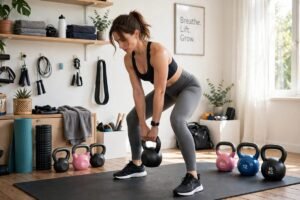
The best kettlebell exercises in 2027 are the ones that build strength, power and coordination with a single piece of kit, and they start with the swing. If you could learn only a handful of moves, the swing, the goblet squat, the deadlift and the Turkish get-up would cover most of what a kettlebell can do.
So which kettlebell exercises deserve your time? The ten below are ranked by how much they give back for the effort they take to learn, from the swing at the top to the halo. Each one comes with plain form cues and guidance on starting light and building up only when the movement feels smooth.
Key takeaways:
- The swing is the most useful kettlebell move, training hips, glutes and grip in one pattern.
- Start light and learn form first; a bell you can control beats a heavier one you fight.
- Squats, deadlifts, presses, rows and carries make a complete routine.
- Slow moves such as the Turkish get-up build stability fast moves cannot, and reward patience.
- Warm up, stop if something hurts, and get advice if you are unsure about any move.
Why a kettlebell works so well
A kettlebell is a ball of iron with a handle, and that shape is the whole point. The weight sits below the handle, so it swings and pulls against your grip, and your body has to stabilise it through every rep.
It is also practical: one or two bells and a mat are enough for a full session at home. Twenty minutes built around three or four moves, two or three times a week, is a sensible place to begin. Our guide to how to improve your posture covers the standing habits that make kettlebell work feel easier.
How to start: weight, form and the first session
Choosing a starting weight matters more than choosing the perfect programme. As a rough guide, many beginners start with a bell they can swing for a handful of reps with crisp form. If you already train with weights, you may start a little heavier, but the rule is the same: form first, weight second.
Learn the deadlift and the swing before anything else: the deadlift teaches you to hinge at the hips with a flat back, and the swing is that hinge with power added. For a first session, pick three moves below and rest well between sets.
1. Kettlebell swing: the move that matters most
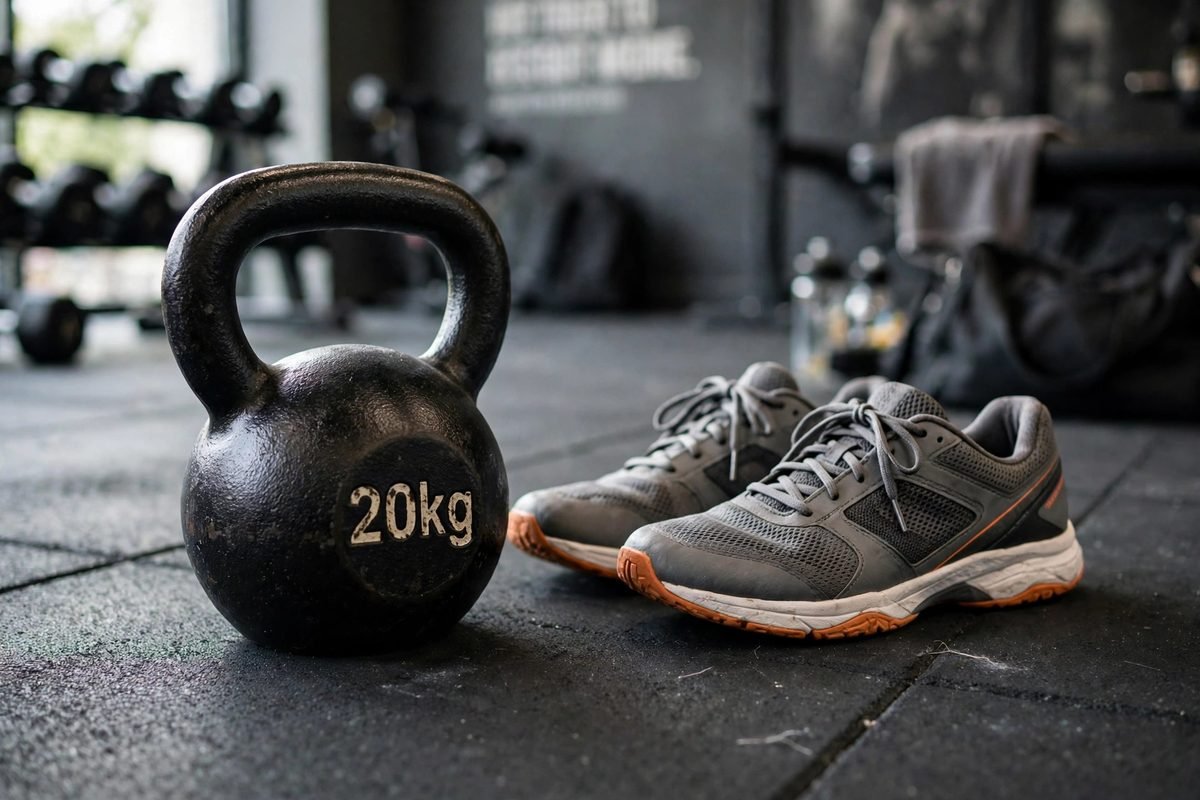
The swing is first because it does the most with the least fuss. You hinge at the hips, snap them forward, and let the bell float up to chest height, then guide it back down and hinge again. The arms are ropes, not lifters: they steer the bell, while the hips and glutes do the work. Keep your chest open, your back flat and your weight through your heels.
Best for: power, conditioning and glute strength in one move.
2. Goblet squat
The goblet squat is the friendliest squat most people will ever meet. Hold the bell by its horns close to your chest, elbows tucked in, and sit down until your thighs are roughly level with the floor, then drive back up. The bell acts as a counterweight, helping you stay upright. Keep your heels down and your knees over your toes.
Best for: leg strength, squat technique and anyone who struggles to squat with a bar.
3. Kettlebell deadlift
The deadlift is the foundation move, and it deserves respect even though it looks plain. Stand over the bell, hinge at the hips, bend your knees slightly, and grip the handle with both hands. Push the floor away, stand tall, squeeze your glutes, then hinge back down with control, back flat and arms straight.
Best for: learning the hip hinge, building posterior strength, and safe lifting habits.
4. Kettlebell press
The press builds shoulder and arm strength with a bell in each hand or one at a time. Clean the bell to your shoulder, wrist straight and elbow tucked in, then press it overhead until your arm is straight and lower it slowly. The bell rests on the back of your forearm, so a straight wrist matters. Press one arm at a time for more core work, and avoid arching your lower back to help the bell up.
Best for: shoulder strength, pressing power and single-arm stability.
5. Turkish get-up
The Turkish get-up is the slowest, most deliberate move on this list, and many coaches call it the most valuable. Lying on your back, you press a bell up with one arm and keep it there while you roll, sit, kneel and stand up, then reverse the sequence back to the floor. Every stage asks your shoulder to stay stable and your core organised, which builds a kind of strength fast moves cannot. Learn it without weight first, then add a light bell.
Best for: shoulder stability, coordination and full-body control.
6. Kettlebell row
The row balances all the pressing and swinging by training the upper back. Place one hand on a bench or sturdy chair, hinge forward with a flat back, and pull the bell towards your hip. Lower it slowly until your arm is straight. Your torso should stay still; if it twists with every rep, the bell is too heavy.
Best for: upper-back strength, posture and balancing pressing work.
7. Kettlebell clean
The clean is the move that gets the bell from the floor or the swing position up to your shoulder, ready to press or squat with. It looks like a small swing ending with the bell resting on the back of your forearm, and the secret is the hand: as the bell rises, your hand slips around the handle instead of letting the bell flip over and bang your wrist.
Best for: linking moves together, and learning to handle the bell smoothly.
8. Kettlebell snatch
The snatch takes the bell from the floor to overhead in one continuous movement, and it is the most athletic move on this list. It starts like a swing, then the bell keeps travelling up as your hand punches through at the top, finishing with a straight arm overhead. The power comes from the hips. Learn the swing and press first, and keep sets short.
Best for: experienced trainers who want a full-body power move.
9. Farmer’s carry
The farmer’s carry is almost embarrassingly simple: pick up a heavy bell in each hand and walk. Yet it trains grip, shoulders, core and posture at once, because every step asks your body to stay tall while the bells pull down. Stand tall, walk at a steady pace, then set the bells down with a hinge, not a rounded back. Start with a weight you can hold for a short walk, and build up the distance before the weight.
Best for: grip strength, posture and real-world carrying strength.
10. Kettlebell halo
The halo is a small, slow move that earns its place by keeping your shoulders mobile and warm. Hold a light bell upside down by its horns in front of your chest, then circle it slowly around your head, elbows close and ribs down. Go one way for a few reps, then the other. Use it as a warm-up or finisher, not a main lift. If circling overhead feels pinchy, keep the circle smaller or skip it.
Best for: shoulder mobility, warm-ups and finishers.
| Exercise | Main muscles | Skill level | Best for |
|---|---|---|---|
| Swing | Glutes, hamstrings, grip | Beginner | Power and conditioning |
| Goblet squat | Legs, glutes, core | Beginner | Leg strength |
| Deadlift | Glutes, hamstrings, back | Beginner | The hip hinge |
| Press | Shoulders, arms, core | Intermediate | Shoulder strength |
| Turkish get-up | Full body, shoulders | Intermediate | Stability |
| Row | Upper back, arms | Beginner | Posture and balance |
| Clean | Full body, forearms | Intermediate | Linking moves |
| Snatch | Full body, shoulders | Advanced | Full-body power |
| Farmer’s carry | Grip, core, shoulders | Beginner | Carrying strength |
| Halo | Shoulders, core | Beginner | Mobility and warm-ups |
Your kettlebell checklist
Run through this list before each session.
- Warm up first: five minutes of easy movement, then halos and light deadlifts.
- Check your space: clear floor and nothing breakable within bell range.
- Start light: add weight only when form stays clean.
- Hinge, do not squat, the swing: hips back, back flat, power from the glutes.
- Keep wrists straight: a straight wrist protects the joint.
- Breathe with the move: breathe out on the effort.
- Stop if it hurts: sharp or joint pain is a signal to stop.
- Rest between sets: quality reps beat tired reps with sloppy form.
- Practise the get-up slowly: learn it unweighted first.
- Finish with a walk: a short carry helps you cool down.
Frequently asked questions
What weight kettlebell should a beginner start with?
Start with a bell you can swing and deadlift with clean form for a handful of reps. Starting light and building up over weeks beats starting heavy and practising poor form.
Are kettlebell swings safe for your back?
Swings are safe for most healthy people when the hinge is learned properly and the back stays flat. The risk comes from rounding the lower back or using a bell too heavy to control. Learn the deadlift first.
How often should you train with kettlebells?
Two or three sessions a week suits most people, with a day of rest between harder sessions. Each session can be short, built around three or four moves from this list. Two good sessions a week beat a burst of daily training that fades.
Can kettlebell training replace a gym membership?
For many people, yes, at least for general strength and conditioning. A couple of bells cover squats, hinges, presses, rows, carries and core work, which is a complete programme. You may still want a gym for heavy barbell work, but you do not need one to get strong. Our guide to pelvic floor exercises is a useful companion for the deep core muscles kettlebell work asks a lot of.
Do I need one kettlebell or two?
One bell is enough to start, and most moves above are single-bell exercises. A second bell adds options later, and a matching pair opens up double-bell work. Buy one good bell first, and add a second when you know which weight you reach for most.
Should I do kettlebell training if I have never lifted weights?
Yes, with a light bell and a focus on learning the moves slowly. The deadlift, goblet squat, halo and farmer’s carry are all friendly to beginners. Take your time and build up gradually. If you have a health condition or an injury, check with a clinician first.
Sources
Form guidance here reflects widely published kettlebell coaching advice from established strength coaches. For related habits, our guides to how to lower your resting heart rate and how to improve your posture cover recovery and standing habits that support training.
The bottom line
The best kettlebell exercises are the ones you can learn well and practise often. Start with the swing, the deadlift and the goblet squat, add the press, row and carry when those feel solid, and treat the get-up and the snatch as skills to grow into.
Your next step is simple: pick one light bell, learn the deadlift and the swing this week, and practise them for a few short sessions before adding anything else. When the hinge feels automatic, add the goblet squat.
A note on safety
Kettlebell training carries some risk, especially if you have a health condition, an injury, or you are new to lifting. Warm up before every session, learn the form before adding weight, and stop if you feel sharp pain or dizziness. If you are pregnant, have a heart condition or a back problem, speak to a clinician before starting. This article is general information, not medical advice.