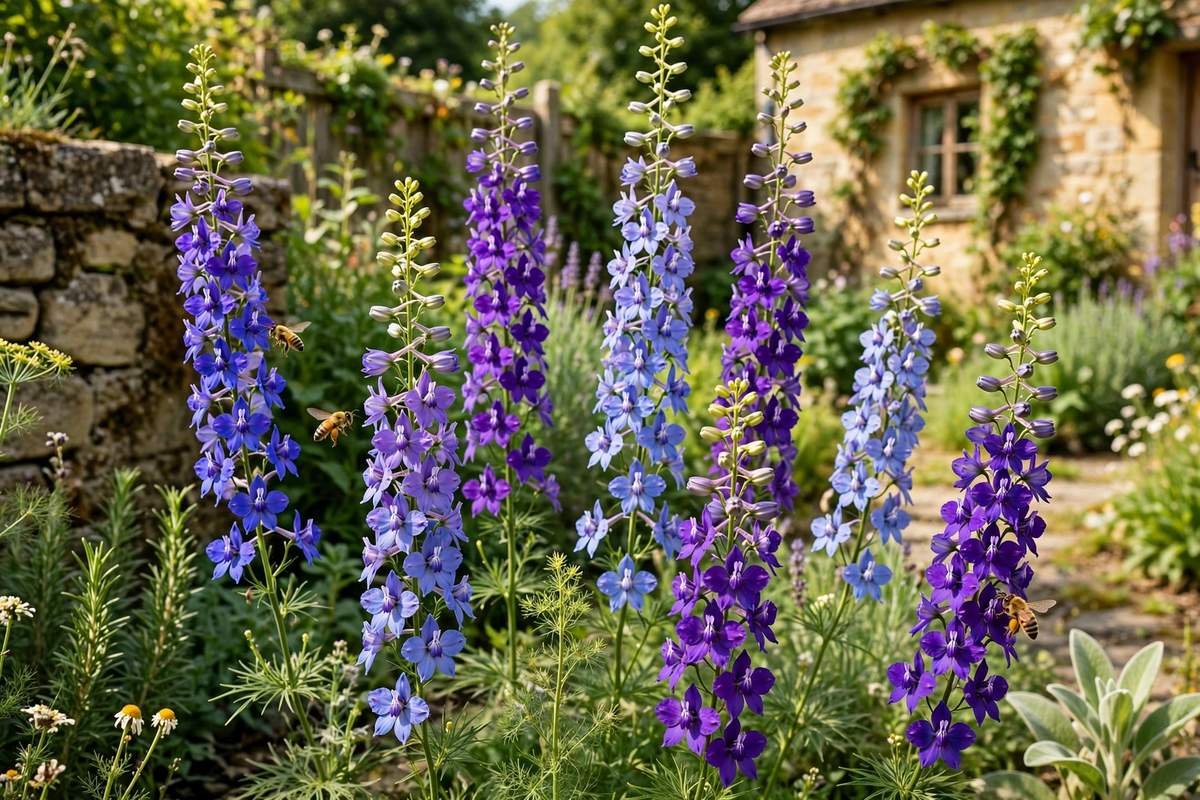

The July birth flower is larkspur, a tall, spired bloom in shades of blue, purple, pink and white that brings height and drama to a summer garden. If you were born in July, or you are choosing a birthday gift for someone who was, larkspur is the flower that belongs to the month.
So what is the July birth flower, exactly? Larkspur is the main flower, and the water lily is the second flower of July. Together they suit high summer perfectly: larkspur is upright, bright and full of energy, while the water lily is calm, floating and serene, opening its petals on still water in the morning sun.
This guide explains both flowers in full: what they mean, where they come from, how to grow and care for them, and how to give them well.
Key takeaways:
- The July birth flower is larkspur; the water lily is July’s second birth flower.
- Larkspur most often means an open heart, lightness and a strong attachment, with the exact message changing by colour.
- The water lily means purity, rebirth and peace, and its flowers open in the morning and close at night.
- Larkspur is an annual that grows best from seed sown where it is to flower, in sun and well-drained soil.
What is the July birth flower?
July has two birth flowers, and larkspur comes first. It is the flower most birth flower charts list for the month, and the one florists reach for when a customer asks for a July birthday bouquet. The water lily is the quieter companion flower, listed alongside larkspur on many modern charts.
Larkspur belongs to the genus Delphinium, a name that comes from the Greek word for dolphin, because the flower buds were thought to resemble a dolphin’s shape. The annual larkspur grown in gardens is usually Delphinium consolida, sometimes listed as Consolida ajacis, while the tall perennial delphiniums are close relatives.
Water lilies belong to the genus Nymphaea, and the hardy water lily most often grown in garden ponds is Nymphaea odorata and its many hybrids. They are aquatic plants, rooted in the mud at the bottom of a pond, with round leaves that float on the surface and flowers that rise just above the water. Their blooms open in the morning and close in the late afternoon, a habit that has given them a rich symbolic life.
What does larkspur mean?
Larkspur’s best-known meaning is an open heart, and it has carried that message in the language of flowers, the Victorian system in which each bloom stood for a feeling. The flower was also said to mean lightness, swiftness and a strong attachment, which suits a midsummer birthday gift: warm, sincere and easy to give.
Colour changes the message, so it is worth choosing with care. Blue larkspur, the most familiar colour, means dignity and grace, and it suits a formal birthday bouquet. Pink larkspur means fickleness in the older flower language, though many modern florists simply read it as affection, so a pink bunch is best given with a clear and loving card. White larkspur means happiness and a joyful nature, which makes it a natural choice for a celebration.
Purple larkspur is often read as a first love, and it is a good choice for a partner or a new romance. Choose the colour you like best and let the card say what you mean.
What is the history of larkspur?
Larkspur has been grown in European gardens for centuries, and its history is tied to the wider delphinium family. The name Delphinium reflects the dolphin shape of the buds, and the common name larkspur comes from the spur at the back of each flower, which was compared with the spur on a lark’s foot. Both names are descriptive, and both have lasted.
In Greek myth, the delphinium was linked with the story of Ajax, the hero of the Trojan War, and legend said the flowers sprang from his blood after his death. In English folk tradition, larkspur was also hung in stables to protect horses.
Victorian gardeners grew larkspur widely, and it became a favourite of the cottage garden, sown in drifts among roses, hollyhocks and foxgloves. The tall perennial delphiniums were developed later, through breeding in the nineteenth and twentieth centuries, and they are now a showpiece of the summer border. The annual larkspur remains the simpler plant: sow it, let it flower, and collect the seed for next year.
Meet the water lily, July’s second flower
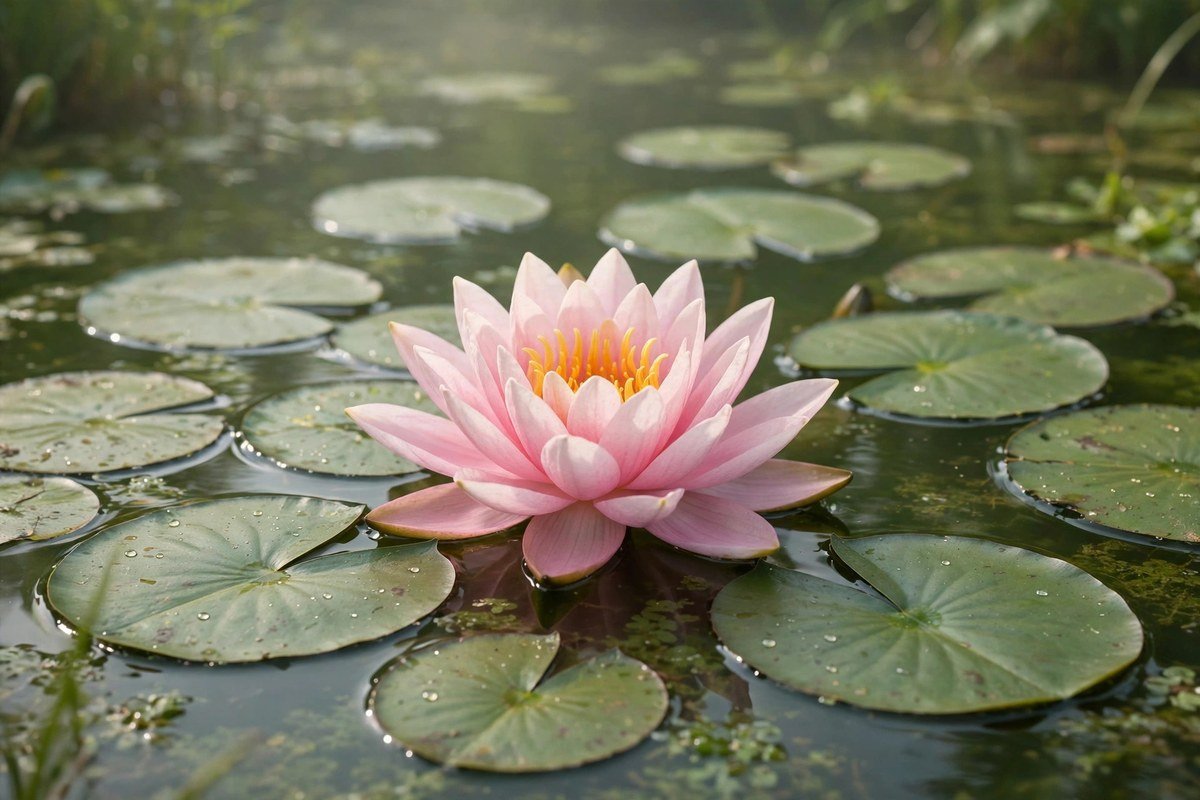
The water lily is a flower with a calm and ancient reputation. It grows in still, shallow water, with leaves that float on the surface and flowers that open in the morning and close again by evening. That daily rhythm is the heart of its meaning: rebirth, renewal and the return of light after darkness.
Water lilies are found across the world, in temperate and tropical regions, and they have been admired for thousands of years. In ancient Egypt, the blue water lily was a symbol of rebirth and the sun, and it appears in temple carvings and tomb paintings.
Unlike larkspur, the water lily is rarely given as a cut flower, because its blooms last only a day or two once picked. It is better admired where it grows, or given as a potted water lily for a garden pond, which the recipient can enjoy for years. A small hardy water lily is a thoughtful gift for a July birthday, and it turns an ordinary pond into a place worth sitting beside.
| Flower | Role | Meaning | Best use |
|---|---|---|---|
| Larkspur | Main July flower | An open heart, lightness, attachment | Birthday bouquets, cottage garden borders |
| Water lily | Second July flower | Purity, rebirth, peace | Garden ponds, still water, quiet corners |
How do you grow and care for larkspur?
Larkspur likes sun and rich, well-drained soil, and it does best in a bright, open spot sheltered from strong wind. The tall stems can snap in a gale, so a position near a wall or fence helps, and taller forms may need a cane for support. Heavy, wet soil is the main enemy, because it can rot the roots before the plants have a chance to flower.
Sow annual larkspur where it is to flower, in autumn or early spring, because it dislikes being moved. Scatter the seed thinly on prepared soil, cover it lightly, and keep the ground moist until the seedlings appear. Thin the seedlings to about 25 centimetres apart so air can move between the plants, and water them in dry spells, especially while they are young.
Deadhead faded spikes regularly, and the plants will keep producing new flowers through the summer. Larkspur is an annual, so the plants themselves will not return, but self-sown seedlings often appear in the same spot the following spring.
How do you grow and care for water lilies?
Water lilies need still, shallow water and a sunny pond, with at least six hours of sun a day for the best flowering. Plant them in a basket of aquatic compost, with the crown just below the surface, and lower the basket slowly to its final depth as the plant grows. Hardy water lilies suit ponds at least 45 centimetres deep, which keeps the roots safe from frost in winter. Choose a hardy variety for a garden pond in the United Kingdom, since tropical types need warm water and winter protection indoors.
Feed water lilies in spring with an aquatic fertiliser tablet pushed into the compost, and remove yellowing leaves and faded flowers through the summer. In winter, hardy water lilies need no care beyond leaving them where they are, below the frost line.
One caution matters for every gardener: larkspur and delphinium plants are poisonous if eaten, and they are best kept away from grazing animals and small children who might chew the leaves. Keep the plants where they can be admired without being handled, and wash your hands after gardening.
How should you give July birth flowers as a gift?
A bouquet of larkspur is one of the most striking birthday gifts you can give in July, because the tall spires stand out in any arrangement. A florist’s bunch of blue or purple larkspur, mixed with white flowers and greenery, suits a summer birthday table perfectly. If you know the recipient’s favourite colour, match it; if you do not, a mixed bunch of blue, pink and white is a safe and cheerful choice.
For a gift that lasts beyond the birthday, a packet of larkspur seed with a handwritten note is a charming idea for a gardener, and a potted water lily is a better choice for someone with a pond. Add a short note explaining the meaning of the flower, and the gift becomes personal rather than generic.
Larkspur also pairs well with other July birthday ideas: a small piece of jewellery in the July birthstone, ruby, or a birthday card that names the flower. Our guide to the August birthstone shows how a birthstone gift can work in the same way for a late summer birthday, and our engagement photos guide has flower advice that suits a summer celebration as well as a birthday.
Your July birth flower checklist
Work through this list before you buy, sow or give.
- Choose the flower: larkspur for a bouquet or a cottage garden, water lilies for a pond or a quiet corner.
- Pick the colour: blue for dignity and grace, white for happiness, purple for a first love.
- Write the card: say what you mean in words, so the older flower meanings cannot be misread.
- Check the stems: cut larkspur should have firm stems and buds opening from the bottom, not fully blown flowers.
- Keep them cool: trim the stems, change the water every couple of days, and keep the vase out of direct sun.
- Sow where it flowers: larkspur dislikes transplanting, so sow the seed in its final spot in sun and well-drained soil.
- Plant water lilies in sun: still water, at least six hours of sun, and a pond deep enough to escape frost.
Frequently asked questions
What is the July birth flower?
The July birth flower is larkspur. The water lily is July’s second birth flower, listed alongside larkspur on many modern birth flower charts.
What does larkspur mean?
Larkspur most often means an open heart, lightness and a strong attachment. Blue larkspur means dignity and grace, white larkspur means happiness, and purple larkspur is often read as a first love.
Is larkspur the same as delphinium?
Larkspur and delphinium are close relatives in the same family, and the names are often used loosely. Annual larkspur is usually Delphinium consolida, while the tall perennial delphiniums are bred garden plants. Both have spurred flowers on tall spikes.
When does the water lily flower?
Hardy water lilies flower through the summer, from late spring into early autumn, with the best display in July and August. Each flower opens in the morning and closes in the late afternoon, lasting only a few days.
Can you grow larkspur in pots?
Yes, shorter larkspur forms grow well in deep pots with free-draining compost and a sunny spot. Water when the compost feels dry, support tall stems with canes, and deadhead faded spikes to keep new flowers coming.
What is the July birthstone?
The July birthstone is ruby, a deep red gemstone. If you are planning a summer garden gift instead, our guide to how to grow lettuce is a useful next step for a new gardener.