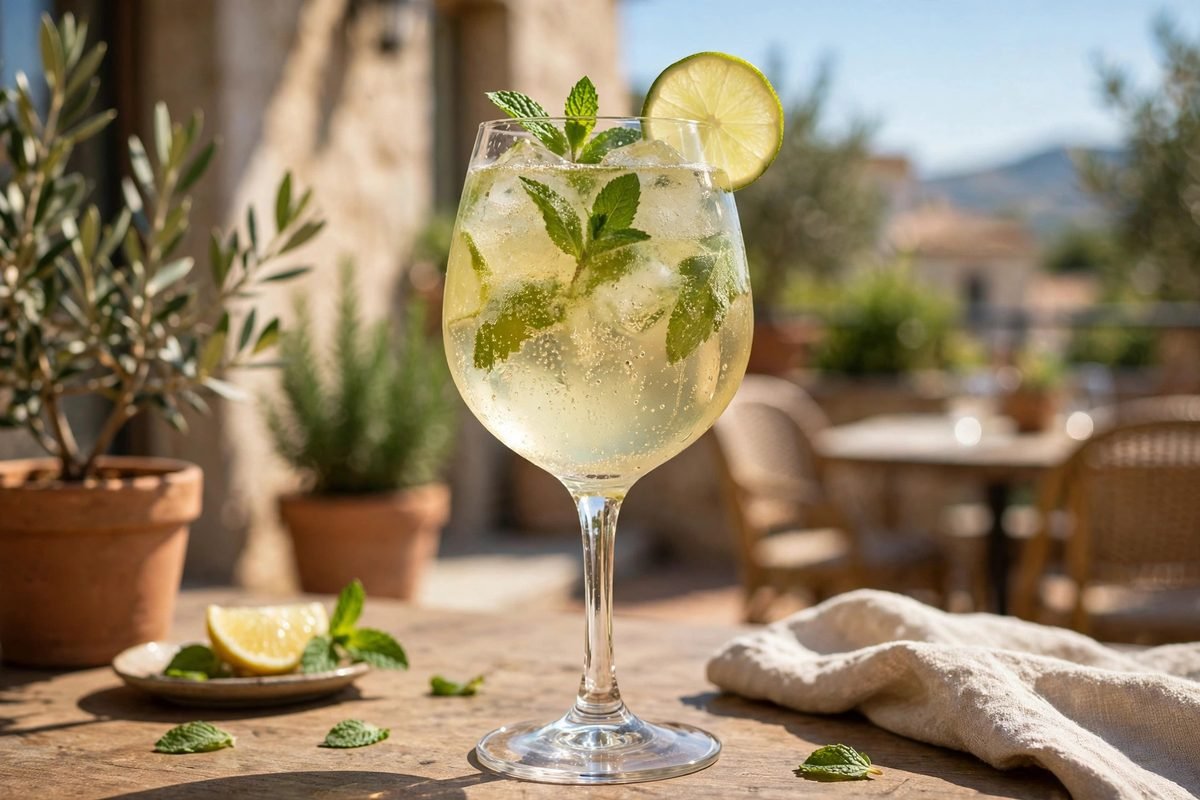

The Hugo spritz recipe is one of the easiest drinks to get right, and one of the easiest to spoil. A Hugo spritz is a light, floral aperitif made with prosecco, elderflower cordial or liqueur, soda water, fresh mint and lime, served over ice in a large wine glass.
So what is the classic Hugo spritz recipe? Fill a large wine glass with ice, add elderflower cordial or liqueur and a squeeze of lime, pour in chilled prosecco, top with a splash of soda water, and stir once, gently. Here are the proportions, the cordial-versus-liqueur choice, and the mistakes to avoid.
Key takeaways:
- A Hugo spritz is prosecco, elderflower cordial or liqueur, soda water, mint and lime, served over ice in a large wine glass.
- Start with three parts prosecco to one part elderflower, topped with a splash of soda.
- Chill everything first, build the drink in the glass, and stir once, gently, so the sparkle survives.
- Elderflower cordial gives a softer, lighter drink; elderflower liqueur gives a deeper floral note and a little more strength.
- Serve it as an aperitif with light, salty snacks, garnished simply with mint and lime.
What is a Hugo spritz?
The Hugo spritz was born in the bars of South Tyrol, in northern Italy, where elderflower grows in abundance and the aperitif hour is a serious ritual. It is a cousin of the Aperol spritz, but where that drink is bitter and orange, the Hugo is floral, pale gold and gently sweet.
Its appeal is its lightness. Prosecco gives it sparkle and a dry backbone, elderflower gives it a scented, almost honeyed perfume, and soda water lifts the whole drink and keeps it from becoming cloying. Mint adds a cool freshness and lime adds a small sharp edge. The skill lies in the proportions: too much elderflower and the drink is syrupy, too little and it tastes like plain sparkling wine, and stirring too hard flattens the bubbles.
What you need for a Hugo spritz
Five ingredients make a Hugo spritz, and each one earns its place. Prosecco is the base, and a dry prosecco works best because the elderflower already brings sweetness. Elderflower cordial or liqueur is the signature flavour, soda water is the lift, mint is the freshness, and lime is the bright note that keeps the drink balanced.
Choose a prosecco you would happily drink on its own. It does not need to be expensive, but a flat or very sweet sparkling wine will show in the finished drink. Keep the bottle well chilled, and open it just before you build the drinks so the bubbles are at their liveliest. The same goes for the soda water: cold, freshly opened and properly fizzy. You also need fresh mint, a firm lime, a large wine glass, plenty of ice and a long spoon.
The classic Hugo spritz recipe, step by step

Start by chilling the glass in the fridge for a few minutes, or fill it with ice water and tip it away. Then fill the glass generously with ice, right up to near the rim.
Add the elderflower first. Pour in one part elderflower cordial or liqueur, then add the mint leaves and a squeeze of lime. Clap the mint leaves gently between your palms before dropping them in: this releases their oils without tearing them into shreds that float in every sip.
Now pour in three parts of chilled prosecco, pouring down the side of the glass to keep the bubbles intact. Top with a splash of soda water, about one part or a little less, then stir once, slowly, with a long spoon, lifting from the bottom of the glass.
Finish with a lime wheel and a fresh sprig of mint on top. Taste before you serve it to anyone else: if it feels too sweet, add a little more soda; if it feels flat or plain, add a small splash more elderflower. The classic proportions are a starting point, not a rule, and your palate is the final judge.
Elderflower cordial or liqueur: which should you use?
This is the one real choice in the recipe, and both options make a good Hugo. Elderflower cordial is a non-alcoholic syrup made from elderflowers, sugar and citrus. It gives a soft, light floral sweetness and keeps the finished drink lower in alcohol, which suits long, sunny afternoons.
Elderflower liqueur is alcoholic and more concentrated in flavour. It gives a deeper, more perfumed floral note and a rounder finish, and the drink will be a little stronger. If you use liqueur, start with a touch less than you would use of cordial. If you are making drinks for a group, cordial is often the simpler choice.
Hugo spritz variations worth trying
Once you can make the classic, the variations are easy. A Hugo with gin is the best-known twist: a small measure of gin added before the prosecco gives the drink a juniper backbone and a little more weight, which suits an evening aperitif.
A non-alcoholic Hugo is just as good when it is built with care. Use a non-alcoholic sparkling wine or a good sparkling white grape drink in place of the prosecco, with elderflower cordial, soda, mint and lime. Chill everything, use plenty of ice, and do not drown it in cordial. A few raspberries or a slice of cucumber add colour and a fresh note.
| Variation | What changes | Best for |
|---|---|---|
| Classic Hugo | Prosecco, elderflower, soda, mint and lime | Every occasion, and the first time you make it |
| Hugo with gin | A small measure of gin before the prosecco | Evening aperitifs, when you want more weight |
| Non-alcoholic Hugo | Non-alcoholic sparkling wine instead of prosecco | Daytime gatherings, and guests not drinking |
| Hugo with raspberries | A few fresh raspberries added with the mint | Summer parties, when you want colour |
| Hugo with cucumber | A ribbon of cucumber in place of lime | Hot afternoons, when you want the lightest version |
| Frozen Hugo | Ingredients blended with crushed ice | The hottest days, as a slushy party drink |
Glassware, ice and garnish
The glass is part of the recipe. A large wine glass, sometimes called a balloon glass, is the classic choice: its wide bowl holds plenty of ice, gives the drink room to breathe, and shows off the pale gold colour. A stemmed glass also keeps your hand away from the bowl, so the drink stays cold longer.
Ice deserves the same attention as the prosecco. Use fresh ice from a clean tray or bag, and fill the glass generously. Ice that has been sitting in a freezer for weeks can pick up stale flavours. Keep the garnish simple: a lime wheel and a fresh mint sprig, nothing more. A glass crowded with fruit and herbs looks busy and tastes muddled. Build each drink to order, because a Hugo made ahead loses its bubbles and its mint turns tired.
What food goes with a Hugo spritz?
A Hugo spritz is an aperitif, which means it is made to be drunk before a meal, with small bites that wake up the appetite rather than fill you up. Salty, light snacks are its natural partners: olives, salted almonds, crisps, breadsticks and small pieces of cheese all work beautifully.
Its floral sweetness also suits delicate food. Try it with smoked salmon on rye, bruschetta with tomato and basil, or a plate of cured meats and soft cheese. Its acidity cuts through the richness of the cheese and the oil of the fish. For a summer lunch, serve it with a salad of tomatoes, mozzarella and basil, or grilled vegetables with lemon and herbs. Our guide to the margarita recipe covers a sharper, more citrus-led aperitif, and our guide to cider is the lighter, orchard-fresh alternative for a long afternoon.
Common mistakes to avoid
The most common mistake is too much elderflower. Elderflower is a strong flavour, and an extra splash turns a bright drink into a syrupy one. Start with the classic proportion and add more only if the drink tastes plain.
The second mistake is stirring too hard, or stirring too long. A vigorous stir drives the bubbles out of the prosecco and the soda, leaving a drink that looks flat and tastes dull. One slow, gentle lift of the spoon is all the mixing this drink needs. The third mistake is warm ingredients: prosecco from a warm cupboard and soda from a shelf will give you a drink that is lukewarm within minutes, however much ice you add. Chill everything first.
Your Hugo spritz checklist
Use this list the next time you make a Hugo spritz, whether it is for one glass or a whole table.
- Chill everything: prosecco, soda water and glasses cold before you start.
- Fill the glass with ice: right up to near the rim, with fresh, clean ice.
- Elderflower first: one part cordial or liqueur, with mint and a squeeze of lime.
- Pour the prosecco gently: three parts, down the side of the glass to keep the bubbles.
- Top with soda: a splash, about one part or a little less.
- Stir once, gently: a single slow lift of the spoon, no more.
- Garnish simply: a lime wheel and a fresh mint sprig, nothing else.
- Taste and adjust: more soda if it is too sweet, a little more elderflower if it is plain.
Frequently asked questions
What is the difference between a Hugo spritz and an Aperol spritz?
A Hugo spritz is made with elderflower, prosecco and soda, and tastes floral, pale and gently sweet. An Aperol spritz is made with Aperol, prosecco and soda, and tastes bitter, orange and herbal. The Hugo is the lighter, more delicate of the two.
Should I use elderflower cordial or elderflower liqueur?
Both work well. Cordial is non-alcoholic and gives a softer, lighter drink, which suits daytime drinking and larger groups. Liqueur is more concentrated and gives a deeper floral note and a little more strength. If you use liqueur, start with a touch less than you would use of cordial.
What is the best prosecco for a Hugo spritz?
A dry prosecco you enjoy drinking on its own is the best choice. It does not need to be expensive, but it should be well chilled and freshly opened so the bubbles are lively.
Can I make a Hugo spritz without alcohol?
Yes. Use a non-alcoholic sparkling wine or a good sparkling white grape drink in place of the prosecco, with elderflower cordial, soda, mint and lime. Build it the same way, with plenty of ice and a gentle stir.
What glass should I serve a Hugo spritz in?
A large wine glass, sometimes called a balloon glass, is the classic choice. Its wide bowl holds plenty of ice, lets the aromas gather, and shows off the drink. Our guide to beer covers the same principle for a very different drink: the right glass shapes how a drink smells, tastes and stays cold.
Sources
Proportions and method follow the standard Hugo spritz serve: prosecco, elderflower, soda, mint and lime.
The bottom line
The Hugo spritz is proof that a great drink does not need a long ingredient list or a complicated method. Chilled prosecco, elderflower, soda, mint and lime, built gently in a large glass over plenty of ice, is all it takes, and the result is light, floral and quietly elegant.
Your next step is simple: chill a bottle of prosecco, pick up some elderflower cordial and fresh mint, and make one glass exactly as described above. Taste it, adjust it, and you will know the drink by heart.
Please drink responsibly. This drink is for adults of legal drinking age only. Never drink and drive.