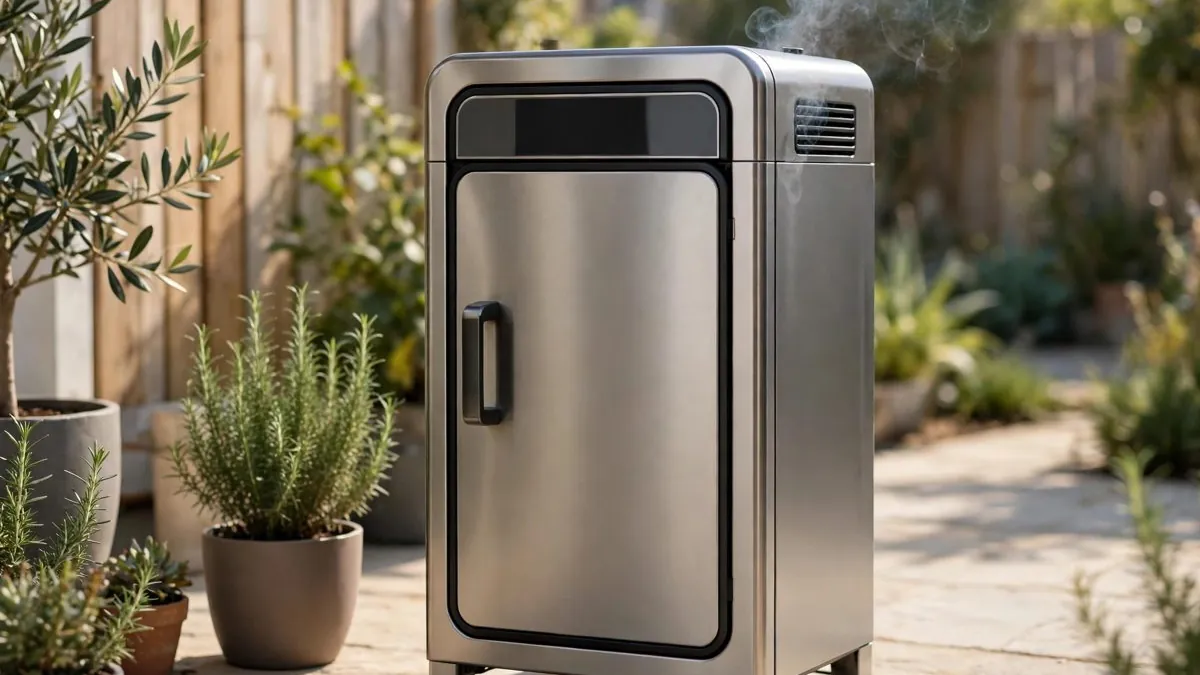
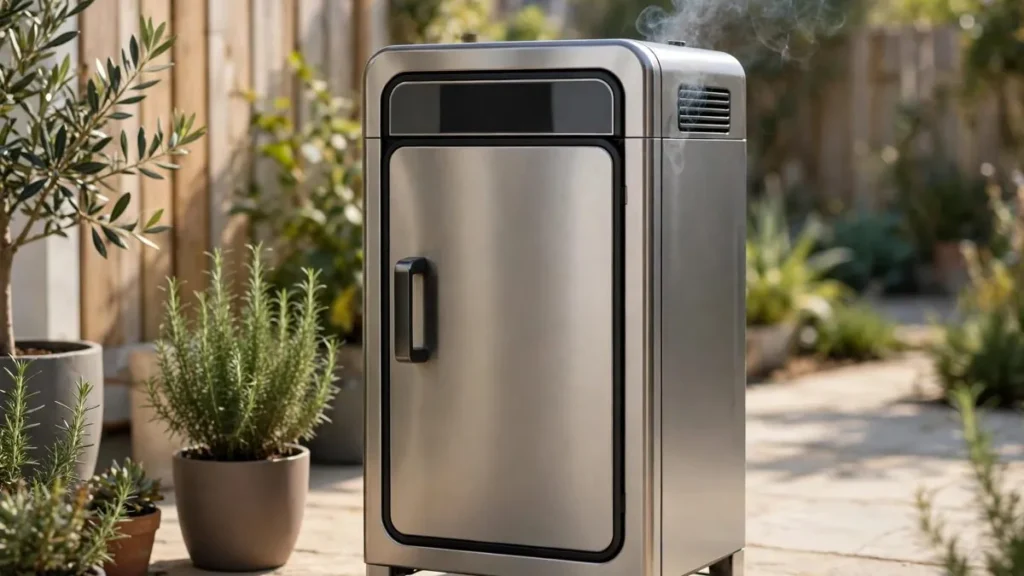
An electric smoker is a cooking appliance that turns a handful of wood chips and a power socket into slow, smoky food, and it is the easiest way for a home cook to try smoking without managing a live fire. The central question is simple: does it give you real smoked flavour with far less fuss than charcoal or wood? The honest answer is yes, provided you choose the right size and learn the basic rhythm of a cook.
That gentler character is exactly why so many people start here. You set a temperature, add wood chips, load the racks, and let the heating element do the work. There is no fire to tend and no flare-up to chase. This guide explains how electric smokers work, the types you will meet, how to choose one, how to use it well, and how to look after it.
Key takeaways:
- An electric smoker uses a heating element and wood chips to cook food slowly at low, steady heat.
- Vertical cabinet models suit most beginners; digital controls add precision, while analogue models cost less.
- Choose by cooking space, temperature range and build quality, not by extra features.
- Good results come from steady temperature, dry food surfaces, and patience rather than opening the door.
- Clean the racks and drip tray after every cook, and store the smoker dry and covered.
What is an electric smoker and how does it work?
An electric smoker is an insulated cabinet, usually upright, with a heating element at the bottom, racks for food in the middle, and a small tray where wood chips smoulder. When you switch it on, the element heats the cabinet to the temperature you set, the wood chips begin to smoke, and that warm smoke circulates around the food for hours.
The thermostat is the heart of the whole idea. On a basic model you turn a dial and the element cycles on and off to hold the temperature. On a digital model you set an exact temperature on a panel and the smoker manages the rest.
Smoke comes from wood chips, small chunks, or pellets, depending on the design. The chips sit in a tray close to the element, where they heat until they smoulder rather than burn. Different woods give different flavours: fruit woods tend to be mild and slightly sweet, while stronger woods give a heavier smoke.
The main types of electric smoker
Most electric smokers fall into a few broad groups, and the differences matter more than the name on the door. The upright cabinet is the classic shape: a tall box with several racks, a door that seals shut, and the heating element and chip tray at the bottom.
Analogue and digital models are the same cabinet with different controls. An analogue smoker has a simple dial and a temperature gauge, and it asks a little more of you. A digital smoker has a panel and a thermostat that holds the temperature for you, often with a timer and a probe. The food does not care which one you use. The choice is really about how much attention you want to give the cook.
| Type | How it works | Best for | Watch out for |
|---|---|---|---|
| Vertical cabinet | Upright insulated box with racks and a chip tray | Family cooks and larger joints | Check the rack spacing fits tall items |
| Analogue cabinet | Dial control with a temperature gauge | Simple, budget-friendly smoking | You adjust the heat by hand |
| Digital cabinet | Panel control with thermostat, timer and probe | Set-and-forget long cooks | More parts that can fail over time |
| Smoker-grill combination | Smoking cabinet plus a grilling surface | One appliance for two styles | Less smoking space than a dedicated cabinet |
| Tabletop smoker | Compact unit for small portions | Fish, small joints and small spaces | Too small for cooking for a crowd |
How to choose an electric smoker
Start with capacity, because it is the hardest thing to change later. Count the racks and look at the space between them, not just the headline size. A cabinet with four racks sounds generous until you try to fit a tall joint. Think about what you will actually cook: a whole chicken, a large cut for a gathering, or several smaller items at once.
Next, look at the temperature range. A good electric smoker should hold low temperatures steadily for slow cooking and reach high enough to finish food properly. The exact numbers matter less than stability: a smoker that drifts up and down gives uneven results, while one that holds steady cooks evenly. A separate thermometer removes all doubt.
Build quality is where cheap models show their limits. Look for a door that seals well, hinges that feel solid, and racks that are sturdy and easy to remove. Thin metal loses heat quickly and struggles in cold or windy weather, so a well-insulated cabinet is worth having if you plan to smoke through the cooler months.
How to use an electric smoker
Begin by seasoning a new smoker before you cook in it. That means running it empty, or with only wood chips, at a moderate temperature for a couple of hours. This burns off any manufacturing residues and coats the inside with a thin layer of smoke. Check the manual that came with your model for the exact routine it recommends.
On cooking day, start with cold, dry food. Pat the surface dry with kitchen paper, because smoke sticks better to a dry surface than a wet one, and a dry surface browns better too. Season simply at first: salt and a basic rub are enough while you learn how your smoker behaves.
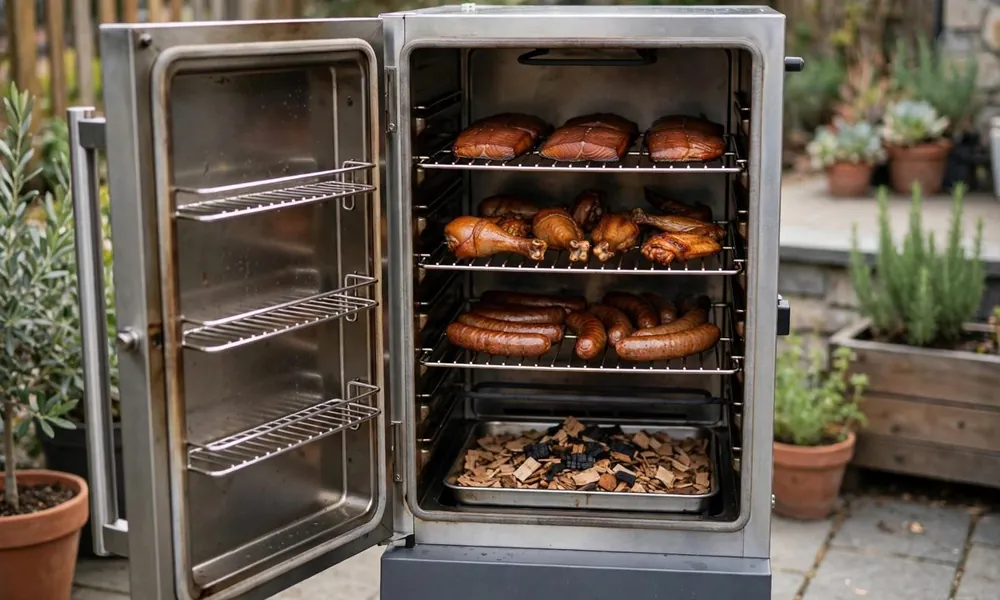
Load the chip tray with a modest amount of wood chips and set the temperature. Put the food on the racks with space around each piece so the smoke and heat can circulate, and close the door. Then leave it alone. Every time you open the door, heat and smoke escape, and the smoker has to work to recover.
Top up the chips when the smoke thins, rather than on a fixed schedule. The timing depends on your smoker, the wood and the weather, but a thin blue wisp is what you are looking for, not a thick white cloud. Heavy white smoke can taste bitter, so if the cabinet is billowing, you have added too much wood.
Judge doneness by temperature, not by time. A recipe’s timings are a guide, and the real test is the internal temperature of the food measured with a reliable thermometer. When the food reaches the temperature you are aiming for, take it out and let it rest before cutting. Our guide to how to roast a chicken makes the same point about resting, and it applies just as much to smoked poultry.
What foods work best in an electric smoker
Electric smokers shine with foods that benefit from long, gentle heat. Large cuts that need hours to become tender are the natural starting point, because the steady temperature does the work while the smoke adds flavour. Poultry takes on smoke beautifully and cooks in a manageable time, which makes it a good first cook for a beginner. Fish smokes quickly and needs a light hand with the wood.
Sausages and cured meats are also natural candidates, and a smoked sausage is one of the simplest pleasures an electric smoker produces. A good bratwurst takes on smoke well and cooks evenly on a rack. Vegetables are the surprise success: aubergines, peppers, mushrooms and whole garlic heads pick up smoke quickly and add a deep flavour to other dishes. Cheese can be smoked too, but only at very low temperatures, so save that experiment for a cool day.
Care, cleaning and storage
Cleaning is the part nobody enjoys, but it is what keeps an electric smoker working well. After each cook, once the smoker has cooled, remove the racks and the drip tray and wash them in hot, soapy water. Grease left on the racks turns rancid and taints the next cook, so do not leave it. The interior walls do not need scrubbing back to bare metal; a wipe to remove loose grease and ash is enough.
Your first smoke: a simple checklist
Your first cook should be simple, forgiving and enjoyable, so plan it rather than improvising. The checklist below covers the essentials, and once you have run through it once, the whole routine will feel natural.
- Season the smoker first, following the manual, and let it cool before you load food.
- Choose a forgiving first cook, such as a whole chicken or a small joint.
- Pat the food dry, season simply, and leave space around each piece on the racks.
- Fill the water pan if you are using one, and load a modest amount of wood chips.
- Set the temperature, close the door, and resist opening it to check.
- Top up chips only when the smoke thins, and keep the smoke light rather than heavy.
- Check doneness with a thermometer, rest the food before cutting, and clean the racks.
Frequently asked questions
Do electric smokers produce real smoke flavour?
Yes, they do. The flavour is usually lighter and cleaner than the flavour from a charcoal or wood-burning smoker, because the wood smoulders rather than burns, but it is unmistakably smoke. For a stronger flavour, use a more assertive wood and give the food more time.
Can I use an electric smoker indoors?
No. Electric smokers produce smoke and carbon monoxide, and they must be used outdoors in a well-ventilated space. Never use one in a garage, a shed, or under a low cover where smoke can build up.
What wood chips should a beginner start with?
A mild fruit wood is a good starting point, because it is forgiving and suits most foods. Avoid wood from treated timber, painted wood, or softwoods such as pine, which can produce unpleasant and unsafe smoke. Use only wood sold for smoking food.
Why does my smoker lose temperature on a cold day?
Cold wind strips heat from the cabinet, and a thin-walled smoker will struggle to hold its temperature. Sheltering the smoker from the wind, choosing a calm day, and allowing extra time all help. A well-insulated cabinet handles cold weather far better.
How often should I clean my electric smoker?
Clean the racks, drip tray and chip tray after every cook, and wipe the interior when it needs it. A deep clean once or twice a year is enough for most people, provided the routine cleaning is done properly.
Final thoughts
An electric smoker is a practical way into a style of cooking that once demanded a fire, a pit and a whole afternoon of attention. It will not replace a traditional smoker for everyone, but it makes smoked food part of an ordinary weekend. Choose a solid cabinet, learn its rhythm over a few cooks, and keep it clean.
The best next step is a simple one: pick a forgiving first cook, gather your wood chips and a reliable thermometer, and set aside an unhurried afternoon. A well-chosen cookware set will handle the sides while the smoker handles the main event, and the meal that comes off the racks will tell you whether smoking is for you.
Safety note: Always use an electric smoker outdoors on a stable, level surface, away from anything flammable. The outside of the cabinet gets hot during a cook, so keep children and pets away and use heatproof gloves when handling racks or trays. Follow food safety basics: keep raw and cooked food apart, cook food to a safe internal temperature, and refrigerate leftovers promptly.