
A gold bracelet is the easiest piece of jewellery to wear every day, and the hardest to choose well. It sits on the wrist all day, catches on sleeves and gets knocked against desks. A good one becomes part of your hand. A bad one scratches, tarnishes or pinches within a month, and because gold is expensive, a bad choice is an expensive mistake.
That is why this guide is organised by how a bracelet is actually made, not just by brand name. Solid gold, gold-filled, vermeil and plated are four very different things, and the price gap between them is the gap between a piece that lasts decades and one that lasts a season. Karat matters too: 14k is harder and more practical for daily wear than soft 24k, while 18k sits in the middle, richer in colour and still durable.
Below are nine gold bracelets worth considering in 2027, from an iconic screw-lock bangle to affordable solid-gold options for a first piece, each described by what it is good at, what to watch for, and who it suits best.
Key takeaways
- Solid gold lasts the longest, gold-filled is a strong middle ground, and gold-plated pieces wear through fastest, so check how a bracelet is made before you check its price.
- 14k gold is the most practical choice for daily wear, 18k is richer in colour, and 24k is too soft for a bracelet you plan to wear every day.
- Fit matters as much as metal: a bracelet should slide over the hand and sit loosely at the wrist, not spin freely or pinch when you bend your hand.
- Buy from a maker who states the karat, the weight and the construction clearly, and keep the receipt and any certificate for insurance and resale.
- No gold bracelet is scratch-proof or tarnish-proof, and a piece that promises never to fade, never to scratch, or to hold its value like an investment is overselling itself.
What gold actually means for a bracelet
Gold is measured in karats, and the number tells you how much pure gold is in the alloy. Pure gold is 24 karat, but it is very soft, so it is almost never used on its own for a bracelet. Instead it is mixed with other metals, usually copper, silver, zinc or palladium, which make it harder and change its colour. Yellow gold gets its warmth from copper and silver, rose gold its pink tone from extra copper, and white gold is usually coated with rhodium for a bright, cool finish.
The three karats you will see most often are 14k, 18k and 22k. Fourteen karat is about 58 percent pure gold, and it is the hardest and most scratch-resistant, which is why it is the usual choice for daily wear. Eighteen karat is 75 percent pure gold, with a deeper, richer colour, and it is the standard for most fine jewellery in Europe. Twenty-two karat is 92 percent pure gold, with a deep yellow colour many people love, but it is soft enough to dent and scratch easily, so it suits occasional wear.
Construction matters just as much as karat. A solid gold bracelet is gold all the way through, and it can be polished, repaired and resized for decades. A gold-filled bracelet has a thick layer of gold bonded to a base metal core, far more durable than plating. Gold vermeil is a thick layer of gold over sterling silver, a reasonable middle ground on a budget. Gold plating is a very thin layer over a base metal, and it wears through with regular use, often within months on a bracelet that rubs against skin and sleeves all day.
How we chose these bracelets and what to look for
Look first at the metal and the making. A seller who states the karat, the construction and the weight is one you can trust, and a seller who only says “gold” without any of those details is one to avoid. Weight is a useful check: a solid gold bangle should feel substantial, not feather-light, and a very light bracelet at a low price is usually hollow or plated.
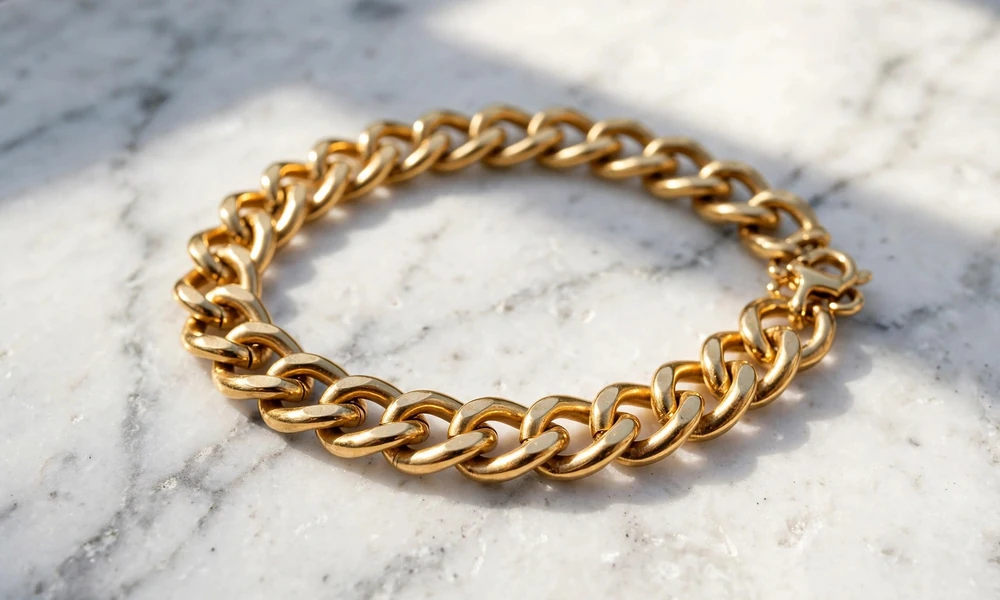
Look next at the clasp and the fit. A bracelet is opened and closed every day, so the clasp is the part most likely to fail. A screw-lock, a box clasp with a safety catch, or a sturdy toggle lasts far longer than a thin spring ring on a heavy chain. Fit is just as important: measure your wrist at its widest point, add about one to two centimetres for comfort, and check whether the bracelet is meant to sit snugly or slide loosely. A bangle that is too tight will pinch and dent, while a chain that is too loose will catch on everything. Our guide to gold jewellery for everyday wear explains how to build a small collection around pieces that actually get worn, rather than pieces that sit in a box.
Finally, look at how the bracelet will age. Gold softens and scratches with wear, and that is normal. A polished finish shows fine scratches sooner than a brushed or hammered finish, and a high-polish bangle needs a professional polish every year or two. None of that is a flaw. It is the nature of gold, and a bracelet that is cared for, cleaned gently and stored on its own will look good for decades.
The 9 best gold bracelets of 2027
Cartier Love Bracelet in Yellow Gold
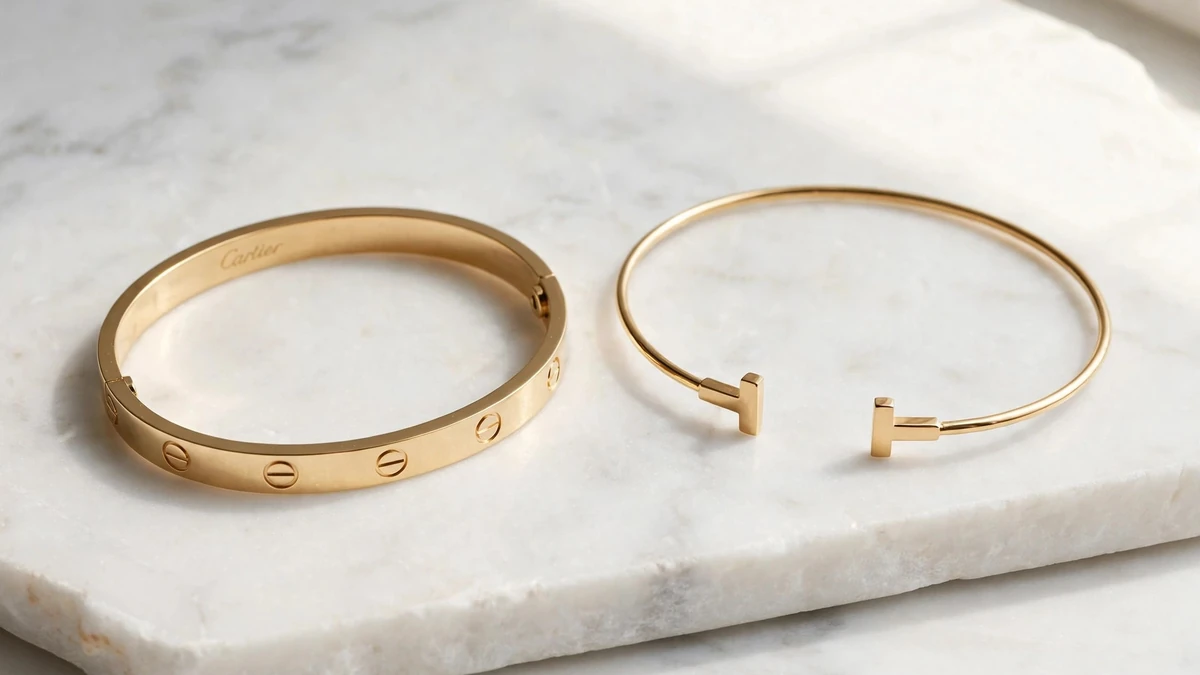
What we like: The most recognised gold bracelet in the world, in solid 18k yellow gold, with a screw-lock closure and a clean shape that sits flat on the wrist.
What to consider: Premium price, and the screwdriver closure means it is not a piece you take on and off daily. Stone: None, plain 18k yellow gold. Setting: Solid 18k gold bangle with screw-lock closure. Best for: A signature, wear-it-forever piece. Price range: Luxury, from around $7,000.
For a single, permanent piece of gold jewellery, it remains a strong first choice.
Cartier Juste un Clou Bracelet in Yellow Gold
What we like: A bold nail-shaped bangle in solid 18k yellow gold, with a sculptural shape that reads modern and confident, and a satisfying weight on the wrist.
What to consider: The shape is distinctive and not for everyone, and the price is firmly luxury. Stone: None, plain 18k yellow gold. Setting: Solid 18k gold bangle, nail form. Best for: A statement piece worn alone. Price range: Luxury, from around $7,500.
A good alternative to the Love bracelet if you want something with more edge.
Tiffany & Co. Tiffany T Wire Bracelet in Yellow Gold
What we like: A clean, graphic T-shaped wire bracelet in solid 18k yellow gold, lightweight for its size, with a secure hinged closure.
What to consider: The open wire design can catch on fine knits, and it is a premium price for a relatively slim bracelet. Stone: None, plain 18k yellow gold. Setting: Solid 18k gold wire bangle, hinged. Best for: Everyday polish with a modern edge. Price range: Luxury, from around $3,000.
A good choice if you want a recognisable designer piece that is lighter than a heavy bangle.
David Yurman Cable Classic Bracelet in Gold
What we like: The signature twisted cable design in 14k yellow gold, comfortable to wear, with a clean profile and a sturdy clasp.
What to consider: The cable texture can trap lotion and soap, so it needs regular cleaning. Stone: None, plain 14k yellow gold. Setting: Solid 14k gold cable bracelet. Best for: A classic, wearable gold bracelet. Price range: Luxury, from around $2,500.
A sensible design for people who want gold that feels substantial without feeling heavy.
Van Cleef & Arpels Perlée Gold Bracelet
What we like: A delicate row of polished gold beads in solid 18k yellow gold, light on the wrist, that suits both everyday and evening wear.
What to consider: Delicate, so it is best kept for lighter days rather than rough use, and it is premium-priced for its weight. Stone: None, plain 18k yellow gold beads. Setting: Solid 18k gold beaded bracelet. Best for: A light, elegant bracelet. Price range: Luxury, from around $4,000.
One of the prettiest gold bracelets available, and it stacks beautifully with a slim watch.
Monica Vinader Linear Chain Bracelet in Gold Vermeil
What we like: A clean, modern chain in 18k gold vermeil over recycled sterling silver, with a strong clasp and a sensible price for a first gold bracelet.
What to consider: Vermeil is not solid gold, so the gold layer will wear over years of daily use, and it should be kept dry. Stone: None, 18k gold vermeil over sterling silver. Setting: Gold vermeil chain with adjustable length. Best for: A first gold bracelet on a budget. Price range: Mid-range, from around $150.
An easy, low-risk place to start for a first gold bracelet.
Mejuri Boyfriend Bold Bracelet in 14k Gold
What we like: A solid 14k yellow gold bracelet with a bold, modern link, made to be worn daily, with a secure clasp and a clean, unbranded look.
What to consider: The bold link is heavier than a fine chain, so check the fit before committing. Stone: None, solid 14k yellow gold. Setting: Solid 14k gold link bracelet. Best for: A solid-gold everyday bracelet. Price range: Mid to luxury, from around $600.
The best value solid-gold option on this list for most people.
Bulgari B.zero1 Bracelet in Yellow Gold
What we like: A bold, architectural spiral bracelet in solid 18k yellow gold, with a distinctive shape and a satisfying weight.
What to consider: The shape is very distinctive, so it suits confident styling, and it is firmly luxury-priced. Stone: None, plain 18k yellow gold. Setting: Solid 18k gold spiral bangle. Best for: A bold statement piece. Price range: Luxury, from around $5,000.
A strong choice if you want a gold bracelet that is instantly recognisable, worn alone.
Quince 14k Gold Herringbone Bracelet
What we like: A solid 14k yellow gold herringbone chain at a remarkably fair price, with a fluid drape, a smooth finish and a secure clasp.
What to consider: Herringbone chains can kink if bent sharply, so handle it gently and store it flat. Stone: None, solid 14k yellow gold. Setting: Solid 14k gold herringbone chain. Best for: Affordable solid gold. Price range: Mid-range, from around $400.
A sensible choice for a first solid-gold bracelet, at a price that leaves room for a second piece later.
Which gold bracelet is right for you
Start with how you will wear it. If you want a bracelet you never take off, choose solid 14k gold, a secure clasp, and a shape without sharp edges or open wires. A bangle or a sturdy link bracelet copes with daily life far better than a delicate chain, and a brushed finish hides the fine scratches daily wear brings.
If you want a bracelet for evenings and special occasions, 18k gold is the richer choice, and a more delicate design, such as a beaded bracelet or a slim wire bangle, will look right with formal clothes. These pieces do not need to survive a working day, so you can choose for beauty rather than durability.
Budget changes the calculation too. A solid-gold bracelet is a long-term purchase, worth saving for if you plan to wear it for years. If your budget is smaller, gold vermeil or gold-filled are honest alternatives, as long as you know what you are buying. What matters is that the seller is clear about the construction, because a bracelet sold as “gold” without a karat or a construction is almost always plated, whatever the price. A diamond buying guide is a useful companion here, because the same questions about certification and honest pricing apply to gold as well as to stones.
The caveats that matter
Gold is durable, but it is not indestructible. It scratches, it dents, and it softens with wear, and a bracelet worn every day will show that within a year. That is normal, and a professional polish restores most of the shine, but a bracelet advertised as scratch-proof or maintenance-free is overselling itself. Hollow bangles are the most vulnerable, because a sharp knock can dent them in a way that is hard to repair.
| Detail | What is known |
|---|---|
| Best karat for daily wear | 14k gold, the hardest and most scratch-resistant of the common karats |
| Best karat for colour | 18k gold, richer and deeper in tone, still durable for most wear |
| Most durable construction | Solid gold, which can be polished, repaired and resized for decades |
| What to avoid for daily wear | Thin gold plating, which wears through within months on a bracelet |
| How it should fit | Slides over the hand and sits loosely at the wrist, without spinning freely |
| Cleaning | Warm water, mild soap and a soft cloth; avoid harsh chemicals and ultrasonic cleaners for delicate pieces |
| Storage | On its own, in a soft pouch or lined box, away from other jewellery that can scratch it |
| What it does not do | It does not stay scratch-free, hold its value like an investment, or suit every skin tone equally |
Allergies are worth checking too. Most people tolerate gold well, but white gold alloyed with nickel can irritate sensitive skin, and some plated bracelets use a nickel base that can cause a rash. If your skin reacts to costume jewellery, choose solid gold or gold vermeil over sterling silver, and ask the seller what the alloy contains.
Checklist: choosing a gold bracelet honestly
Use these checks before you buy, and again after two weeks of wear.
- Check the karat and construction: solid gold, gold-filled, vermeil or plated should all be stated clearly.
- Check the weight: a solid gold bracelet should feel substantial, not feather-light for its size.
- Check the clasp: open and close it several times, and make sure it clicks shut securely.
- Check the fit: it should slide over your hand and sit loosely at the wrist, not pinch or spin freely.
- Check the finish: a brushed or hammered finish hides daily scratches better than a high polish.
- Check the paperwork: keep the receipt and any certificate, and ask about the return policy before you buy.
Frequently asked questions
Is 14k or 18k gold better for a bracelet?
For daily wear, 14k is usually better, because it is harder and more scratch-resistant. For colour and richness, 18k is better, and it is still durable enough for most people. Choose 14k if you never take the bracelet off, and 18k if you want the deepest gold colour.
What is the difference between gold-filled and gold-plated?
Gold-filled has a thick layer of gold bonded to a base metal, and it can last for years with care. Gold-plated has a very thin layer, and it usually wears through within months on a bracelet. Gold vermeil sits between the two, with a thick layer of gold over sterling silver.
How should a gold bracelet fit?
It should slide over your hand without forcing, and sit loosely at the wrist with about one to two centimetres of movement. A bangle that is too tight will pinch and dent, while a chain that is too loose will catch on sleeves and desks. The chunky bracelets trend shows how a looser, stacked fit is meant to look.
Can I wear a gold bracelet every day?
Yes, if it is solid 14k or 18k gold with a secure clasp. Take it off for heavy work, swimming in chlorinated water and cleaning with harsh chemicals, and wash it gently with warm water and mild soap every few weeks.
Does a gold bracelet tarnish?
Pure gold does not tarnish, but the alloys in 14k and 18k gold can dull slightly over time, especially with lotions, perfumes and sweat. A gentle clean restores the shine, and a professional polish every year or two keeps it looking new.
Is a gold bracelet a good investment?
Buy a gold bracelet because you love it and will wear it, not as an investment. Gold holds some value, but the retail price includes design, making and brand costs you will not recover on resale. A well-made solid-gold bracelet keeps more of its value than a plated piece, but it is jewellery first.
The bottom line
The best gold bracelet in 2027 is not the most expensive or the most famous. It is the one that suits how you actually live, that you will wear every day, and that is honestly made from the metal the seller claims. For daily wear, a solid 14k gold bracelet with a secure clasp is the smartest choice.
Choose one bracelet, check the karat and the construction, try the fit, and buy from a seller who states all three clearly. That is the honest way to get a gold bracelet that earns its place on your wrist.