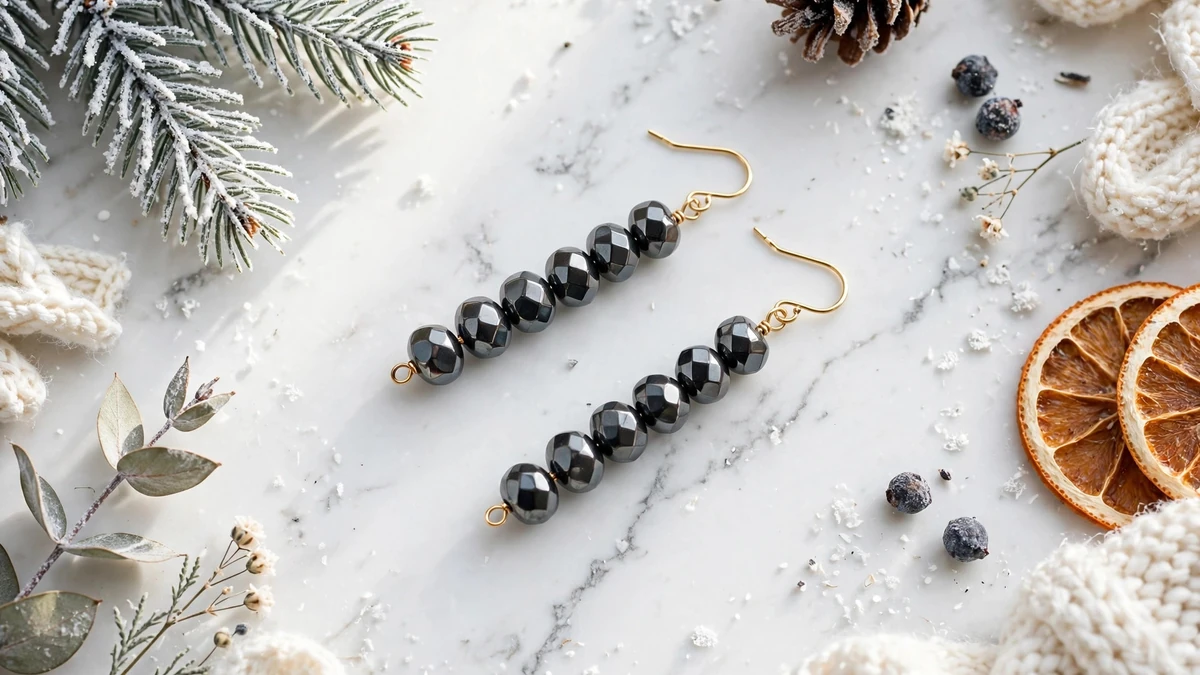

Hematite has a quiet confidence that suits winter perfectly. It is dark, smooth and metallic, with a soft silver-grey shine that catches the light without glittering, and it sits beautifully against heavy knitwear, dark wool coats and the muted palette of the cold months. Unlike brighter stones, it does not compete with a scarf or a high collar. It simply adds a polished, considered finish to an outfit that is already doing the talking.
The problem is that hematite is often misunderstood. Much of what is sold as hematite is actually hematine, a man-made ceramic imitation, and even genuine hematite is a soft stone that needs more care than its tough, metallic look suggests. It can chip, rust if it stays wet, and scratch if it is stored loose in a jewellery box. Choosing well means knowing what to look for.
Below are nine hematite earrings worth considering for winter 2027, from classic studs to longer drops. Each one is described by what it is good at, what to watch for, and who it suits best, so you can choose a pair that will look good in January and still look good next winter.
Key takeaways
- Hematite is a naturally metallic grey-black stone with a soft shine, and it pairs well with winter knitwear, wool and dark coats.
- Genuine hematite is iron oxide, while hematine is a man-made imitation that looks similar but is not the same stone, so check the description before you buy.
- Hematite is relatively soft at 5.5 to 6.5 on the Mohs scale, so choose protective settings and store earrings separately to avoid chips and scratches.
- Keep hematite dry, because prolonged moisture can cause rust, and never put it in an ultrasonic or steam cleaner.
- Hematite has no proven healing or grounding properties, and it is not an investment stone, so buy it for how it looks, not for what it promises.
What hematite actually is and why it suits winter
Hematite is an iron oxide mineral, and its name comes from the Greek word for blood, because the stone leaves a red streak when it is scratched on unglazed porcelain. Polished hematite looks nothing like that. It is a smooth, steel-grey to black stone with a metallic lustre, and it feels cool and surprisingly heavy for its size. That weight is one of the easiest ways to tell genuine hematite from lighter imitations, because hematine and black glass feel noticeably lighter in the hand.
Winter is hematite’s best season for a simple reason. In summer, bright stones and light metals do the work, but in winter the wardrobe turns dark, textured and layered. A hematite stud catches the light against a charcoal jumper or a black coat in a way that a bright stone cannot, and it does not clash with the silver-grey tones of a cold-weather outfit. It is also a good choice for people who find gold too warm or diamonds too formal for everyday wear.
There are two things to understand before you buy. First, hematite is softer than it looks. At 5.5 to 6.5 on the Mohs hardness scale, it can be scratched by harder stones and chipped by a sharp knock against a hard surface. Second, it is made of iron, so water is its enemy. A quick splash is not a disaster, but leaving hematite damp, wearing it in the shower, or storing it in a humid bathroom can cause rust spots over time.
How we chose these earrings and what to look for
Look first at the stone itself. Genuine hematite should feel cool and heavy, with a smooth, even polish and a consistent grey-black colour. If the description says hematine, magnetic hematite, or man-made hematite, it is not natural hematite, and the price should reflect that. Some sellers are honest about this, and hematine is a perfectly fine fashion choice at a low price, but it should not be sold at the price of a natural stone.
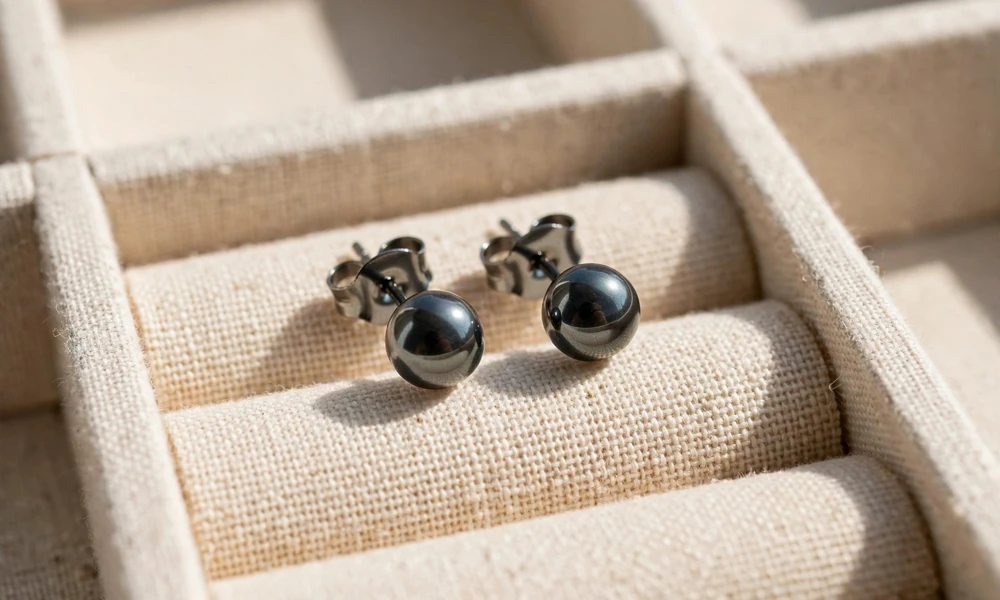
Look next at the setting. Because hematite is relatively soft, a protective bezel setting is a better choice than a high prong setting for everyday wear, and it also suits the stone’s smooth, modern look. Check that the metal is clearly described, whether it is sterling silver, gold vermeil, or solid gold, because the metal is what touches your skin, and it is also what determines whether the earrings will last. Our guide to the best diamond earrings of 2027 covers setting styles in more detail, and the same principles apply here, even though the stone is very different.
Finally, think about size and weight. Hematite is dense, so a large drop earring can feel heavier than it looks. Studs are the safest everyday choice, and small drops are a good middle ground. If you are buying for someone else, a classic stud in a bezel setting is the most reliable gift, because it suits almost everyone and needs the least care.
The 9 best hematite earrings for winter 2027
Tiffany & Co. Hematite Studs
What we like: A classic, understated stud in a polished bezel setting, with the brand’s reliable finishing and a smooth, even stone. What to consider: Premium price for a simple design, and the stone is small, so it is a subtle look rather than a statement. Stone: Natural hematite. Setting: Sterling silver bezel. Best for: Everyday wear and gifting. Price range: Premium.
This is the pair to buy if you want hematite done properly and simply. It is not flashy, and that is the point. It sits neatly on the ear, it goes with everything, and the bezel setting protects the stone from the knocks of daily life.
Cartier Hematite Studs
What we like: A refined, minimal stud with excellent polish and a secure, comfortable back. What to consider: The most expensive pair in this roundup, and the design is deliberately plain. Stone: Natural hematite. Setting: 18k gold bezel. Best for: A luxury everyday stud. Price range: Luxury.
Cartier’s version is for people who want the best-made version of a simple idea. The gold setting keeps the stone warm against the skin, and the polish is as good as it gets. It is a quiet luxury choice, not a showpiece.
David Yurman Hematite Studs
What we like: A slightly larger stone in the brand’s signature cable setting, with a comfortable fit and a distinctive look. What to consider: The cable detail makes the pair more noticeable, so it is less of a neutral than a plain stud. Stone: Natural hematite. Setting: Sterling silver with cable detail. Best for: A signature everyday pair. Price range: Premium.
David Yurman’s cable edge gives a plain hematite stud some personality without making it loud. It is a good choice if you like the brand’s look and want a pair you will reach for most days.
Mejuri Hematite Stud Earrings
What we like: A clean, modern stud at a fair price, with a secure bezel setting and a smooth, well-polished stone. What to consider: The stone is modest in size, and the design is simple, so it will not stand out in a crowd. Stone: Natural hematite. Setting: Gold vermeil bezel. Best for: A first pair of hematite earrings. Price range: Mid-range.
Mejuri is a sensible place to start with hematite. The price is honest, the setting protects the stone, and the stud is comfortable enough to wear all day. It is the pair most people should buy first.
Monica Vinader Hematite Studs
What we like: A neat, well-finished stud with a choice of metal finishes, and a comfortable, secure back. What to consider: The stone is small, so the effect is subtle, and the vermeil will need gentle care to keep its finish. Stone: Natural hematite. Setting: Gold vermeil or sterling silver bezel. Best for: Everyday wear and layering with other earrings. Price range: Mid-range.
This is a good option if you like to mix metals or wear more than one pair of earrings. The stud is small enough to sit alongside a hoop or a second stud, and the finish is clean and modern.
Missoma Hematite Stud Earrings
What we like: A contemporary stud with a smooth polish and a relaxed, wearable design. What to consider: The vermeil finish needs care, and the stone is not large, so it reads as an everyday piece. Stone: Natural hematite. Setting: Gold vermeil bezel. Best for: A modern, everyday stud. Price range: Mid-range.
Missoma’s version suits people who want hematite without a formal feel. It is easy to wear with knitwear and denim, and it looks just as good with a coat as it does with a simple jumper.
Maria Black Hematite Studs
What we like: A bold, architectural stud with a strong, modern shape and a confident finish. What to consider: The design is more statement than classic, so it will not suit everyone. Stone: Natural hematite. Setting: Sterling silver, sculptural. Best for: A modern, architectural look. Price range: Mid-range.
Maria Black is the choice if you want hematite with an edge. The shape is stronger and more sculptural than a plain stud, and it works well with the clean lines of winter tailoring.
Astrid & Miyu Hematite Drops
What we like: A longer drop that shows off the stone’s metallic shine, with a lightweight feel and an affordable price. What to consider: Drops are more exposed to knocks than studs, so they need a little more care, and the stone is smaller than it looks in photos. Stone: Natural hematite. Setting: Gold vermeil drop. Best for: Evening wear and special occasions. Price range: Affordable to mid-range.
These drops are the best option in this roundup for an evening out. The length lets the stone catch the light as you move, and the price makes them an easy addition to a winter wardrobe.
Thomas Sabo Hematite Drops
What we like: A longer, more dramatic drop with a smooth polish and a secure hook, at a reasonable price. What to consider: The drop is the heaviest pair here, so try the weight before a long evening, and the hook needs checking before each wear. Stone: Natural hematite. Setting: Sterling silver drop. Best for: A statement winter earring. Price range: Mid-range.
Thomas Sabo’s drops are for people who want hematite to be noticed. They are longer and bolder than the studs in this guide, and they look best with hair worn up and a simple neckline.
Which hematite earrings are right for you
If you want one pair to wear every day, choose a stud in a bezel setting. It protects the stone, it is comfortable, and it goes with everything from a work outfit to a weekend coat. The Mejuri and Monica Vinader studs are the most sensible starting points, because they are well made, fairly priced, and easy to wear.
If you want something for evenings, choose a drop. Drops show off hematite’s metallic shine far better than studs, because the stone moves and catches the light, but they are also more exposed to knocks and feel heavier. The Astrid & Miyu drops are the lightest option, while the Thomas Sabo drops make the strongest statement. A good rule for everyday gold is worth remembering here too. Our guide to the best gold jewellery for everyday wear explains how to match metal tones to your wardrobe, and the same thinking applies to hematite, because the stone’s grey-black colour sits between silver and gold and works with both.
If you are buying a gift, a classic stud is the safest choice. It suits almost every ear, it needs the least care, and it does not depend on the wearer’s taste in statement jewellery. Ask about the stone before you buy, and keep the receipt, because a reputable seller should be able to tell you whether the stone is natural hematite or hematine, and that difference matters for the price.
The caveats that matter
Hematite is a beautiful stone, but it is not a hard-wearing one, and the two problems to watch for are chips and rust. A sharp knock against a table or a doorframe can chip a polished edge, and prolonged dampness can cause rust spots on the surface. Neither problem means the stone is poor quality. They are simply what hematite does, and they are both avoidable with a little care.
| Detail | What is known |
|---|---|
| What it is | Iron oxide, a naturally metallic grey-black stone |
| Hardness | 5.5 to 6.5 on the Mohs scale, softer than it looks |
| Best setting | A protective bezel, which shields the stone from knocks |
| Water | Keep it dry, because prolonged moisture can cause rust |
| Cleaning | A soft, dry cloth only, never ultrasonic or steam cleaning |
| Storage | Separately in a soft pouch, away from harder stones |
| Imitations | Hematine is man-made and lighter, black glass is lighter still |
| What it does not do | No proven healing or grounding properties, and not an investment stone |
Hematite is sometimes sold with claims about grounding, protection, or healing. There is no reliable evidence for any of these, and they should not influence what you pay. Buy hematite because you like how it looks, and judge it on the stone, the setting, and the finish, not on a promise.
Checklist: choosing hematite earrings honestly
Use these checks before you buy, and again when the earrings arrive.
- Check the stone: ask whether it is natural hematite or hematine, and expect the price to match the answer.
- Check the weight: genuine hematite feels cool and heavy for its size, while imitations feel noticeably lighter.
- Check the setting: a bezel protects the stone better than high prongs for everyday wear.
- Check the metal: make sure the metal is clearly described, and that it suits your skin if you are sensitive.
- Check the finish: the stone should be smooth and evenly polished, with no rough edges or dull patches.
- Check the care: keep hematite dry, store it separately in a soft pouch, and clean it only with a soft, dry cloth.
Frequently asked questions
Is hematite a real stone or a man-made one?
Natural hematite is a real mineral, an iron oxide that occurs in nature. Hematine, sometimes sold as magnetic hematite, is a man-made ceramic that imitates it. Both can look good, but they are not the same thing, and the price should reflect which one you are buying.
Can I wear hematite earrings every day?
Yes, if they are studs in a bezel setting. The setting protects the stone, and the size keeps the weight comfortable. Drops are better kept for evenings or special occasions, because they are more exposed to knocks.
Can hematite get wet?
A brief splash is not a disaster, but hematite should not be worn in the shower, in a pool, or in heavy rain, and it should be dried straight away if it does get wet. Prolonged moisture can cause rust spots on the surface.
How do I clean hematite earrings?
Use a soft, dry cloth, and nothing else. Never put hematite in an ultrasonic cleaner or a steam cleaner, and do not use chemical jewellery dips, because they can damage the polish and the setting.
Does hematite have healing properties?
There is no reliable evidence that hematite heals, grounds, or protects the wearer. It is a beautiful stone with a long history in jewellery, but its value is in how it looks, not in what it is claimed to do. A winter jewellery guide, such as our best diamond jewellery for winter, covers the same honest approach to stones that are often oversold.
Is hematite a good investment?
No. Hematite is widely available and inexpensive as a stone, so it does not hold or increase in value the way a fine diamond or a rare coloured gemstone can. Buy it because you like it, and spend your money on the quality of the setting and the finish, not on the stone itself.
The bottom line
The best hematite earrings for winter 2027 are the ones that respect what the stone is. A well-made stud in a bezel setting, with a genuine stone and a clear metal description, will look polished against winter knitwear and dark coats, and it will last if you keep it dry and store it separately.
Choose the stone honestly, check that it is natural hematite rather than hematine, and do not pay for promises the stone cannot keep. If you do that, a pair of hematite earrings is one of the easiest and most affordable ways to give a winter outfit a finished, considered look.