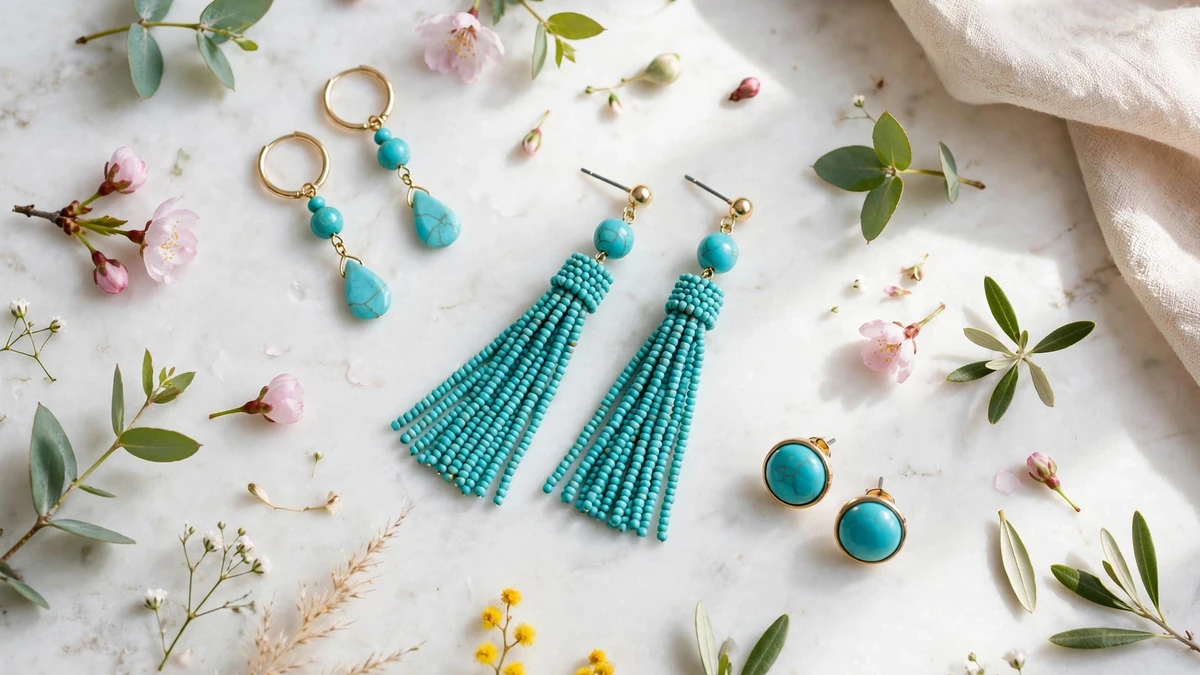

Turquoise earrings are the most cheerful jewellery choice for spring. The sky-blue and blue-green tones wake up a neutral wardrobe, pair beautifully with white, denim and linen, and give even the simplest outfit a sense of colour and intention. A small turquoise stud is an easy everyday piece, while a longer turquoise drop can carry a whole spring look on its own.
The difficulty is that turquoise is one of the most imitated stones in jewellery. Natural, untreated turquoise is rare and expensive, most turquoise on the market has been stabilised with resin, and dyed howlite, magnesite, plastic and glass are sold as turquoise every day. Turquoise is also soft and porous, which means it stains, fades and cracks if it is treated carelessly. Knowing what you are buying, and how to look after it, is what turns a good pair into a lasting one.
Below are nine turquoise earrings worth considering in 2027, from classic sky-blue studs to modern turquoise drops. Each one is described by what it does well, what to watch for, and who it suits best, so you can choose with the stone in mind, not just the colour.
Key takeaways
- Turquoise suits spring because sky-blue and blue-green tones pair easily with white, denim and linen.
- Turquoise is soft and porous, at Mohs 5 to 6, so it needs a protective bezel setting and gentle handling.
- Most turquoise sold today is stabilised with resin, which is standard practice, but the seller should disclose it.
- Keep turquoise away from perfume, hairspray, oils, acids and ultrasonic cleaners, and store each pair separately.
- Turquoise has no proven healing properties and is not an investment stone, and dyed howlite and magnesite are widely sold as turquoise.
What turquoise actually is
Turquoise is a hydrous phosphate of copper and aluminium, and its colour comes from copper, with iron adding green tones. The finest turquoise is a clear, even sky blue with little or no matrix, the dark veining that runs through many stones. Green-blue turquoise is more common and often less expensive, and a heavy black matrix usually lowers the price, although some people prefer the character it gives the stone.
In spring, turquoise’s brightness is its biggest advantage. The clear blue tones sit comfortably against the season’s light neutrals, white, pale denim and soft grey, while a greener turquoise adds warmth to cream and olive. Turquoise also works well with silver, which picks up the coolness in the stone, and with the soft, unstructured fabrics of spring, where a hard, glittering stone can feel out of place.
Turquoise is soft and porous. At Mohs 5 to 6 it scratches more easily than sapphire or diamond, and its porous surface absorbs oils, perfume, sweat and chemicals, which can change the colour over time. That is why turquoise should be the last thing you put on and the first thing you take off, and why it should never be cleaned in an ultrasonic cleaner or with soap and water.
Most turquoise sold today has been stabilised, which means it has been infused with resin to harden it and protect the colour. Stabilising is standard, honest practice when it is disclosed, and it makes the stone far more wearable. Natural, untreated turquoise is rare, much more expensive, and more fragile, so it is usually reserved for collectors and high-end pieces. A seller who claims their turquoise is natural should be able to explain why, and a seller who does not mention stabilising at all is worth questioning.
How we chose these earrings and what to look for
Look first at the colour and the surface. Good turquoise has a clear, saturated blue or blue-green tone, a smooth polish, and a colour that looks the same in daylight and indoors. A chalky, pale or greyish stone is usually low grade, and a perfectly uniform, almost plastic-looking blue is a warning sign for dyed howlite or resin. Dyed howlite often shows greyish veining and a lighter weight, and dyed magnesite has a similar giveaway.

Look next at the setting and the metal. Because turquoise is soft, a bezel setting that wraps the edge of the stone is the safest choice for everyday wear, and a low prong setting is the next best. A high, exposed cabochon is more vulnerable to knocks. The metal matters too: 14k or 18k gold holds up better than thin plating, and a secure post and butterfly or screw back keeps a stud safe. Our guide to the best diamond earrings of 2027 covers the same setting principles, and they apply even more strongly to a soft, porous stone like turquoise.
Finally, look at the seller. Buy from a jeweller who states whether the turquoise is natural or stabilised, names the origin or mine where possible, and offers a clear returns policy. Sleeping Beauty turquoise from Arizona, Kingman turquoise, and Persian turquoise are well-known sources, but the mine closed or the name alone does not guarantee quality. A seller who can answer questions about treatment and origin is the right place to buy turquoise, however attractive the price elsewhere.
The 9 best turquoise earrings for spring 2027
Tiffany & Co. Studs
What we like: Classic sky-blue turquoise cabochons in a clean bezel setting, with the polish and finishing you expect from Tiffany, and a colour that reads bright rather than green. What to consider: Premium price, and the turquoise is small, so the effect is understated rather than bold. Stone: Turquoise, bezel-set. Setting: 18k yellow gold. Best For: Everyday luxury and special occasions. Price Range: $1,400 to $2,400.
Cartier Studs
What we like: Refined turquoise studs with a smooth, even polish and a low profile that sits neatly on the ear, made to Cartier’s usual high standard. What to consider: High price for a small stone, and the clear blue tone suits cool skin tones best. Stone: Turquoise, bezel-set. Setting: 18k yellow gold. Best For: Spring weddings and polished daytime looks. Price Range: $1,100 to $1,900.
David Yurman Studs
What we like: Turquoise cabochons in Yurman’s signature cable setting, a distinctive design that makes a small stone feel intentional and modern. What to consider: The cable detail adds weight, and the turquoise needs the same gentle care as any soft stone. Stone: Turquoise, cable-set. Setting: Sterling silver with 18k gold accents. Best For: A signature everyday pair with character. Price Range: $550 to $900.
Mejuri Stud Earrings
What we like: Small turquoise studs in solid gold at a fair price, with a clean, minimal design that works for everyday wear and layering with other earrings. What to consider: The turquoise is modest in size, and the colour can vary slightly between pairs. Stone: Turquoise, bezel-set. Setting: 14k solid gold. Best For: Everyday wear and second piercings. Price Range: $140 to $240.
Monica Vinader Studs
What we like: Turquoise studs in gold vermeil with a clear blue tone, designed to be worn daily and priced for a first piece of fine turquoise jewellery. What to consider: Gold vermeil wears faster than solid gold, so these are better for occasional than constant wear. Stone: Turquoise, bezel-set. Setting: 18k gold vermeil on sterling silver. Best For: A first turquoise pair and spring gifting. Price Range: $110 to $190.
Missoma Stud Earrings
What we like: Turquoise studs with a bright, natural colour and a light, comfortable fit, in a simple design that suits both work and weekends. What to consider: Vermeil construction means the gold layer will thin with heavy wear, and the turquoise is small. Stone: Turquoise, bezel-set. Setting: 18k gold vermeil on sterling silver. Best For: Everyday spring outfits and layering. Price Range: $85 to $150.
Maria Black Studs
What we like: A modern, sculptural take on turquoise studs, with a clear blue stone and a contemporary setting that feels fresh rather than traditional. What to consider: The design is distinctive, so it suits a modern wardrobe better than a classic one. Stone: Turquoise, prong-set. Setting: Sterling silver with 18k gold plating. Best For: Modern, minimal spring styling. Price Range: $120 to $210.
Astrid & Miyu Drops
What we like: Turquoise drop earrings with a bright blue tone and a gentle swing, giving more presence than a stud without feeling heavy. What to consider: Drops expose the turquoise more, so they need more care, and the plating will wear with daily use. Stone: Turquoise, drop-set. Setting: 18k gold-plated sterling silver. Best For: Spring evenings and holiday outfits. Price Range: $75 to $130.
Thomas Sabo Drops
What we like: Turquoise drop earrings with a vivid blue tone and a playful, romantic design, at a price that makes turquoise accessible for the first time. What to consider: The turquoise is smaller and the setting is plated, so treat these as a seasonal piece rather than a lifetime buy. Stone: Turquoise, drop-set. Setting: 925 sterling silver with 18k gold plating. Best For: A first turquoise drop and spring occasions. Price Range: $85 to $140.
Which turquoise earrings are right for you
Start with the colour. A clear sky blue suits cool skin tones and looks striking against white, denim and navy. A greener, blue-green turquoise flatters warm skin tones and pairs well with cream, olive and earthy spring colours. A stone with matrix, the dark veining that runs through turquoise, has more character and a more bohemian feel, while a clean stone without matrix looks more polished and classic. Hold the stone near your face in daylight, not under shop lighting, and choose the tone that brightens your skin rather than competing with it.
Then think about how you will wear them. A bezel-set stud is the best everyday choice, because the setting protects the soft stone and the earring is light enough to forget. A drop is better for evenings and occasions, but it exposes more turquoise to knocks and to perfume, so it needs more care. If you wear earrings every day, solid gold is worth the extra cost, because vermeil and plating wear thin over time and leave the turquoise sitting in a tired setting. Our guide to gold jewellery for everyday wear explains the difference between solid gold, vermeil and plating in detail, and it matters more with a soft stone than with a hard one.
Metal choice matters too. Silver is the traditional partner for turquoise, and it suits the stone’s cool, southwestern character, while yellow gold warms a green-blue turquoise and gives it a more luxurious feel. White gold sits in between, and it is a good choice if you want turquoise to look polished rather than bohemian. Try the combination in daylight before you commit, because the metal changes how blue the stone appears.
Finally, be honest about the budget. Natural, untreated turquoise is rare and expensive, and a pair under $50 labelled turquoise is almost certainly dyed howlite or resin. That does not mean you must spend thousands: a small, well-made stud in stabilised turquoise from a reputable jeweller is a better buy than a large, flashy pair of dyed imitation stone. Buy the smallest genuine piece you can afford, from a seller who will stand behind it, rather than the largest imitation you can find.
The caveats that matter
Turquoise’s softness and porosity are its main weaknesses. It scratches easily, chips if dropped on a hard surface, and absorbs oils, perfume and chemicals, which can darken or green the colour over time. It is also sensitive to heat and to prolonged sunlight, which can dry it out and fade the blue. That is why turquoise should be the last thing you put on and the first thing you take off, and why it should never go in an ultrasonic cleaner, a steam cleaner, or a bowl of soapy water.
| Detail | What is known |
|---|---|
| Hardness | Mohs 5 to 6, softer than sapphire or diamond, so it scratches and chips easily |
| What it is | A hydrous phosphate of copper and aluminium, coloured blue by copper |
| Best setting | Bezel setting that protects the edge of the stone, or a low prong setting |
| Colour range | Clear sky blue to blue-green, with or without dark matrix veining |
| Common imitations | Dyed howlite, dyed magnesite, plastic, glass and reconstituted turquoise |
| Care | Wipe with a soft, dry cloth only, no water, soap, chemicals or ultrasonic cleaning |
| Treatment | Most turquoise sold today is stabilised with resin, which should be disclosed |
| What it does not do | It has no proven healing properties and is not an investment stone |
If you have very sensitive ears, check the post material as well as the stone. Nickel in a cheap post is a common cause of irritation, and it has nothing to do with the turquoise itself. Solid gold or surgical-grade steel posts are the safest choice, and a jeweller should be able to tell you what the post is made from.
Checklist: choosing turquoise earrings honestly
Use these checks before you buy, and again when the earrings arrive.
- Check the colour: a clear, saturated blue or blue-green tone, not chalky, pale or plastic-looking.
- Check the setting: a bezel or low prong setting that protects the soft stone, with a secure post and back.
- Check the treatment: ask whether the turquoise is natural or stabilised, and get the answer in writing.
- Check the metal: solid gold for daily wear, vermeil or plating only for occasional wear.
- Check for imitations: look for greyish veining, a glassy shine, or a price far below genuine turquoise.
- Check the care: wipe with a soft, dry cloth, keep away from perfume, oils and chemicals, and store each pair separately.
Frequently asked questions
Is turquoise real jewellery or just a fashion stone?
Turquoise is a genuine jewellery material with a long history in fine jewellery, from Persian turquoise to Native American silverwork. It is softer and more delicate than a gemstone, so it needs more care, but a well-made pair from a reputable jeweller is a proper piece of jewellery, not a costume accessory.
How can I tell real turquoise from dyed howlite?
Real turquoise has a clear, saturated colour, a smooth polish, and a weight that feels like stone. Dyed howlite often shows greyish or black veining, feels lighter, and has a flatter, more uniform colour. If you are unsure, ask the seller whether the turquoise is natural or stabilised, and buy from a jeweller with a clear returns policy.
Can I wear turquoise earrings every day?
Yes, if they are bezel-set and you treat them gently. Put them on after perfume, hairspray and makeup, take them off before swimming, showering or exercising, and store them separately from harder jewellery so they do not get scratched. A stud is a better daily choice than a drop.
Does turquoise change colour over time?
It can. Turquoise is porous, so it absorbs oils, perfume and sweat, which can darken the stone or shift it towards green. Stabilised turquoise is much more resistant to this, which is one reason stabilising is standard practice. Keep turquoise dry, wipe it with a soft cloth after wearing, and keep it away from chemicals.
What is stabilised turquoise, and is it real?
Stabilised turquoise is genuine turquoise that has been infused with resin to harden it and protect the colour. It is real turquoise, and stabilising is standard, honest practice when it is disclosed. Natural, untreated turquoise is rarer and more expensive, and it is also more fragile, so most everyday turquoise jewellery is stabilised.
How do I clean turquoise earrings?
Wipe them with a soft, dry cloth and store them separately. Do not use water, soap, jewellery cleaner, ultrasonic cleaners or steam cleaners, and do not soak turquoise. If the stone dulls, a jeweller can advise on re-polishing, but prevention is better than repair. Our guide to diamond necklaces covers the same gentle-cleaning principles for soft stones, and they apply to turquoise too.
The bottom line
The best turquoise earrings for spring 2027 are the ones that suit your skin tone, fit how you actually wear jewellery, and come from a seller who will tell you honestly whether the turquoise is natural or stabilised and where it came from. A small, bezel-set stud in solid gold is the safest first buy, and it will outlast a larger, cheaper pair of dyed imitation stone every time.
Choose the blue that brightens your face in daylight, protect the soft stone with a good setting and gentle care, and treat turquoise as the delicate, cheerful material it is. Done well, a pair of turquoise earrings is one of the easiest ways to make a spring outfit feel finished.