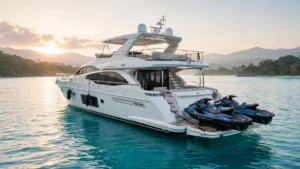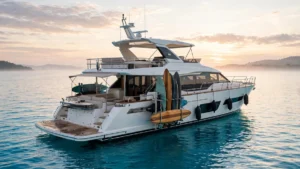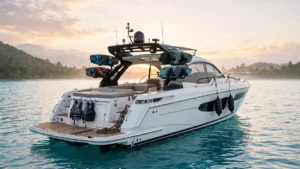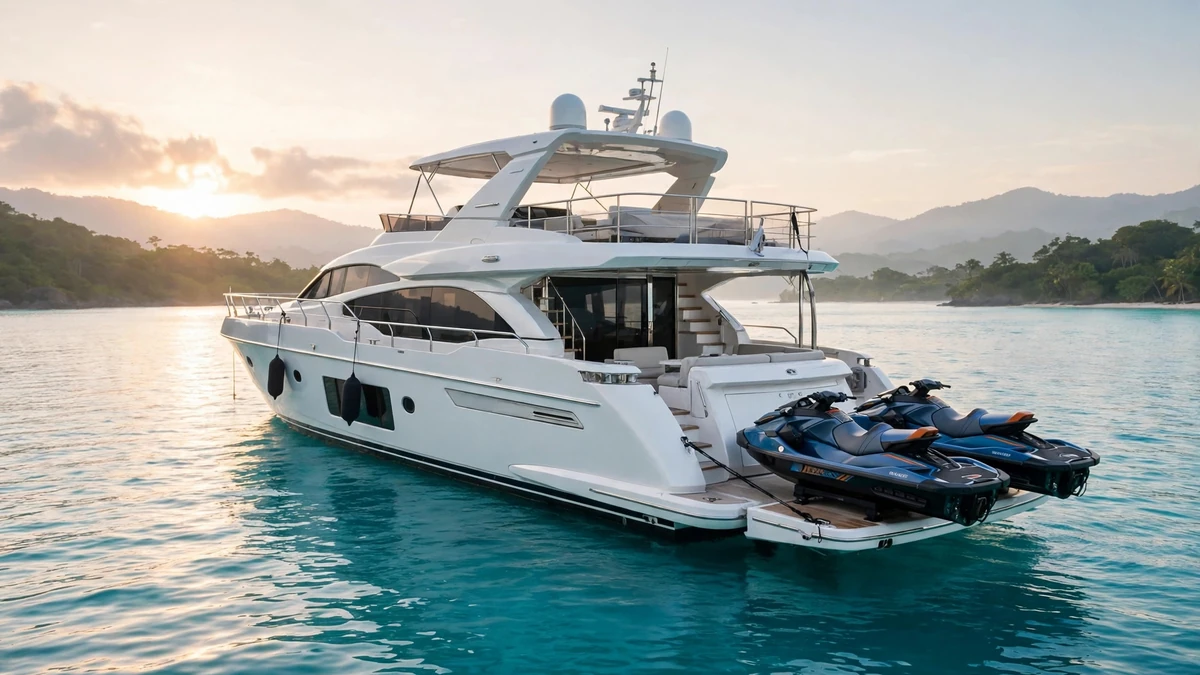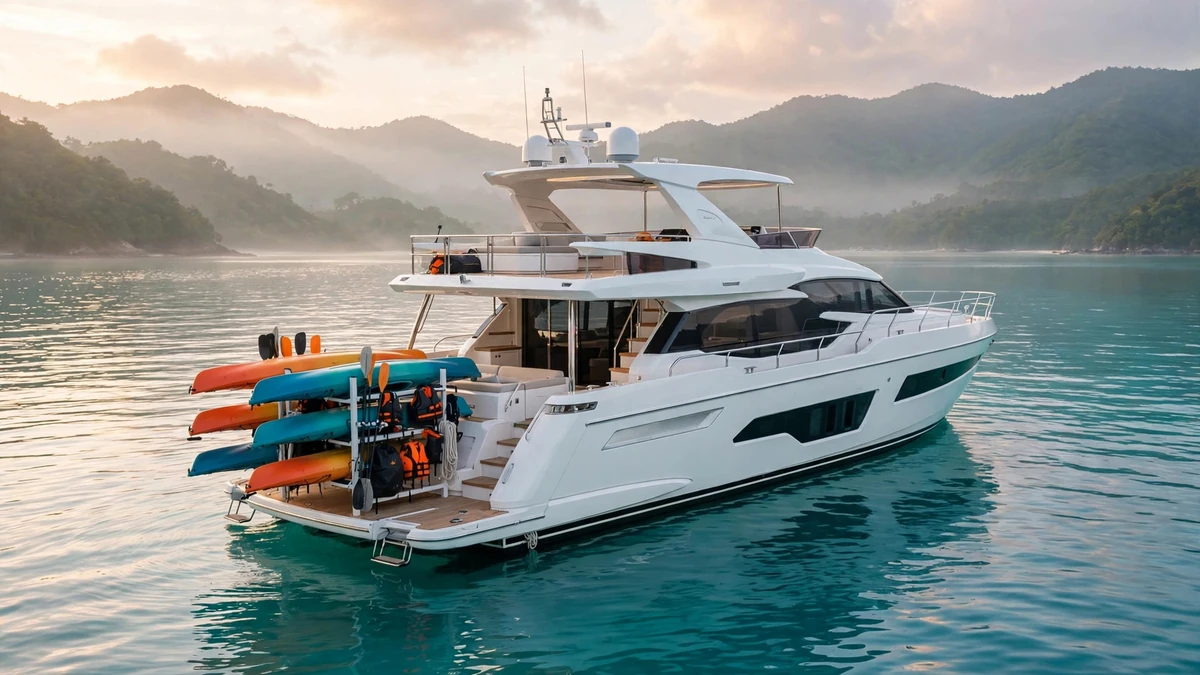

Kayaking from a yacht is a different kind of paddling. Instead of launching from a crowded beach or a car park, you step off a swim platform into a quiet bay, paddle a coastline that has no road to it, and come back to a cold drink and a hot shower. The yacht is your base, your hotel and your tender garage, and the kayak is the way you get close to cliffs, mangroves, sea caves and beaches that a hull of any size simply cannot reach.
The problem is that not every yacht is good at it. Some carry one battered single kayak and call it a watersports programme. Others carry a fleet of stable doubles, transparent-bottom boats, fishing kayaks and inflatable boards, plus a crew member who actually knows the local coastline and will plan a route around the wind, the tide and your energy. The difference between those two yachts is the difference between a token paddle and a trip you remember.
Below are nine yachts worth considering for a kayaking trip in 2027, from a 126-metre explorer with a full expedition tender fleet to a 37-metre sportfisher built for dawn paddles. Each one is described by what it is good at, what to watch for, and who it suits best, so you can choose with your paddling in mind, not just a brochure.
Key takeaways
- A good kayaking yacht carries several stable kayaks, a crew member who knows the coastline, and a swim platform or tender that makes launching easy.
- Double kayaks are steadier and better for beginners and couples, while single kayaks suit confident paddlers who want to cover more distance.
- Early morning is usually the best paddling window, before the wind picks up, and a good crew plans routes around tides and weather, not around a fixed schedule.
- Charter rates are weekly and indicative, and they usually exclude tax, fuel, food, drinks and tips, so ask for the full figure in writing before you book.
- No yacht can guarantee calm water, wildlife sightings or a particular route, and kayaking always depends on the weather on the day.
What a kayaking trip from a yacht actually means
A kayaking yacht trip is a charter where paddling is a real part of the day, not an afterthought. The yacht anchors in a sheltered bay, the crew launches kayaks from the swim platform or a tender, and you paddle for an hour or three, usually in the morning, before the wind rises. Routes follow the coast: a sea cave, a mangrove channel, a hidden beach, a reef edge. You return to the yacht for lunch, a swim and a change of scenery, and the yacht moves to a new anchorage for the afternoon or the next day.
What makes it work is the combination of a stable platform and local knowledge. A good crew knows which coves are sheltered from the prevailing wind, which channels are safe at low tide, and which beaches are worth the paddle. They also know when not to go: a rising wind, a strong current or a busy ferry lane is a reason to stay on board, not a challenge to push through. That judgement is what you are really chartering, as much as the yacht itself.
The kayaks themselves matter more than most people expect. A wide, stable double is forgiving for a first-timer and comfortable for a couple, while a narrow single is faster but tippier. Transparent-bottom kayaks are a treat over a reef, and inflatable kayaks are easy to launch but slower in a breeze. Ask what the yacht carries before you book, and match it to who is paddling: children, older guests and nervous swimmers need stability first, while confident paddlers can ask for singles and longer routes.
How we chose these yachts and what to look for
Look first at the kayak fleet. A yacht that is serious about kayaking carries at least four kayaks, including doubles, and stores them where they can be launched quickly. A single kayak on a yacht that also lists jet skis, seabobs and a slide is a sign that paddling is a footnote. Ask how many kayaks there are, what type they are, and whether the crew includes someone who paddles and plans routes, rather than simply handing you a paddle.
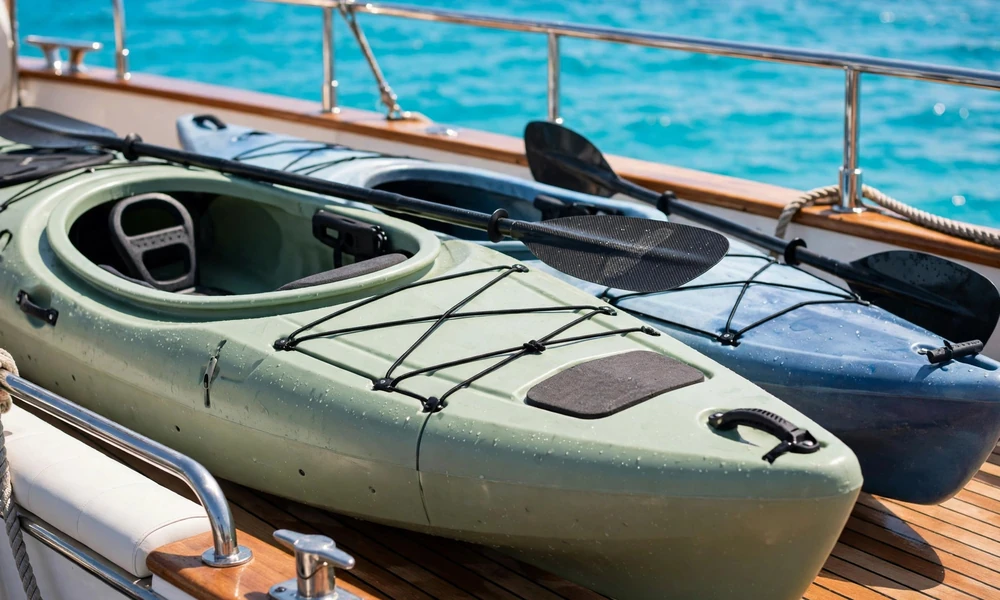
Look next at the platform and the tender. A wide swim platform at water level makes launching and landing easy, especially for children and older guests. A capable tender matters too, because it can drop you at the start of a one-way paddle and collect you at the other end, which turns a short out-and-back into a proper coastal journey. Our guide to chartering a luxury yacht explains the basics of how a charter is put together, and it is worth reading before you start comparing boats.
Finally, look at the cruising ground. Kayaking is best where the coast is interesting and the water is sheltered: the fjords of Norway, the islands of Croatia and Greece, the lagoons of the Seychelles, the mangroves of the Bahamas. A yacht that spends its season in open, exposed water will offer fewer good paddling days than one based in a sheltered archipelago. Ask the broker where the yacht will be, what the typical paddling conditions are, and what the plan is on a windy day.
The 9 best luxury yachts for kayaking trips of 2027
M/Y Octopus
What we like: A 126-metre explorer with a full expedition setup, including several kayaks, a submarine and a helicopter, and a crew used to planning remote coastal days. What to consider: A very large yacht with a very large rate, and kayaking is one of many activities rather than the focus. Length: 126 m. Guests: 26. Best For: Remote expeditions and large groups. Charter Price Range: From about €2,200,000 per week.
M/Y Tatoosh
What we like: A 92-metre explorer with kayaks, a good tender fleet and a crew that plans proper coastal days, plus a swimming pool and cinema for downtime. What to consider: A large yacht, so it needs a capable local agent to find the best anchorages. Length: 92 m. Guests: 12. Best For: Families who want kayaking plus comfort. Charter Price Range: From about €1,000,000 per week.
M/Y Attessa IV
What we like: A 100-metre yacht with a generous toy garage, several kayaks and a crew that takes watersports seriously, plus a large sun deck and spa. What to consider: High demand in peak season, so book early for the best weeks. Length: 100 m. Guests: 12. Best For: Groups who want variety. Charter Price Range: From about €1,200,000 per week.
M/Y Legend
What we like: A 77-metre expedition yacht built for remote waters, with kayaks, a submarine and a crew that knows how to run a proper coastal expedition. What to consider: An expedition layout rather than a classic superyacht interior. Length: 77 m. Guests: 26. Best For: Adventure groups and remote coastlines. Charter Price Range: From about €650,000 per week.
M/Y SuRi
What we like: A 63-metre yacht with a strong watersports setup, including kayaks and a good tender, and a relaxed, family-friendly atmosphere. What to consider: Smaller than the explorers, so it suits sheltered waters best. Length: 63 m. Guests: 12. Best For: Families in the Mediterranean or Caribbean. Charter Price Range: From about €490,000 per week.
SuRi is a comfortable, unpretentious choice for a family kayaking week. The kayaks are easy to launch, the crew is friendly, and the yacht is the right size for island-hopping in calm water.
M/Y Cloudbreak
What we like: A 72-metre explorer with kayaks, a helicopter and a crew used to remote anchorages, plus a striking modern interior. What to consider: A high rate for a yacht of this size, reflecting its expedition capability. Length: 72 m. Guests: 12. Best For: Remote cruising with a design-led interior. Charter Price Range: From about €750,000 per week.
Cloudbreak suits a group that wants both adventure and polish. The kayaks are used properly, the crew plans real routes, and the yacht itself is a pleasure to live on between paddles.
M/Y Alucia
What we like: A 56-metre research-style yacht with kayaks, a submarine and a crew that knows how to run a science-led coastal day. What to consider: A more functional interior than a classic charter yacht. Length: 56 m. Guests: 12. Best For: Curious paddlers and marine life. Charter Price Range: From about €400,000 per week.
Alucia is for people who want to learn something while they paddle. The crew can talk about the reef, the mangroves and the coastline, and the kayaks are the way to see it up close.
M/Y Samara
What we like: A 50-metre yacht with a solid kayak setup, a good swim platform and a crew that plans gentle coastal days, plus a bright, comfortable interior. What to consider: Limited to sheltered waters in a breeze. Length: 50 m. Guests: 10. Best For: Couples and small families. Charter Price Range: From about €300,000 per week.
Samara is a good mid-size choice for a first kayaking charter. The paddling is gentle, the crew is attentive, and the yacht is comfortable without being overwhelming.
M/Y Loon
What we like: A 67-metre yacht with kayaks, a beach club and a crew that takes watersports seriously, plus a large sun deck and gym. What to consider: Popular in peak season, so the best weeks go early. Length: 67 m. Guests: 12. Best For: Active groups who paddle daily. Charter Price Range: From about €550,000 per week.
Loon suits a group that wants to paddle every morning. The kayaks are well maintained, the beach club makes launching easy, and the crew is happy to plan a different route each day.
Which kayaking yacht is right for you
Beginners and families should look for doubles, a wide swim platform and a crew that plans short, sheltered routes. The yacht does not need to be the biggest; it needs to be the easiest to launch from, with a crew that is patient and a tender that can collect you if you get tired. A smaller yacht in a sheltered archipelago will give you more good paddling days than a huge explorer in open water.
Confident paddlers can ask for singles, longer routes and one-way paddles with a tender pickup. Expedition yachts suit this best, because their crews are used to planning around tides and weather, and their tender fleets can support a proper coastal journey. If you want to paddle for three hours and cover real distance, say so before you book, and ask what the yacht can actually support.
Groups with mixed abilities need a yacht with both doubles and singles, and a crew that splits the group without fuss. One person paddling hard while another drifts gently is normal, and a good crew plans for it. A luxury hotel in the Maldives can be a useful backup if the weather turns, but the real answer is a crew that has a plan B for a windy day, whether that is a sheltered lagoon, a different anchorage or a morning ashore.
The caveats that matter
Kayaking from a yacht is safe and enjoyable when it is planned well, but it is still an activity on open water. Wind, tide and current change through the day, and a route that is easy in the morning can be hard work by midday. A good crew plans around that, keeps the group together, and carries a radio and a safety boat. If a crew seems relaxed about weather, currents or life jackets, that is a warning sign, not a sign of confidence.
| Detail | What is known |
|---|---|
| Best time to paddle | Early morning, before the wind picks up, usually for one to three hours |
| Best kayaks for beginners | Wide, stable doubles, launched from a swim platform or tender |
| What the rate usually excludes | Tax, fuel, food, drinks, tips and local licences or park fees |
| Who should be cautious | Non-swimmers, young children and anyone with a medical condition should tell the crew first |
| What the crew should provide | Life jackets, a radio, a safety tender and a route planned around wind and tide |
| Best cruising grounds | Sheltered archipelagos: Croatia, Greece, the Seychelles, the Bahamas, Norway’s fjords |
| What to pack | Reef-safe sunscreen, a hat, water shoes and a dry bag for phone and camera |
| What no yacht can guarantee | Calm water, a particular route, wildlife sightings or good weather on a given day |
If you are travelling with children, check the age and swimming requirements before you book, and make sure there are life jackets in children’s sizes. If you take medication or have a medical condition, tell the captain, not just the broker, so the crew can plan properly. And wear reef-safe sunscreen: it protects the reef you are paddling over as well as your skin.
Checklist: choosing a kayaking yacht honestly
Use these checks before you book, and again when you step on board.
- Check the kayak fleet: at least four kayaks, including doubles, and ask what type they are.
- Check the launch: a wide swim platform at water level, or a tender that can drop and collect you.
- Check the crew: someone who paddles and plans routes, not just someone who hands out paddles.
- Check the cruising ground: sheltered water with interesting coast, not open sea with few anchorages.
- Check the full price: weekly rate, tax, fuel, food, drinks, tips and any licences, all in writing.
- Check the plan B: what happens on a windy day, and whether the crew has a sheltered alternative.
Frequently asked questions
Do I need kayaking experience to charter a kayaking yacht?
No. Most guests are beginners, and a good crew starts with a short, sheltered paddle in a stable double. Tell the crew your experience level honestly, and they will plan a route that suits you. Confident paddlers can ask for singles and longer routes.
What should I wear for kayaking from a yacht?
Light, quick-drying clothes, water shoes and a hat, plus reef-safe sunscreen. The crew will provide a life jacket. Bring a dry bag for your phone and camera, and a light windproof layer for the return if the breeze picks up.
Can children kayak from a yacht?
Yes, usually in a double with an adult, and only with a properly fitting life jacket. Check the age and swimming requirements with the broker before you book, and tell the crew if a child is a nervous swimmer so they can plan a short, calm route.
What happens if the weather is bad?
The crew will change the plan: a sheltered lagoon, a different anchorage, a shorter paddle, or a morning ashore. Kayaking is weather-dependent, and a good crew would rather change the route than push through a rising wind. Ask about the plan B before you book.
Are kayaks included in the charter rate?
Usually yes, as part of the yacht’s watersports equipment, but confirm it in writing. The weekly rate itself usually excludes tax, fuel, food, drinks, tips and any local licences or park fees, so ask for the full figure before you commit.
Which is better for a first trip, the Mediterranean or the Caribbean?
Both work well. The Mediterranean suits island-hopping in Croatia and Greece, with short paddles between anchorages, while the Caribbean suits longer, warmer days in the Bahamas and the Grenadines. A honeymoon destination guide can help you pick a region if you are combining the trip with a celebration, but the real deciding factor is where the yacht will be and what the local conditions are in your chosen week.
The bottom line
The best luxury yacht for a kayaking trip in 2027 is not the biggest or the most expensive. It is the one with a proper kayak fleet, a crew that plans routes around the wind and tide, and a cruising ground with sheltered water and an interesting coast. For remote expeditions, an explorer like Octopus or Legend is the right call. For a family week in the Mediterranean or the Caribbean, a mid-size yacht like SuRi or Samara will give you more good paddling days for less money.
Ask about the kayaks, the launch, the crew and the plan B before you book, and get the full price in writing. Then paddle early, wear reef-safe sunscreen, and let the yacht do what it does best: carry you to a coastline you could never reach any other way.