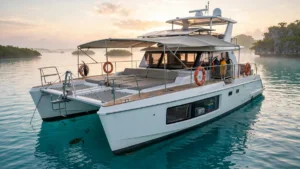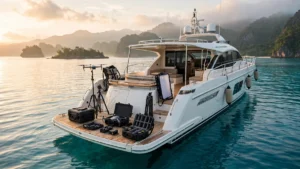
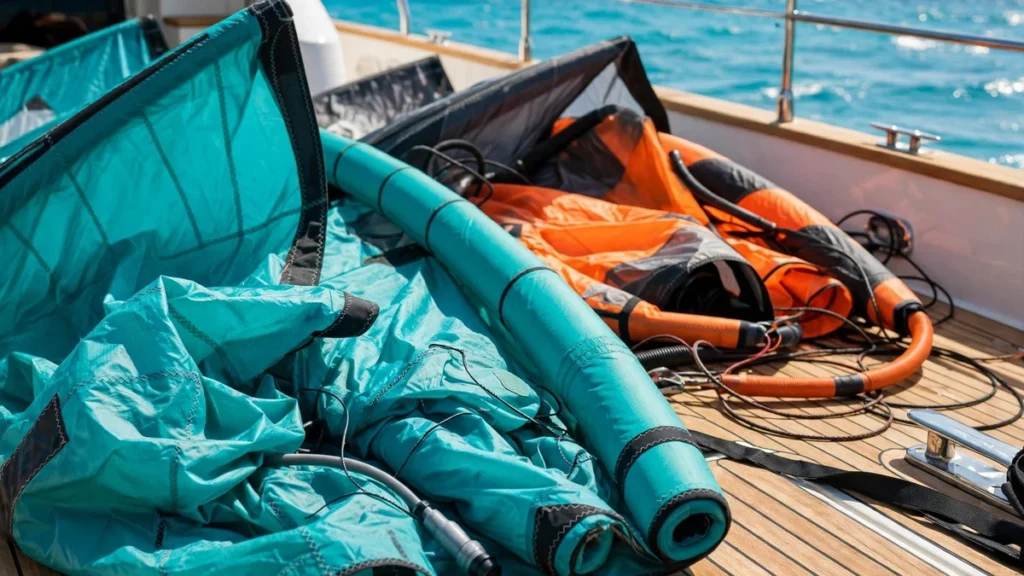
A kitesurfing trip lives or dies on the wind, and on the space to use it. A good hotel can put you near a beach, but it cannot move you to where the wind is blowing, carry a quiver of kites and boards, or launch you from a tender into flat water at first light. A yacht can do all three, which is why the best kitesurfing holidays in 2027 are not booked by the room, but by the week, aboard a yacht that is set up for it.
The problem is that most superyachts are not set up for kitesurfing at all. Many have no kite storage, no launch area, no tender rated to carry a kite, and a crew that has never launched a kiter from a moving boat. The yachts that do it well share a few things: deck space for kites and boards, a fast tender with a wide swim platform, a crew that knows wind windows, and an itinerary built around wind rather than around dinner reservations.
Below are nine yachts worth considering in 2027, from a 162-metre flagship with a full water-sports deck to a 43-metre yacht that suits a small group of friends. Each one is described by what it is good at, what to watch for, and who it suits best, so you can choose with the wind in mind, not just the brochure.
Key takeaways
- A kitesurfing yacht needs kite and board storage, a fast tender, and a crew that understands wind windows, not just a big deck.
- The best kitesurfing spots are chosen day by day, so a flexible itinerary matters more than a fixed route.
- Charter rates are weekly and indicative, and they exclude tax, fuel, food, drinks, tips and licences.
- Most yachts carry a small quiver of kites and boards, so serious kiters should confirm sizes and bring their own gear if needed.
- No yacht can guarantee wind, and no trip should promise a particular wind speed on a particular day.
What a kitesurfing yacht trip actually involves
A kitesurfing yacht trip is a moving base camp. Each morning the captain checks the forecast and picks the spot with the best wind and the flattest water, then the yacht anchors nearby and the tender carries you and your kite to the launch point. You ride for a few hours, come back aboard for lunch and a rest, and ride again in the afternoon if the wind holds. The yacht moves overnight or in the early morning, so you wake up somewhere new.
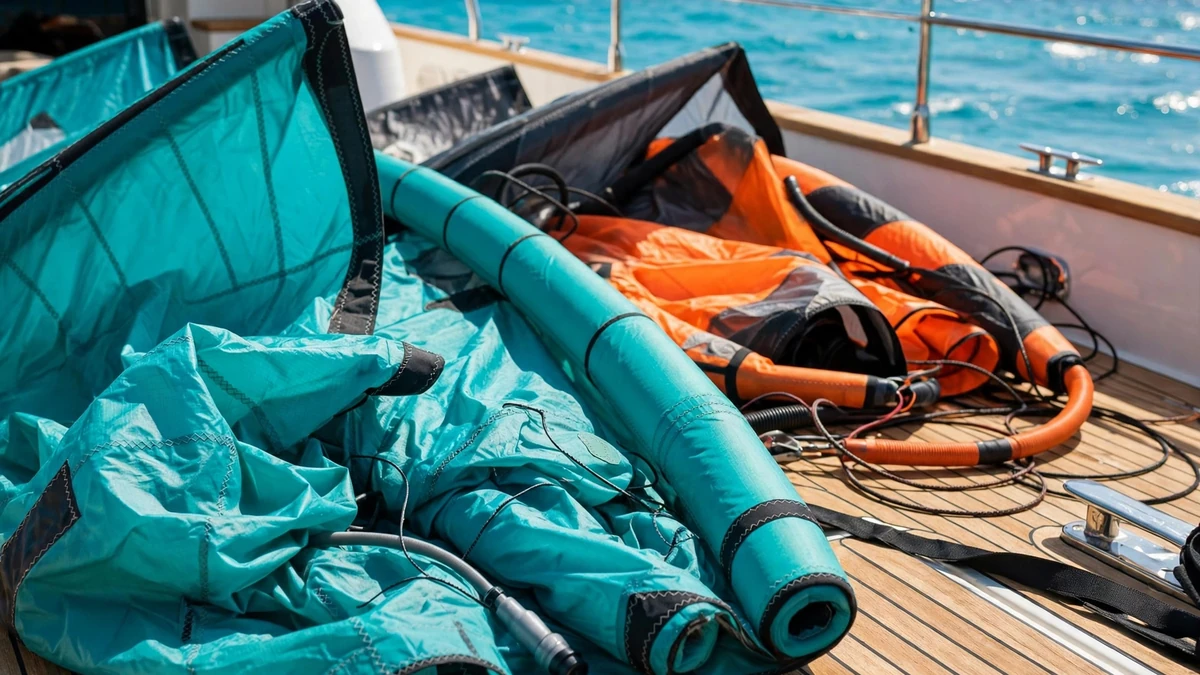
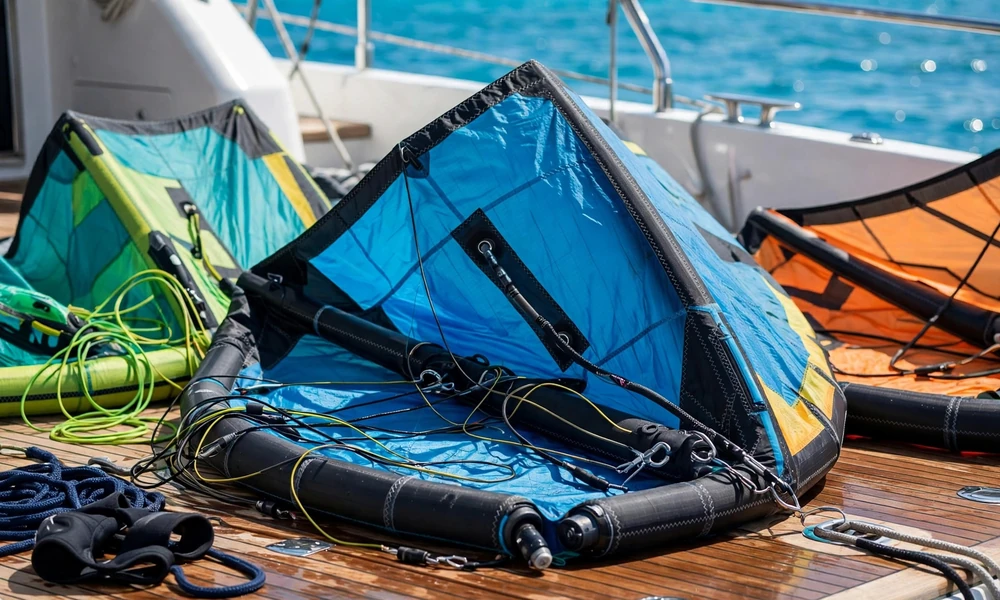
The gear is the practical heart of it. A good kitesurfing yacht carries kites in several sizes, from around 7 to 14 square metres, twin-tip and surf boards, bars, lines and a rack for wetsuits and harnesses. The tender matters as much as the gear, because a wide swim platform and a powerful outboard make launching and recovering a kite far easier than a small, slow tender does. Ask before you book whether the yacht carries its own kitesurfing kit or expects you to bring yours, because the answer changes what you pack.
The daily rhythm is what makes it feel different from a beach holiday. There is no drive to the spot, no queue for a rental kite, and no need to pack up at sunset. The crew handles the gear, the chef handles the food, and the yacht handles the moving. Your job is to ride, rest, and be ready when the wind fills in, which is usually in the late morning and again in the afternoon.
How we chose these yachts and what to look for
Look first at the water-sports setup. A yacht with a dedicated tender garage, a swim platform, and storage for kites and boards is worth more than a larger yacht with a prettier saloon and no gear at all. Ask how many kites and boards are carried, what sizes they are, and whether the crew includes someone who kitesurfs. A crew that rides will read the water and the wind with you, and that is worth more than any toy list.
Look next at the itinerary. The best kitesurfing charters are built around wind, not around a fixed list of ports, so the captain needs the freedom to change the plan each morning. A luxury yacht charter guide is a useful starting point here, because the same questions about crew, tenders and flexible routing apply to any charter, and a yacht that answers them well is usually the one that rides well too.
Finally, look at the size of the group. Kitesurfing is a small-group activity, and a yacht that sleeps 36 guests will not have 36 kiters on the water at once. Most tenders carry four to six people with gear, so larger groups need a rotation, with some riding while others swim, paddle or relax on deck. A yacht that is honest about that rotation is better than one that pretends everyone rides at once.
The 9 best luxury yachts for kitesurfing trips 2027
M/Y Eclipse
What we like: A 162-metre flagship with a full water-sports deck, a large tender garage, and room for a serious quiver of kites and boards. What to consider: Very large and very expensive, and it needs deep water, so it suits open-water spots rather than shallow lagoons. Length: 162 m. Guests: 24. Best for: Large groups who want the fullest water-sports setup afloat. Charter price range: From about $3,300,000 per week.
Eclipse is the most capable platform on this list, with space for gear that smaller yachts simply cannot carry. It is best for a group that wants kitesurfing plus diving, kayaking and a helicopter, and it is the only yacht here that can genuinely host two dozen guests in comfort.
M/Y Flying Fox
What we like: A 136-metre yacht with a strong tender setup, a large swim platform, and a crew used to running water-sports days. What to consider: A very high weekly rate, and its size limits it to deeper anchorages. Length: 136 m. Guests: 25. Best for: Experienced kiters who want a proven, well-crewed platform. Charter price range: From about $2,500,000 per week.
Flying Fox has a huge deck and a crew that knows how to run a kitesurfing day without fuss. It is a good choice for a group that values space and experience over novelty, and it handles open water with confidence.
M/Y Serene
What we like: A 134-metre yacht with a huge deck, a fast tender, and space for a full quiver. What to consider: A high weekly rate, and it books up early in the wind season. Length: 134 m. Guests: 24. Best for: Groups who want space, speed and a full water-sports programme. Charter price range: From about $2,500,000 per week.
Serene is one of the most comfortable yachts on this list, with deck space that makes rigging and launching easy. It suits a group that wants to ride hard in the morning and relax properly in the afternoon.
M/Y Dilbar
What we like: A 156-metre yacht with enormous deck space, a large tender garage, and a crew that can handle a big group. What to consider: Its size means it needs deep water and a long lead time to book. Length: 156 m. Guests: 36. Best for: Very large groups chasing wind in open water. Charter price range: From about $1,100,000 per week.
Dilbar is the largest yacht on this list by guest capacity, and it can host a whole kitesurfing community at once. It is best for a big group that wants to ride together, with a rotation that still gives everyone plenty of time on the water.
M/Y Kismet
What we like: A 122-metre yacht with a fast tender, a large swim platform, and a modern, well-equipped water-sports setup. What to consider: A high rate for its size, and it is popular, so the best wind-season weeks go early. Length: 122 m. Guests: 12. Best for: Kiters who want a modern yacht with a strong tender. Charter price range: From about $1,200,000 per week.
Kismet is a modern, capable yacht with a crew that runs water sports properly. It suits a group that wants a newer yacht and is happy to pay for it, and it handles both flat water and open water well.
M/Y Amadea
What we like: A 106-metre yacht with a good tender, a large swim platform, and a relaxed, well-run crew. What to consider: The kitesurfing kit is good but not the largest on this list, so confirm kite sizes before booking. Length: 106 m. Guests: 16. Best for: Mixed groups of kiters and non-kiters. Charter price range: From about $1,100,000 per week.
Amadea strikes a good balance between riding and comfort, with enough deck space for gear and enough shade for everyone else. It suits a group where only some people kitesurf and the rest want to swim, paddle or simply watch.
M/Y Here Comes The Sun
What we like: An 83-metre yacht with a fast tender, a large swim platform, and a crew used to running water-sports days. What to consider: Less deck space for gear than larger yachts, so a big quiver needs careful packing. Length: 83 m. Guests: 12. Best for: Groups who want a proven, well-run kitesurfing platform. Charter price range: From about $1,100,000 per week.
Here Comes The Sun is a reliable, well-liked charter yacht with the right setup for a kitesurfing week. It suits a group that wants a smooth, well-organised trip without surprises, and it is fairly priced for what it offers.
M/Y Seawolf X
What we like: A 43-metre explorer yacht with a proper tender garage and a crew that knows remote water. What to consider: Fewer cabins than larger yachts, and the interior is more practical than luxurious. Length: 43 m. Guests: 12. Best for: Adventurous kiters who want to reach spots other yachts cannot. Charter price range: From about $450,000 per week.
M/Y Callisto
What we like: A 63-metre yacht with a friendly crew, a good tender, and a sensible rate for its size. What to consider: Less deck space for gear than larger yachts, so a big quiver needs careful packing. Length: 63 m. Guests: 12. Best for: Small groups and families on a first kitesurfing charter. Charter price range: From about $550,000 per week.
Which kitesurfing yacht is right for you
Start with the wind. If you want steady trade winds and flat water, the Caribbean and the Mediterranean in summer are the most reliable choices, and a yacht based in the Maldives can work well in the winter season. A guide to luxury hotels in Santorini is worth a look even if you are chartering, because it shows how a good wind destination pairs sailing with food, views and a quiet anchorage, and that is exactly what a kitesurfing itinerary needs.
Next, match the yacht to your group. A group of four to six kiters fits almost any yacht on this list, while a group of twelve or more needs a larger yacht and a rotation, with some riding while others rest. If your group includes non-kiters, choose a yacht with a good swim platform, a paddleboard or two, and enough shade, so nobody is stuck watching from the saloon.
Finally, be honest about your level. Beginners need flat water, a steady breeze and a patient crew, while advanced kiters want stronger wind and a yacht that can reach open water. Tell the broker your level before you book, because the right yacht for a beginner is not the right yacht for someone who wants to jump and ride waves.
The caveats that matter
Kitesurfing is a weather-dependent sport, and a yacht charter does not change that. Wind can drop, rain can arrive, and a spot that was perfect yesterday can be flat calm today. The best charters build in flexibility, with alternative activities for calm days, and the best brokers are honest about that before you pay.
| Detail | What is known |
|---|---|
| Best wind season | Caribbean and Mediterranean in summer, Maldives in winter, depending on the trade winds |
| What the rate excludes | Tax, fuel, food, drinks, tips, licences and sometimes the water-sports kit |
| Typical group size | Four to twelve kiters, with a tender rotation for larger groups |
| Gear to confirm | Kite sizes, board types, bars, lines, harnesses and wetsuits before you book |
| Who should avoid it | People who cannot swim, and anyone with a medical condition that makes falling in the water unsafe |
| Safety essentials | Life jacket, helmet for beginners, sun protection, and a tender that stays close |
| What no yacht can promise | A particular wind speed, a particular spot, or a particular number of riding hours |
| What to ask first | What gear is carried, who on the crew kitesurfs, and how flexible the itinerary is |
If you are new to kitesurfing, say so before you book, and ask whether the yacht can arrange an instructor. Learning from a yacht is a good way to start, because the tender is always close and the water is usually calm, but it is not a substitute for a proper lesson on land first.
Checklist: booking a kitesurfing yacht honestly
Use these checks before you pay, and again before you fly.
- Check the gear list: kite sizes, board types, bars, lines, harnesses and wetsuits, in writing.
- Check the tender: fast, wide, with a swim platform, and rated to carry kites and boards.
- Check the itinerary: it should flex with the wind, not follow a fixed list of ports.
- Check the crew: at least one person who kitesurfs, and a tender driver who stays close.
- Check the extras: what the rate excludes, and what a calm day costs you in lost riding.
- Check your level: be honest about it, and ask for an instructor if you are still learning.
Frequently asked questions
Do I need to bring my own kitesurfing gear?
Not always. Most yachts on this list carry a small quiver of kites and boards, but the sizes are limited, so serious kiters often bring their own gear. Confirm the sizes in writing before you book, and ask whether the yacht charges extra for carrying your kit.
What is the best time of year for a kitesurfing yacht trip?
It depends on the destination. The Caribbean and the Mediterranean are most reliable in summer, when the trade winds are steady, while the Maldives works well in the winter season. Your broker should match the destination to the wind calendar, not to the calendar on your wall.
Can beginners kitesurf from a yacht?
Yes, and it is a good way to learn, because the tender stays close and the water is usually calm. Ask whether the yacht can arrange an instructor, and choose a yacht with flat water and a steady breeze rather than open water and strong wind.
How many people can kitesurf at once?
Usually four to six, because that is what a tender can carry with gear. Larger groups rotate, with some riding while others swim, paddle or rest on deck. A yacht that is honest about the rotation is better than one that promises everyone rides at once.
What happens on a windless day?
A good charter has a plan for it: swimming, paddleboarding, kayaking, snorkelling, or moving to a different spot. Ask the broker what the calm-day plan is before you book, because a windless day on a yacht with nothing else to do is a long day.
Is a kitesurfing yacht trip suitable for a honeymoon?
Yes, if both of you kite, or if one of you is happy to relax while the other rides. A St Barts travel guide can help you pick a destination that works for riding and for celebrating, because the best kitesurfing honeymoons combine good wind with good food and a quiet anchorage.
The bottom line
The best luxury yacht for a kitesurfing trip in 2027 is not the biggest or the most expensive. It is the one with the right gear, the right tender, a crew that understands wind, and an itinerary that bends with the forecast. For a large group that wants everything, Eclipse and Dilbar are hard to beat. For a smaller group that wants value and a well-run week, Seawolf X and Callisto are the sensible picks.
Choose the yacht that matches your level and your group, confirm the gear in writing, and book the weeks when the wind is most reliable. Do that, and a kitesurfing yacht trip is one of the best weeks on the water you can have.