Aquamarine is the colour of clear shallow water, and in summer that is exactly the point. A pale blue stone catches light without shouting, sits comfortably against sun-warmed skin, and works with linen, white cotton, swim cover-ups and evening dresses alike. The problem is not finding aquamarine earrings. It is finding a pair where the stone is a genuine, well-cut aquamarine, the colour is even rather than washed out, and the setting is strong enough to survive a season of heat, sunscreen and salt water.
That is why this guide is organised by stone quality and setting, not just by brand name. A deep blue aquamarine in a bezel setting can be worn every day through summer and still look new in September. A pale, poorly cut stone in a thin prong setting can look dull by August and is far more likely to loosen. Price is a poor guide on its own. Some of the most wearable pairs are mid-priced, and some of the most expensive are the least practical for daily summer wear.
Below are nine aquamarine earrings worth considering for summer 2027, from a classic high-end stud to affordable, well-made drops for holidays and weekends. Each one is described by what it is good at, what to watch for, and who it suits best, so you can choose with your summer in mind, not just a bestseller list.
Key takeaways
- Aquamarine is a blue variety of beryl, the same mineral family as emerald, and its pale blue colour suits summer light and warm skin tones.
- A deeper, more saturated blue is rarer and more expensive, while very pale stones are common and best bought in a good cut that makes the most of the colour.
- Most aquamarine is heat-treated to strengthen its blue colour; this is standard, stable and permanent, and a reputable seller should say so.
- Aquamarine is hard enough for daily wear at 7.5 to 8 on the Mohs scale, but prongs and settings still need checking after swimming and travel.
- No earring makes a stone deeper blue than it is, and a stone that looks grey or greenish in daylight will not improve in summer sun.
What aquamarine actually is
Aquamarine is a blue variety of beryl, the same mineral family that gives us emerald. Its colour comes from iron, and it ranges from an almost colourless pale blue to a rich, deep blue. The most prized colour is a strong, clear blue, sometimes called Santa Maria blue after the Brazilian mine where the finest material was found. Most of the aquamarine on the market today is a lighter blue, and that is not a flaw in itself, but the cut matters more with a pale stone, because a good cut returns light through the top of the stone and makes the colour look stronger.
Almost all aquamarine is heat-treated. The treatment removes the greenish tint that much rough aquamarine has and leaves a cleaner blue. It is standard practice, it is permanent, and it does not make the stone fragile. What it does mean is that a seller describing a stone as untreated should be able to explain why, and a stone described as a deep natural blue at a low price deserves a second look. The honest question is not whether the stone was heated, but whether the colour you see in daylight is the colour you like.
Aquamarine sits at 7.5 to 8 on the Mohs hardness scale, which makes it hard enough for everyday earrings, including summer wear. It is not as tough as a diamond or a sapphire, and a sharp knock against a hard surface can still chip an edge, particularly on a large stone with exposed corners. That is why settings matter. A bezel setting protects the edges of the stone, while a prong setting shows more of the stone but leaves it more exposed.
How we chose these earrings and what to look for
Look first at colour and cut together. Hold the earrings in daylight, not under shop lights, and look at the stone face-on and from the side. The colour should be even across the stone, without a pale centre or a dark, murky edge. A well-cut stone should look lively, with light moving across the top as you turn it. A flat, glassy look usually means a shallow cut or a stone that is too pale for its size.
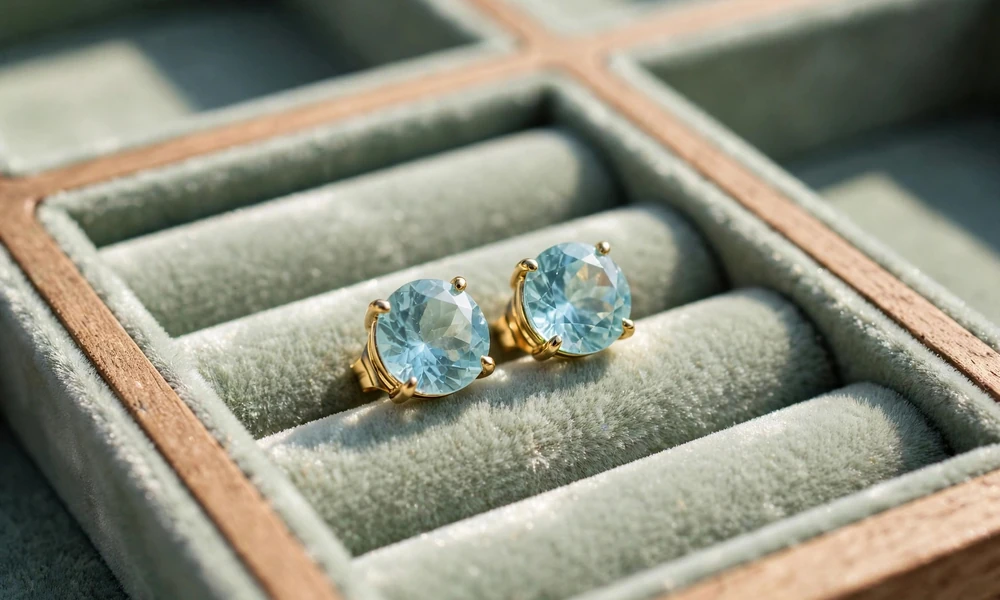
Look next at the setting and the post. A bezel setting is the safest choice for summer, because it protects the stone and has no prongs to catch on hair, hats or swimwear. If you prefer prongs, check that they are even, that they grip the stone firmly, and that the stone does not rock when you press it gently. Screw-back or secure butterfly backs are worth having for larger studs, because a lost aquamarine stud on a beach is gone for good. Our guide to the best diamond earrings of 2027 explains the same setting checks in more detail, and they apply just as much to aquamarine as they do to diamonds.
Finally, think about size for the season. A small stud is the easiest summer earring, comfortable under a sun hat and light enough to forget. A drop earring makes more of a statement for evenings, but it moves more, catches more, and needs a stronger hook or post. Choose the size you will actually wear on a hot day, not the size that looks best in a photograph.
The 9 best aquamarine earrings of summer 2027
Tiffany & Co. Aquamarine Studs
What we like: A classic round aquamarine in a clean platinum setting, with an even pale blue colour and a cut that keeps the stone bright in daylight.
What to consider: Premium price, and the colour is a soft pale blue rather than a deep blue, so check it in daylight before buying. Stone: Round aquamarine, approximately 1 carat per stone, heat-treated Setting: Four-prong platinum setting Best for: Everyday summer wear and special occasions Price range: From about $1,800 a pair
Cartier Aquamarine Studs
What we like: An elegant, precisely made stud with a well-matched pair of stones and a setting that sits neatly against the ear.
What to consider: The stones are modest in size, so they read as refined rather than statement, and the price reflects the brand as much as the stone. Stone: Oval aquamarine, approximately 0.8 carats per stone, heat-treated Setting: Four-prong 18k gold setting Best for: Work, weddings and smart summer evenings Price range: From about $2,400 a pair
David Yurman Aquamarine Studs
What we like: A sculptural setting with Yurman’s signature cable detail, giving a familiar aquamarine stud a more distinctive, jewellery-led feel.
What to consider: The decorative setting adds weight, so try them on before a long day, and the cable detail needs a soft cloth to keep clean. Stone: Cushion-cut aquamarine, approximately 1.2 carats per stone, heat-treated Setting: Bezel setting in sterling silver with 18k gold accents Best for: Summer evenings and occasions when you want the earrings noticed Price range: From about $950 a pair
Mejuri Aquamarine Stud Earrings
What we like: A simple, well-priced stud in solid gold, with a clear pale blue stone and a comfortable post that suits all-day wear.
What to consider: The stones are small, so they suit a delicate look rather than a bold one, and the colour is pale rather than deep. Stone: Round aquamarine, approximately 0.5 carats per stone, heat-treated Setting: Four-prong 14k gold setting Best for: Daily summer wear, layering with other studs Price range: From about $250 a pair
Monica Vinader Aquamarine Studs
What we like: A neat, modern stud with a good colour match between the two stones and a setting designed to sit flat and comfortable.
What to consider: The gold vermeil finish needs more care than solid gold, so keep them away from perfume and pool water. Stone: Oval aquamarine, approximately 0.7 carats per stone, heat-treated Setting: Bezel setting in 18k gold vermeil over sterling silver Best for: Everyday wear and holidays Price range: From about $180 a pair
Missoma Aquamarine Stud Earrings
What we like: A fresh, contemporary stud with a bright pale blue stone and a lightweight feel that suits hot weather.
What to consider: The setting is delicate, so check the prongs after travel, and the stones are on the pale side of the colour range. Stone: Round aquamarine, approximately 0.6 carats per stone, heat-treated Setting: Four-prong gold vermeil setting Best for: Casual summer days and beach holidays Price range: From about $160 a pair
Maria Black Aquamarine Studs
What we like: A cool, architectural stud with a strong design identity, giving a pale stone a sharper, more modern character.
What to consider: The design-led setting may not suit a classic wardrobe, and the stones are small, so the colour reads as an accent rather than the main event. Stone: Round aquamarine, approximately 0.4 carats per stone, heat-treated Setting: Bezel setting in sterling silver Best for: Modern, minimal summer looks Price range: From about $220 a pair
Astrid & Miyu Aquamarine Drops
What we like: A graceful drop earring that moves well and catches light as you turn your head, with a clear blue stone that suits evening light.
What to consider: Drops move more than studs, so they are less comfortable for long hot days, and the hook needs checking before a night out. Stone: Pear-cut aquamarine, approximately 1 carat per stone, heat-treated Setting: Drop setting in 18k gold-plated sterling silver Best for: Summer evenings, weddings and dinners Price range: From about $140 a pair
Thomas Sabo Aquamarine Drops
What we like: A playful, well-made drop with a good-sized stone and a setting that feels more substantial than its price suggests.
What to consider: The plating will wear with heavy use, so treat these as a seasonal favourite rather than a forever pair. Stone: Oval aquamarine, approximately 0.9 carats per stone, heat-treated Setting: Drop setting in 925 sterling silver Best for: Holidays, parties and summer weekends Price range: From about $170 a pair
Which aquamarine earrings are right for you
Small studs suit almost everyone in summer, because they are light, secure and easy to wear under a hat or with hair up. If you have a round face, a slightly elongated oval or pear-cut stone adds length. If you have a long face, a round stud or a short drop balances better than a long, narrow drop. A well-cut half-carat stone with a good colour often looks better than a pale two-carat stone.
Think about your skin tone and your summer colour palette. Aquamarine’s cool blue flatters most skin tones, but it looks its best against warm, sun-tanned skin and with white, navy, pale blue and soft coral clothing. If your wardrobe is mostly warm earth tones, a deeper blue aquamarine will hold its own better than a very pale one. A guide to gold jewellery for everyday wear is useful here, because the metal you choose changes how the stone reads: yellow gold warms a pale aquamarine, while white gold and platinum keep it cool and crisp.
Consider your summer routine honestly. If you swim most days, choose a bezel-set stud with a secure back and rinse it in fresh water afterwards. If you mostly wear earrings for evenings, a drop is a better use of your budget, because you will see the stone in the light it suits best. And if you travel light, one pair of studs that goes with everything will serve you better than three pairs you leave in the hotel safe.
The caveats that matter
Aquamarine is a durable stone, but summer is hard on jewellery. Sunscreen, salt water, chlorine and sand all find their way into settings, and a loose prong is usually discovered too late. It can also be hard to tell a genuine aquamarine from blue glass or a pale synthetic spinel at a glance, which is why buying from a seller who states the stone, the treatment and the metal in writing matters more than any certificate of style.
| Detail | What is known |
|---|---|
| Best colour for summer | A clear, even medium blue; very pale stones can look washed out in strong sun |
| Hardness | 7.5 to 8 on the Mohs scale, hard enough for daily wear |
| Treatment | Almost always heat-treated to improve the blue colour; standard, stable and permanent |
| Safest setting for summer | Bezel setting, which protects the stone edges and has no prongs to catch |
| What to avoid | Sunscreen and pool chemicals left sitting in the setting; rinse in fresh water after swimming |
| Who should choose a deeper blue | People with warm or tanned skin, and anyone wearing mostly warm colours |
| When to have them checked | Once a season, or after any hard knock, a long flight, or a beach holiday |
| What aquamarine does not do | It does not change colour in sunlight, and it has no proven healing properties |
If you are buying aquamarine as an investment, be honest with yourself. Aquamarine is a beautiful, wearable stone, but it is not a rare investment gem, and its value is mostly in the jewellery, the cut and the setting, not in the stone alone. Buy it because you love the colour and will wear it, not because you expect it to appreciate.
Checklist: choosing aquamarine earrings honestly
Use these checks before you buy, and again after a week of wearing them.
- Check the colour in daylight: it should be even, without a pale centre or a murky edge.
- Check the cut: the stone should look lively as you turn it, not flat or glassy.
- Check the setting: bezel for the safest summer wear, or even prongs that grip the stone firmly.
- Check the backs: screw-back or secure butterfly backs for larger studs, especially on holiday.
- Check the paperwork: the seller should state the stone, the treatment and the metal in writing.
- Rinse after swimming: fresh water, mild soap, a soft cloth, and a jeweller’s check once a season.
Frequently asked questions
Is aquamarine good for everyday summer wear?
Yes, in a good setting. At 7.5 to 8 on the Mohs scale it is hard enough for daily wear, and a bezel-set stud is one of the easiest summer earrings to live with. Rinse it in fresh water after swimming and have the setting checked once a season.
Can I wear aquamarine earrings in the sea or a pool?
You can, but rinse them in fresh water afterwards. Salt and chlorine do not damage the stone itself, but they can dull the metal and leave residue in the setting, which is what loosens stones over time.
Is heat-treated aquamarine worth buying?
Yes. Almost all aquamarine is heat-treated to remove a greenish tint and leave a cleaner blue. The treatment is permanent and standard, and a reputable seller will say so. The price should reflect the colour you see, not the word untreated.
Why does my aquamarine look pale in sunlight?
Very pale aquamarine can look washed out in strong sun, because there is less colour for the light to work with. A deeper blue stone, or a smaller stone with a good cut, usually looks better in bright light than a large, very pale one.
Does aquamarine go with gold or silver?
Both, but they give different results. Yellow gold warms a pale aquamarine and suits warm skin tones, while white gold, platinum and silver keep the stone cool and crisp. Try both against your skin in daylight before deciding.
How do I clean aquamarine earrings after a holiday?
Warm water, a drop of mild soap and a soft brush or cloth are enough. Dry them fully before putting them away. Avoid ultrasonic cleaners if the stone has any visible cracks, and never use steam. Our guide to after-sun skincare covers the same rinse-and-repair habit for skin, and your jewellery benefits from the same routine after a day in the sun.
The bottom line
The best aquamarine earrings for summer 2027 are not the deepest blue or the most expensive. They are the pair with an even colour you like in daylight, a setting that protects the stone, and a size you will actually wear on a hot day. For most people, a well-cut stud in a bezel setting is the smartest choice, with a drop pair kept for evenings.
Choose one pair, wear it through the season, rinse it after swimming, and have the setting checked once before your next holiday. That is the honest way to enjoy a beautiful, practical summer stone without losing it to a loose prong or a setting that was never quite right.