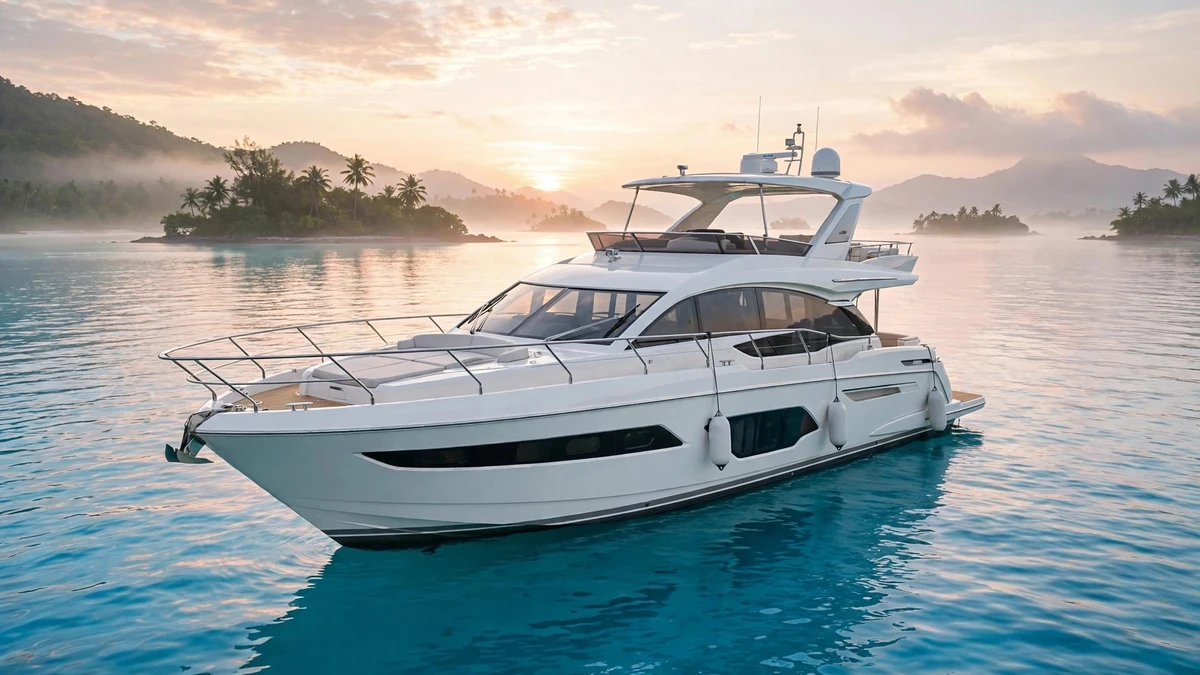
Island hopping by yacht is the closest thing to having a private archipelago. Instead of packing, checking out, and catching a ferry every two days, you wake up in a new anchorage each morning, swim before breakfast, and decide over coffee whether today is a beach, a village, a reef, or simply a long, slow sail to the next island. A good island hopping yacht is built for exactly that rhythm: shallow enough to anchor close to shore, fast enough to cover distance between islands, and stocked with the tenders and toys that make each stop feel like its own small holiday.
The problem is that not every superyacht is a good island hopper. A deep-draught yacht with a single slow tender will spend its days anchored far from shore, with guests waiting in line for a ride to the beach. A yacht without stabilisers will roll at anchor in the open water between islands. And a yacht with a small tender garage will leave you choosing between the jet skis and the dive gear, when a proper island hopping trip needs both.
Below are nine luxury yachts worth considering for island hopping trips in 2027, from a 162-metre flagship with every toy imaginable to a nimble 43-metre explorer that can slip into anchorages the big yachts cannot reach. Each one is described by what it is good at, what to watch for, and who it suits best, so you can choose with the islands in mind, not just the size of the yacht.
Key takeaways
- Island hopping rewards a shallow draught, fast tenders, and a well-stocked toy garage, because the best islands are often the ones big yachts cannot reach.
- The classic routes are the Greek islands, the Balearics, Croatia, the Caribbean, the Seychelles, and the Thai islands, each with its own best season.
- A yacht with stabilisers, a beach club, and two tenders makes island hopping comfortable, because you spend as much time at anchor as you do under way.
- Plan the route around anchorages, not ports: the prettiest islands often have no marina, so the tender and the beach club matter more than the berth.
- No yacht can guarantee calm seas between islands, and weather can change a route, so a flexible itinerary matters more than a fixed schedule.
What island hopping from a yacht actually means
Island hopping from a yacht means travelling between islands by sea, staying on board, and using the yacht as a floating hotel that moves with you. A typical day starts with a swim at anchor, a short cruise to the next island, lunch in a sheltered bay, and an afternoon ashore in a village, on a beach, or on a reef. The yacht carries everything with you, so there is no packing, no ferry timetable, and no hotel check-in between islands.
The experience depends on the yacht’s draught and its tenders. A shallow draught lets the yacht anchor close to a beach, sometimes close enough to swim ashore, while a deep-draught yacht must anchor far out and ferry guests in by tender. Two tenders change the trip completely: one can take guests ashore while the other runs a dive trip or a water-ski session. A beach club at the stern, with direct access to the water, turns the yacht itself into the best swimming platform on the trip.
The route matters as much as the yacht. The Greek Cyclades, the Balearics, the Dalmatian coast, the Leeward Islands, the Seychelles and the Thai islands all reward a different pace. Some routes suit short hops between lively islands with restaurants and marinas. Others suit long, quiet passages between empty anchorages where the yacht is the only hotel for miles. Ask the broker which kind of route the yacht is best suited to before you book.
How we chose these yachts and what to look for
Look first at the draught and the tenders. A shallow draught, ideally under three metres, lets the yacht anchor in the sheltered bays where the best swimming and snorkelling happen. Two tenders, one fast and one large, mean guests are never waiting on the sun deck for a ride ashore. A good tender garage, with jet skis, paddleboards, kayaks and dive gear, is what turns a cruise into an island hopping trip.
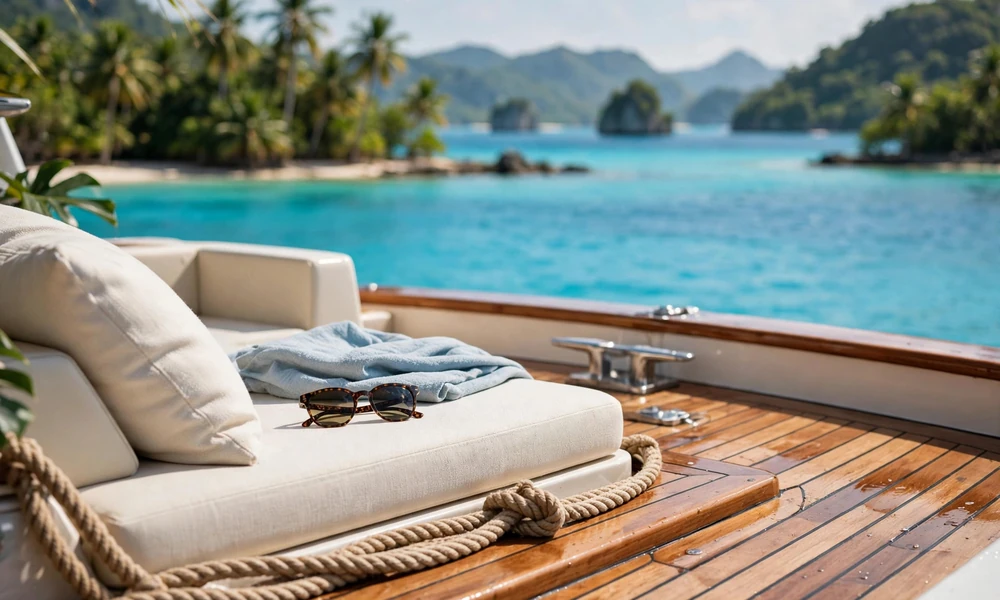
Look next at stabilisers and the beach club. Island hopping means long hours at anchor in open water, and stabilisers are what keep the yacht comfortable while you swim, eat and sleep. A beach club with direct water access, a swim platform, and shaded seating is where you will spend half the trip. Our guide to chartering a luxury yacht explains how to check what is actually included in the rate, because tenders, toys and fuel are not always part of the headline price.
Finally, look at the range and the speed. A yacht that cruises at 15 knots or more can cover a longer route in a week, which matters in the Caribbean or the Seychelles, where the best islands are spread out. A slower yacht suits the Greek islands or Croatia, where the hops are short and the anchorages are close together. Match the yacht’s speed to the route, not the other way round.
The 9 best luxury yachts for island hopping trips of 2027
M/Y Eclipse
What we like: A 162-metre flagship with two helicopter pads, a submarine, a large beach club, multiple tenders, and enough toys for a whole archipelago. What to consider: One of the most expensive charters in the world, and its size means it anchors far from the smallest beaches. Length: 162 metres. Guests: 24. Best for: Large groups who want every toy and every comfort on a long island route. Charter price range: From about $2,000,000 per week.
M/Y Flying Fox
What we like: A 136-metre yacht with a helicopter pad, a large beach club, a swimming pool, a spa, and a tender garage stocked for island hopping. What to consider: Premium pricing, and its size limits access to the smallest anchorages. Length: 136 metres. Guests: 25. Best for: Groups who want a resort-style yacht for a long island itinerary. Charter price range: From about $1,800,000 per week.
M/Y Serene
What we like: A 134-metre yacht with a large sun deck, a beach club, a helicopter pad, and a crew experienced in long Mediterranean and Caribbean island routes. What to consider: A deep draught for its size, so it anchors further from shore than smaller yachts. Length: 134 metres. Guests: 24. Best for: Luxury travellers who want island hopping with full resort comfort. Charter price range: From about $1,500,000 per week.
M/Y Dilbar
What we like: A 156-metre yacht with one of the largest interiors afloat, a large swimming pool, a helicopter pad, and space for a large group to spread out over a long route. What to consider: Very large and deep-draught, so it suits open-water island routes rather than shallow bays. Length: 156 metres. Guests: 36. Best for: The largest groups and multi-generational families on a long route. Charter price range: From about $1,900,000 per week.
M/Y Kismet
What we like: A 122-metre yacht with a large beach club, a swimming pool, a helicopter pad, a cinema, and a tender garage built for island hopping. What to consider: Premium pricing, and it books far ahead for the summer Mediterranean season. Length: 122 metres. Guests: 12. Best for: Guests who want a large yacht with an intimate guest count. Charter price range: From about $1,200,000 per week.
M/Y Amadea
What we like: A 106-metre yacht with a helicopter pad, a large sun deck, a swimming pool, stabilisers, and a crew used to long island itineraries. What to consider: A deep draught, so it stays in open water and relies on its tenders for shore access. Length: 106 metres. Guests: 16. Best for: Groups who want a classic large yacht for a Caribbean or Mediterranean route. Charter price range: From about $1,000,000 per week.
M/Y Here Comes The Sun
What we like: A 83-metre yacht with a large beach club, a swimming pool, a helicopter pad, and a warm, relaxed interior that suits long, slow island days. What to consider: A smaller tender garage than the largest yachts, so check the toy list before you book. Length: 83 metres. Guests: 12. Best for: Families and couples who want a relaxed island hopping pace. Charter price range: From about $800,000 per week.
M/Y Seawolf X
What we like: A 43-metre explorer yacht with a shallow draught, a large tender, kayaks, paddleboards, and a hybrid propulsion system that is quiet at anchor. What to consider: The smallest yacht on this list, so it suits groups of twelve or fewer and has less range than larger yachts. Length: 43 metres. Guests: 12. Best for: Small groups who want to reach the anchorages big yachts cannot. Charter price range: From about $250,000 per week.
M/Y Callisto
What we like: A 63-metre expedition yacht with a shallow draught, a helicopter pad, a large tender garage, kayaks, and a crew experienced in remote island routes. What to consider: A more expedition-style interior than a classic superyacht, and it is popular in the high season. Length: 63 metres. Guests: 12. Best for: Active travellers who want remote islands, not busy marinas. Charter price range: From about $420,000 per week.
Which island hopping yacht is right for you
Families with children usually do best on a mid-sized yacht like Here Comes The Sun or Amadea, where there is a beach club, a pool, and enough space for everyone to spread out between islands. Small groups and couples often prefer Seawolf X or Callisto, where the shallow draught opens up anchorages that larger yachts cannot reach. Large groups and multi-generational parties will need Dilbar, Flying Fox or Serene, the only yachts on this list that sleep more than sixteen guests comfortably.
Budget is the other deciding factor. Weekly rates on this list range from about $250,000 to about $2,000,000, and that is before tax, fuel, food, drinks, tips and licences, which can add a substantial amount. A smaller yacht with two good tenders often delivers a better island hopping experience than a larger yacht with one slow tender, so spend the money on the tenders and the toys rather than on extra cabins you do not need. The best luxury hotels in Santorini are worth considering as a base before or after your charter, because Santorini is one of the best places to start a Greek island hopping route.
Season matters more than the yacht. The Greek islands and Croatia are best from May to October, the Balearics from June to September, the Caribbean from December to April, the Seychelles from April to June and September to November, and the Thai islands from November to March. Choose the route and the month first, then find the yacht that will be there.
The caveats that matter
Island hopping is weather-dependent, and the sea between islands can be rougher than the sheltered bays where you anchor. A yacht can plan a route around the forecast, but a windy week can mean fewer islands and more time at anchor, which is why the best charters build flexible itineraries with alternative anchorages and activities for the days when the crossing is not comfortable.
| Detail | What is known |
|---|---|
| Best seasons | Greece and Croatia May to October, Caribbean December to April, Seychelles April to June and September to November |
| Best yacht type | Shallow draught, two tenders, stabilisers, beach club, well-stocked toy garage |
| Typical charter length | Seven to ten days, with one or two islands per day at most |
| What is usually extra | Tax, fuel, food, drinks, tips, licences and marina fees |
| Best anchorages | Sheltered bays with no marina, reached by tender or by swimming ashore |
| Who should avoid it | Anyone prone to severe seasickness, or travellers who need a fixed daily schedule |
| Planning tip | Plan around anchorages, not ports, and keep at least one flexible day in the route |
| What no yacht guarantees | Calm seas between islands, a berth in a busy marina, or a particular island on a particular day |
Marinas deserve a word of their own. The prettiest islands often have no marina at all, and the busiest marinas in the Mediterranean and the Caribbean book up months ahead in high season. A good charter broker will reserve berths where they matter and plan anchorages where they do not, but if a particular port is essential to your trip, confirm the berth in writing before you pay a deposit.
Checklist: booking an island hopping yacht honestly
Use these checks before you book, and again before you board.
- Check the draught: confirm the yacht can anchor close to the beaches and bays you want to visit.
- Check the tenders: confirm two tenders are included, one fast and one large, plus the toys you want.
- Check the stabilisers: confirm the yacht is stabilised at anchor, not just under way.
- Check the route: confirm the yacht will be in your chosen islands in your chosen month.
- Check the extras: confirm what the rate covers and what tax, fuel, food, drinks and marina fees will add.
- Check the berths: confirm marina berths are reserved where they matter, and anchorages are planned where they do not.
Frequently asked questions
How many islands can you visit in a week?
Most charters cover five to eight islands in seven days, at a relaxed pace of one or two islands per day. Trying to visit more usually means long crossings and short stops, which defeats the point of island hopping. A slower route with longer stays is almost always the better trip.
Do you need a marina berth every night?
No. Most island hopping yachts anchor out in sheltered bays and use the tender to go ashore, which is often the best part of the trip. Berths are useful for provisioning, fuel, and nights in a lively town, but they are not needed every night.
Is island hopping safe for children?
Yes, with the right yacht and crew. Choose a stable yacht with stabilisers, a beach club with easy water access, and a crew experienced with younger guests. Children should wear life jackets on tenders, and the crew should brief the whole group on tender safety on the first day.
What should I pack for an island hopping charter?
Light clothes, swimwear, sun protection, a waterproof bag for electronics, and soft bags rather than hard suitcases, because cabin storage is limited. Snorkelling gear is usually provided by the yacht, so check before you pack your own. A St Barts travel guide is a useful starting point if your route includes the Caribbean, because St Barts is one of the best islands to begin a Leeward Islands hopping trip.
Can you combine island hopping with diving or fishing?
Yes, and most of the yachts on this list are equipped for it. Ask the broker about dive guides, compressors, and fishing gear before you book, because not every yacht carries a full dive setup, and some destinations require permits for fishing or diving in marine parks.
Do I need a permit to anchor in island bays?
In some destinations, yes. Certain marine parks and protected bays require permits or limit the number of yachts at anchor, and some countries charge a cruising tax. A reputable charter broker handles permits as part of the booking, so confirm this in writing before you pay a deposit.
The bottom line
The best luxury yacht for island hopping in 2027 is not the biggest or the most expensive. It is the shallow-draught, well-equipped yacht that will be in the right islands at the right time, with two good tenders, stabilisers at anchor, and a beach club that makes the yacht itself the best swimming platform on the trip. For most travellers, a mid-sized yacht like Here Comes The Sun, Callisto or Seawolf X offers the best balance of access, comfort and price, while Eclipse and Flying Fox remain the ultimate choices for large groups on long routes.
Choose the route and the season first, check the tenders and the draught second, and keep at least one flexible day in the itinerary. The islands will do the rest, one anchorage at a time, which is exactly what makes the trip worth taking.