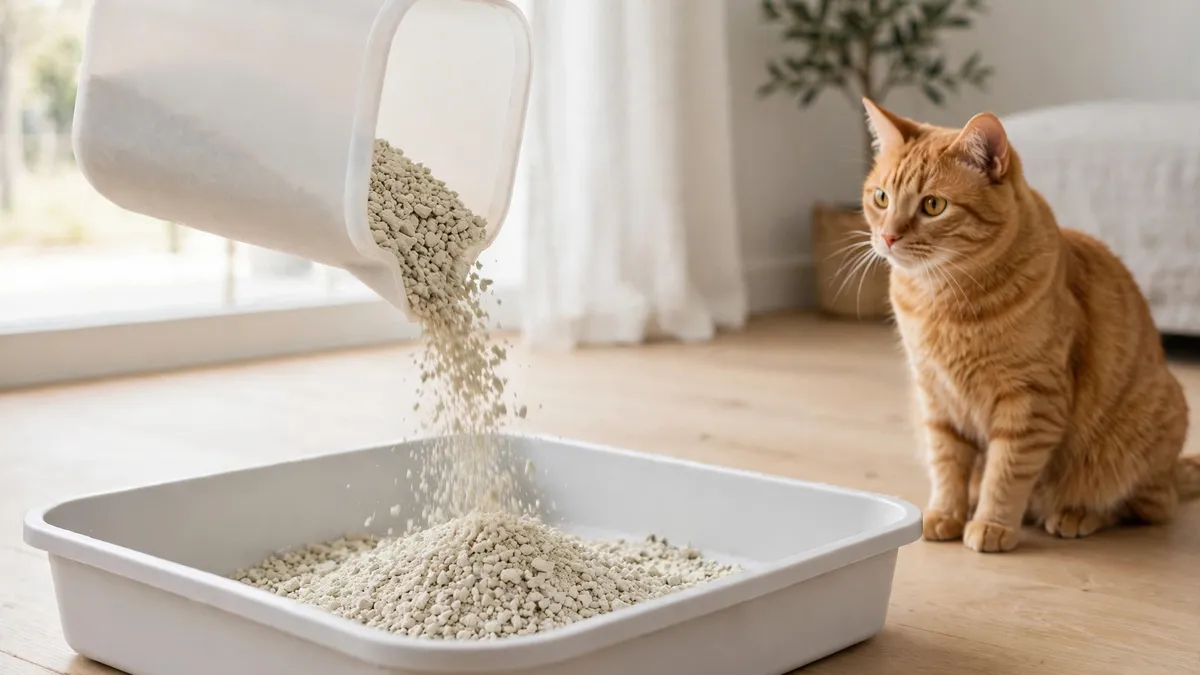
The best cat litter for odor control is the one that traps smells at the source, clumps firmly and suits the cat using it. If you are searching for the best cat litter for odor, the answer is rarely a single product, as the right litter depends on your cat and how often you scoop. The answer, straight away: a firm-clumping litter, scooped daily, in a clean box, is the best cat litter that controls odor for most homes.
We have ranked ten litters by how well they handle smells, from classic clumping clay to plant-based and crystal options. Each pick explains who it suits and where it falls short, and the comparison table near the end puts them side by side.
Key takeaways
- Firm clumps matter most: waste you can lift out cleanly cannot keep smelling.
- Scoop daily. No litter, however good, can make up for a tray left for days.
- Unscented usually wins, as a strong fragrance masks smells instead of removing them.
- Change litter gradually: a sudden switch can put a cat off the box.
How to Choose the Best Cat Litter for Odor Control
Start with clumping: a litter that forms firm, liftable clumps lets you remove the smell’s source every day, the single most effective step in odour control. Non-clumping litters rely on absorbing moisture across the whole tray, so smells build faster between changes. Our 2026 guide to cat litter that actually keeps your home fresh explains the daily habits that matter most.
Next, think about dust and tracking: a dusty litter spreads fine particles through the house and can irritate sensitive noses. Heavier granules track less, while very light plant-based litters may scatter further. Pour a little from a height and watch the dust before you commit to a large bag.
Consider scent carefully. Many litters add fragrance to suggest freshness, but a strong perfume can bother cats, whose sense of smell is far sharper than ours. Unscented litters with good absorption usually keep a home fresher in the long run.
Finally, match the litter to your household. A multi-cat home needs the strongest clumping you can find, while a single-cat flat may do well with a lighter plant-based litter. Buy a small bag first and watch your cat for a week.
The 10 Best Cat Litters for Odor Control in 2027
1. Clumping Clay Litter
Best for: strong everyday odour control in most homes.
Clumping clay is the benchmark other litters are measured against. It forms firm clumps, so a daily scoop removes the smell at its source, and most cats accept it readily.
Its weaknesses are weight and dust: a full tray is heavy, and cheaper clay can be dusty when poured. For straightforward odour control, though, it remains the safest starting point.
2. Silica Crystal Litter
Best for: long-lasting freshness between full changes.
Silica crystals absorb moisture into tiny pores, keeping the tray drier and fresher for longer than many clumping litters. You scoop solids daily and stir the crystals, replacing the tray when they look saturated.
Crystals do not clump, so urine stays in the tray until the full change. Some cats dislike the feel under their paws, so introduce it slowly.
3. Charcoal-Blended Clay Litter
Best for: homes where smells linger despite daily scooping.
This is clumping clay with activated charcoal mixed through it, which helps trap odour molecules rather than covering them with fragrance. The tray smells noticeably fresher between scoops, especially in a small flat.
It behaves like ordinary clumping clay, so most cats accept the switch without fuss. Check the blend is unscented if your cat is sensitive to perfume.
4. Pine Pellet Litter
Best for: a natural woody scent and low dust.
Pine pellets break down into sawdust as they absorb moisture, with a gentle fresh scent rather than perfume. The pellets are large, so tracking is minimal and dust is very low.
Pine does not clump, so you scoop solids and sift out the sawdust as it forms. Odour control is good while the pellets are fresh, but a tray left too long will smell of damp wood.
5. Walnut-Shell Litter
Best for: firm clumps and a gentle, natural scent.
Walnut-shell litter clumps firmly and has a mild, earthy smell. It is darker, which hides stains, and it tracks less than fine clay. Cats that like a fine texture usually take to it quickly.
The darker granules can hide changes in urine colour, so watch your cat’s habits in other ways. Check the litter is free of added fragrance if your cat is sensitive.
6. Corn-Based Clumping Litter
Best for: owners who prefer a plant-based litter.
Corn-based litter clumps well and is made from renewable plant material, which appeals to owners who want a lighter footprint. It is low in dust, with a mild smell when fresh, and most cats accept the soft texture.
Plant-based litters can attract insects if the tray stays damp, so daily scooping matters even more here. Store the bag somewhere dry, and switch the whole tray regularly rather than topping it up for weeks.
7. Paper Pellet Litter
Best for: kittens and cats with sensitive paws.
Paper pellets are soft, almost dust-free and gentle on small paws, which is why vets often suggest them for kittens and cats recovering from surgery. They absorb moisture well, with very little tracking.
Honesty matters here: paper is not the strongest odour controller on this list. It works best with very regular full changes, so it suits a single-cat home rather than a busy multi-cat household.
8. Grass-Seed Clumping Litter
Best for: light litter with tight clumps.
Grass-seed litter is notably light to carry and forms tight clumps that lift out cleanly. It has very little dust and a mild natural smell, and many cats like the fine texture. The light weight helps if you carry bags up stairs.
Because the granules are fine and light, tracking can be worse than with heavier clay, so a good mat by the box helps. Odour control is strong when scooped daily, as the tight clumps leave little waste behind.
9. Tofu Litter
Best for: light, low-tracking homes that want easy cleaning.
Tofu litter is made from soybean fibre, clumps firmly and is very light to carry. The pellets are larger than clay granules, so tracking is low and dust is minimal.
It may need a little more litter in the tray to clump well. As with other plant-based litters, keep the tray scooped daily and store the bag somewhere dry.
10. Baking-Soda-Boosted Clay Litter
Best for: multi-cat homes that need extra help with smells.
This is clumping clay with baking soda mixed in, which helps neutralise odours rather than masking them. In a multi-cat home, that extra help can make a real difference to how the room smells by evening.
It clumps just like ordinary clay, so the switch is easy for most cats. Keep scooping daily, as no additive can keep up with a tray left for days.
What a Fresh-Smelling Home Feels Like
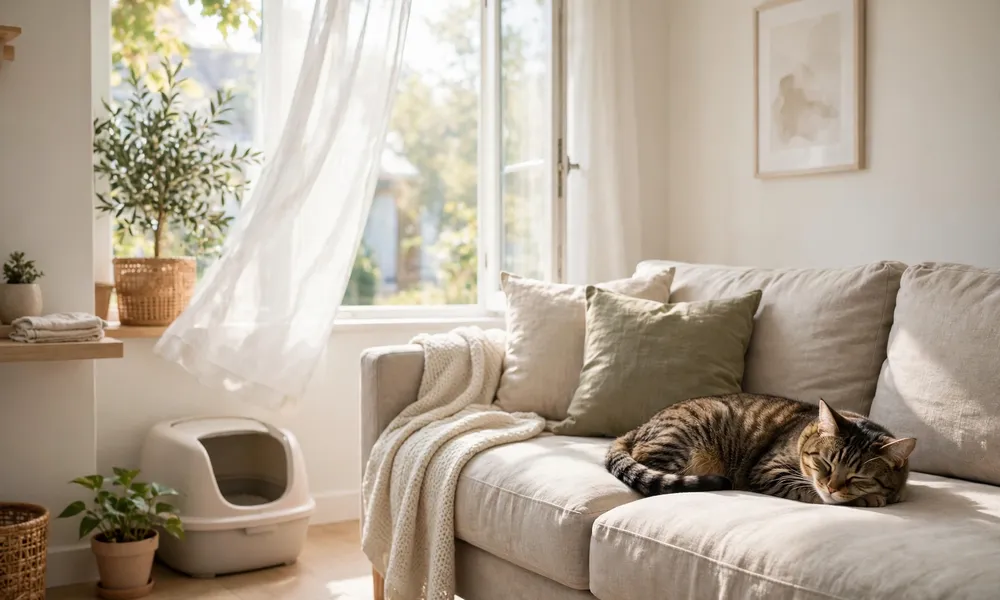
A fresh-smelling home feels easy. Guests walk in and notice the cat asleep on the sofa, not the litter box in the corner. There is no blast of air freshener by the door and no frantic tidy-up before visitors arrive.
That feeling comes from small habits more than from any single bag of litter. A firm-clumping litter, a daily scoop and a weekly wash do most of the work. Once the routine is set, the litter box fades into the background of a home that simply smells clean.
Cat Litter for Odor Control Comparison
| Litter | Odour control | Clumping | Dust level |
|---|---|---|---|
| Clumping clay | Strong | Firm | Moderate |
| Silica crystal | Strong | None | Low |
| Charcoal-blended clay | Very strong | Firm | Moderate |
| Pine pellets | Good | None | Very low |
| Walnut-shell | Good | Firm | Low |
| Corn-based | Good | Firm | Low |
| Paper pellets | Modest | None | Very low |
| Grass-seed | Strong | Firm | Very low |
| Tofu | Good | Firm | Very low |
| Baking-soda clay | Very strong | Firm | Moderate |
What to Check Before You Buy
Read the bag, not just the front of it. Look for the words unscented and clumping, and check whether the litter is made for single or multi-cat use.
Test a small bag first. Fill the tray and watch your cat for a week: does the cat use the box happily, does the litter clump firmly and does the room smell fresh by evening? If yes to all three, you have found your litter.
Think about the box as well as the litter. A hooded or top-entry box can help contain smells, while an open tray airs better but lets more odour escape. The two work as a pair.
Your Cat Litter Checklist
- A firm-clumping litter that your cat accepts happily.
- An unscented formula, unless your cat clearly prefers a light scent.
- A scoop kept by the box and used at least once a day.
- Litter at a comfortable digging depth, about a finger deep.
- A clean, dry storage spot for the bag, away from damp.
- A spare bag on hand, so a change never waits.
Frequently Asked Questions
Which litter is the best cat litter that controls odor?
For most homes, the best cat litter that controls odor is a firm-clumping unscented clay, or a charcoal-blended clay if smells linger. The best cat litter for odor control is not a single brand but a type: one that clumps firmly, so waste leaves the tray daily. If you are comparing the best cat litter for odor in general, start with clumping clay and scoop daily.
Is scented litter better for odor control?
Usually not. Scented litter masks smells with perfume rather than removing them, and a strong fragrance can put a cat off the box. An unscented litter with good absorption keeps a home fresher in the long run.
How often should I change the litter completely?
With a clumping litter, a full change every two to four weeks works for most homes, with daily scooping in between. Non-clumping litters need a full change more often, usually weekly. If the tray smells even after scooping, it is time for a fresh fill and a wash.
Why does my home still smell after I scoop?
The smell may be in the box itself, especially a scratched plastic tray that has absorbed odour. Wash it with warm water and mild soap, and consider replacing a tray that stays smelly when empty. A second box can also help in a multi-cat home.
Can I mix two litters together?
You can, and many owners do, mixing a little of a new litter into the old one to ease a switch. Mixing works best when both litters clump in a similar way, so avoid mixing a clumping litter with a non-clumping one. Our guide to the best cat litter in 2027 covers the main types side by side.
The Bottom Line
The best cat litter for odor control in 2027 is a firm-clumping, unscented litter your cat likes, scooped daily in a clean box. Charcoal-blended and baking-soda clays add extra help for busy homes, while plant-based litters suit owners who prefer natural materials.
If smells persist, look beyond the bag: wash the box, check the litter depth and make sure there are enough boxes for the cats in the home. Our guide to the best automatic cat litter box in 2027 shows how a different box can help. Get the litter, the box and the routine right, and a fresh-smelling home follows.