The best cat trees in 2027 give your cat somewhere to climb, scratch, hide and sleep. The short answer to which one suits your home is the one that fits your space, matches your cat’s size and habits, and stays steady when your cat launches at it. This guide rounds up ten picks covering the main styles.
A good cat tree earns its floor space quickly. Cats climb to survey their territory, scratch to stretch and mark, and curl up high to rest. Below, each pick explains who it suits and where it works best.
Key takeaways
- Stability comes first: a tree that wobbles will be ignored.
- Match the height and platform size to your cat.
- Sisal posts protect your sofa; soft perches invite naps.
- Place the tree where your cat already likes to be.
How to Choose Cat Trees
Start with the spot, not the catalogue. Measure the floor space and the ceiling height, and note where your cat already spends time. A tree in a forgotten corner will gather dust, while one beside a window or near the sofa becomes part of the daily routine.
Stability matters most. A wide, heavy base keeps the tree upright when a cat leaps onto the top platform, and a tall tower needs a base to match. Give the tree a firm push when it arrives: if it rocks, it is not steady enough.
Think about how your cat behaves. A keen climber wants height and several platforms, a keen scratcher wants tall sisal posts, and a nervous cat wants a hideaway with a small entrance, while older cats and kittens need lower steps and shorter jumps. If you share your home with a large breed, our guide to the best cat breeds notes which grow biggest.
The 10 Best Cat Trees in 2027
1. Classic Multi-Level Tower
Best for: most homes and cats that love to climb.
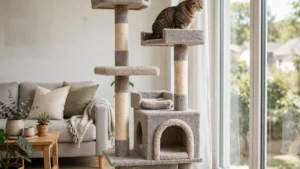
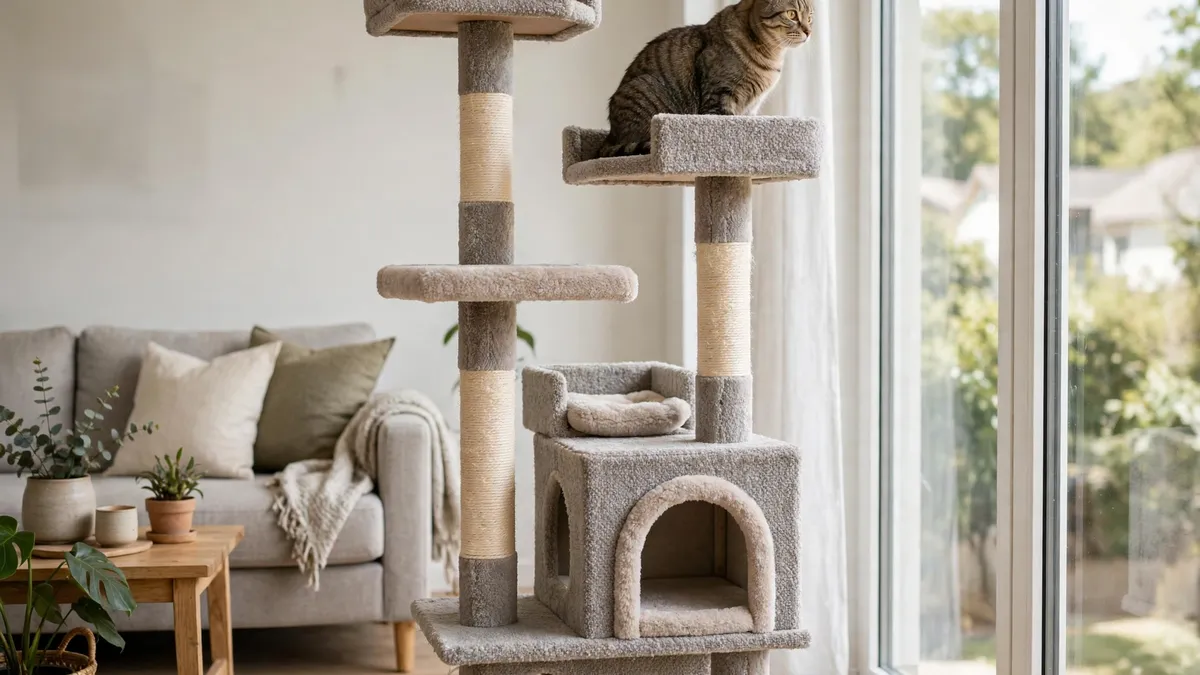
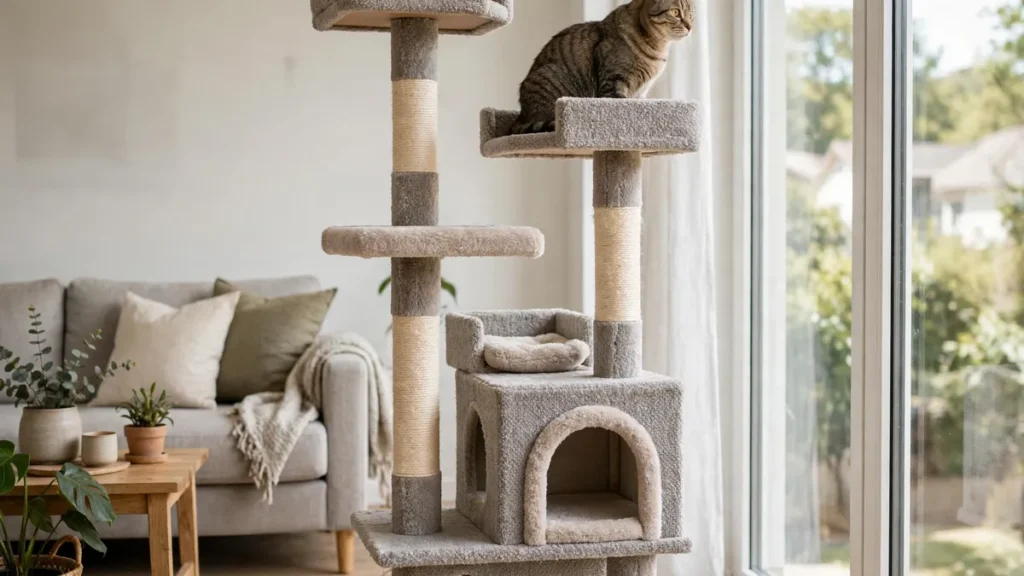
The classic multi-level tower is the shape most people picture when they think of a cat tree: a sturdy base, two or three platforms, a hideaway box and a sisal-wrapped post or two. It gives a cat a route upwards, a perch and a hiding place.
It suits the living room, near a window or beside the sofa. Check the platforms are wide enough for your cat to turn around on.
2. Compact Condo for Small Flats
Best for: small rooms and first-time cat owners.
A compact condo packs a hideaway, a perch and a scratching post into a footprint not much bigger than a side table, and it gives a new cat a safe base in the first weeks at home.
Place it against a wall so it cannot tip, near the room your cat sleeps in. The small size makes it easy to move while you work out where your cat likes to be.
3. Tall Sisal Scratching Tower
Best for: keen scratchers and saving your sofa.
A tall sisal tower is built around scratching: a long, tightly wound post that lets a cat stretch to full height and dig in. The maker says the natural sisal texture suits the way cats scratch, and the height allows a proper stretch.
Put it beside the furniture your cat already scratches, not across the room. The hallway and the sofa end beat a spare bedroom.
4. Wooden Designer Tree
Best for: homes where the tree is on show.
A wooden designer tree looks more like furniture than pet equipment, with clean lines and soft cushions that lift off for washing. It suits a living room where a carpeted tower would clash, yet still gives a cat a perch to survey from.
The trade-off is usually height: wooden trees tend to be lower and lighter than carpeted towers. Keep it on a rug or a non-slip mat so it stays put, and check the cushions are washable.
5. Window Perch Tower
Best for: cats that spend all day at the window.
A window perch tower is a slim, tall design made to stand against glass, with platforms stacked so a cat can climb to the best view in the house. It suits cats that watch birds and passing traffic, and it turns a plain window into the most popular seat in the room.
Measure the window sill and the drop below before you buy, and make sure the tower cannot slide on a polished floor.
6. Cat Tree with Hammock
Best for: cats that love to sleep in the air.
A hammock slung between two posts is one of the most popular sleeping spots a cat tree can offer. The fabric cradles the cat, the gentle sway seems to soothe them, and the raised position keeps them away from draughts.
Check the fabric is removable and washable. The fixings should feel solid when you tug them, and the hammock should sit low enough to step into without a leap.
7. Wide-Base Tower for Large Cats
Best for: large breeds and confident jumpers.
A wide-base tower is built for bigger cats: a heavier base, broader platforms and thicker posts that do not flex under weight. It suits large breeds and any cat that throws itself at furniture, and it stays put where a standard tower would rock.
Measure your cat stretched out, not curled up, when you judge platform size. A platform that looks generous in a photograph can still be too small for a long cat.
8. Corner Cat Tree
Best for: awkward corners and multi-cat homes.
A corner cat tree is shaped to fit where two walls meet, turning dead space into a climbing route. It suits rooms where a freestanding tower would block a walkway, and it gives a second cat a separate route up.
Push it firmly into the corner so both walls brace it, and check the top platform clears any shelves above.
9. Tree and Scratcher Combo
Best for: kittens and cats that scratch everything.
A tree and scratcher combo pairs a small climbing frame with a generous scratching surface, so a cat can climb, scratch and nap without moving far. It suits kittens and cats that scratch the sofa, the rug and the chair legs.
Place it where the scratching already happens, and reward your cat for using it in the first week. A little praise and a treat at the right moment teach faster than moving the tree somewhere your cat never visits. Our guide to the best cat food for kittens covers feeding while your kitten grows.
10. Low-Profile Tree for Older Cats
Best for: older cats and cats with stiff joints.
A low-profile tree keeps everything within easy reach: short steps, a low perch and a ground-level hideaway, with ramps or shallow steps instead of big jumps. It suits older cats that still love a perch but no longer fancy a leap.
Put it near your cat’s usual sleeping spot so the move is short and familiar. A soft, washable cushion on the perch helps, and a stable base matters when a cat steps on carefully rather than jumping.
What Climbing Time Feels Like
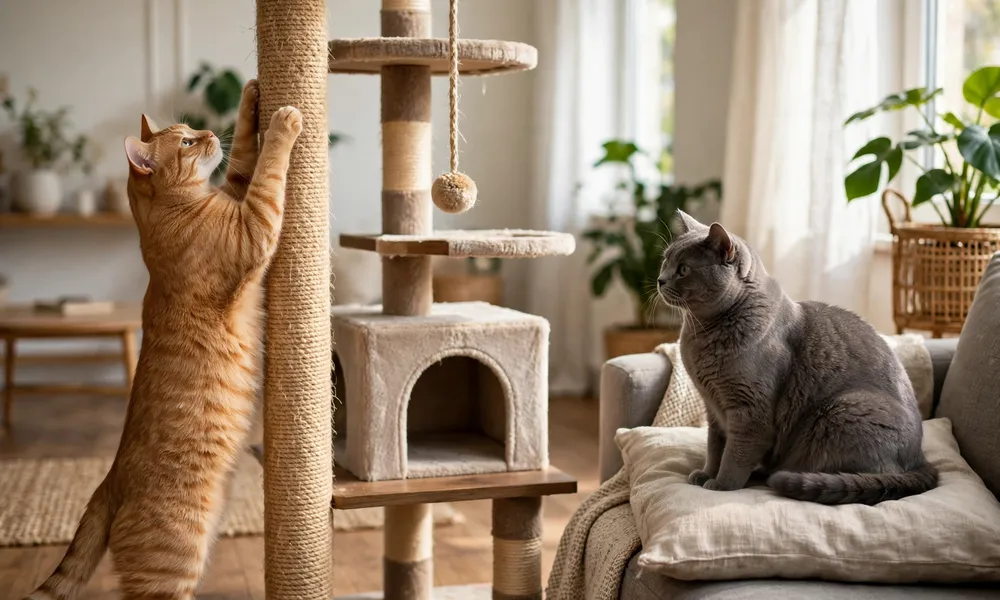
Climbing time starts the moment your cat spots the top platform. There is a pause, a crouch, and then the leap — a short burst followed by a long, satisfied settle. From up high, your cat can see the whole room.
Scratching is part of the same ritual. A long stretch up the post wakes the muscles after a sleep and marks the spot as theirs. It is not mischief; it is how a cat says this place is home.
The best trees get used all day in small bursts: a climb, a scratch, a nap, a look out of the window, then down again for food.
Cat Trees Compared
The ten picks range from tall towers to low loungers. Use the table to match a tree style to your cat and your room, then read the full pick for the detail.
| Tree style | Height | Best spot | Suits best |
|---|---|---|---|
| Multi-level tower | Tall | Living room | Climbers |
| Compact condo | Low | Small flats | New cats |
| Sisal scratching tower | Tall | Beside the sofa | Keen scratchers |
| Wooden designer tree | Medium | On show | Style-led homes |
| Window perch tower | Tall | At the window | Window watchers |
| Tree with hammock | Medium | Quiet corner | Sleepy cats |
| Wide-base tower | Tall | Open floor | Large cats |
| Corner cat tree | Medium | Room corner | Multi-cat homes |
| Tree and scratcher combo | Low | Where scratching happens | Kittens |
| Low-profile tree | Low | Near the bed | Older cats |
What to Check Before You Buy
Check the base first, and compare its weight and width with the height of the tree. A tall tower on a small base will wobble, and a wobbling tree is one your cat will avoid.
Look at the materials and the fixings: sisal should be wound tight with no loose ends, carpet should be fixed flat rather than peeling, and every bolt should sit flush. Removable, washable cushions are worth seeking out, since a tree that cannot be cleaned will smell within months. Keep food and water away from the tree; our guide to the best canned cat food covers the feeding side.
Your Cat Tree Checklist
- Base is wide and heavy enough for the height.
- Platforms are big enough for your cat to turn on.
- Sisal posts are tall enough for a full stretch.
- Hideaway entrance suits your cat’s size.
- Cushions are removable and washable.
- Tree fits the spot your cat already likes.
Cat Trees FAQs
Where should I put a cat tree?
Put it where your cat already likes to be, usually near a window or beside the sofa. A tree in a quiet corner gets ignored, while one in the middle of family life gets used every day. If your cat ignores it, move it a metre or two.
How tall should a cat tree be?
It depends on your cat and your ceiling. A keen climber enjoys a tall tower with several levels, while an older cat or a kitten does better with a lower tree and short steps. Leave clearance above the top platform so your cat cannot reach shelves.
Will my cat actually use a cat tree?
Most cats do, provided the tree is stable, well placed and suited to their habits. A wobbly tree, a tree in a lonely room or a platform too small for your cat will be ignored. Give it a week, add a familiar blanket to the perch, and place it near the window.
How do I stop my cat scratching the sofa?
Place a tall sisal scratcher right beside the sofa, where your cat already scratches. Reward them for using it, and make the sofa less inviting with a throw while the habit changes. Scratching is normal, so the aim is to move it, not stop it.
How do I clean a cat tree?
Vacuum it weekly, wash removable cushions as directed, and spot-clean marks with a damp cloth. Check the fixings every few months and tighten any bolt that has worked loose. A tree that smells fresh and stands firm is one your cat will keep using.
The Bottom Line
The best cat tree is the one your cat actually uses: steady underfoot, placed where life happens, and matched to how your cat climbs, scratches and sleeps. A tall tower suits a keen climber, a low-profile tree suits an older cat, and a compact condo suits a small flat.
Measure your space, check the base, and give your cat a week to claim it. Once the top perch becomes their favourite seat in the house, the tree has earned its place.