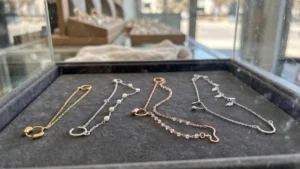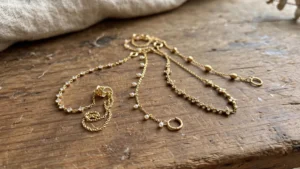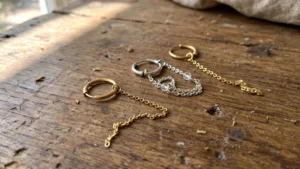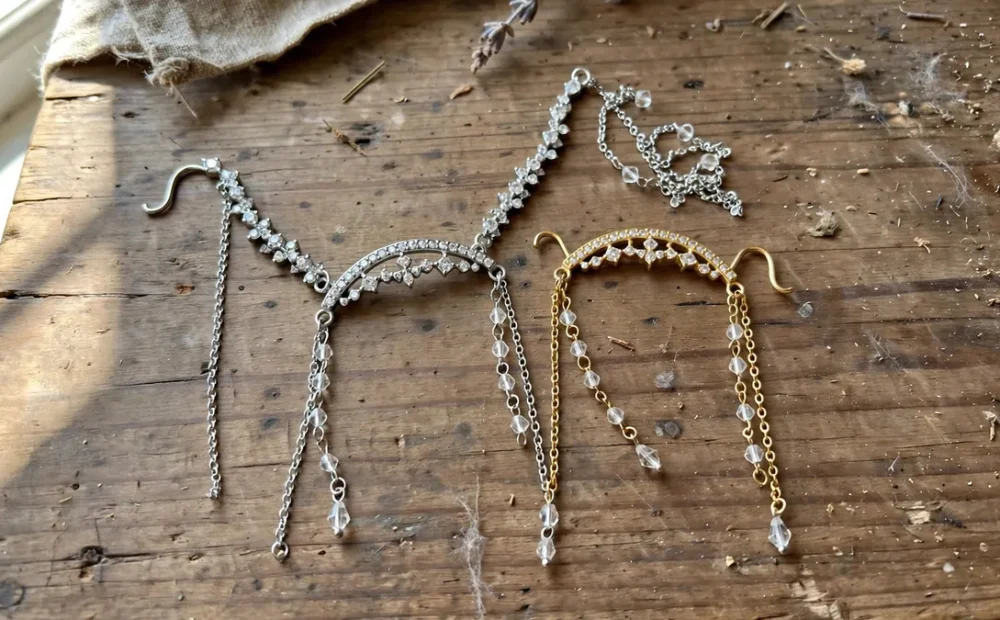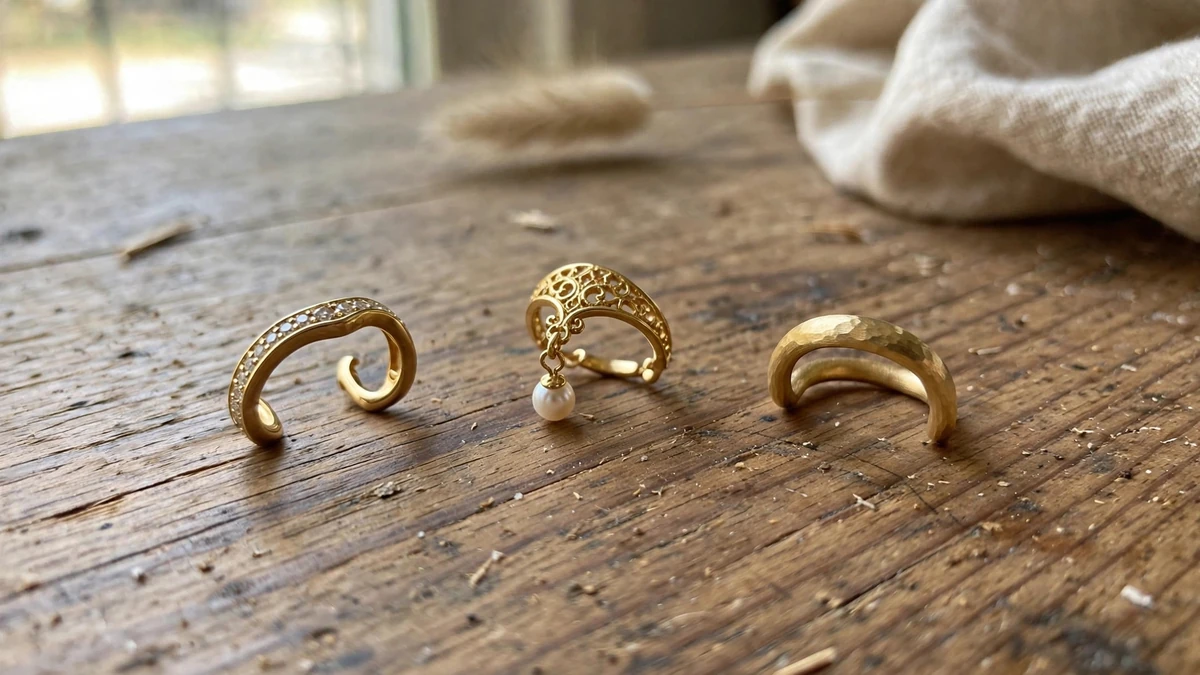
The most expensive nose cuffs in 2027 are not costume jewellery. They are made from platinum and 18-carat gold, set with diamonds, sapphires, rubies, and pearls, and finished by hand to the same standard as fine piercing jewellery. They cost hundreds or thousands of pounds, and they are bought by people who want the look of a nose ring, the quality of fine jewellery, and no piercing at all.
What makes one cuff cost ten times another is not the size of the stone alone. It is the metal, the quality of the gemstone, the precision of the setting, and the finish of the clasp. A platinum cuff with a well-cut diamond holds its value and its shine for years. A plated cuff with a glass stone looks similar in a photograph and very different in person, and it will not last.
Below are nine of the most expensive nose cuffs available in 2027, from a platinum diamond cuff to a vintage-inspired design, plus a tenth, a black diamond cuff in 18-carat gold, priced at approximately 2,500 to 8,000 pounds, which is named in the table below. Every price range is approximate, because fine jewellery is priced by the exact stone and metal, not by a fixed tag.
Key takeaways
- The most expensive nose cuffs are made from platinum, 18-carat gold, and fine gemstones, not plated base metal.
- Price is set by the metal, the stone quality, the setting, and the finish, not by the size of the stone alone.
- A diamond cuff in platinum or 18-carat gold is the most valuable and the most durable choice.
- Buy from a seller who provides a certificate for the stone and a clear returns policy.
- Even the finest nose cuff is not a piercing, and it will never be as secure as one, so fit and care still matter.
What the most expensive nose cuffs actually are
An expensive nose cuff is a fine jewellery piece shaped to sit on the nose without a piercing. The metal is usually platinum or 18-carat gold, solid rather than plated, and the stone is a real diamond, sapphire, ruby, opal, or pearl, set by hand. The clasp or tension mechanism is engineered to hold firmly without pinching, and the edges are polished smooth so the cuff is comfortable for hours.
The difference from a cheap cuff is visible up close. A fine cuff has clean, even prongs, a stone that sits level, and a finish with no rough edges or visible glue. A cheap cuff often has a stone glued into a plated setting, with rough edges that catch on skin and clothing. That is why the price gap is so large, and why it is worth understanding before you buy.
These cuffs are usually made to order or in small batches, because the stones are graded individually and the settings are finished by hand. That means delivery can take days or weeks, and the price can vary with the exact stone. A seller who cannot tell you the metal, the stone weight, and the origin of the gem is not selling fine jewellery.
How we chose these nose cuffs and what to look for
Look first at the metal and the hallmark. Platinum should be marked Pt950, and 18-carat gold should be marked 750. A hallmark is your proof that the metal is what the seller claims, and it is the simplest way to separate a fine cuff from a plated one. If there is no hallmark, ask for one, or walk away.

Look next at the stone. A diamond should come with a certificate from a recognised grading laboratory, and a coloured stone should be described by its origin and treatment. A sapphire or ruby that has been heat-treated is normal, but the treatment should be disclosed. Our guide to the most expensive nose rings explains the same checks for pierced jewellery, and they apply here too.
Finally, look at the fit and the finish. The cuff should sit evenly on the nose, with no tilt and no pressure point. The setting should be secure, with no wobble when you touch the stone gently. And the seller should offer a returns policy and a warranty, because a fine cuff is an investment, not a throwaway purchase.
The 9 most expensive nose cuffs in the world in 2027
Platinum Diamond
What we like: Platinum is the most durable precious metal, and a well-cut diamond in a platinum setting is the classic fine jewellery choice. What to consider: It is the most expensive option, and platinum is heavier than gold, so the fit must be right. Best For: A lifetime piece and special occasions. Material: Platinum, Pt950, with a certified diamond. Price Range: Approximately 2,000 to 6,000 pounds. Standout Feature: The diamond is set low and secure, so it catches light without snagging.
This is the cuff to choose if you want the best of everything. Platinum does not tarnish, the diamond holds its value, and the piece will look the same in ten years as it does today.
18-Carat Gold Diamond
What we like: Warm, rich gold with a bright diamond, lighter and more comfortable than platinum. What to consider: 18-carat gold is softer than platinum, so it needs more care. Best For: Everyday luxury and evening wear. Material: 18-carat gold with a certified diamond. Price Range: Approximately 1,200 to 4,000 pounds. Standout Feature: The gold band is polished to a high shine that makes the diamond look larger.
A gold diamond cuff is the most versatile fine option. It suits warm skin tones, pairs well with other gold jewellery, and is light enough to wear all day without noticing it.
Emerald-Cut Diamond
What we like: The emerald cut gives a clean, architectural look that is very different from a round stone. What to consider: Emerald-cut diamonds show inclusions more easily, so the stone quality matters even more. Best For: A modern, understated luxury look. Material: 18-carat white gold with an emerald-cut diamond. Price Range: Approximately 1,500 to 5,000 pounds. Standout Feature: The long, stepped facets catch light in a quiet, elegant way.
This is the cuff for someone who wants a diamond without the obvious sparkle of a round stone. It reads as refined rather than showy, and it suits a minimalist wardrobe.
Pink Diamond
What we like: A rare and distinctive stone, with a soft colour that flatters most skin tones. What to consider: Pink diamonds are among the rarest and most expensive stones, and the price rises steeply with size. Best For: A collector or a once-in-a-lifetime gift. Material: 18-carat rose gold with a pink diamond. Price Range: Approximately 3,000 to 10,000 pounds. Standout Feature: The pink stone in rose gold is a matched, harmonious combination.
Pink diamonds became even rarer after the Argyle mine closed, and that scarcity is reflected in the price. A small pink diamond cuff is a genuine rarity, not just a pretty stone.
Sapphire
What we like: A deep blue sapphire is striking, durable, and far more affordable than a diamond of the same size. What to consider: The colour varies widely, and a pale or cloudy sapphire is worth far less than a vivid one. Best For: A bold colour statement and evening wear. Material: Platinum or 18-carat gold with a blue sapphire. Price Range: Approximately 800 to 3,500 pounds. Standout Feature: The sapphire is set in a halo of tiny diamonds that make the blue look deeper.
Sapphire is one of the hardest gemstones, second only to diamond, so it stands up to daily wear. A good blue sapphire cuff is a practical luxury, not a fragile one.
Ruby
What we like: A vivid red ruby is dramatic, warm, and instantly noticeable. What to consider: Fine rubies are rare and expensive, and many rubies on the market are treated or synthetic, so buy from a trusted seller. Best For: Special occasions and a bold, romantic look. Material: 18-carat yellow gold with a ruby. Price Range: Approximately 1,000 to 4,500 pounds. Standout Feature: The red stone against yellow gold is a classic, high-contrast pairing.
Ruby has been prized for centuries, and a good one holds its colour in any light. Check the certificate carefully, because the difference between a fine natural ruby and a treated one is entirely in the paperwork.
Opal in White Gold
What we like: Opal has a shifting play of colour that no other stone matches, and white gold keeps the focus on the stone. What to consider: Opal is softer than diamond or sapphire, so it needs gentle handling and should not be worn every day. Best For: Occasions and collectors who love colour. Material: 18-carat white gold with an Australian opal. Price Range: Approximately 600 to 2,500 pounds. Standout Feature: The opal flashes green, blue, and pink as it moves.
Opal is a stone to admire rather than to wear hard. Keep it away from harsh chemicals and hard knocks, and it will keep its colour for years. Wear it for evenings and special days, not for the gym.
Pearl
What we like: A pearl cuff is soft, classic, and unlike any other nose jewellery. What to consider: Pearls are delicate, and they can be damaged by perfume, hairspray, and rough handling. Best For: Weddings, formal events, and a timeless look. Material: 18-carat gold with a freshwater or Akoya pearl. Price Range: Approximately 400 to 1,800 pounds. Standout Feature: The pearl is set on a fine gold band that makes it look as if it is floating.
A pearl nose cuff is the most elegant option in this list, and the least practical for daily wear. Treat it gently, wipe it after each wear, and store it separately from harder gemstones.
Vintage-Inspired Diamond
What we like: Milgrain edges, filigree, and an old-cut diamond give a romantic, antique feel that modern settings cannot copy. What to consider: Vintage-inspired pieces are often made to order, so delivery takes longer and the price depends on the exact stone. Best For: Weddings, anniversaries, and anyone who loves antique jewellery. Material: 18-carat gold or platinum with an old-cut diamond. Price Range: Approximately 1,500 to 5,500 pounds. Standout Feature: The milgrain beading around the stone catches light from every angle.
This is the cuff to choose if you want a story, not just a stone. The vintage details make it look like a family piece, even when it is brand new, and the old-cut diamond has a softer sparkle than a modern brilliant cut.
Which expensive nose cuff is right for you
Choose by how you will wear it, not by the price tag. A platinum diamond cuff is the best choice if you want one piece to last a lifetime and hold its value. An 18-carat gold diamond cuff is the best choice if you want everyday luxury that is light and comfortable. A sapphire or ruby cuff is the best choice if you want colour and a bolder statement.
Think about your skin tone and your other jewellery. Warm gold suits warm skin and pairs well with other gold pieces, while white gold and platinum suit cool skin and pair well with silver and diamonds. A guide to diamond necklaces is useful here, because it shows how the same stones look at a larger scale, and which metals flatter which skin tones.
Finally, think about care. A diamond or sapphire cuff can be worn most days with simple cleaning. An opal or pearl cuff needs gentler handling and is better kept for occasions. The most expensive cuff is not the best cuff if it spends its life in a box because you are afraid to wear it.
The caveats that matter
Fine nose cuffs are a real investment, and the risks are different from cheap jewellery. The biggest risk is overpaying for a stone or a metal that is not what the seller claims. Always ask for a hallmark, a stone certificate, and a written returns policy before you pay. A reputable seller will provide all three without hesitation.
| Detail | What is known |
|---|---|
| Most durable choice | Platinum diamond, approximately 2,000 to 6,000 pounds |
| Best everyday luxury | 18-carat gold diamond, approximately 1,200 to 4,000 pounds |
| Rarest stone | Pink diamond, approximately 3,000 to 10,000 pounds |
| Best colour value | Sapphire, approximately 800 to 3,500 pounds |
| Most delicate | Opal and pearl, best kept for occasions, not daily wear |
| 10th entry | Black diamond in 18-carat gold, approximately 2,500 to 8,000 pounds |
| What to check before buying | Hallmark, stone certificate, and a written returns policy |
| What it does not do | It does not replace a piercing, and it will not stay on as securely as one |
Fit still matters at this price. A fine cuff that slides or pinches is a wasted purchase, so check the size guide, ask the seller about adjustments, and try the cuff at home before wearing it out. If the seller cannot adjust the fit, consider a different design, because no stone is worth a cuff you cannot wear comfortably.
Checklist: buying an expensive nose cuff well
Use these checks before you buy, and again when the cuff arrives.
- Check the hallmark: Pt950 for platinum, 750 for 18-carat gold.
- Check the stone certificate: a recognised grading laboratory for diamonds, and a clear description for coloured stones.
- Check the fit: measure your nostril or septum and compare it with the seller’s size guide.
- Check the setting: the stone should sit level and secure, with no wobble and no rough edges.
- Check the returns policy: buy only from a seller who accepts returns and offers a warranty.
- Check the care: ask how to clean the cuff and how often it should be checked by a jeweller.
Frequently asked questions
Why are some nose cuffs so expensive?
Because they are fine jewellery, not costume jewellery. The metal is solid platinum or 18-carat gold, the stone is a real, graded gemstone, and the setting is finished by hand. Those three things set the price, and they are also what make the cuff last.
Is a diamond nose cuff worth the price?
It can be, if you will wear it often and you buy a certified stone in a solid metal. A diamond cuff holds its value far better than a plated cuff, and it will look the same in years to come. If you only want to try the look, a cheaper cuff is the smarter first step.
Can I wear an expensive nose cuff every day?
A diamond, sapphire, or ruby cuff in platinum or gold can be worn most days, with simple cleaning. An opal or pearl cuff is more delicate and is better kept for occasions. Take any cuff off at night and before swimming or exercise.
How do I know the stone is real?
Ask for a certificate from a recognised grading laboratory for diamonds, and a written description of origin and treatment for coloured stones. A reputable seller provides this as standard. If a seller cannot or will not provide it, do not buy.
Do expensive nose cuffs stay on better?
Usually yes, because the tension mechanism and the finish are better engineered. But no cuff is as secure as a piercing, and a fine cuff still needs the right size. Fit matters at every price, and a well-fitting mid-priced cuff stays on better than a poorly fitting expensive one.
How should I store a fine nose cuff?
Store it in a soft pouch or a lined jewellery box, away from harder gemstones that could scratch it. Clean it with warm water and mild soap, dry it fully, and have it checked by a jeweller once a year. A guide to statement necklaces covers the same storage principles, because fine jewellery of any kind needs the same care.
The bottom line
The most expensive nose cuffs in 2027 are fine jewellery pieces that happen to need no piercing. A platinum diamond cuff is the most durable and valuable choice, an 18-carat gold diamond cuff is the most versatile, and a sapphire or ruby cuff is the best way to add colour at a lower price. Whichever you choose, the checks are the same: hallmark, certificate, fit, and returns policy.
Buy the best cuff you will actually wear, not the most expensive one you can afford. A well-fitting diamond cuff worn every week is a far better purchase than a rare pink diamond cuff that stays in its box. Choose the metal and the stone that suit your skin and your life, and the cuff will earn its price many times over.