The best dog breeds for seniors in 2027 are the ones that bring calm company to a quieter home, asking for gentle walks and a warm lap rather than long runs and endless games. Choosing well matters because the right dog fits a slower daily rhythm, offers affection without demanding constant activity.
This guide compares ten calm, affectionate breeds on energy, size, grooming, shedding and care, so you can find the one that suits your home and your way of life. If you are weighing the wider choice first, our guide to the best dog breeds for 2027 sets out the broader picture, while this list focuses on quieter homes and senior owners.
Key takeaways
- Cavaliers, Pugs and Shih Tzus lead the list for seniors because all three are known for affection, calm manners and a love of lap time.
- Smaller breeds are usually easier to manage on the lead.
- Grooming varies widely: Poodles, Shih Tzus and Bichons need regular clipping, while Pugs and French Bulldogs need only light brushing.
- Flat-faced breeds such as the Pug and the French Bulldog can have breathing difficulties, so ask a vet about the breed before deciding.
How to Choose a Dog Breed for a Quieter Home
Start with energy and exercise, not looks. A senior’s dog should enjoy a gentle walk and a game, then settle happily for the rest of the day, and breeds known for calm, easygoing natures suit that rhythm best. A dog that needs long runs will soon feel like hard work.
Next, think about size and strength on the lead. A small dog is easier to lift, carry and control, which matters on wet paths and busy pavements, while a larger dog needs a steady hand and a comfortable harness.
Finally, weigh grooming, shedding and health. Some breeds need professional clipping every few weeks, while others need only a weekly brush, and flat-faced breeds can need extra veterinary care for breathing. Our guide to the best canned dog food for 2027 can help with feeding.
The 10 Best Dog Breeds for Seniors in 2027
Cavalier King Charles Spaniel
Best for: seniors who want a small, gentle lap dog that loves company.
The Cavalier is a small spaniel known for its gentle, loving nature and its wish to be close to people. Cavaliers are often called happy and adaptable.
They need regular grooming to keep their silky coat in good order, and their ears need checking as part of the routine. Cavaliers can be prone to certain health problems, so ask a vet about the breed.
French Bulldog
Best for: seniors who want a small, sturdy and affectionate companion for a flat or small home.
The French Bulldog is a small, sturdy dog known for a playful yet calm nature. French Bulldogs are often called cheerful and adaptable, happy with short walks and indoor games before settling beside their owner.
As a flat-faced, brachycephalic breed, the French Bulldog can have breathing difficulties, especially in warm weather or after exercise, so ask a vet about this before deciding. They need only light brushing.
Pug
Best for: seniors who want a small, comical and devoted lap dog.
Pugs are small, sturdy dogs known for their affectionate, comical nature and their love of people. They are often called clowns, always ready to make their owner smile.
Pugs are another brachycephalic breed, so breathing difficulties can occur, especially in heat, and weight needs watching carefully. Their short coat sheds, and their facial folds need regular cleaning, so ask a vet about the breed.
Shih Tzu
Best for: seniors who want a small, calm and affectionate indoor companion.
The Shih Tzu is a small breed known for a calm, friendly nature and a love of human company. Shih Tzus are often called happy lap dogs.
Their long coat needs regular brushing and clipping to stay comfortable, which is a real commitment in time and cost. Their eyes and ears need routine care too, but with grooming kept up, a Shih Tzu is a gentle and loyal companion.
Bichon Frise
Best for: seniors who want a small, cheerful and low-shedding dog.
The Bichon Frise is a small, white, cheerful dog known for its happy nature and love of company. Bichons are often called merry little dogs, and their coat sheds very little.
That coat needs regular brushing and clipping to stay clean and comfortable, and their eyes and ears need routine care. Bichons enjoy company and can become unhappy if left alone for long periods, so they suit homes where someone is usually around.
Maltese
Best for: seniors who want a tiny, gentle and low-shedding lap dog.
The Maltese is a tiny breed known for a gentle, affectionate nature and a love of being close to its owner. Maltese dogs are often called devoted lap dogs, happy with short walks and quiet indoor time.
Their long, white coat needs regular brushing and clipping, and their eyes need daily care to stay clean. Maltese dogs can be lively in short bursts, but they settle quickly, and with grooming kept up they are sweet and loyal companions.
Greyhound
Best for: seniors with space who want a large, calm and surprisingly lazy dog.
The Greyhound is a large breed known for a gentle, calm nature indoors, despite its racing history. Greyhounds are often called couch potatoes, happy with a couple of short walks before spending the day resting.
They need a secure garden or a lead on walks, as their chase instinct can be strong around small animals. Their short coat needs only light brushing, and they feel the cold, so a coat in winter helps.
Cocker Spaniel
Best for: seniors who enjoy gentle walks and want a medium-sized, affectionate dog.
The Cocker Spaniel is a medium-sized breed known for a cheerful, affectionate nature and a love of people. Cockers are often called merry and gentle, enjoying walks and outdoor time before settling beside their owner.
Their silky coat and long ears need regular grooming and checking to stay healthy. Cockers need daily walks and a little play, but they are not as demanding as more energetic spaniels, and with care they are loyal and loving companions.
Miniature Poodle
Best for: seniors who want a clever, low-shedding dog in a manageable size.
The Miniature Poodle is known for intelligence and a willingness to learn, and it is often called a quick learner. Miniature Poodles bond closely with their owners.
Their coat needs regular clipping and brushing, which is a real commitment in time and cost. They also need mental stimulation alongside exercise, or they can become bored and restless, but with care they are elegant and loyal companions.
Boston Terrier
Best for: seniors who want a small, lively yet manageable companion.
The Boston Terrier is a small, sturdy breed known for a friendly, lively nature and a love of people. Boston Terriers are often called gentle and good-natured, enjoying short walks and games before settling down.
They can have breathing difficulties as a flat-faced breed, so ask a vet about this and avoid exercise in hot weather. Their short coat needs only light brushing, and their eyes need watching, but with sensible care they are cheerful and devoted companions.
What Living With a Senior’s Dog Feels Like
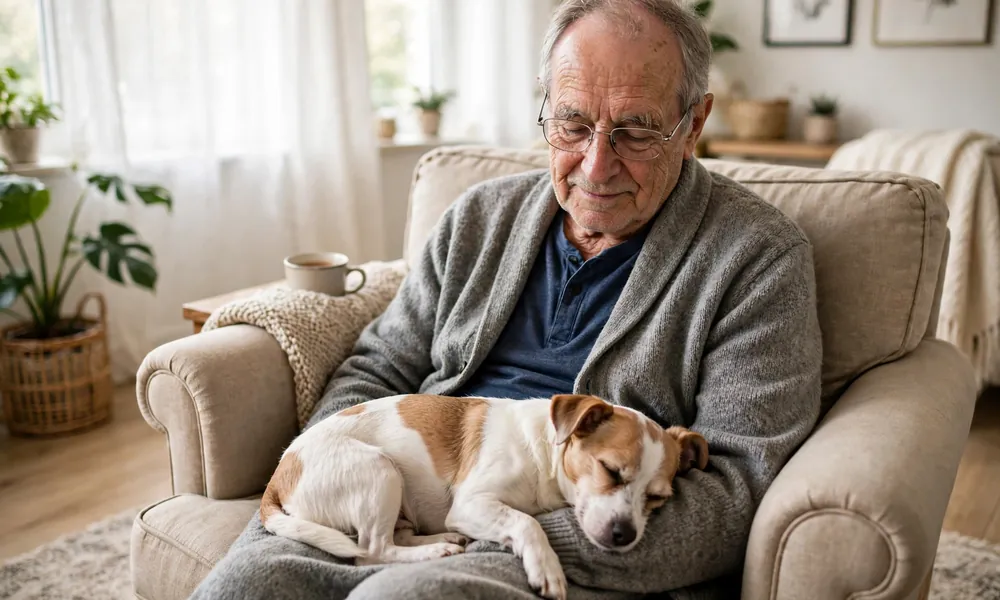
A senior’s dog changes a quieter home in gentle, daily ways. Mornings start with a short walk and fresh air, afternoons bring a dog settled nearby while you read or watch television, and evenings end with a warm companion at your side.
There are practical moments too, and they are worth planning for. Grooming appointments, vet visits and feeding all need a routine, and a small dog is easier to lift into the car or carry up steps.
Over time, the dog becomes a steady presence. Choosing a breed that fits your strength, your energy and your home makes those years easier and happier.
The 10 Best Dog Breeds for Seniors Compared
Use this table to compare the ten breeds at a glance, then read the full notes above before deciding. Energy and size shape daily life, while grooming shows the weekly care each breed needs.
| Breed | Size | Energy | Grooming and care |
|---|---|---|---|
| Cavalier King Charles Spaniel | Small | Low to moderate | Regular grooming |
| French Bulldog | Small | Low to moderate | Light brushing |
| Pug | Small | Low | Light brushing |
| Shih Tzu | Small | Low to moderate | Regular clipping |
| Bichon Frise | Small | Moderate | Regular clipping |
| Maltese | Very small | Low to moderate | Regular clipping |
| Greyhound | Large | Low | Light brushing |
| Cocker Spaniel | Medium | Moderate | Regular grooming |
| Miniature Poodle | Small | Moderate | Regular clipping |
| Boston Terrier | Small | Low to moderate | Light brushing |
What to Check Before You Buy
Meet the breed in person before you commit, and watch how the dog behaves on the lead and around the home. A calm, gentle response tells you more than any description.
Check the breeder or rescue centre carefully, asking about health tests, the dog’s parents and its early life. For flat-faced breeds such as the Pug, the French Bulldog and the Boston Terrier, ask your vet about breathing and heat.
Plan the practical side in advance, including food, bedding, a vet and help for days when you feel unwell. Our guide to the best cat breeds for 2027 may also interest households weighing a pet, and a little preparation makes the first weeks far smoother.
Your Dog Breed Checklist
- Choose a breed whose size, energy and grooming fit your strength and daily routine.
- Meet the dog before deciding.
- Ask about health tests and known health considerations, and talk to your vet first.
- Plan training, food, grooming and vet visits, and arrange help for difficult days.
- Keep walks gentle and regular.
- Arrange regular vet checks and grooming, and keep the routine steady and calm.
Frequently Asked Questions
Which dog breed is best for seniors living in a flat?
Cavaliers, Pugs and French Bulldogs suit flats well because all three are small, calm and happy with short walks. Maltese and Shih Tzus also adapt easily to flat living, and all settle quietly indoors.
Are Greyhounds really calm indoors?
Yes, Greyhounds are often called couch potatoes because they rest for much of the day after short walks. They do need a lead outside.
Which senior dog breed needs the least grooming?
Pugs, French Bulldogs, Boston Terriers and Greyhounds need the least grooming, with short coats that need only light brushing. Poodles, Shih Tzus, Bichons and Maltese need the most, with regular clipping and brushing.
Do flat-faced breeds need extra care?
Yes, flat-faced breeds such as the Pug, the French Bulldog and the Boston Terrier can have breathing difficulties, especially in warm weather. Keep exercise gentle, avoid heat, watch their weight and ask a vet about the breed before deciding.
Should seniors choose a puppy or an adult rescue dog?
Both can work well, and the right choice depends on your time and energy. Puppies need more training and supervision, while an adult rescue dog may already be house-trained and settled, and rescue centres can match you with a calm dog.
The Bottom Line
The best dog breed for a senior is the one that fits your home, your strength and your daily rhythm, not simply the most popular name on a list. Cavaliers, Pugs and Shih Tzus suit most quieter homes, while the Greyhound offers calm company in a larger size.
Take your time, meet the breed, talk to your vet and prepare your home before the dog arrives. A thoughtful choice now leads to years of gentle walks, quiet evenings and steady companionship, and that is the real reward of bringing a dog home.